Kirjojen hintavertailu – 12 903 724 kirjaa ja 27 kauppaa

Kirjailija

Brian S. Everitt

Kirjat ja teokset yhdessä paikassa: 27 kirjaa, julkaisuja vuosilta 1992–2021, suosituimpiin kuuluu Cluster Analysis. Vertaile teosten hintoja ja tarkista saatavuus suomalaisista kirjakaupoista.

Nimi esiintyy myös muodoissa: Brian S Everitt

27 kirjaa

Kirjojen julkaisuvuodet: 1992–2021.

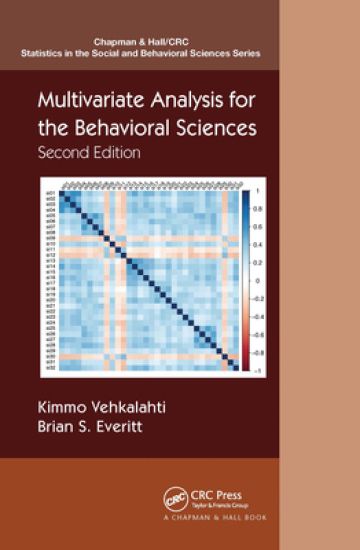
Multivariate Analysis for the Behavioral Sciences, Second Edition

Multivariate Analysis for the Behavioral Sciences, Second Edition

Kimmo Vehkalahti; Brian S. Everitt

CRC Press
2020
nidottu
Multivariate Analysis for the Behavioral Sciences, Second Edition is designed to show how a variety of statistical methods can be used to analyse data collected by psychologists and other behavioral scientists. Assuming some familiarity with introductory statistics, the book begins by briefly describing a variety of study designs used in the behavioral sciences, and the concept of models for data analysis. The contentious issues of p-values and confidence intervals are also discussed in the introductory chapter. After describing graphical methods, the book covers regression methods, including simple linear regression, multiple regression, locally weighted regression, generalized linear models, logistic regression, and survival analysis. There are further chapters covering longitudinal data and missing values, before the last seven chapters deal with multivariate analysis, including principal components analysis, factor analysis, multidimensional scaling, correspondence analysis, and cluster analysis. Features: Presents an accessible introduction to multivariate analysis for behavioral scientists Contains a large number of real data sets, including cognitive behavioral therapy, crime rates, and drug usage Includes nearly 100 exercises for course use or self-study Supplemented by a GitHub repository with all datasets and R code for the examples and exercises Theoretical details are separated from the main body of the text Suitable for anyone working in the behavioral sciences with a basic grasp of statistics
Cluster Analysis

Cluster Analysis

Brian S. Everitt; Sabine Landau; Morven Leese; Daniel Stahl

John Wiley Sons Inc
2011
sidottu
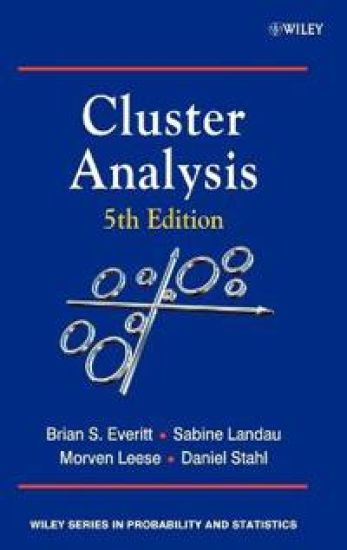
Cluster analysis comprises a range of methods for classifying multivariate data into subgroups. By organizing multivariate data into such subgroups, clustering can help reveal the characteristics of any structure or patterns present. These techniques have proven useful in a wide range of areas such as medicine, psychology, market research and bioinformatics. This fifth edition of the highly successful Cluster Analysis includes coverage of the latest developments in the field and a new chapter dealing with finite mixture models for structured data. Real life examples are used throughout to demonstrate the application of the theory, and figures are used extensively to illustrate graphical techniques. The book is comprehensive yet relatively non-mathematical, focusing on the practical aspects of cluster analysis. Key Features: Presents a comprehensive guide to clustering techniques, with focus on the practical aspects of cluster analysisProvides a thorough revision of the fourth edition, including new developments in clustering longitudinal data and examples from bioinformatics and gene studies./li>Updates the chapter on mixture models to include recent developments and presents a new chapter on mixture modeling for structured data Practitioners and researchers working in cluster analysis and data analysis will benefit from this book.
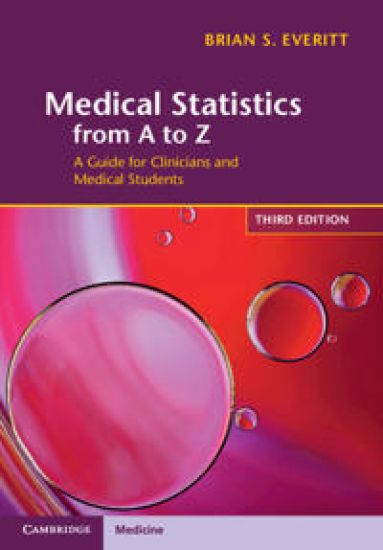
Medical Statistics from A to Z

Medical Statistics from A to Z

Brian S. Everitt

Cambridge University Press
2021
pokkari
For clinicians not well-versed in mathematical techniques, medical statistics can be baffling. Understanding these statistics is crucial for the interpretation of literature and the informed judgement of the use of therapies. From 'Abortion rate' to 'Zygosity determination', this accessible introduction to the terminology of medical statistics clearly describes, illustrates and explains over 1500 terms using non-technical language, and without any mathematical formulae! The majority of terms have been updated and revised for this new edition, and almost 150 new definitions have been added, ensuring readers are up to date with the latest practices. Entries are organised alphabetically, and related topics are clearly cross-referenced throughout, to provide fast, easy navigation. Further reading suggestions supplement most definitions, which allows readers to deepen their understanding of the subject. Enabling clinicians and medical students to grasp the meaning of any statistical terms they encounter when studying medical literature, this guide is a real lifesaver.
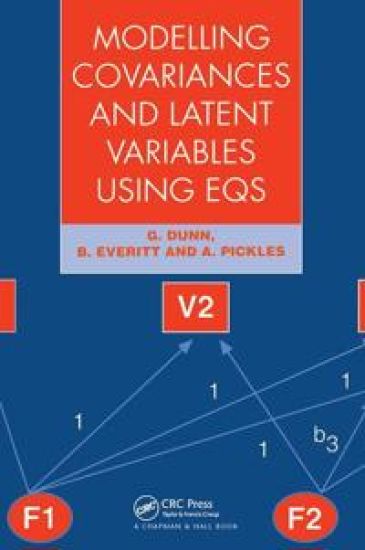
Modelling Covariances and Latent Variables Using EQS

Modelling Covariances and Latent Variables Using EQS

G Dunn; Brian S. Everitt; Andrew Pickles

CRC Press
2020
sidottu
This primer has been designed as a self-instructional text which serves to introduce the reader to both the principles of statistical modelling of covariance structures and to the use of the EQS software package. It is divided into three parts - the first covering the basic ideas and language of covariance structure modelling together with an introduction to the EQS package. The second section covers a wide variety of models suitable for cross-sectional and longitudinal data and the final section discusses a wide variety of practical problems. This book should be of interest to researchers in psychology, sociology and medicine who use the EQS software; applied and consultant statisticians.
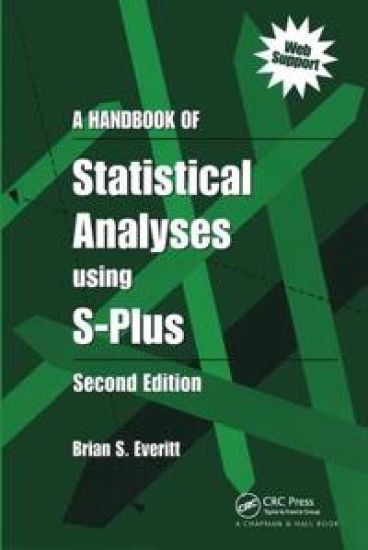
A Handbook of Statistical Analyses Using S-PLUS
Since the first edition of this book was published, S-PLUS has evolved markedly with new methods of analysis, new graphical procedures, and a convenient graphical user interface (GUI). Today, S-PLUS is the statistical software of choice for many applied researchers in disciplines ranging from finance to medicine. Combining the command line language and GUI of S-PLUS now makes this book even more suitable for inexperienced users, students, and anyone without the time, patience, or background needed to wade through the many more advanced manuals and texts on the market. The second edition of A Handbook of Statistical Analyses Using S-Plus has been completely revised to provide an outstanding introduction to the latest version of this powerful software system. Each chapter focuses on a particular statistical technique, applies it to one or more data sets, and shows how to generate the proposed analyses and graphics using S-PLUS. The author explains S-PLUS functions from both the Windows and command-line perspectives and clearly demonstrates how to switch between the two. This handbook provides the perfect vehicle for introducing the exciting possibilities S-PLUS, S-PLUS 2000, and S-PLUS 6 hold for data analysis. All of the data sets used in the text, along with script files giving the command language used in each chapter, are available for download from the Internet at http://www.iop.kcl.ac.uk/iop/Departments/BioComp/splus.shtml
The Analysis of Contingency Tables

The Analysis of Contingency Tables

Brian S. Everitt

CRC Press
2019
nidottu
Much of the data collected in medicine and the social sciences is categorical, for example, sex, marital status, blood group, whether a smoker or not and so on, rather than interval-scaled. Frequently the researcher collecting such data is interested in the relationships or associations between pairs, or between a set of such categorical variables; often the data is displayed in the form of a contingency table for example, smoker versus non-smoker against death from lung cancer or death from some other cause. This text gives a comprehensive account of the analysis of such tables, written at a level suitable for the applied researcher. The first edition of "The Analysis of Contingency Tables" arose from Professor A. E. Maxwell's earlier text, "Analysing Qualitative Data". In this new edition, more material is included that those methods which have developed over the last decade or so, for example, logistic regression models for tables with ordered categories and for response variables with more than two categories. A brief account is given of the increasingly important technique, correspondence analysis. The methods of analysis described in this book should be relevant to research workers and graduate students dealing with data from surveys, particularly in the area of psychiatry, social sciences and psychology.
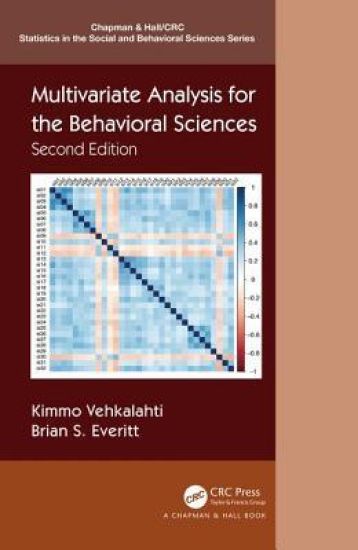
Multivariate Analysis for the Behavioral Sciences, Second Edition

Multivariate Analysis for the Behavioral Sciences, Second Edition

Kimmo Vehkalahti; Brian S. Everitt

CRC Press Inc
2019
sidottu
Multivariate Analysis for the Behavioral Sciences, Second Edition is designed to show how a variety of statistical methods can be used to analyse data collected by psychologists and other behavioral scientists. Assuming some familiarity with introductory statistics, the book begins by briefly describing a variety of study designs used in the behavioral sciences, and the concept of models for data analysis. The contentious issues of p-values and confidence intervals are also discussed in the introductory chapter. After describing graphical methods, the book covers regression methods, including simple linear regression, multiple regression, locally weighted regression, generalized linear models, logistic regression, and survival analysis. There are further chapters covering longitudinal data and missing values, before the last seven chapters deal with multivariate analysis, including principal components analysis, factor analysis, multidimensional scaling, correspondence analysis, and cluster analysis. Features: Presents an accessible introduction to multivariate analysis for behavioral scientists Contains a large number of real data sets, including cognitive behavioral therapy, crime rates, and drug usage Includes nearly 100 exercises for course use or self-study Supplemented by a GitHub repository with all datasets and R code for the examples and exercises Theoretical details are separated from the main body of the text Suitable for anyone working in the behavioral sciences with a basic grasp of statistics
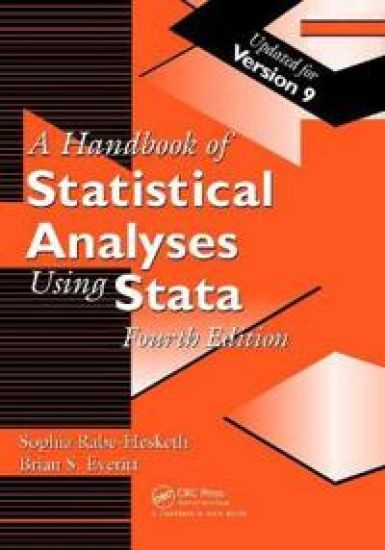
Handbook of Statistical Analyses Using Stata
With each new release of Stata, a comprehensive resource is needed to highlight the improvements as well as discuss the fundamentals of the software. Fulfilling this need, AHandbook of Statistical Analyses Using Stata, Fourth Edition has been fully updated to provide an introduction to Stata version 9. This edition covers many new features of Stata, including a new command for mixed models and a new matrix language. Each chapter describes the analysis appropriate for a particular application, focusing on the medical, social, and behavioral fields. The authors begin each chapter with descriptions of the data and the statistical techniques to be used. The methods covered include descriptives, simple tests, variance analysis, multiple linear regression, logistic regression, generalized linear models, survival analysis, random effects models, and cluster analysis. The core of the book centers on how to use Stata to perform analyses and how to interpret the results. The chapters conclude with several exercises based on data sets from different disciplines. A concise guide to the latest version of Stata, A Handbook of Statistical Analyses Using Stata, Fourth Edition illustrates the benefits of using Stata to perform various statistical analyses for both data analysis courses and self-study.
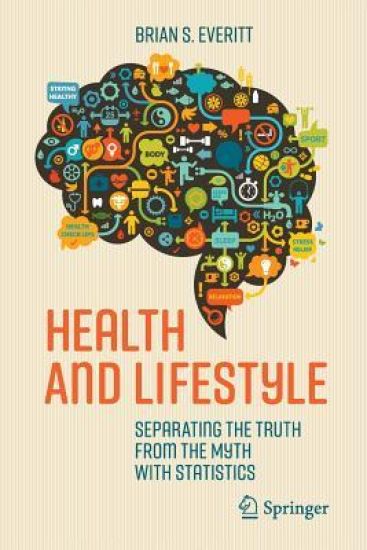
Health and Lifestyle

Health and Lifestyle

Brian S. Everitt

Copernicus
2016
nidottu
The main message of this book is that people should be on their guard against both scare stories about risks to health, and claims for miracle cures of medical conditions. In the 21st century hardly a day passes without another article appearing in the media about a new treatment for a particular disease, new ways of improving our health by changing our lifestyle or new foodstuffs that claim to increase (or decrease) the risk of heart disease, cancer and the like. But how should the general public react to such claims, given that some of the journalists writing them focus on the sensational rather than the mundane and often have no qualms about sacrificing accuracy and honesty for the sake of a good story? Perhaps the wisest initial response is one of healthy scepticism, followed by an attempt to discover more about the details of the studies behind the reports. But most people are not, and have little desire to become experts in health research. By reading this book, however, these non-experts can, with minimal effort, learn enough about the scientific method to differentiate between those health claims, warnings and lifestyle recommendations that have some merit and those that are unproven or simply dishonest. So if you want to know if ginseng can really help with your erectile dysfunction, if breast cancer screening is all that politicians claim it to be, if ECT for depression is really a horror treatment and should be banned, if using a mobile phone can lead to brain tumours and how to properly evaluate the evidence from health and lifestyle related studies, then this is the book for you.
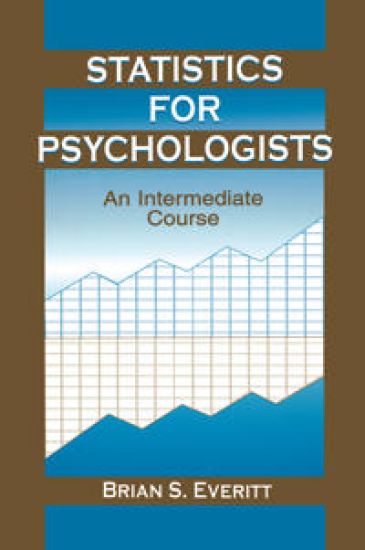
Statistics for Psychologists

Statistics for Psychologists

Brian S. Everitt

Psychology Press Ltd
2013
nidottu
Built around a problem solving theme, this book extends the intermediate and advanced student's expertise to more challenging situations that involve applying statistical methods to real-world problems. Data relevant to these problems are collected and analyzed to provide useful answers. Building on its central problem-solving theme, a large number of data sets arising from real problems are contained in the text and in the exercises provided at the end of each chapter. Answers, or hints to providing answers, are provided in an appendix. Concentrating largely on the established SPSS and the newer S-Plus statistical packages, the author provides a short, end-of-chapter section entitled Computer Hints that helps the student undertake the analyses reported in the chapter using these statistical packages.
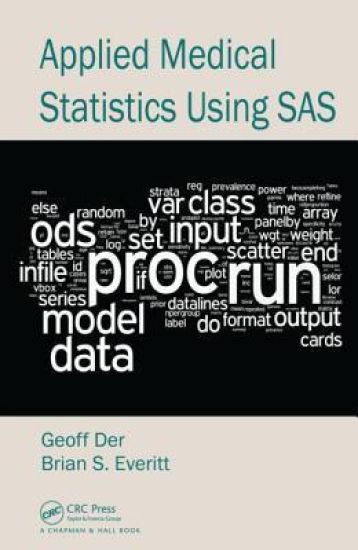
Applied Medical Statistics Using SAS

Applied Medical Statistics Using SAS

Geoff Der; Brian S. Everitt

Taylor Francis Inc
2012
sidottu
Written with medical statisticians and medical researchers in mind, this intermediate-level reference explores the use of SAS for analyzing medical data. Applied Medical Statistics Using SAS covers the whole range of modern statistical methods used in the analysis of medical data, including regression, analysis of variance and covariance, longitudinal and survival data analysis, missing data, generalized additive models (GAMs), and Bayesian methods. The book focuses on performing these analyses using SAS, the software package of choice for those analysing medical data. Features Covers the planning stage of medical studies in detail; several chapters contain details of sample size estimationIllustrates methods of randomisation that might be employed for clinical trialsCovers topics that have become of great importance in the 21st century, including Bayesian methods and multiple imputationIts breadth and depth, coupled with the inclusion of all the SAS code, make this book ideal for practitioners as well as for a graduate class in biostatistics or public health. Complete data sets, all the SAS code, and complete outputs can be found on an associated website: http://support.sas.com/amsus
An R and S-Plus® Companion to Multivariate Analysis

An R and S-Plus® Companion to Multivariate Analysis

Brian S. Everitt

Springer London Ltd
2010
nidottu
Most data sets collected by researchers are multivariate, and in the majority of cases the variables need to be examined simultaneously to get the most informative results. This requires the use of one or other of the many methods of multivariate analysis, and the use of a suitable software package such as S-PLUS or R. In this book the core multivariate methodology is covered along with some basic theory for each method described. The necessary R and S-PLUS code is given for each analysis in the book, with any differences between the two highlighted. Graduate students, and advanced undergraduates on applied statistics courses, especially those in the social sciences, will find this book invaluable in their work, and it will also be useful to researchers outside of statistics who need to deal with the complexities of multivariate data in their work. From the reviews: "This text is much more than just an R/S programming guide. Brian Everitt's expertise in multivariate data analysis shines through brilliantly." Journal of the American Statistical Association, June 2006
Clinical Trials in Psychiatry

Clinical Trials in Psychiatry

Brian S. Everitt; Simon Wessely

John Wiley Sons Inc
2008
sidottu
At last – a new edition of the highly acclaimed book Clinical Trials in Psychiatry This book provides a concise but thorough overview of clinical trials in psychiatry, invaluable to those seeking solutions to numerous problems relating to design, methodology and analysis of such trials. Practical examples and applications are used to ground theory whenever possible. The Second Edition includes new information regarding: Recent important psychiatric trialsMore specific discussion of psychiatry in the USA and the particular problems of trials in the USA, including comments about the FDA (U. S. Food and Drug Administration)An extended chapter on meta-analysisFurther discussion of sub-group analysis Special features include appendices outlining how to design and report clinical trials, what websites and software programs are appropriate and an extensive reference section. From the reviews of the First Edition: “Everitt & Wessely are to be congratulated on producing an excellent guide to help overcome the snags in clinical trial research. Clearly written and in an engrossing style, the book is likely to become a classic textbook on clinical trials, and not just in psychiatry. The authors’ enthusiasm and grasp of clinical trial research make for a gripping and insightful read…it is one of the very best books that has been written on clinical trials.” THE BRITISH JOURNAL OF PSYCHIATRY "The experience of both authors in this area gives the book a very pragmatic approach grounded in reality, with theoretical overviews invariably being followed by practical examples and applications… an invaluable companion to anyone involved in, or contemplating undertaking, clinical trials research.” PSYCHOLOGICAL MEDICINE
Handbook of Statistical Analyses Using Stata

Handbook of Statistical Analyses Using Stata

Brian S. Everitt

Chapman Hall/CRC
2006
nidottu
With each new release of Stata, a comprehensive resource is needed to highlight the improvements as well as discuss the fundamentals of the software. Fulfilling this need, AHandbook of Statistical Analyses Using Stata, Fourth Edition has been fully updated to provide an introduction to Stata version 9. This edition covers many new features of Stata, including a new command for mixed models and a new matrix language. Each chapter describes the analysis appropriate for a particular application, focusing on the medical, social, and behavioral fields. The authors begin each chapter with descriptions of the data and the statistical techniques to be used. The methods covered include descriptives, simple tests, variance analysis, multiple linear regression, logistic regression, generalized linear models, survival analysis, random effects models, and cluster analysis. The core of the book centers on how to use Stata to perform analyses and how to interpret the results. The chapters conclude with several exercises based on data sets from different disciplines. A concise guide to the latest version of Stata, A Handbook of Statistical Analyses Using Stata, Fourth Edition illustrates the benefits of using Stata to perform various statistical analyses for both data analysis courses and self-study.
The Encyclopaedic Companion to Medical Statistics

The Encyclopaedic Companion to Medical Statistics

Brian S. Everitt; Christopher R. Palmer

John Wiley Sons Inc
2006
nidottu
During the last twenty years statistical methodology has become of central importance in research studies in medicine and also in day-to-day clinical practice. The medical literature is now liberally punctuated not only with relatively routine statistical terms such as p-value, t-test, confidence interval, and correlation, but also with more esoteric items such as hazard function, multilevel model, generalized estimating equations and crossover design. Consequently researchers in medicine and clinicians who are not primarily statisticians need to have a source that provides readable accounts of these terms so that they can understand at least the essence of the statistical aspects of both the design and analysis of a reported investigation. The Encyclopedic Companion to Medical Statistics is that source, containing readable accounts of over 500 statistical topics central to current medical research, with each entry being written by an expert in the field. Examples and graphical material supplement the written material in many entries, and extensive cross-referencing sign posts the reader to other entries that are likely to be relevant.
The Encyclopaedic Companion to Medical Statistics

The Encyclopaedic Companion to Medical Statistics

Brian S. Everitt; Christopher R. Palmer

John Wiley Sons Inc
2005
sidottu
During the last twenty years statistical methodology has become of central importance in research studies in medicine and also in day-to-day clinical practice. The medical literature is now liberally punctuated not only with relatively routine statistical terms such as p-value, t-test, confidence interval, and correlation, but also with more esoteric items such as hazard function, multilevel model, generalized estimating equations and crossover design. Consequently researchers in medicine and clinicians who are not primarily statisticians need to have a source that provides readable accounts of these terms so that they can understand at least the essence of the statistical aspects of both the design and analysis of a reported investigation. The Encyclopedic Companion to Medical Statistics is that source, containing readable accounts of over 500 statistical topics central to current medical research, with each entry being written by an expert in the field. Examples and graphical material supplement the written material in many entries, and extensive cross-referencing sign posts the reader to other entries that are likely to be relevant.
An R and S-Plus® Companion to Multivariate Analysis

An R and S-Plus® Companion to Multivariate Analysis

Brian S. Everitt

Springer London Ltd
2005
sidottu
Most data sets collected by researchers are multivariate, and in the majority of cases the variables need to be examined simultaneously to get the most informative results. This requires the use of one or other of the many methods of multivariate analysis, and the use of a suitable software package such as S-PLUS or R. In this book the core multivariate methodology is covered along with some basic theory for each method described. The necessary R and S-PLUS code is given for each analysis in the book, with any differences between the two highlighted. Graduate students, and advanced undergraduates on applied statistics courses, especially those in the social sciences, will find this book invaluable in their work, and it will also be useful to researchers outside of statistics who need to deal with the complexities of multivariate data in their work. From the reviews: "This text is much more than just an R/S programming guide. Brian Everitt's expertise in multivariate data analysis shines through brilliantly." Journal of the American Statistical Association, June 2006
Statistical Aspects Of The Design And Analysis Of Clinical Trials (Revised Edition)
Fully updated, this revised edition describes the statistical aspects of both the design and analysis of trials, with particular emphasis on the more recent methods of analysis. About 8000 clinical trials are undertaken annually in all areas of medicine, from the treatment of acne to the prevention of cancer. Correct interpretation of the data from such trials depends largely on adequate design and on performing the appropriate statistical analyses. This book provides a useful guide to medical statisticians and others faced with the often difficult problems of designing and analysing clinical trials.
Modern Medical Statistics

Modern Medical Statistics

Brian S. Everitt

John Wiley Sons Inc
2002
sidottu
Statistical science plays an increasingly important role in medical research. Over the last few decades, many new statistical methods have been developed which have particular relevance for medical researchers and, with the appropriate software now easily available, these techniques can be used almost routinely to great effect. These innovative methods include survival analysis, generalized additive models and Bayesian methods. Modern Medical Statistics covers these essential new techniques at an accessible technical level, its main focus being not on the theory but on the effective practical application of these methods in medical research. Modern Medical Statistics is an indispensable practical guide for medical researchers and medical statisticians as well as an ideal text for advanced courses in medical statistics and public health.
A Handbook of Statistical Analyses Using S-PLUS
Since the first edition of this book was published, S-PLUS has evolved markedly with new methods of analysis, new graphical procedures, and a convenient graphical user interface (GUI). Today, S-PLUS is the statistical software of choice for many applied researchers in disciplines ranging from finance to medicine. Combining the command line language and GUI of S-PLUS now makes this book even more suitable for inexperienced users, students, and anyone without the time, patience, or background needed to wade through the many more advanced manuals and texts on the market. The second edition of A Handbook of Statistical Analyses Using S-Plus has been completely revised to provide an outstanding introduction to the latest version of this powerful software system. Each chapter focuses on a particular statistical technique, applies it to one or more data sets, and shows how to generate the proposed analyses and graphics using S-PLUS. The author explains S-PLUS functions from both the Windows® and command-line perspectives and clearly demonstrates how to switch between the two. This handbook provides the perfect vehicle for introducing the exciting possibilities S-PLUS, S-PLUS 2000, and S-PLUS 6 hold for data analysis. All of the data sets used in the text, along with script files giving the command language used in each chapter, are available for download from the Internet at http://www.iop.kcl.ac.uk/iop/Departments/BioComp/splus.shtml