Kirjojen hintavertailu – 12 903 724 kirjaa ja 27 kauppaa

Kirjailija

Brian S. Rosner

Kirjat ja teokset yhdessä paikassa: 8 kirjaa, julkaisuja vuosilta 2007–2025, suosituimpiin kuuluu First Letter to the Corinthians. Vertaile teosten hintoja ja tarkista saatavuus suomalaisista kirjakaupoista.

Nimi esiintyy myös muodoissa: Brian S Rosner

8 kirjaa

Kirjojen julkaisuvuodet: 2007–2025.

First Letter to the Corinthians

First Letter to the Corinthians

Roy E. Ciampa; Brian S. Rosner

William B Eerdmans Publishing Co
2010
sidottu
This careful, sometimes innovative, mid-level commentary touches on an astonishingly wide swath of important, sensitive issues theological and pastoral that have urgent resonances in twenty-first-century life. Roy Ciampa and Brian Rosner reveal how 1 Corinthians directly addresses the claims of unity and truth, church discipline, sexual matters, the Lord's supper, the nature of love, Christian leadership, and many other significant topics. Those who preach and teach 1 Corinthians will be grateful to Ciampa and Rosner for years to come and scholars will be challenged to see this letter with fresh eyes."
Strengthened by the Gospel

Strengthened by the Gospel

Brian S. Rosner

Crossway Books
2025
pokkari

Halvin toimitettuna 26,20 €

An Introduction to the Theology and Themes of Romans The book of Romans, often regarded as one of the greatest letters ever written, provides a thorough explanation of Christian doctrine. Yet, in explaining Paul’s gospel, Romans is not just for preachers and people who have not yet come to faith. Paul’s purpose in Romans is to strengthen believers with the gospel of God thereby equipping them for every good work, to live holy lives, be protected from evil, and to live as those who belong to the day of Christ’s glorious return. In this volume of the New Testament Theology series, Brian S. Rosner explores the key theology and themes of Romans, including sin, righteousness, justification, judgment, union with Christ, Christian conduct, hope, and more. By examining the letter’s Old Testament connections and the full scope of Paul’s gospel, this volume seeks to strengthen and encourage today’s disciples of Jesus. Part of the New Testament Theology Series: Other volumes include Living Faith; The Appearing of God Our Savior; and To Walk and to Please God Ideal for Anyone Wanting to Study the Bible More Deeply: Perfect for pastors, seminarians, college students, and laypeople Covers Important Theological Themes: Sin, righteousness, justification, judgment, union with Christ, Christian conduct, hope, and more
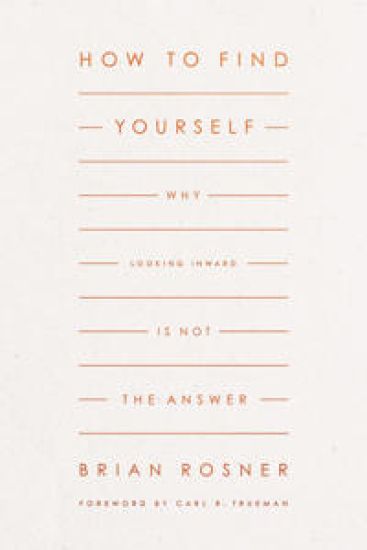
How to Find Yourself

How to Find Yourself

Brian S. Rosner; Carl R. Trueman

Crossway Books
2022
pokkari
A Christian Answer to the Identity Angst of Our Culture In the 21st-century West, identity is everything. Never has it been more important, culturally speaking, to know who you are and be true to yourself. Expressive individualism—the belief that looking inward is the way to find yourself—has become the primary approach to identity formation, and questioning anyone’s “self-made self” is often considered a threat or attack. Prompted by his own crisis of identity, Brian Rosner argues that personal identity is formed not only by looking inward, but also by looking around to your relationships, backward and forward to your life stories, and upward to God. In How to Find Yourself, Rosner equips readers to engage sympathetically with some of the most pressing questions of our day. Challenging the status quo, he offers an approach to identity formation that leads to more secure and joyful self-knowledge: being known intimately and personally by God and following the script of Jesus’s life story. Challenges the Status Quo: Examines and critiques expressive individualism—the leading strategy for identity formation Gospel-Centered: Identifies an approach to identity formation in Jesus’s life story and God’s personal knowledge of his children Accessible: Helpful for a wide audience of laypeople, students, and church leaders Foreword by Carl R. Trueman: Opens with a message from the author of The Rise and Triumph of the Modern Self
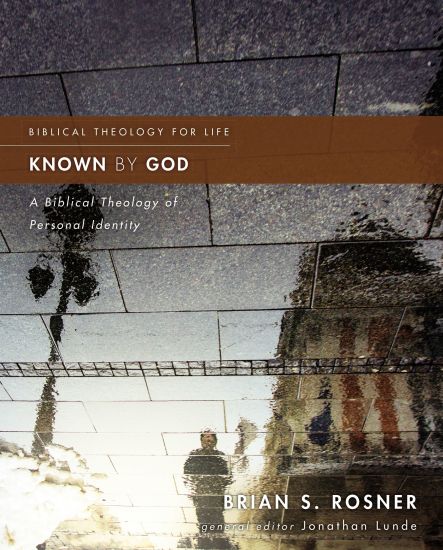
Known by God

Known by God

Brian S. Rosner

Zondervan
2017
nidottu
What does the Bible say about your sense of self? In the past, an individual's identity was more predictable than it is now. Today, personal identity is a do-it-yourself project. Constructing a stable and satisfying sense of self is hard amidst relationship breakdowns, the pace and rhetoric of modern life, the rise of social media, social mobility, and so on. Ours is a day of identity angst. Who are you? What defines you? What makes you you? In Known by God, Rosner argues that rather than knowing ourselves, being known by God is the key to personal identity. He explores three biblical angles on the question of personal identity:Being made in the image of God. Being known by God. Being in Christ. At the center of a biblical understanding of personal identity is sonship: God gives us our identity as a parent who knows his child. Being known by him as his child gives our fleeting lives significance, provokes in us needed humility, supplies cheering comfort when things go wrong, and offers clear moral direction for living.____________Part of the Biblical Theology for Life series, this practical and insightful book will help you ground your longing to be known and the security of your identity on the solid foundation of biblical understanding and reflection.
Paul and the Law

Paul and the Law

Brian S. Rosner

INTERVARSITY PRESS
2013
nidottu

Halvin toimitettuna 29,50 €

Preaching's Preacher's Guide to the Best Bible Reference"For neither circumcision counts for anything nor uncircumcision, but keeping the commandments of God" (1 Cor 7:19). The apostle Paul's relationship to the Law of Moses is notoriously complex and much studied. Difficulties begin with questions of definition (of the extent of Paul's corpus and the meanings of "the law") and are exacerbated by numerous problems of interpretation of the key texts. Major positions are entrenched, yet none of them seems to know what to do with all the pieces of the puzzle. Inextricably linked to Paul's view of the law is his teaching concerning salvation history, Israel, the church, anthropology, ethics and eschatology. Understanding "Paul and the law" is critical to the study of the New Testament, because it touches on the perennial question of the relationship between the grace of God in the gift of salvation and the demand of God in the call for holy living. Misunderstanding can lead to distortions of one or both. This New Studies in Biblical Theology volume is something of a breakthrough, bringing neglected evidence to the discussion and asking different questions of the material, while also building on the work of others. Brian Rosner argues that Paul undertakes a polemical re-evaluation of the Law of Moses, which involves not only its repudiation as law-covenant and its replacement by other things, but also its wholehearted re-appropriation as prophecy (with reference to the gospel) and as wisdom (for Christian living). Addressing key issues in biblical theology, the works comprising New Studies in Biblical Theology are creative attempts to help Christians better understand their Bibles. The NSBT series is edited by D. A. Carson, aiming to simultaneously instruct and to edify, to interact with current scholarship and to point the way ahead.
Paul and the Law

Paul and the Law

Brian S Rosner

Apollos
2013
nidottu
For neither circumcision counts for anything nor uncircumcision, but keeping the commandments of God' (1 Cor. 7:19). Â The apostle Paul's relationship to the Law of Moses is notoriously complex and much studied. Difficulties begin with questions of definition (of the extent of Paul's corpus and the meanings of 'the law') and are exacerbated by numerous problems of interpretation of the key texts. Major positions are entrenched, yet none of them seems to know what to do with all the pieces of the puzzle. Â Â Inextricably linked to Paul's view of the law is his teaching concerning salvation history, Israel, the church, anthropology, ethics and eschatology. Understanding 'Paul and the law' is critical to the study of the New Testament, because it touches on the perennial question of the relationship between the grace of God in the gift of salvation and the demand of God in the call for holy living. Misunderstanding can lead to distortions of one or both. Â This fresh and valuable study is something of a breakthrough, bringing neglected evidence to the discussion and asking different questions of the material, while also building on the work of others. Brian Rosner argues that Paul undertakes a polemical re-evaluation of the Law of Moses, which involves not only its repudiation as law-covenant and its replacement by other things, but also its wholehearted re-appropriation as prophecy (with reference to the gospel) and as wisdom (for Christian living).
The Wisdom of the Cross

The Wisdom of the Cross

Brian S Rosner

Apollos
2011
nidottu
The apostle Paul’s First Letter to the Corinthians is often regarded as his makeshift response to random problems in a messy church. This stimulating volume argues for, and undertakes, a more coherent reading of the letter, in the hope of providing a more compelling and theologically rich interpretation and a clearer apprehension of its relevance to the church today. Brian Rosner begins by putting the case for a holistic approach to studying the theology and ethics of 1 Corinthians. The following nine chapters cover, first, Karl Barth’s classic treatment, which underscores the letter’s coherence (Keith Condie); next, the major topics of holiness (Bill Salier), the cross (Philip Kern), sexual ethics (Roy Ciampa), spiritual gifts (David Peterson), eschatology (Bruce Winter), ethics (Michael Jensen), and the glory of God (Matthew Malcolm); and, finally, preaching 1 Corinthians (Brian Rosner). The chapters cohere around the themes of Paul’s pastoral practice and the wisdom of the cross of Jesus. The volume, based on the 2010 Moore College School of Theology, reflects the contributors’ common interest in theological interpretation that acknowledges the text as the word of God and seeks to serve the interests of the contemporary church.
Greed as Idolatry

Greed as Idolatry

Brian S. Rosner

William B Eerdmans Publishing Co
2007
nidottu
What are the origin and meaning of the words "greed is idolatry" found in "Ephesians 5:5" and "Colossians 3:5"? In what sense are the greedy guilty of idolatry? Many different answers have been given to this question throughout the history of interpretation. In fact, a consensus exists on only one score - that the expression serves to blacken greed. Brian Rosner takes up the challenge of interpretation by tackling the phrase as a metaphor. With an in-depth study of the text from this vantage point, he concludes that the comparison of greed with idolatry teaches that to desire to acquire and keep for oneself more material goods is an attack on God's exclusive rights to human love, trust, and obedience. Rosner's work here has profound implications for theology and ethics today.