Kirjojen hintavertailu – 12 903 725 kirjaa ja 27 kauppaa
Kirjailija
Brian Stanley
Kirjat ja teokset yhdessä paikassa: 17 kirjaa, julkaisuja vuosilta 2000–2024, suosituimpiin kuuluu Intra-African Pentecostalism and the Dynamics of Power. Vertaile teosten hintoja ja tarkista saatavuus suomalaisista kirjakaupoista.
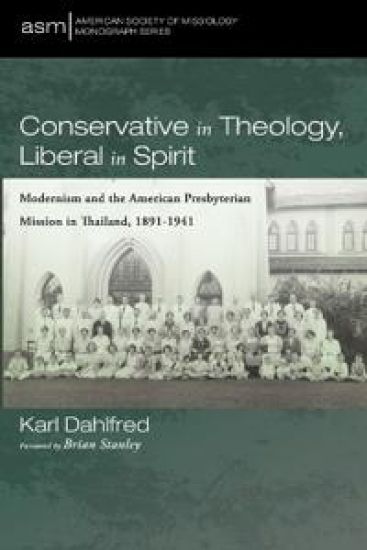
In the early twentieth century, theological modernism was gaining ground in the Presbyterian Church in the U. S. A. Conservatives claimed that there were modernists on the mission field but that the Board of Foreign Missions was doing nothing about it. In Thailand, the executive secretary of the American Presbyterian mission did not want to address the issue, claiming that ""almost all of our Mission . . . are conservative in their theology, and liberal in their spirit."" But was it true? In this book, Karl Dahlfred explores letters, reports, and other primary sources to reveal instances and indicators of modernism among Presbyterian missionaries in Thailand. Officially committed to making disciples of Jesus Christ, American Presbyterian missionaries were increasingly divided over what that meant, and how to carry out their task. Were schools or evangelism the best mode of Christian influence? Did the gospel need adjustment for the modern world? The mission formally maintained a conservative consensus, yet modernism was present. And fundamentalist-minded missionaries were not happy about it. Scholars, missionaries, Thai Christians, and anyone interested in mission history or the long-term trajectory of Protestant work in Thailand will enjoy this exploration of an overlooked chapter in the history of Christianity in Thailand.
In the early twentieth century, theological modernism was gaining ground in the Presbyterian Church in the U. S. A. Conservatives claimed that there were modernists on the mission field but that the Board of Foreign Missions was doing nothing about it. In Thailand, the executive secretary of the American Presbyterian mission did not want to address the issue, claiming that "almost all of our Mission . . . are conservative in their theology, and liberal in their spirit." But was it true? In this book, Karl Dahlfred explores letters, reports, and other primary sources to reveal instances and indicators of modernism among Presbyterian missionaries in Thailand. Officially committed to making disciples of Jesus Christ, American Presbyterian missionaries were increasingly divided over what that meant, and how to carry out their task. Were schools or evangelism the best mode of Christian influence? Did the gospel need adjustment for the modern world? The mission formally maintained a conservative consensus, yet modernism was present. And fundamentalist-minded missionaries were not happy about it. Scholars, missionaries, Thai Christians, and anyone interested in mission history or the long-term trajectory of Protestant work in Thailand will enjoy this exploration of an overlooked chapter in the history of Christianity in Thailand.
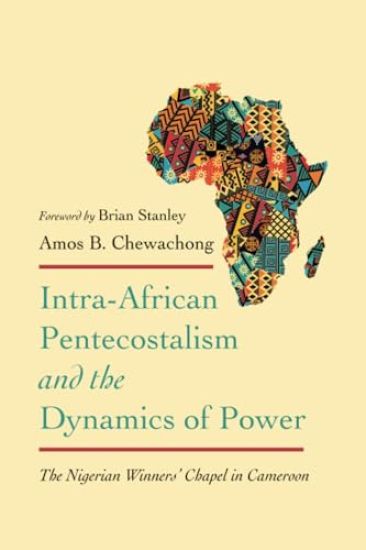
In an era when African Pentecostalism stretches its vibrant mosaic across continents, Intra-African Pentecostalism and the Dynamics of Power examines the pulsating heart of this phenomenon within Africa itself. The book explores the complex interplay of faith and power through the lens of Nigeria's Winners' Chapel and its expansion into Cameroon. What compels a movement to evangelize fervently within its own continent, making it both the preacher and the audience? The book exposes the reverse missionary flow to the northern hemisphere as a backdrop for a more profound story unravelling within Africa. Here, the mother church exerts a magnetic pull, ensuring fidelity, as charismatic leaders, like Bishop Oyedepo, maintain their spiritual gravitas. It is a story not just of spirituality but of strategic moves and socio-political undercurrents that shape identities and beliefs. Employing rich narratives and rigorous research, this book looks in depth at Winners' Chapel's transnational missions, highlighting the complexities of allegiance, identity, and the propagation of the prosperity gospel. It challenges readers to see beyond conventional religious discourse, into the depths where faith intersects with culture and power. The book invites us to understand the multi-dimensional influence of African Pentecostalism and to grasp the nuances of a faith that is transforming the continent from within.
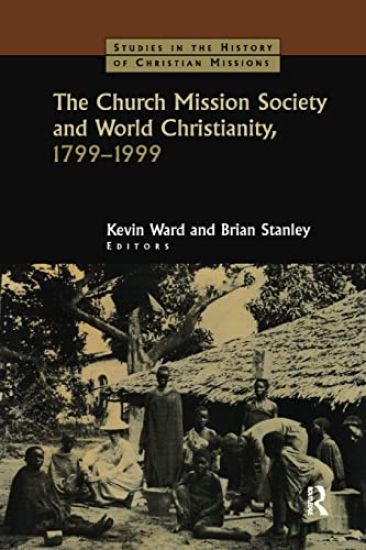
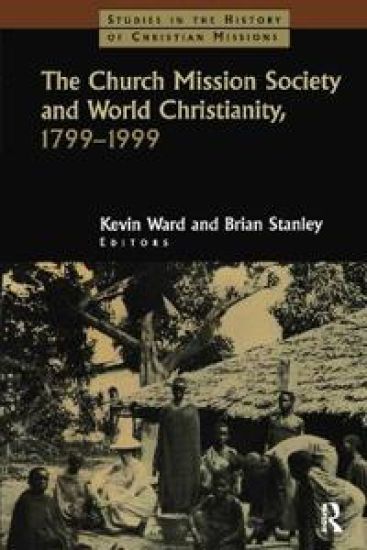
The Church Missionary Society (now renamed the Church Mission Society) has been for most of its 200-year history the largest and most influential of the British Protestant missionary agencies. Its bicentenary in 1999 is being marked by the publication of this collection of historical and theological essays by an international team of scholars, including Lamin Sanneh, Kenneth Cragg, and Geoffrey A. Oddie. The volume contains re-assessments of the classic centenary history of the CMS by Eugene Stock and of the strategic vision of Henry Venn, one of the two architects of the Three-Self theory of the indigenous church. There are chapters on the close links between the CMS and the Basel Mission, women missionaries, and regional studies of Samuel Crowther and the Niger mission, Iran, the Middle East, New Zealand, India, and Kikuyu Christianity. The volume makes a major contribution to the growing body of literature on the indigenization of missionary traditions, and will be of interest to historians of the missionary movement and non-western Christianity, as well as theologians concerned with religious pluralism, dialogue, and Christian mission.
The story of how the Lisu of southwest China were evangelized one hundred years ago by the China Inland Mission is a familiar one in mission circles. The subsequent history of the Lisu church, however, is much less well known. Songs of the Lisu Hills brings this history up to date, recounting the unlikely story of how the Lisu maintained their faith through twenty-two years of government persecution and illuminating how Lisu Christians transformed the text-based religion brought by the missionaries into a faith centered around an embodied set of Christian practices. Based on ethnographic fieldwork as well as archival research, this volume documents the development of Lisu Christianity, both through larger social forces and through the stories of individual believers. It explores how the Lisu, most of whom remain subsistence farmers, have oriented their faith less around cognitive notions of belief and more around participation in a rhythm of shared Christian practices, such as line dancing, attending church and festivals, evangelizing, working in one another’s fields, and singing translated Western hymns. These embodied practices demonstrate how Christianity developed in the mountainous margins of the world’s largest atheist state. A much-needed expansion of the Lisu story into a complex study of the evolution of a world Christian community, this book will appeal to scholars working at the intersections of World Christianity, anthropology of religion, ethnography, Chinese Christianity, and mission studies.
The story of how the Lisu of southwest China were evangelized one hundred years ago by the China Inland Mission is a familiar one in mission circles. The subsequent history of the Lisu church, however, is much less well known. Songs of the Lisu Hills brings this history up to date, recounting the unlikely story of how the Lisu maintained their faith through twenty-two years of government persecution and illuminating how Lisu Christians transformed the text-based religion brought by the missionaries into a faith centered around an embodied set of Christian practices. Based on ethnographic fieldwork as well as archival research, this volume documents the development of Lisu Christianity, both through larger social forces and through the stories of individual believers. It explores how the Lisu, most of whom remain subsistence farmers, have oriented their faith less around cognitive notions of belief and more around participation in a rhythm of shared Christian practices, such as line dancing, attending church and festivals, evangelizing, working in one another’s fields, and singing translated Western hymns. These embodied practices demonstrate how Christianity developed in the mountainous margins of the world’s largest atheist state. A much-needed expansion of the Lisu story into a complex study of the evolution of a world Christian community, this book will appeal to scholars working at the intersections of World Christianity, anthropology of religion, ethnography, Chinese Christianity, and mission studies.
A history of unparalleled scope that charts the global transformation of Christianity during an age of profound political and cultural changeChristianity in the Twentieth Century charts the transformation of one of the world's great religions during an age marked by world wars, genocide, nationalism, decolonization, and powerful ideological currents, many of them hostile to Christianity. Written by a leading scholar of world Christianity, the book traces how Christianity evolved from a religion defined by the culture and politics of Europe to the expanding polycentric and multicultural faith it is today. Brian Stanley provides a history of Christianity as a popular faith experienced and lived by its adherents, telling a compelling and multifaceted story of Christendom’s fortunes across the globe.
For centuries, Pentecostalism has played a significant role in oppressively shaping the life of formerly colonized people of Africa. Moreover, its theologies have perpetuated neocolonial policies developed through the lens of colonial legacies rooted in la mission civilizatrice (mission to civilize). However, since the 1980s, Neo-Pentecostalism is increasingly reshaping the Congolese Christendom. It sanctions the theologies of a prosperity gospel rooted in an uncritical reading of the Bible and self-theologizing informed by a lack of literal, contextual translation effects. This book argues that the prosperity gospel bankrupts its adherents--in this case, the vulnerable, impoverished sections of Sub-Saharan Africa, and particularly the Postcolonial Congo--and instead offers a balanced theological reflection that broadens Neo-Pentecostal studies with an African voice encouraging the rewriting and rereading of the story of redemptive mission. The research engages a paradigm shift within global missions and world Christianity, or the history of missions as the platform to negotiate literal, prophetic, and contextual translation and retransmission of the biblical gospel. It is critical to reclaim and reestablish a hermeneutic of mixed methodologies and construct a contextual and critical interpretation of the Bible in the Congo. To avoid the African assumption of cultural baggage, which affects how the Congolese interpret the Bible, the interpreter has to be neutral and experience the voice of Christ in the text instead of the voice of Congolese culture; they must be a prophetic voice to reconstruct the authentic meaning of the salvific story. ""Nelson Ngoy's Neo-Pentecostalism is a major contribution to the study of mission, religion, and cultural integration in Central Africa. The book is exhaustive in its research and comprehensive in its approach. It succeeds in weaving together the many strands of history, indigenous African religious belief, contemporary social chaos, and religious fervor."" --Katherine C. Hill-Miller, Professor of English, Dean of Liberal Arts and Sciences, Long Island University, New York 2002-2015 ""The author speaks from a deep place of prophetic anguish, arguing that African Pentecostalism has lost its way and sold its soul to the prosperity gospel and late capitalism. Ngoy, nonetheless, offers key insights on how to turn the situation around for the good of the kingdom of God."" --Nimi Wariboko, Boston University, author of Nigerian Pentecostalism ""Neo-Pentecostalism deserves a reading in part because it presents a minority report/stance on contested matters regarding postcolonial Christian self-understandings and the relationship between syncretism and contextualization in majority world contexts but especially since it is one of the few African voices to extend--rather than be apologetic about--the Western argument from three to four decades ago that the prosperity message in that continent was imported from North America."" --Amos Yong, Fuller Seminary Nelson Kalombo Ngoy, a scholar of Mission, Evangelism, and World Christian Studies, obtained a PhD at Southwestern Baptist Seminary, Roy Fish School of Evangelism and Missions, a Masters of Divinity and a Masters of Sacred Theology from Drew University, a Masters of Art Intercultural Studies from Asbury Theological Seminary, and is a PhD candidate in Theology and Religion at the University of Birmingham, United Kingdom. Prior to pursuing graduate studies in the United States, Ngoy is a recipient of a Bachelors of Divinity at the Universite Methodiste of Katanga in the Democratic Republic of the Congo and a Bachelors of Theological Studies at Africa University in Zimbabwe. Dr. Ngoy has presented academic papers at Bicentennial United Methodist conference on ""Colonialism and Empire in Mission"" and at Yale-Edinburgh conference on ""World Christianity."" Also, he has served churches in the United States and Africa.
A history of unparalleled scope that charts the global transformation of Christianity during an age of profound political and cultural changeChristianity in the Twentieth Century charts the transformation of one of the world's great religions during an age marked by world wars, genocide, nationalism, decolonization, and powerful ideological currents, many of them hostile to Christianity. Written by a leading scholar of world Christianity, the book traces how Christianity evolved from a religion defined by the culture and politics of Europe to the expanding polycentric and multicultural faith it is today--one whose growing popular support is strongest in sub-Saharan Africa, Latin America, China, and other parts of Asia. Brian Stanley sheds critical light on themes of central importance for understanding the global contours of modern Christianity, illustrating each one with contrasting case studies, usually taken from different parts of the world. Unlike other books on world Christianity, this one is not a regional survey or chronological narrative, nor does it focus on theology or ecclesiastical institutions. Rather, Stanley provides a history of Christianity as a popular faith experienced and lived by its adherents, telling a compelling and multifaceted story of Christendom's fortunes in Europe, North America, and across the rest of the globe. Transnational in scope and drawing on the latest scholarship, Christianity in the Twentieth Century demonstrates how Christianity has had less to fear from the onslaughts of secularism than from the readiness of Christians themselves to accommodate their faith to ideologies that privilege racial identity or radical individualism.
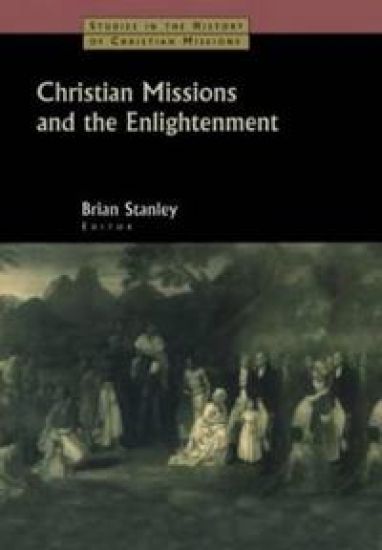
Addresses the nature of the influence of the European Enlightenment on the beliefs and practice of the Protestant missionaries who went to Asia and Africa from the mid-eighteenth century onwards, particularly British missions and the formative role of the Scottish Enlightenment on their thinking.
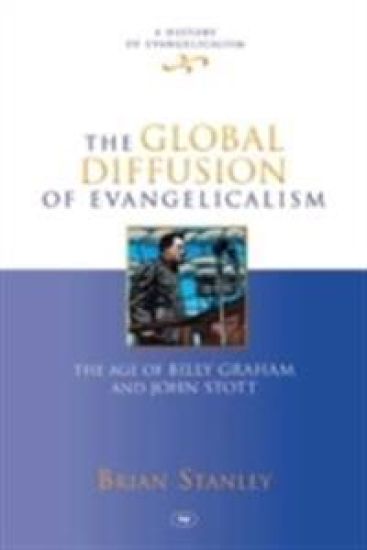
This latest volume in the 'A History of Evangelicalism' series surveys the extraordinary numerical and geographical expansion of evangelical Christianity from 1945 to 2000. It discusses the globalization of movements of mission, evangelism and revival, paying particular attention to the charismatic and neo-Pentecostal movements. It examines trends in evangelical biblical scholarship, preaching, and apologetics, and analyses the impact of the new discipline of hermeneutics on key issues. Extended treatment is given to the part played by southern-hemisphere Christianity in broadening evangelical understandings of mission. Whilst the role of familiar leaders such as Billy Graham, John Stott, Carl Henry, Martyn Lloyd-Jones and Festo Kivengere receives full coverage, space is also given to lesser-known figures, such as Edward Carnell, Agnes Sanford, Orlando Costas, John Gatu and John Laird. The final chapter considers whether evangelical expansion has been at the price of theological coherence and stability, and discusses the phenomenon of 'post-evangelicalism'.
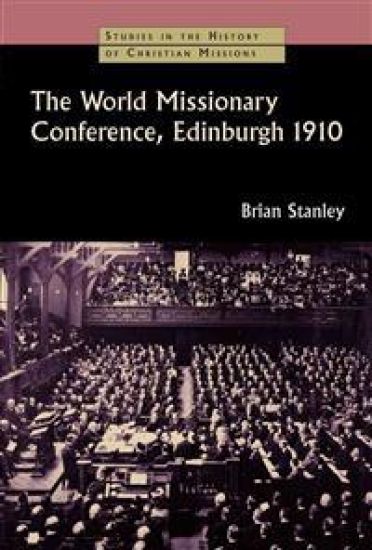
The World Missionary Conference in 1910 was a defining event in the history of world missions. Brian Stanley here presents his careful research revealing the compelling story of this turbulent, influential gathering in Edinburgh. This book is both an account of the conference itself and an examination of the Protestant missionary movement as it neared the apex of its size and influence. The World Missionary Conference, Edinburgh 1910 is an erudite and engaging summation of, in Stanley's own words, -the many-sided legacy of the Edinburgh conference, not simply for the history of the ecumenical movement but also for Christian missions and the wider field of Christian discourse on questions of race and culture.-
Addresses the nature of the influence of the European Enlightenment on the beliefs and practice of the Protestant missionaries who went to Asia and Africa from the mid-eighteenth century onwards, particularly British missions and the formative role of the Scottish Enlightenment on their thinking.
The Church Missionary Society (now renamed the Church Mission Society) has been for most of its 200-year history the largest and most influential of the British Protestant missionary agencies. Its bicentenary in 1999 is being marked by the publication of this collection of historical and theological essays by an international team of scholars, including Lamin Sanneh, Kenneth Cragg, and Geoffrey A. Oddie. The volume contains re-assessments of the classic centenary history of the CMS by Eugene Stock and of the strategic vision of Henry Venn, one of the two architects of the Three-Self theory of the indigenous church. There are chapters on the close links between the CMS and the Basel Mission, women missionaries, and regional studies of Samuel Crowther and the Niger mission, Iran, the Middle East, New Zealand, India, and Kikuyu Christianity. The volume makes a major contribution to the growing body of literature on the indigenization of missionary traditions, and will be of interest to historians of the missionary movement and non-western Christianity, as well as theologians concerned with religious pluralism, dialogue, and Christian mission.