Kirjojen hintavertailu – 12 903 724 kirjaa ja 27 kauppaa

Kirjailija

Bronwen Neil

Kirjat ja teokset yhdessä paikassa: 8 kirjaa, julkaisuja vuosilta 2007–2021, suosituimpiin kuuluu Seventh-Century Popes and Martyrs: The Political Hagiography of Anastasius Bibliothecarius. Vertaile teosten hintoja ja tarkista saatavuus suomalaisista kirjakaupoista.

8 kirjaa

Kirjojen julkaisuvuodet: 2007–2021.

Dreams and Divination from Byzantium to Baghdad, 400-1000 CE

Dreams and Divination from Byzantium to Baghdad, 400-1000 CE

Bronwen Neil

Oxford University Press
2021
sidottu

Halvin toimitettuna 149,40 €

Why did dreams matter to Jews, Byzantine Christians, and Muslims in the first millennium? Dreams and Divination from Byzantium to Baghdad, 400 - 1000 CE shows how the ability to interpret dreams universally attracted power and influence in the first millennium. In a time when prophetic dreams were viewed as God's intervention in human history, male and female prophets wielded was unparalleled power in imperial courts, military camps, and religious gatherings. The three faiths drew on the ancient Near Eastern tradition of dream key manuals, which offer an insight into the hopes and fears of ordinary people. They melded pagan dream divination with their own scriptural traditions to produce a novel and rich culture of dream interpretation. Prophetic dreams enabled communities to understand their past and present circumstances as divinely ordained and helped to bolster the spiritual authority of dreamers and those who had the gift of interpreting their dreams. Bronwen Neil takes a gendered approach to the analysis of the common culture of dream interpretation across late antique Jewish, Byzantine, and Islamic sources to 1000 CE, in order to expose the ways in which dreams offered women a unique opportunity to exercise influence. The epilogue to the volume reveals why dreams still matter today to many men and women of the monotheist traditions.
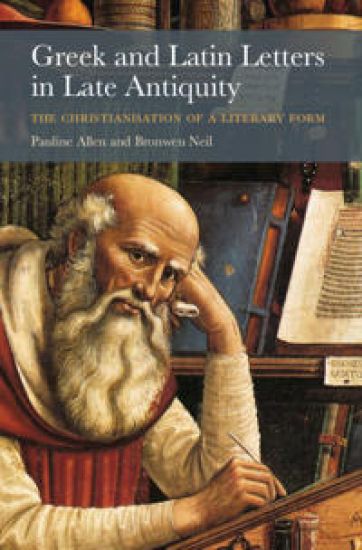
Greek and Latin Letters in Late Antiquity

Greek and Latin Letters in Late Antiquity

Pauline Allen; Bronwen Neil

Cambridge University Press
2020
sidottu
This is the first general book on Greek and Latin letter-writing in Late Antiquity (300–600 CE). Allen and Neil examine early Christian Greek and Latin literary letters, their nature and function and the mechanics of their production and dissemination. They examine the exchange of Episcopal, monastic and imperial letters between men, and the gifts that accompanied them, and the rarer phenomenon of letter exchanges with imperial and aristocratic women. They also look at the transmission of letter-collections and what they can tell us about friendships and other social networks between the powerful elites who were the literary letter-writers of the fourth to sixth centuries. The volume gives a broad context to late-antique literary letter-writing in Greek and Latin in its various manifestations: political, ecclesiastical, practical and social. In the process, the differences between 'pagan' and Christian letter-writing are shown to be not as great as has previously been supposed.
Greek and Latin Letters in Late Antiquity

Greek and Latin Letters in Late Antiquity

Pauline Allen; Bronwen Neil

Cambridge University Press
2020
pokkari
This is the first general book on Greek and Latin letter-writing in Late Antiquity (300–600 CE). Allen and Neil examine early Christian Greek and Latin literary letters, their nature and function and the mechanics of their production and dissemination. They examine the exchange of Episcopal, monastic and imperial letters between men, and the gifts that accompanied them, and the rarer phenomenon of letter exchanges with imperial and aristocratic women. They also look at the transmission of letter-collections and what they can tell us about friendships and other social networks between the powerful elites who were the literary letter-writers of the fourth to sixth centuries. The volume gives a broad context to late-antique literary letter-writing in Greek and Latin in its various manifestations: political, ecclesiastical, practical and social. In the process, the differences between 'pagan' and Christian letter-writing are shown to be not as great as has previously been supposed.
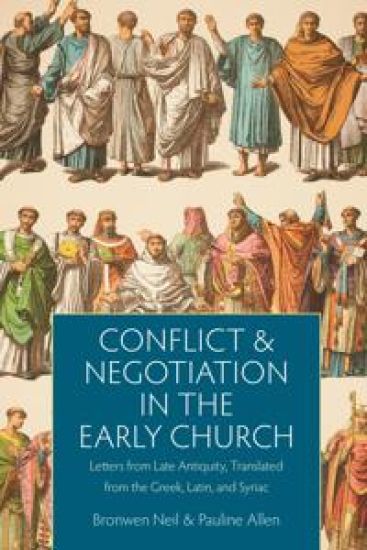
Conflict and Negotiation in the Early Church

Conflict and Negotiation in the Early Church

Bronwen Neil; Pauline Allen

The Catholic University of America Press
2020
sidottu
Recent decades have seen great progress made in scholarship towards understanding the major civic role played by bishops of the eastern and western churches of Late Antiquity. Brownen Neil and Pauline Allen explore and evaluate one aspect of this civic role, the negotiation of religious conflict. Conflict and Negotiation in the Early Church focuses on the period 500 to 700 CE, one of the least documented periods in the history of the church, but also one of the most formative, whose conflicts resonate still in contemporary Christian communities, especially in the Middle East. To uncover the hidden history of this period and its theological controversies, Neil and Allen have tapped a little known written source, the letters that were exchanged by bishops, emperors and other civic leaders of the sixth and seventh centuries. This was an era of crisis for the Byzantine empire, at war first with Persia, and then with the Arab forces united under the new faith of Islam. Official letters were used by the churches of Rome and Constantinople to pursue and defend their claims to universal and local authority, a constant source of conflict. As well as the east-west struggle, Christological disagreements with the Syrian church demanded increasing attention from the episcopal and imperial rulers in Constantinople, even as Rome set itself adrift and looked to the West for new allies. From this troubled period, 1500 letters survive in Greek, Latin, and Syriac. With translations of a number of these, many rendered into English for the first time, Conflict and Negotiation in the Early Church examines the ways in which diplomatic relations between churches were developed, and in some cases hindered or even permanently ruptured, through letter-exchange at the end of Late Antiquity.
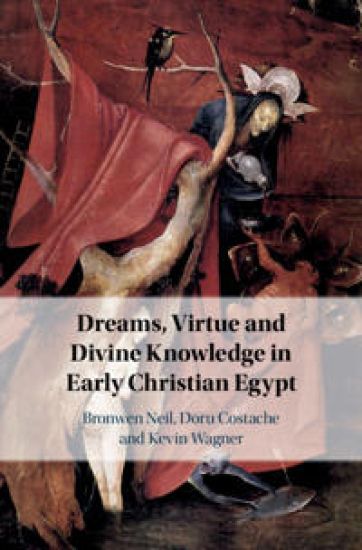
Dreams, Virtue and Divine Knowledge in Early Christian Egypt

Dreams, Virtue and Divine Knowledge in Early Christian Egypt

Bronwen Neil; Doru Costache; Kevin Wagner

Cambridge University Press
2019
sidottu
What did dreams mean to Egyptian Christians of the first to the sixth centuries? Alexandrian philosophers, starting with Philo, Clement and Origen, developed a new approach to dreams that was to have profound effects on the spirituality of the medieval West and Byzantium. Their approach, founded on the principles of Platonism, was based on the convictions that God could send prophetic dreams and that these could be interpreted by people of sufficient virtue. In the fourth century, the Alexandrian approach was expanded by Athanasius and Evagrius to include a more holistic psychological understanding of what dreams meant for spiritual progress. The ideas that God could be known in dreams and that dreams were linked to virtue flourished in the context of Egyptian desert monasticism. This volume traces that development and its influence on early Egyptian experiences of the divine in dreams.
Leo the Great

Leo the Great

Bronwen Neil

Routledge
2009
sidottu
Pope Leo I’s theological and political influence in his own time (440-461) and beyond far outweighs the amount of attention he has received in recent scholarship. That influence extended well beyond Rome to the Christian East through his contribution to preparations for the Council of Chalcedon and its outcome. For this he was alternately praised and vilified by the opposing parties at the Council. Leo made his views known through letters, and a vast number of homilies. While so many of these survive, Leo and his works have not been the subject of a major English-language socio-historical study in over fifty years. In this brief introduction to the life and works of this important leader of the early church, we gain a more accurate picture of the circumstances and pressures which were brought to bear on his pontificate. A brief introduction surveys the scanty sources which document Leo’s early life, and sets his pontificate in its historical context, as the Western Roman Empire went into serious decline, and Rome lost its former status as the western capital. Annotated translations of various excerpts of Leo’s letters and homilies are organised around four themes dealing with specific aspects of Leo’s activity as bishop of Rome: Leo as spiritual adviser on the life of the faithful Leo as opponent of heresy the bishop of Rome as civic and ecclesiastical administrator Leo and the primacy of Rome. Taking each of these key elements of Leo’s pontifical activities into account, we gain a more balanced picture of the context and contribution of his best-known writings on Christology. This volume offers an affordable introduction to the subject for both teachers and students of ancient and medieval Christianity.
Leo the Great

Leo the Great

Bronwen Neil

Routledge
2009
nidottu
Pope Leo I’s theological and political influence in his own time (440-461) and beyond far outweighs the amount of attention he has received in recent scholarship. That influence extended well beyond Rome to the Christian East through his contribution to preparations for the Council of Chalcedon and its outcome. For this he was alternately praised and vilified by the opposing parties at the Council. Leo made his views known through letters, and a vast number of homilies. While so many of these survive, Leo and his works have not been the subject of a major English-language socio-historical study in over fifty years. In this brief introduction to the life and works of this important leader of the early church, we gain a more accurate picture of the circumstances and pressures which were brought to bear on his pontificate. A brief introduction surveys the scanty sources which document Leo’s early life, and sets his pontificate in its historical context, as the Western Roman Empire went into serious decline, and Rome lost its former status as the western capital. Annotated translations of various excerpts of Leo’s letters and homilies are organised around four themes dealing with specific aspects of Leo’s activity as bishop of Rome: Leo as spiritual adviser on the life of the faithful Leo as opponent of heresy the bishop of Rome as civic and ecclesiastical administrator Leo and the primacy of Rome. Taking each of these key elements of Leo’s pontifical activities into account, we gain a more balanced picture of the context and contribution of his best-known writings on Christology. This volume offers an affordable introduction to the subject for both teachers and students of ancient and medieval Christianity.
Seventh-Century Popes and Martyrs: The Political Hagiography of Anastasius Bibliothecarius
This is the 2nd volume in the series Studia Antiqua Australiensia, produced within the Ancient History Documentation Research Centre, Macquarie University. This collection of Latin texts, published in a new edition with an English translation, draws on the rich hagiographical corpus of Anastasius, papal diplomat, secretary and translator in late ninth-century Rome. The texts concern two controversial figures: Pope Martin I (649-653), whose opposition to the imperially-sponsored doctrines of monoenergism and monothelitism saw him exiled to Cherson where he died in 655, and Maximus the Confessor, an Eastern monk condemned to suffer amputation and exile to Lazica for similar reasons in 662. The author seeks to place these works in their political context, namely the growing hostility between the eastern and western churches in the late ninth century, and to assess Anastasius's contribution to the deteriorating relations between the two through his translations of hagiography.