Kirjojen hintavertailu – 12 903 725 kirjaa ja 27 kauppaa
Kirjailija
Bruce A. Elleman
Kirjat ja teokset yhdessä paikassa: 27 kirjaa, julkaisuja vuosilta 2001–2025, suosituimpiin kuuluu Modern China. Vertaile teosten hintoja ja tarkista saatavuus suomalaisista kirjakaupoista.
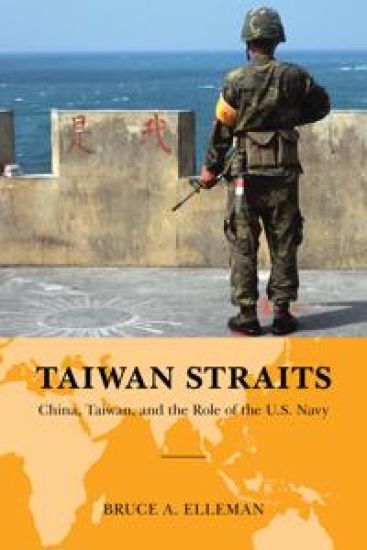
In Taiwan Straits: Crisis in Asia and the Role of the U. S. Navy, historian Bruce Elleman surveys the situation that has led to the current tensions between China and Taiwan. Starting in 1949, the final phase of the civil war in China, which ended with Communist rule of the mainland and nationalist control of Taiwan, this work explores how the 100-mile wide passage of water, known as the Taiwan Strait has served as the geographic flashpoint between the two nations. Even though U. S. Navy destroyers have patrolled this body of water from 1950 to 1979, it has seen four crises—1954-55, 1958, 1962, and, after the withdrawal of the U. S. Navy, 1995-96—that threatened to push Taiwan and China to the brink of war. Notwithstanding the role of the United States in defusing cross-strait tensions for some three decades and the cold peace that has settled in since then, the Taiwan Strait continues to be a major source of anxiety for the region and the world. Taiwan Straits: Crisis in Asia and the Role of the U. S. Navy traces the evolution of this tension between the two nations, details the history of the crises between them, and brings this story forward into the present by considering continuing sources of conflict, present diplomatic efforts by the aggrieved nations, and other key interests—from the United States and Europe to other regional powers—and future possible outcomes in the ongoing struggle between China and Taiwan relations. Simply written and cogently argued, it is the ideal source for military personnel, diplomats, and scholars and student of the modern Far East.
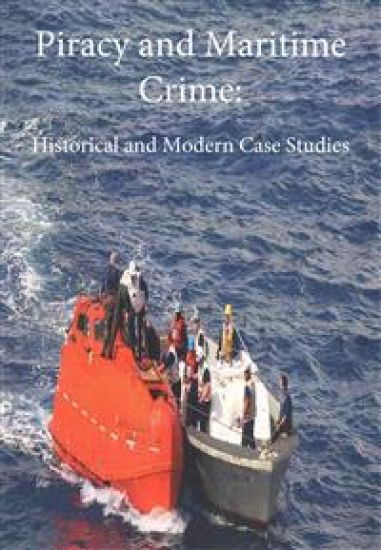
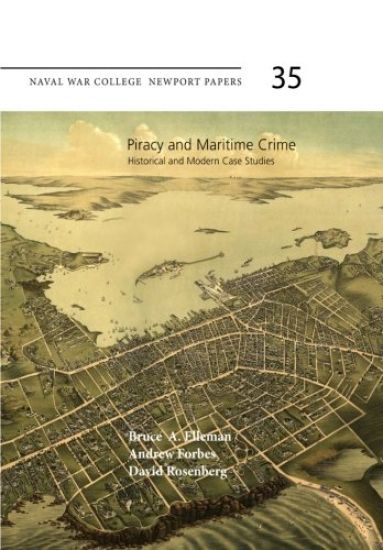
Piracy, or "robbery on the high seas," has existed for as long as people and commodities have traversed the oceans. The ancient Greeks, Romans, and Chinese all complained of it, and all created naval forces to fight pirates. The word "piracy" comes from the Latin pirate, "sea robber," and before that from the Greek pirates-"brigand," or "one who attacks." Piracy, however, has evolved over time, and this volume examines how piracy and ocean governance have changed from 1608, when the Dutch jurist Hugo Grotius published his Mare Liberum The Freedom of the Seas, or the Right Which Belongs to the Dutch to Take Part in the East Indian Trade]. As modern nation-states emerged from feudalism, privateering for both profit and war supplemented piracy at the margins of national sovereignty. More recently, an ocean enclosure movement under the aegis of the United Nations Convention on the Law of the Sea 1982 has granted states access to maritime resources far beyond their territorial limits. This in turn has given states more responsibility for providing safe passage through their waters. This book provides case studies on how these developments have changed the ways in which nations deal with piracy. Who owns the sea? Who has rights of navigation through its waters? Who is responsible for protecting ships at sea? For most of human history, the high seas were seen as vast, dangerous, uncharted regions filled with demons and dragons. In premodern times, the sea was a space apart from society. 'Amr ibn al-'As, a seventh-century Arab military leader who was responsible for the conquest of Egypt in 640, observed, "The sea is a boundless expanse, whereon great ships look tiny specks; nought but the heavens above and waters beneath; when calm, the sailor's heart is broken; when tempestuous, his senses reel. Trust it little, fear it much. Man at sea is an insect on a splinter, now engulfed, now scared to death." Throughout much of human history, therefore, it was assumed that the seas could not be owned, occupied, or governed. Fighting pirates at sea, although desirable, was beyond the jurisdiction and ability of most "states," whether feudal or national. As Grotius asserted in Mare Liberum, "The sea is common to all, because it is so limitless that it cannot become a possession of any one, and because it is adapted for the use of all, whether we consider it from the point of view of navigation or of fisheries." Grotius's view was developed to counter the activities of, in particular, Spain and Portugal, who were using their navies to assert their global maritime spheres of influence. The Dutch and other Europeans also wanted to pursue maritime interests. In this fashion, Grotius's "freedom of the seas" doctrine became a widely accepted foundation of modern international law. Historically, a state's sovereignty stopped at the shoreline. The world's oceans remained open-access, "common pool" resources. "How can a country control the seas?" asked the ruler of Macassar in the early seventeenth century, when the Dutch were attempting to monopolize the spice trade: "God has made the earth and the sea, has divided the earth among mankind and given the sea in common. It is a thing unheard of that anyone should be forbidden to sail the seas."
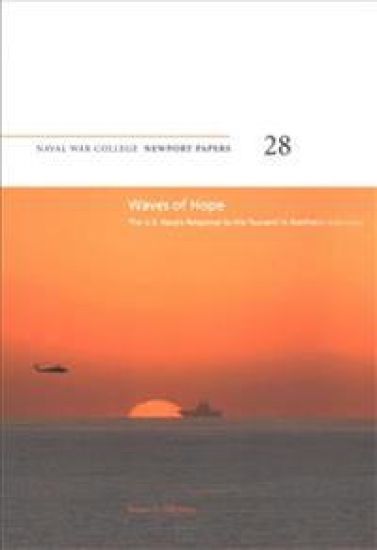
The powerful underwater earthquake that occurred off the coast of Sumatra on 26 December 2004 generated the most destructive tsunami ever recorded, drowning more than 150,000 people without warning in exposed littoral areas from Indonesia to South Africa. The destruction was particularly severe in the Aceh Province of Indonesia, at the northwestern tip of the island of Sumatra. There entire villages were destroyed within minutes as waves of thirty feet or more advanced far inland, while destruction of the main coastal highway made the entire region virtually inaccessible to Indonesian authorities ashore. In these extraordinary circumstances of human suffering, the U. S. Navy was able to play a key role in organizing what was to become a massive, multinational humanitarian relief operation, one based and executed virtually entirely "from the sea." Working closely with the Indonesian government and military, the Navy delivered, beginning within days of the disaster, vast quantities of emergency food and other supplies and provided on-the-spot emergency medical treatment to thousands of injured and displaced persons along the Aceh coast. Humanitarian relief has long been recognized as a mission of the American armed forces and of the U. S. Navy in particular. The scale and complexity of the tsunami's impact, however, posed particular and in some respects novel challenges to the Joint Task Force 536 (JTF 536) that was created to deal with the situation, not least of them the requirement imposed on it to operate exclusively from an improvised "sea base," to use a term that has gained some currency in recent discussions of naval missions and capabilities. In Newport Paper 28, Waves of Hope: The U. S. Navy's Response to the Tsunami in Northern Indonesia, historian Bruce A. Elleman provides the first comprehensive history and analysis of what would become known as Operation UNIFIED ASSISTANCE. Elleman, a research professor in the Department of Maritime History at the Naval War College, has produced a valuable and indeed unique study, one that makes use of a variety of internal Navy documents, oral histories, and interviews with a number of senior naval officers, including the then Chief of Naval Operations, Admiral Vern Clark. It is to be hoped that it will prove of immediate benefit to planners in the naval and joint worlds of the U. S. military, as well as to those of other nations potentially interested in exploiting its lessons to improve their own capabilities in this frequently neglected yet vital-indeed, life-saving-military mission
Why did the Chinese empire collapse and why did it take so long for a new government to reunite China? Modern Chinese Warfare, 1795-1989 seeks to answer these questions by exploring the most important domestic and international conflicts over the past two hundred years, from the last half of the Qing empire through to modern day China. It reveals how most of China's wars during this period were fought to preserve unity in China, and examines their distinctly cyclical pattern of imperial decline, domestic chaos and finally the creation of a new unifying dynasty. By 1989 this cycle appeared complete, but the author asks how long this government will be able to hold power. Exposing China as an imperialist country, and one which has often manipulated western powers in its favour, Bruce Elleman seeks to redress the views of China as a victimised nation.
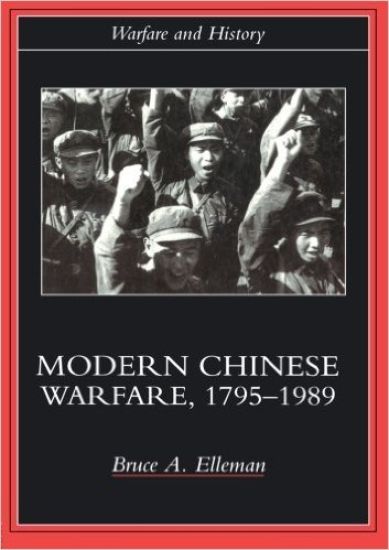
Why did the Chinese empire collapse and why did it take so long for a new government to reunite China? Modern Chinese Warfare, 1795-1989 seeks to answer these questions by exploring the most important domestic and international conflicts over the past two hundred years, from the last half of the Qing empire through to modern day China. It reveals how most of China's wars during this period were fought to preserve unity in China, and examines their distinctly cyclical pattern of imperial decline, domestic chaos and finally the creation of a new unifying dynasty. By 1989 this cycle appeared complete, but the author asks how long this government will be able to hold power. Exposing China as an imperialist country, and one which has often manipulated western powers in its favour, Bruce Elleman seeks to redress the views of China as a victimised nation.