Kirjojen hintavertailu – 12 859 828 kirjaa ja 27 kauppaa

Kirjailija

Bruce Berman

Kirjat ja teokset yhdessä paikassa: 7 kirjaa, julkaisuja vuosilta 1990–2025, suosituimpiin kuuluu From Assets to Profits. Vertaile teosten hintoja ja tarkista saatavuus suomalaisista kirjakaupoista.

7 kirjaa

Kirjojen julkaisuvuodet: 1990–2025.

Home Front

Home Front

Mary M. Cronin; Bruce Berman

Fonthill Media LLc
2025
nidottu

Halvin toimitettuna 45,00 €

As Americans prepared for-and then entered-World War II, the nation was awash with government propaganda. Armed with his Graflex, Speed Graphic, and 35mm cameras, Alfred Palmer shot many of the images that appeared in these patriotic appeals. His photographs were used by the National Defense Advisory Commission, the Office of Emergency Management, the Office of War Information, the War Production Board, the War Shipping Administration, and the US Maritime Commission. Palmer's photographs were seen by millions of Americans and Europeans. His work reveals his technical prowess. He was masterful in his use of lighting and was a pioneer in the use of color photography. He brought a visual weapon to America's arsenal to counter Nazi propaganda. His images portray a country transformed into an economically wealthy, socially coherent, and energetic nation whose citizens-including women and ethnic minorities-were depicted as vitally important to the war effort.
The Intangible Investor: Profiting from Intellectual Property: Companies' Most Elusive Assets
The Intangible Investor takes a hard look at the ways businesses generate return on inventions and ideas, and how they and others profit. Bruce Berman's fifth book also reveals what are behind patent "trolls" and who are the real bad actors gaming the IP system. It goes to the heart of the innovation economy, and provides businesses, investors and general audiences: (1) a basis for understanding how IP can generate hidden value(2) a foundation for what is meant by patent quality, and who, in fact, are the IP systems' bad actors, and (3) a context to discern IP developments of the recent past in the hope of providing a clearer vision of the future." One of the most remarkable things about this collection is how these essays have weathered the test of time," says Gene Quinn, editor of the popular IP Watchdog and a patent attorney in the foreword to the book. "While the 64 essays in The Intangible Investor stretch back to 2003, they are as relevant today as they were when they were written, which is a testament to Berman's forward thinking and understanding of the issues." Viewed collectively the contributions in The Intangible Investor provide entrepreneurs, investors, IP professionals, and the general public useful intelligence about how the IP industry works, and a historical context for what it means for the future. The book took eleven years to produce and includes columns originally contributed to IAM on a wide range of IP topics from patent transactions to illegal file sharing, legislation, valuations and public IP licensing companies (PIPCOs). The title is a play on unapparent stakeholders who rely on intangible assets like patents that escape the balance sheet. The Intangible Investor is also an allusion to Benjamin Graham's The Intelligent Investor, which after 65 years is still the definitive book on value investing. This book is intended for anyone interested in business, new ideas or investing.

From Assets to Profits

From Assets to Profits

Bruce Berman

John Wiley Sons Inc
2008
sidottu
Edited by IP communications expert Bruce Berman, and with contributions from the top names in IP management, investment and consulting, From Assets to Profits: Competing for IP Value and Return provides a real-world look at patents, copyrights, and trademarks, how intellectual property assets work and the subtle and not-so-subtle ways in which they are used for competitive advantage. Authoritative and insightful, From Assets to Profits reveals the most relevant ways to generate return on innovation, with advice and essential guidance from battle tested IP pros.
Unhappy Valley. Conflict in Kenya and Africa

Unhappy Valley. Conflict in Kenya and Africa

Bruce Berman; John Lonsdale

James Currey
1992
pokkari
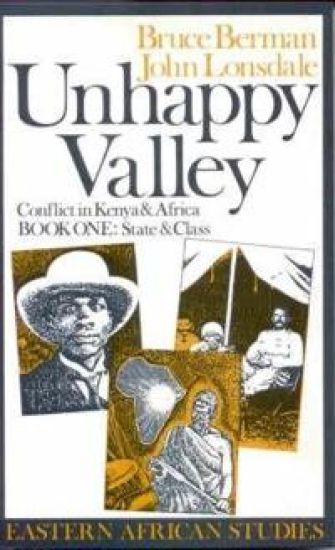
A considerable revision in the understanding of the history of colonial Kenya and, more widely, colonialism in Africa. In the sister two volumes entitled Unhappy Valley 1 and Unhappy Valley 2, the authors investigate major themes including the conquest origins and subsequent development of the colonial state, the contradictory socialforces that articulated African societies to European capitalism, and the creation of new political communities and changing meanings of ethnicity in Africa, in the context of social differentiation and class formation. There issubstantial new work on the problems of Mau Mau and of wealth, poverty and civic virtue in Kikuyu political thought. The authors make a fresh contribution to a deeper historical understanding of contemporary Kenyan society and, in particular, of the British and Kikuyu origins of Mau Mau and the emergency of the 1950s. They also highlight some of the shortcomings of ideas about development, explore the limitations of narrowly structuralist Marxisttheory of the state, and reflect on the role of history in the future of Africa. North America: Ohio U Press; Kenya: EAEP WINNER OF THE TREVOR REESE MEMORIAL PRIZE 1994
Unhappy Valley Book One

Unhappy Valley Book One

Bruce Berman

Ohio University Press
1992
pokkari
This long-awaited book is a considerable revision in the understanding of the history of colonial Kenya and, more widely, colonialism in Africa. There is a substantial amount of new work and this is interlocked with shared areas of concern that the authors have been exploring since 1976. The authors investigate major themes. These include the conquest origins and subsequent development of the colonial state, the contradictory social forces that articulated African societies to European capitalism, and the creation of new political communities and changing meanings of ethnicity in Africa, in the context of social differentiation and class formation. There is substantial new work on the problems of Mau Mau and of wealth, poverty and civic virtue in Kikuyu political thought. The authors make a fresh contribution to a deeper historical understanding of the development of contemporary Kenyan society and, in particular, of the British and Kukuyu origins of Mau Mau and the emergency of the 1950s. They also highlight some of the shortcomings of ideas about development, explore the limitations of narrowly structuralist Marxist theory of the state, and reflect on the role of history in the future of Africa. Book One on State and Class will be used by students of African history as well as of colonial Kenya; it is also concerned with the theory of history and of political science.
Control and Crisis in Colonial Kenya

Control and Crisis in Colonial Kenya

Bruce Berman

James Currey
1990
pokkari
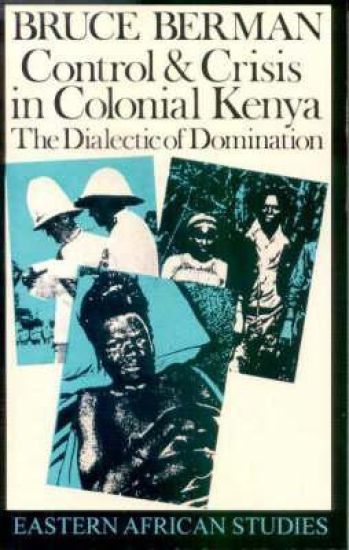
The first full length study of the development of the colonial state in Africa. Professor Berman argues that the colonial state was shaped by the contradictions between maintaining effective political control with limited coercive force and ensuring the profitable articulation of metropolitan and settler capitalism with African societies. North America: Ohio U Press; Kenya: EAEP
Control and Crisis in Colonial Kenya

Control and Crisis in Colonial Kenya

Bruce Berman

Ohio University Press
1990
pokkari
This history of the political economy of Kenya is the first full length study of the development of the colonial state in Africa. Professor Berman argues that the colonial state was shaped by the contradictions between maintaining effective political control with limited coercive force and ensuring the profitable articulation of metropolitan and settler capitalism with African societies. This dialectic of domination resulted in both the uneven transformation of indigenous societies and in the reconstruction of administrative control in the inter-war period. The study traces the evolution of the colonial state from its skeletal beginnings in the 1890s to the complex bureaucracy of the post-1945 era which managed the growing integration of the colony with international capital. These contradictions led to the political crisis of the Mau Mau emergency in 1952 and to the undermining of the colonial state. The book is based on extensive primary sources including numerous interviews with Kenyan and British participants. The analysis moves from the micro-level of the relationship of the District Commissioners and the African population to the macro-level of the state and the political economy of colonialism. Professor Berman uses the case of Kenya to make a sophisticated contribution to the theory of the state and to the understanding of the dynamics of the development of modern African political and economic institutions.