Kirjojen hintavertailu – 12 903 725 kirjaa ja 27 kauppaa

Kirjailija

Bruce Bond

Kirjat ja teokset yhdessä paikassa: 27 kirjaa, julkaisuja vuosilta 2001–2026, suosituimpiin kuuluu Writing the Self-Elegy. Vertaile teosten hintoja ja tarkista saatavuus suomalaisista kirjakaupoista.

27 kirjaa

Kirjojen julkaisuvuodet: 2001–2026.

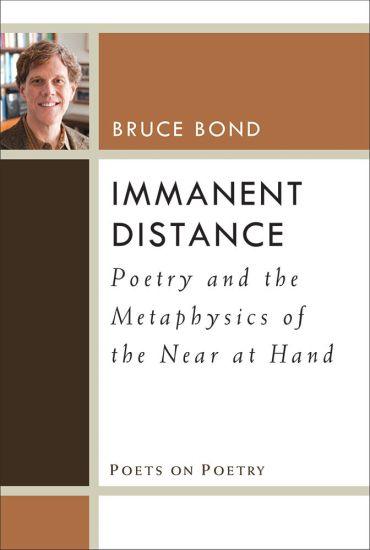
Immanent Distance

Immanent Distance

Bruce Bond

The University of Michigan Press
2015
sidottu
In these essays, Bruce Bond interrogates the commonly accepted notion that all poetry since modernism tends toward one of two traditions: that of a more architectural sensibility with its resistance to metaphysics, and that of a latter-day Romantic sensibility, which finds its authority in a metaphysics authenticated by the individual imagination. Poetry, whether self-consciously or not, has always thrived on the paradox of the distant in the immanent and the other in the self; as such, it is driven by both a metaphysical hunger and a resistance to metaphysical certainty. Hidden resources of being animate the language of the near, just as near things beckon from an elusive and inarticulate distance. Bond revalidates the role of poetry and, more broadly, of the poetic imagination as both models for and embodiments of a transfigurative process, an imperfectly mimetic yet ontological engendering of consciousness at the limits of a language that must—if cognizant of its psychological, ethical, and epistemological summons—honor that which lies beyond it.
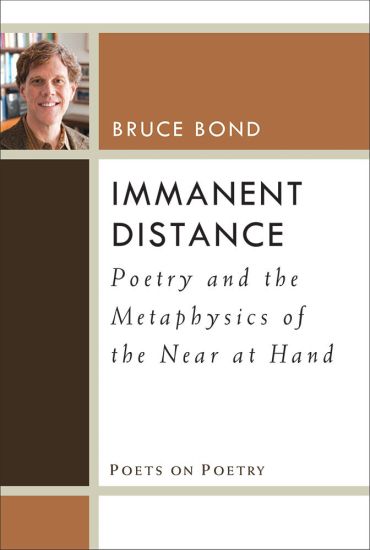
Immanent Distance

Immanent Distance

Bruce Bond

The University of Michigan Press
2015
nidottu
In these essays, Bruce Bond interrogates the commonly accepted notion that all poetry since modernism tends toward one of two traditions: that of a more architectural sensibility with its resistance to metaphysics, and that of a latter-day Romantic sensibility, which finds its authority in a metaphysics authenticated by the individual imagination. Poetry, whether self-consciously or not, has always thrived on the paradox of the distant in the immanent and the other in the self; as such, it is driven by both a metaphysical hunger and a resistance to metaphysical certainty. Hidden resources of being animate the language of the near, just as near things beckon from an elusive and inarticulate distance. Bond revalidates the role of poetry and, more broadly, of the poetic imagination as both models for and embodiments of a transfigurative process, an imperfectly mimetic yet ontological engendering of consciousness at the limits of a language that must—if cognizant of its psychological, ethical, and epistemological summons—honor that which lies beyond it.
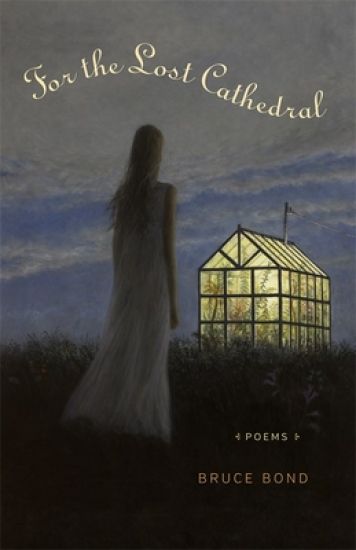
For the Lost Cathedral

For the Lost Cathedral

Bruce Bond

Louisiana State University Press
2015
nidottu
For the Lost Cathedral delves deeply into the human relationship with the divine and its capacity for empathy, transformation, and the tolerance of difference and doubt. Bruce Bond seeks neither to praise nor to attack institutional religions, instead choosing to explore their interactions with the inner lives of those who hold them sacred. Faith can offer comfort and security in difficult times, yet it may also create the temptation to hold to absolutes. For the Lost Cathedral examines the tensions inherent in spiritual devotion as well as the impact of such devotion on our most defining conflicts, creativities, and acts of sacrifice. In poems whose formal simplicity belies the depth of their complexity and insight, Bond explores a dialogue between the spiritual and the religious. A tour de force of emotional truth and focus, For the Lost Cathedral embodies a spirit of wonder in the face of difficulties that might otherwise appear intractable.
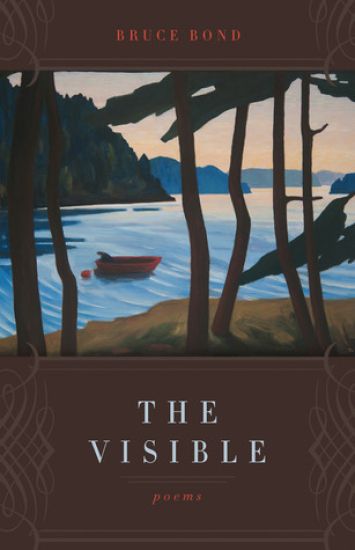
The Visible

The Visible

Bruce Bond

Louisiana State University Press
2012
nidottu
In The Visible, we enter into a surreal landscape ""where it is neither day nor night / but both at once,"" where light becomes an imaginative force that both illuminates and obscures. The illegible draws us closer to the page -- the visible revealed, paradoxically, by what we cannot see. Though these formally restrained poems possess an abstract and introspective intensity, Bond grounds them in the everyday. Both vivid and speculative, the chiseled lyrics breathe. In My Mother's Closet, the pages of medical books become holy and horrendous, ""soiled at the corners, the mind's / terrific passages shocked with highlight, / glossed with scratches in a mother's hand.
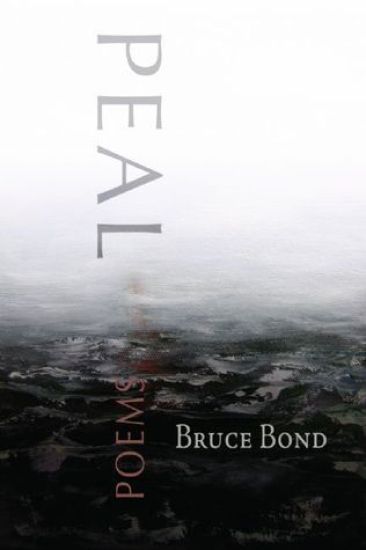
Peal: Poems

Peal: Poems

Bruce Bond

Etruscan Press
2009
nidottu
"The poems in Bruce Bond's new collection Peal probe music's deepest sources. These beautifully crafted lyrics lead us down into intricate and sonoruous paths where we meet out own uncertain songs, at once ghostly, elegiac, and ecstatic. This is a work of exquisite complexity by one of our best poets writing today."--Molly Bendall"The speculative drive of these poems pushes the reader to the very limits of reflection."--Daniel Tiffany"Poets have ever sought a seamless integration of art and life: think of Keats's 'Beauty is truth, truth beauty' or Yeats's 'How can we know the dancer from the dance' In Bruce Bond's Peal, as in the work of this best predecessors, 'it is impossible to know/where music ends, the world begins.'"--H. L. HixIn Bruce Bond's seventh book, we see a sustained exploration of mortality and its embodiment in the consolations of beauty, most notably in music. As if even the respite of song is action, its silence no less. Even the bend and reachof architecture that rises out of the smolderand back, even the legs of the arc that returnthe way the sun returns to a black well, its trespass quiet, slow, a ghost, a coin, a wish gone deep as the day grows old. Bruce Bond teaches at the University of North Texas and is poetry editor for American Literary Review.
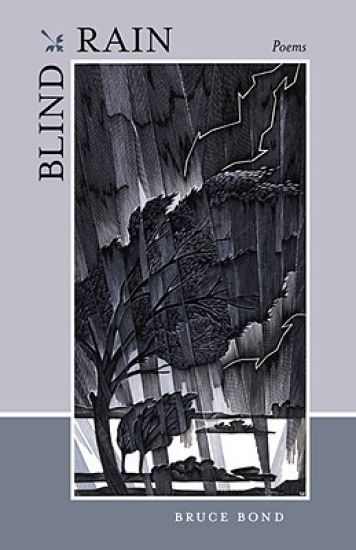
Blind Rain

Blind Rain

Bruce Bond

Louisiana State University Press
2008
nidottu
In his newest collection, Blind Rain, Bruce Bond transforms the known and the familiar into something surreal and new. With spare, unadorned language, he complicates what it is to be both bound to the world and yet free within that world, the way in which the imagination deepens our engagements and yet offers some measure of distance at the same time. Bond opens with several elegies, many of which concern the last days and death of his father. Later poems explore the power of imaginative response as compensation for loss, focusing on poetry, madness, and music, which consoles paradoxically, since it is a form of loss itself. The work includes a long meditation, ""The Return,"" that hinges on the double sense of the word ""true"" as suggesting both ""the real"" and ""the loyal,"" and so participates, often through personal and cultural narrative, in a postmodern conversation about the power of returning as a way of grounding us ethically and emotionally to the world at hand. From Wake: ""One day now since my father last tried to speak, // since the outer provinces of his body shut // down like small cities when the power goes, // just the enormity of starlight to guide them // on their cold journey into dawn. I am writing // at the edge of the other half of life, the part // without my father in it; I feel the strange // sure pull of the earth I walk here, // the polish of the grass, the distance between me // and my students who look up and wait // for my first questions, knowing so little // of my life, just as I know so little of theirs, // only a poem at a time to hold us together // like children before a fire in the woods.
The Throats of Narcissus

The Throats of Narcissus

Bruce Bond

University of Arkansas Press
2001
nidottu
In Bruce Bond's fourth full-length book, The Throats of Narcissus, the myth of Narcissus finds its transfiguring mirror in poems of a contemporary world, a world rendered precarious by literal and metaphysical famine, by the blood of fathers and distant strangers, the charred relics of foreign wars and nearer fires as well—a world wrestling with problems of its own self-regard and the consequent spiritual longing for personal communion and creative transformation. Thus the myth of Narcissus resonates not only as a story of self-absorption and demise, but also of life-affirming metamorphosis. As a result, we see not only poems concerning childhood and the dawn of guilt, desire, and self-awareness, but also poems featuring jazz figures of the fifties and sixties, heroes of creative discipline and play who dealt musically with their own narcissistic wounds and addictions, leaving a generous legacy of pleasures, however rebellious and private their roots.