Kirjojen hintavertailu – 12 903 725 kirjaa ja 27 kauppaa

Kirjailija

Bruce Chilton

Kirjat ja teokset yhdessä paikassa: 22 kirjaa, julkaisuja vuosilta 1986–2024, suosituimpiin kuuluu Jesus in Context. Vertaile teosten hintoja ja tarkista saatavuus suomalaisista kirjakaupoista.

22 kirjaa

Kirjojen julkaisuvuodet: 1986–2024.

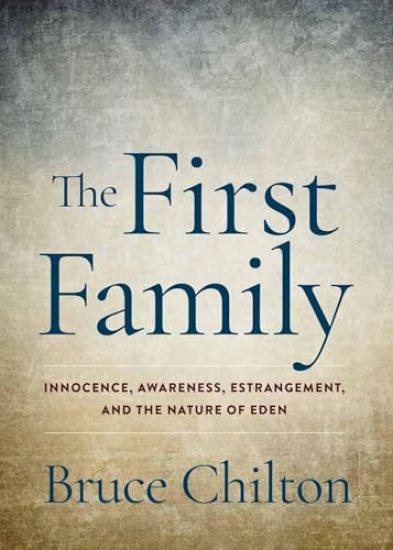
The First Family

The First Family

Bruce Chilton

Station Hill Press,U.S.
2024
nidottu
The Biblical story of Eden is one of innocence, suffering, estrangement, displacement, self-consciousness, awakening, and separation. But it is also a story of hope, about the gaining wisdom and self-knowledge. It is about the costs of maturation and a reckoning with our own mortality. In The First Family, author Bruce Chilton presents a vision of a near, knowable Eden, an Eden that may have been damaged but is not lost.
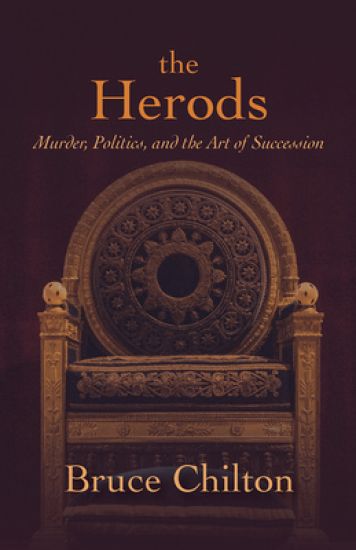
The Herods

The Herods

Bruce Chilton

Fortress Press,U.S.
2021
sidottu
Until his death in 4 BCE, Herod the Great's monarchy included territories that once made up the kingdoms of Judah and Israel. Although he ruled over a rich, strategically crucial land, his royal title did not derive from heredity. His family came from the people of Idumea, ancient antagonists of the Israelites. Yet Herod did not rule as an outsider, but from a family committed to Judaism going back to his grandfather and father. They had served the priestly dynasty of the Maccabees that had subjected Idumea to their rule, including the Maccabean version of what loyalty to the Torah required. Herod's father, Antipater, rose not only to manage affairs on behalf of his priestly masters, but to become a pivotal military leader. He inaugurated a new alignment of power: an alliance with Rome negotiated with Pompey and Julius Caesar. In the crucible of civil war among Romans as the Triumvirate broke up, and of war between Rome and Parthia, Antipater managed to leave his sons with the prospect of a dynasty. Herod inherited the twin pillars of loyalty to Judaism and loyalty to Rome that became the basis of Herodian rule. He elevated Antipater's opportunism to a political art. During Herod's time, Roman power took its imperial form, and Octavian was responsible for making Herod king of Judea. As Octavian ruled, he took the title Augustus, in keeping with his devotion to his adoptive father's cult of the divine Julius. Imperial power was a theocratic assertion as well as a dominant military, economic, and political force. Herod framed a version of theocratic ambition all his own, deliberately crafting a dynastic claim grounded in Roman might and Israelite theocracy. That unlikely hybrid was the key to the Herodians' surprising longevity in power during the most chaotic century in the political history of Judaism.

Christianity: The Basics

Christianity: The Basics

Bruce Chilton

Routledge
2014
sidottu
Christianity: The Basics is a compelling introduction to both the central pillars of the Christian faith and the rich and varied history of this most global of global religions. This book traces the development of Christianity through an exploration of some of the key beliefs, practices and emotions which have been recurrent symbols through the centuries:Christ, the kingdom of heaven and sinBaptism, Eucharist and prayerJoy, divine union and self denialEncompassing the major epochs of Christian history and examining the unity and divisions created by these symbols, Christianity: The Basics is both a concise and comprehensive introduction to the Christian tradition.
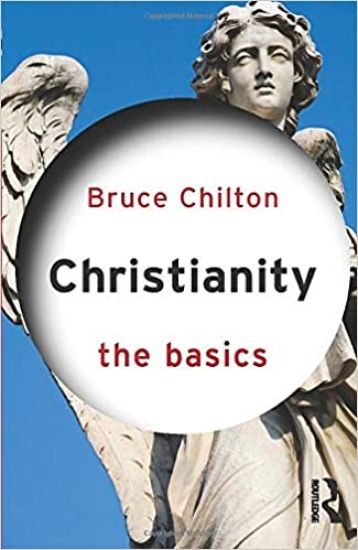
Christianity: The Basics

Christianity: The Basics

Bruce Chilton

Routledge
2014
nidottu
Christianity: The Basics is a compelling introduction to both the central pillars of the Christian faith and the rich and varied history of this most global of global religions. This book traces the development of Christianity through an exploration of some of the key beliefs, practices and emotions which have been recurrent symbols through the centuries:Christ, the kingdom of heaven and sinBaptism, Eucharist and prayerJoy, divine union and self denialEncompassing the major epochs of Christian history and examining the unity and divisions created by these symbols, Christianity: The Basics is both a concise and comprehensive introduction to the Christian tradition.
Rabbi Jesus

Rabbi Jesus

Bruce Chilton

Image Books
2010
nidottu

Halvin toimitettuna 24,20 €

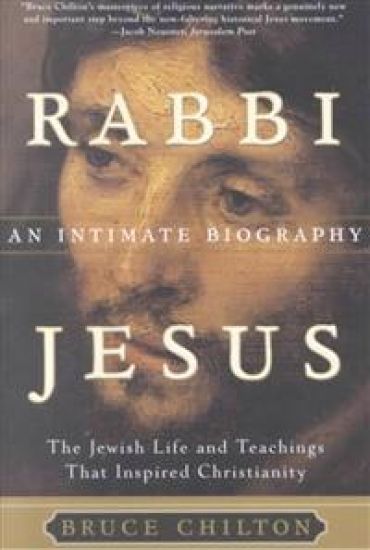
Beginning with the Gospels, interpretations of the life of Jesus have flourished for nearly two millennia, yet a clear and coherent picture of Jesus as a man has remained elusive. In Rabbi Jesus, the noted biblical scholar Bruce Chilton places Jesus within the context of his times to present a fresh, historically accurate, and revolutionary examination of the man who founded Christianity. Drawing on recent archaeological findings and new translations and interpretations of ancient texts, Chilton discusses in enlightening detail the philosophical and psychological foundations of Jesus’ ideas and beliefs. His in-depth investigation also provides evidence that contradicts long-held beliefs about Jesus and the movement he led. Chilton shows, for example, that the High Priest Caiaphas, as well as Pontius Pilate, played a central role in Jesus’ execution. It is, however, Chilton’s description of Jesus’ role as a rabbi, or "master," of Jewish oral traditions, as a teacher of the Cabala, and as a practitioner of a Galilean form of Judaism that emphasized direct communication with God that casts an entirely new light on the origins of Christianity. Seamlessly merging history and biography, this penetrating, highly readable book uncovers truths lost to the passage of time and reveals a new Jesus for the new millennium.
Studying the New Testament

Studying the New Testament

Bruce Chilton

Augsburg Fortress
2010
nidottu
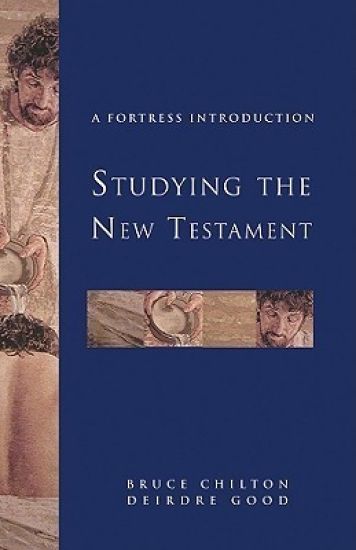
This book offers an introduction to the literature of the New Testament, demonstrating how these writings can be approached and critically studied in an academic setting. Bruce Chilton and Deidre J. Good, two respected New Testament scholars, provide a narrative of the historical context and social world of the books of the New Testament, a chronological survey of the Gospels and letters, and the remaining writings (Apocrypha, Apocalyptic) with their special focus on the emerging church. Together with textboxes, exercises, questions, further readings, maps, timeline, and glossary, this brief introduction surveys and employs leading methods of study and equips students with the general literacy needed for successful and serious study of New Testament writings.
Way of Jesus, The

Way of Jesus, The

Bruce Chilton

Abingdon Press
2010
nidottu
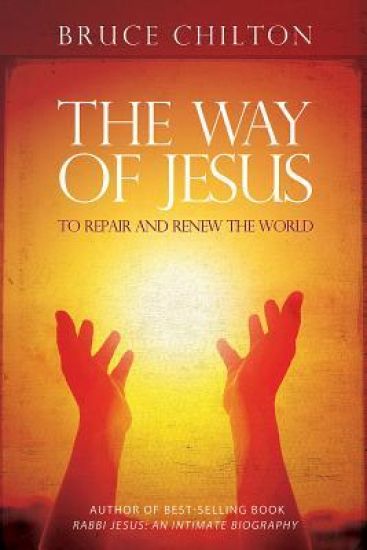
The way of Jesus means that despite our tears and scars, we can become vessels of divine light. A young man loses his wife while their baby escapes without injury. In abject grief he reaches out to a friend for solace. What words of comfort are even possible? How can Jesus repair and renew these lives in this world? Author Bruce Chilton begins in the everyday. He shows how following Jesus not only repairs shattered lives, but renews them. While no broken life is ever simply reassembled and although there is no magic going back to the pristine, repair and renewal will empower us to truly live and love again. But our path requires something from us--mindful practice of Jesus' teachings about the soul, spirit, kingdom, insight, forgiveness, mercy, and glory.
Mary Magdalene: A Biography

Mary Magdalene: A Biography

Bruce Chilton

Image
2006
nidottu
A lively re-interpretation of the life and times of one of the Bible's most misunderstood figures describes Mary Magdalene's key role in the ministry of Jesus and the development of early Christianity, tracing the changing images of Mary and the legends surrounding her and exploring why the Church sought to marginalize her significance. Reprint. 12,500 first printing.
Rabbi Paul: An Intellectual Biography
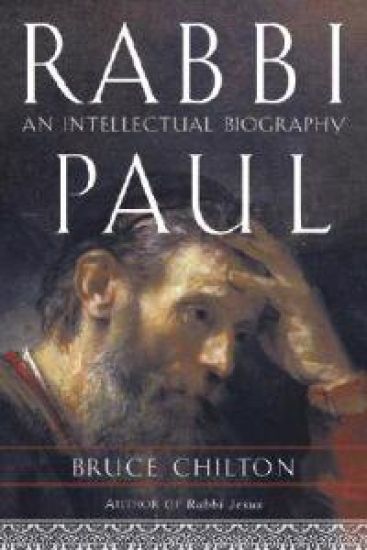
A brilliant new biography of Saint Paul, whose interpretations of the life and teachings of Jesus transformed a loosely organized, grassroots peasant movement into the structured religion we know today Without Paul, there would be no Christianity. His letters to various churches scattered throughout the Roman Empire articulated, for the first time, the beliefs that make up the heart of Christian practice and faith. In this extraordinary biography, Bruce Chilton explains the changing images of Paul, from the early Church period when he was regarded as the premiere apostle who separated Christianity from Judaism to more recent liberal evaluations, which paint him as an antifeminist, homophobic figure more dedicated to doctrine than to spiritual freedom. By illuminating Paul's thoughts and contributions within the context of his time, Chilton restores him to his place as the founding architect of the Church and one of the most important figures in Western history. Rabbi Paul is at once a compelling, highly readable biography and a window on how Jesus' message was transformed into a religion embraced by millions around the world. Drawing on Paul's own writings as well as historical and scholarly documents about his life and times, Chilton portrays an all-too-human saint who helped to create both the most beautiful and the most troublesome aspects of the Church. He shows that Paul sought to specify the correct approach to such central concerns as sexuality, obedience, faith, conscience, and spirit, to define religion as an institution, and to clarify the nature of the religious personality--issues that Christians still struggle with today.
Jewish and Christian Doctrines

Jewish and Christian Doctrines

Bruce Chilton; Jacob Neusner

Routledge
1999
sidottu
Jewish and Christian Doctrines presents a concise and lucid introduction to the foundations of Judaism and Christianity. The authors explore key documents ofJudaism and Christianity to elucidate and illuminate the doctrinal issues which the documents raise and to examine the similarities and differences between the two faiths.
Jewish and Christian Doctrines

Jewish and Christian Doctrines

Bruce Chilton; Jacob Neusner

Routledge
1999
nidottu
Jewish and Christian Doctrines presents a concise and lucid introduction to the foundations of Judaism and Christianity. The authors explore key documents ofJudaism and Christianity to elucidate and illuminate the doctrinal issues which the documents raise and to examine the similarities and differences between the two faiths.
Types of Authority in Formative Christianity and Judaism

Types of Authority in Formative Christianity and Judaism

Bruce Chilton; Jacob Neusner

Routledge
1999
sidottu
Bruce Chilton and Jacob Neusner study the points of comparisons and contrast between formative Christianity and Judaism. By identifying three categories of authority in each of the two religious worlds, they show how they have both worked in compelling or failing to get someone to do a given action. The arguments are introduced by a general discussion of the founding figures of the two religions, Moses and Jesus, and how their inherent authority distilled itself through the structure of their religious institutions and intellectual thoughts.
Jewish-Christian Debates

Jewish-Christian Debates

Bruce Chilton; Jacob Neusner

Augsburg Fortress
1998
pokkari
Two eminent scholars, each expert in his own tradition, take Jewish-Christian dialogue to a new level. Aiming at neither mere description nor conversion, each presents the classical elements of his traditions understanding of three fundamental, common religious questions: where to meet God, how to live, and what to hope for. The other then responds. Neusner and Chilton's analytic comparisons of two great traditions intertwined at the roots serves as a primer on the defining energies of both traditions. The reader is invited to identify the traditions' unity of questions and the equally strong differences in answers and thereby illumine one's own faith commitments about belief, piety, and the purpose of human life.
The Intellectual Foundations of Christian and Jewish Discourse
The Intellectual Foundations of Christian and Jewish Discourse argues that the Judaic and Christian heirs of Scripture adopted, and adapted to their own purposes and tasks, Greek philosophical modes of thought and argument. The authors explore how the earliest intellectuals of Christianity and Judaism shaped a tradition of articulated conflict and reasoned argument in the search for religious truth that was to be shared through continuing that argument with others. Neusner and Chilton examine, using the formative sources of Judaism and Christianity, the literary media of adaptation and reform: precisely where and how we identify in the foundation writings of Christianity and Rabbinic Judaism the new opposing modes of articulated conflict and reasoned argument that through Christianity and Judaism, Greek philosophy and science bequeathed to the West.
The Intellectual Foundations of Christian and Jewish Discourse
The Intellectual Foundations of Christian and Jewish Discourse argues that the Judaic and Christian heirs of Scripture adopted, and adapted to their own purposes and tasks, Greek philosophical modes of thought and argument. The authors explore how the earliest intellectuals of Christianity and Judaism shaped a tradition of articulated conflict and reasoned argument in the search for religious truth that was to be shared through continuing that argument with others. Neusner and Chilton examine, using the formative sources of Judaism and Christianity, the literary media of adaptation and reform: precisely where and how we identify in the foundation writings of Christianity and Rabbinic Judaism the new opposing modes of articulated conflict and reasoned argument that through Christianity and Judaism, Greek philosophy and science bequeathed to the West.
Jesus in Context

Jesus in Context

Bruce Chilton; Craig A. Evans; Bruce Chilton

Brill
1997
sidottu
The Proclamation of Jesus seeks to place Jesus in the context of first-century Palestinian Judaism. The authors hope to discern the essence of his preaching, his concept of the kingdom of God, and the place of purity in his teaching and activities. Better methods for assessing not simply the authenticity of reported sayings and deeds, but for tracing the development of tradition are considered. The authors are convinced that most of the Synoptic tradition is authentic, but that much of it has been reinterpreted and recontextualized. Herein lies the real challenge for those investigating the historical Jesus. The Proclamation of Jesus opens up new avenues of study and makes new proposals for understanding Jesus in the context of his place and time.
Judaism in the New Testament

Judaism in the New Testament

Bruce Chilton; Jacob Neusner

Routledge
1995
nidottu
Judaism in the New Testament explains how the writings of the early church emerged from communities which defined themselves in Judaic terms even as they professed faith in Christ. These two extremely distinguished scholars introduce readers to the plurality of Judaisms of the period. They show, by examining a variety of texts, how the major figures of the New Testament reflect distinctly Judaic practices and beliefs. This important study shows how the early movement centred on Jesus is best seen as `Christian Judaism'. Only with the Epistle to the Hebrews did the profile of a new and distinct Christian religion emerge.
Judaism in the New Testament

Judaism in the New Testament

Bruce Chilton; Jacob Neusner

Routledge
1995
sidottu
Judaism in the New Testament explains how the writings of the early church emerged from communities which defined themselves in Judaic terms even as they professed faith in Christ. These two extremely distinguished scholars introduce readers to the plurality of Judaisms of the period. They show, by examining a variety of texts, how the major figures of the New Testament reflect distinctly Judaic practices and beliefs. This important study shows how the early movement centred on Jesus is best seen as `Christian Judaism'. Only with the Epistle to the Hebrews did the profile of a new and distinct Christian religion emerge.