Kirjojen hintavertailu – 12 903 725 kirjaa ja 27 kauppaa

Kirjailija

Bruce de Mesquita

Kirjat ja teokset yhdessä paikassa: 4 kirjaa, julkaisuja vuosilta 2016–2024, suosituimpiin kuuluu The Spoils of War. Vertaile teosten hintoja ja tarkista saatavuus suomalaisista kirjakaupoista.

4 kirjaa

Kirjojen julkaisuvuodet: 2016–2024.

The Invention of Power

The Invention of Power

Bruce de Mesquita

PUBLICAFFAIRS,U.S.
2024
pokkari
In the tradition of Why Nations Fail, this book solves one of the great puzzles of history: Why did the West become the most powerful civilization in the world? Western exceptionalism-the idea that European civilizations are freer, wealthier, and less violent-is a widespread and powerful political idea. It has been a source of peace and prosperity in some societies, and of ethnic cleansing and havoc in others. Yet in The Invention of Power, Bruce Bueno de Mesquita draws on his expertise in political maneuvering, deal-making, and game theory to present a revolutionary new theory of Western exceptionalism: that a single, rarely discussed event in the twelfth century changed the course of European and world history. By creating a compromise between churches and nation-states that, in effect, traded money for power and power for money, the 1122 Concordat of Worms incentivized economic growth, facilitated secularization, and improved the lot of the citizenry, all of which set European countries on a course for prosperity. In the centuries since, countries that have had a similar dynamic of competition between church and state have been consistently better off than those that have not. The Invention of Power upends conventional thinking about European culture, religion, and race and presents a persuasive new vision of world history.
The Dictator's Handbook

The Dictator's Handbook

Alastair Smith; Bruce de Mesquita

PUBLICAFFAIRS,U.S.
2022
pokkari

Halvin toimitettuna 32,90 €

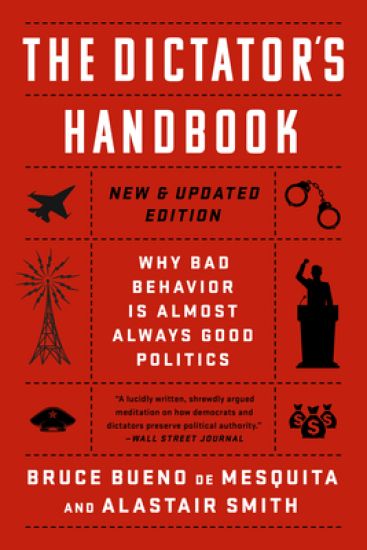
Bruce Bueno de Mesquita and Alastair Smith's canonical book on political science turned conventional wisdom on its head. They started from a single assertion: leaders do whatever keeps them in power. They don't care about the "national interest"-or even their subjects-unless they must. Newly updated to reflect the global rise of authoritarianism, this clever and accessible book illustrates how leaders amass and retain power. As Bueno de Mesquita and Smith show, democracy is essentially just a convenient fiction. Governments do not differ in kind, but only in the number of essential supporters or backs that need scratching. The size of this group determines almost everything about politics: what leaders can get away with, and the quality of life or misery under them. And it is also the key to returning power to the people.
The Invention of Power

The Invention of Power

Bruce de Mesquita

PUBLICAFFAIRS,U.S.
2022
sidottu
Western exceptionalism-the idea that European civilizations are freer, wealthier, and less violent-is a widespread and powerful political idea. It has been a source of peace and prosperity in some societies, and of ethnic cleansing and havoc in others. Yet in The Invention of Power, Bruce Bueno de Mesquita draws on his expertise in political maneuvering, deal-making, and game theory to present a revolutionary new theory of Western exceptionalism: that a single, rarely discussed event in the twelfth century changed the course of European and world history. By creating a compromise between churches and nation-states that, in effect, traded money for power and power for money, the 1122 Concordat of Worms incentivized economic growth, facilitated secularization, and improved the lot of the citizenry, all of which set European countries on a course for prosperity. In the centuries since, countries that have had a similar dynamic of competition between church and state have been consistently better off than those that have not. The Invention of Power upends conventional thinking about European culture, religion, and race and presents a persuasive new vision of world history.
The Spoils of War

The Spoils of War

Alastair Smith; Bruce de Mesquita

PublicAffairs,U.S.
2016
sidottu
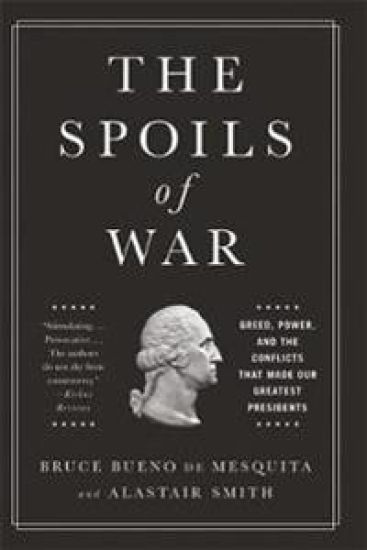
Why are America's most beloved presidents also our most dangerous? It's striking how many of the presidents Americans venerate- Abraham Lincoln, George Washington, Franklin D. Roosevelt, and John F. Kennedy, to name a few- oversaw some of the republic's bloodiest years. Perhaps they were driven by the needs of the American people and the nation. Or maybe they were just looking out for themselves. This revealing and entertaining book puts some of America's greatest leaders under the microscope, showing how their calls for war, usually remembered as brave and noble, were in fact selfish and convenient. In each case, our presidents chose personal gain over national interest while loudly evoking justice and freedom. The result is an eye-opening retelling of American history, and a call for reforms that may make the future better. Bueno de Mesquita and Smith demonstrate in compelling fashion that wars, even bloody and noble ones, are not primarily motivated by democracy or freedom or the sanctity of human life. When our presidents risk the lives of brave young soldiers, they do it for themselves.