Kirjojen hintavertailu – 12 903 725 kirjaa ja 27 kauppaa

Kirjailija

Bruce E. Baker

Kirjat ja teokset yhdessä paikassa: 6 kirjaa, julkaisuja vuosilta 2007–2019, suosituimpiin kuuluu The Cotton Kings. Vertaile teosten hintoja ja tarkista saatavuus suomalaisista kirjakaupoista.

6 kirjaa

Kirjojen julkaisuvuodet: 2007–2019.

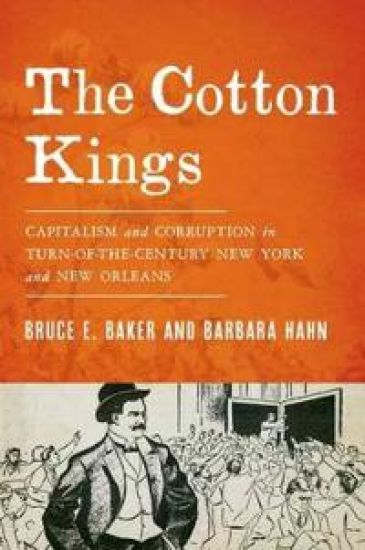
The Cotton Kings

The Cotton Kings

Bruce E. Baker; Barbara Hahn

Oxford University Press Inc
2016
sidottu
The Cotton Kings relates a rip-roaring drama of competition in the marketplace and reveals the damage markets can cause when they do not work properly. It also explains how they can be fixed through careful regulation. At the turn of the twentieth century, cotton was still the major agricultural product of the American South and an important commodity for world industry. Key to marketing cotton were futures contracts, traded at exchanges in New York and New Orleans. Futures contracts had the potential to hedge risk and reduce price volatility, but only if the markets in which they were traded worked properly. Increasing corruption on the powerful New York Cotton Exchange pushed prices steadily downwards in the 1890s, impoverishing millions of cotton farmers. The U. S. Department of Agriculture tried to solve the problem with better crop predictions and market information, shared equally and simultaneously with all participants, but these efforts failed. To fight the cotton market's corruption, cotton brokers in New Orleans, led by William P. Brown and Frank Hayne, began quietly to assemble resources. They triumphed in the summer of 1903, when they cornered the world market in cotton and raised its price to reflect the reality of increasing demand and struggling supply. The brokers' success pushed up the price of cotton for the next ten years. However, the structural problems of self-regulation by market participants still threatened the cotton trade. More corruption at the New York Cotton Exchange appeared, until eventually political pressure inspired the Cotton Futures Act of 1914, the federal government's first successful regulation of a financial derivative.

Essential Skills for Historians

Essential Skills for Historians

J. Laurence Hare; Jack Wells; Bruce E. Baker

Bloomsbury Academic
2019
sidottu
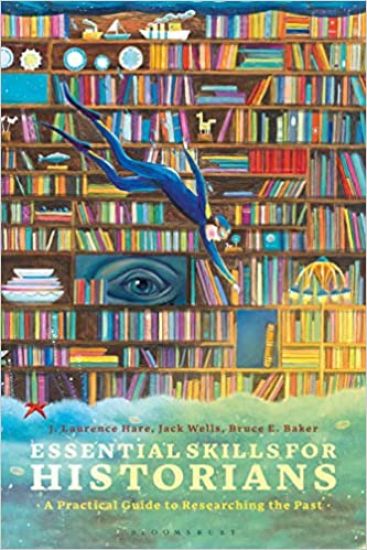
Essential Skills for Historians helps undergraduate students make the transition from general university study to a more in-depth study of history, and to gain the skills and techniques they need to conduct an independent research project or embark on a career as a professional historian. The book begins with an examination of the historical discipline and its relevance to contemporary culture. It then guides readers through the steps of developing a research project, using two sample projects that illustrate the connections between core proficiencies such as critical thinking and effective time management, and professional proficiencies such as source criticism and historical interpretation. By following these source projects as they develop, the book also highlights the importance of sound historical practice and a critical understanding of the past in contemporary society. Finally, the book discusses the outcomes of historical research and reveals the wide array of possibilities for careers built upon the skills gained from studying history. Covering key topics such as research strategies, reading sources, effective writing and professional ethics – and with useful features such as glossaries, guidelines for student projects, hands-on exercises, further reading and a companion website containing extra resources – Essential Skills for Historians equips aspiring historians with everything they need to succeed whilst also demonstrating the value of history in the wider world.
Essential Skills for Historians

Essential Skills for Historians

J. Laurence Hare; Jack Wells; Bruce E. Baker

Bloomsbury Academic
2019
nidottu
Essential Skills for Historians helps undergraduate students make the transition from general university study to a more in-depth study of history, and to gain the skills and techniques they need to conduct an independent research project or embark on a career as a professional historian. The book begins with an examination of the historical discipline and its relevance to contemporary culture. It then guides readers through the steps of developing a research project, using two sample projects that illustrate the connections between core proficiencies such as critical thinking and effective time management, and professional proficiencies such as source criticism and historical interpretation. By following these source projects as they develop, the book also highlights the importance of sound historical practice and a critical understanding of the past in contemporary society. Finally, the book discusses the outcomes of historical research and reveals the wide array of possibilities for careers built upon the skills gained from studying history. Covering key topics such as research strategies, reading sources, effective writing and professional ethics – and with useful features such as glossaries, guidelines for student projects, hands-on exercises, further reading and a companion website containing extra resources – Essential Skills for Historians equips aspiring historians with everything they need to succeed whilst also demonstrating the value of history in the wider world.
What Reconstruction Meant

What Reconstruction Meant

Bruce E. Baker

University of Virginia Press
2009
nidottu
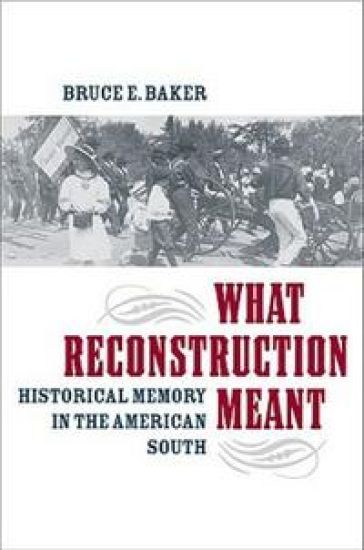
A great deal has been written about southern memory centering on the Civil War, particularly the view of the war as a valiant lost cause. In this challenging book Bruce E. Baker looks at a related, and equally important, aspect of southern memory that has been treated by historians only in passing: Reconstruction. He examines what both white and black South Carolinians thought about the history of Reconstruction and how it shaped the way they lived their lives in the first half of the twentieth century. Baker addresses the dominant white construct of 'the dark days of Reconstruction', which was instrumental both in ending Reconstruction and in justifying Jim Crow and the disenfranchisement of African Americans in the South, setting the tone for early historians' accounts of Reconstruction. Looking back on the same era. African Americans and their supporters recalled a time of potential and of rights to be regained, inspiring their continuing struggles to change the South. The author draws on a tremendous range of newspapers, memoirs, correspondence, and published materials to show the intricate process by which the white-supremacist memory of Reconstruction became important in the 1890s as segregation and disenfranchisement took hold in the South, and how it began to crumble as the civil rights movement gained momentum. Examining the southern memory of Reconstruction, in all its forms, is an essential element in understanding the society and politics of the twentieth-century South.
This Mob Will Surely Take My Life

This Mob Will Surely Take My Life

Bruce E. Baker

Hambledon Continuum
2009
sidottu
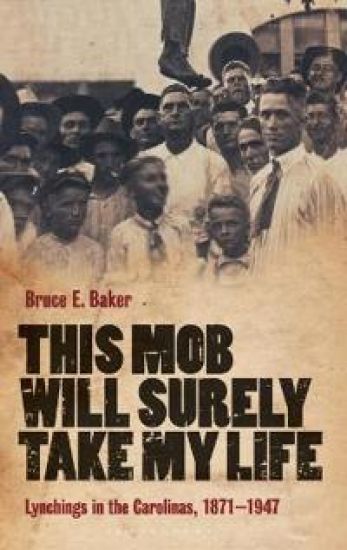
This book presents a comprehensive history of lynching and mob violence in North and South Carolina, focusing on seven specific case studies from the region. Lynching marked the violent outer boundaries of race and class relations in the American South between Reconstruction and the civil rights era. Everyday interactions could easily escalate into mob violence, and did so thousands of times. Bruce Baker examines this important aspect of American history by taking seven lynchings in North Carolina and South Carolina and studying them in detail. He succeeds in getting behind the superficial accounts and explanations provided at the time to explain the deeper causes and wider contexts of these events. Many studies of lynching begin only after Reconstruction had ended and African Americans found themselves with little political power. However, this book provides the most thorough study yet written of the Ku Klux Klan's most violent episode - the killing of thirteen black militia members in Union, South Carolina, in 1871 - to argue that this act of mob violence set the conditions in important ways for the entire lynching era. Enmities born in Reconstruction lingered afterwards and lay behind an 1887 lynching in York County, South Carolina. As lynching became an unsurprising part of life in the South, African Americans even found that they could use it themselves, in once case to punish a child's killer and in another to settle a church's factional squabbles. In addition, a variety of forces opposing lynching was rising and by the 1930s their efforts would begin to make a difference.
What Reconstruction Meant

What Reconstruction Meant

Bruce E. Baker

University of Virginia Press
2007
sidottu
A great deal has been written about southern memory centering on the Civil War, particularly the view of the war as a valiant lost cause. In this challenging new book, Bruce Baker looks at a related, and equally important, aspect of southern memory that has been treated by historians only in passing: Reconstruction. ""What Reconstruction Meant"" examines what both white and black South Carolinians thought about the history of Reconstruction and how it shaped the way they lived their lives in the first half of the twentieth century. Baker addresses the dominant white construct of ""the dark days of Reconstruction,"" which was instrumental both in ending Reconstruction and in justifying Jim Crow and the disfranchisement of African Americans in the South, setting the tone for early historians' accounts of Reconstruction. Looking back on the same era, African Americans and their supporters recalled a time of potential and of rights to be regained, inspiring their continuing struggles to change the South. Baker draws on a tremendous range of newspapers, memoirs, correspondence, and published materials, to show the intricate process by which the white-supremacist memory of Reconstruction became important in the 1890s, as segregation and disenfranchisement took hold in the South, and how it began to crumble as the civil rights movement gained momentum. Examining the southern memory of Reconstruction, in all its forms, is an essential element in understanding the society and politics of the twentieth-century South.