
Kirjailija
Bruce G Epperly
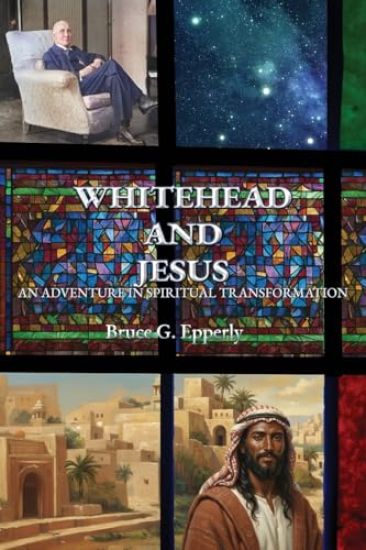
Kirjat ja teokset yhdessä paikassa: 64 kirjaa, julkaisuja vuosilta 2001–2025, suosituimpiin kuuluu Whitehead and Jesus. Vertaile teosten hintoja ja tarkista saatavuus suomalaisista kirjakaupoista.
Nimi esiintyy myös muodoissa: Bruce G. Epperly
64 kirjaa
Kirjojen julkaisuvuodet: 2001–2025.
What can we learn by combining the wisdom of two major theological pioneers of the 20th century? The God of the Growing Edge: Whitehead and Thurman on Theology, Spirituality, and Social Change explores the intersecting spiritual visions of two such towering figures: Alfred North Whitehead, the eminent philosopher and process theologian, and Howard Thurman, the influential African American mystic, theologian, and civil rights leader. This book offers a timely resource for contemplative activists seeking a deeper integration of spirituality and social transformation in our turbulent times. The God of the Growing Edge examines these intersecting visions, highlighting their complementary strengths. Whitehead's metaphysics provides a robust intellectual framework for understanding a universe of interconnectedness, change, and possibility, while Thurman's lived experience of oppression and spiritual resistance infuses this framework with prophetic urgency and practical wisdom. Together, they offer a powerful and timely message for today's world. This book is a personal and spiritual exploration. Drawing on the author's own experiences The God of the Growing Edge invites readers to embark on a "holy adventure" guided by the wisdom of Whitehead and Thurman. It offers practical spiritual practices at the end of each chapter, along with powerful prayers by Thurman. By exploring the "growing edge" of faith, this book offers a compelling path toward a more just, compassionate, and sustainable future.

Saving Progressive Christianity to Save the Planet
Bruce G Epperly
Energion Publications
2024
pokkari
Calling for a faith that lives by what it affirms, not just by what it denies, this book outlines a positive, engaging message supported by active spiritual practices, and carried out in action for a better community and planet. In doing so, Bruce Epperly calls for rethinking and reviving many Christian themes, often neglected or discarded in progressive Christianity, to help carry out this mission. Among these themes are: Mystical experience and visionSpiritual healingGenuine dialogReclaiming a relationship with JesusReclaiming and affirming the work of the Holy SpiritPracticing God's kindom and peace rather than an expectation of doomBeing witnesses in the worldSpeaking and acting prophetically, bringing hopeIn bringing life to these themes, Epperly looks to Jesus and to scripture without demeaning other faiths. He evokes a relational, non-coercive God as the foundation of a relational and non-coercive presence in the world. This book will provide both a challenge and a hope to progressive congregations, especially those struggling with diminishing numbers, but it will also provide an excellent antidote to the charge that progressive Christianity is not an affirmative, active, and hopeful faith.

Pierre Teilhard de Chardin and Alfred North Whitehead came from very different religious backgrounds yet a study of their ideas shows a number of important and helpful synergies. This book by Dr. Bruce Epperly, skilled in the clear presentation of the ideas of process theology, examines those ideas and the experiences of these two important thinkers. Epperly shows the ways in which their themes converge and examines how this synergy can help us plan strategies to join God's adventure of the universe in our own spheres. He argues that both thinkers call for a theological adventure that embraces change and evolution and sees God as a dynamic and transformative force in the universe. Whitehead's metaphysics of love and Teilhard's metaphysics of spiritual evolution offer a synthesis that challenges traditional notions of God and invites us to recognize the mystical and transformative potential within ourselves. Epperly emphasizes the need for a holistic approach to theology and mission that engages with science, culture, and the challenges of our time. He concludes with a call to embrace the God of Tomorrow and embark on a journey of creative transformation and planetary healing. This is a must-read for anyone interested in process theology. It is suitable for individual reading, and with sections on spiritual practices with each chapter, it would be a great aid for study, prayer, and meditation in a small prayer or study group. It encourages personal application and action.
Can mysticism and process theology work together in a way that is a valuable and practical part of one's spiritual life? In this booklet, the first of three that integrate process theology with contemporary spiritual life and activity, Bruce Epperly brings process thought into our spiritual lives and physical well-being in a call to Shalom in cooperation with the Divine. Epperly is a specialist in bringing difficult concepts to life for everyone. He combines that skill with the short format of the Topical Line Drives series to reach spiritual seekers embedded in a busy and challenging world. Mysticism is not something just for people in ancient times or who live in monasteries. It can be a vital part of your life. These may be the words you're looking for to understand and express what you feel.

Those who sing pray twice. In our Christmas carols, we find praise, contemplation, lamentation, and affirmation. Singing them, we join the angelic chorus with the shepherds, participating in the harmonies of the spheres. Our carols rise to the heavens and plumb the unconscious depths of the Spirit, where the "sighs too deep for words" whisper. Childhood memories of carols linger forever at the edges of our memories, fueling our hearts with hope. This holiday season, extend the Christmas joy through the traditional twelve days that lead up to Epiphany. After the busyness of parties and gifts, family gatherings and cookie-baking, take time to focus on the real meaning of Christmas. Celebrate each day with Bruce Epperly, meditating on the familiar words of Christmas carols. Sing and pray at the same time, as you rejoice in the coming of Love and Wisdom into our world, embodied in a Child whose compassionate embrace is greater than any challenge. Joy to the world, for God is come.
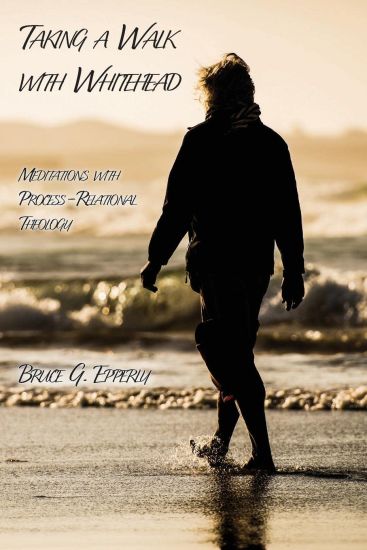
What do walking, meditation, prayer, and process-relational theology have to do with one another? In the view of theologian Bruce Epperly, much, in every way This delightful devotional book draws from the experience of decades as a pastor, but also from simply living the principles of process-relational theology. The first chapter title, "It Will Be Solved in the Walking," sets the tone. Epperly continues to look at some of the simple things of life and find in them opportunities to hear Divine wisdom and to see new opportunities and energies released in your life." Religion without adventure is dead," he says, and then presents spiritual adventure after spiritual adventure. Each chapter grew out of reading and meditating on a quotation from Alfred North Whitehead. The reader is not only taking a walk with Whitehead, but also with the author as he presents how this particular quotation impacted his life and his ministry. This is a devotional book designed to draw the reader into an experience of spiritual and theological adventure. It includes exercises that suggest how to grow from and beyond the meditations in the book. It is suitable for individual or small group reading and study.
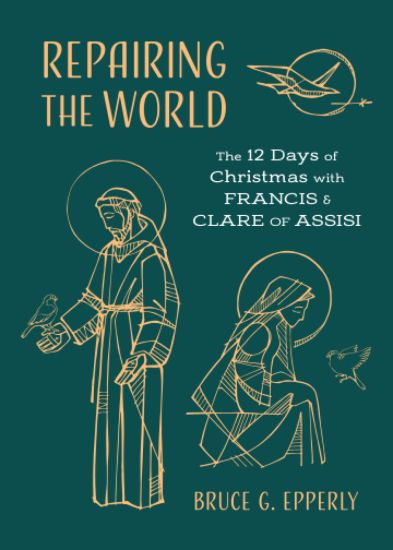
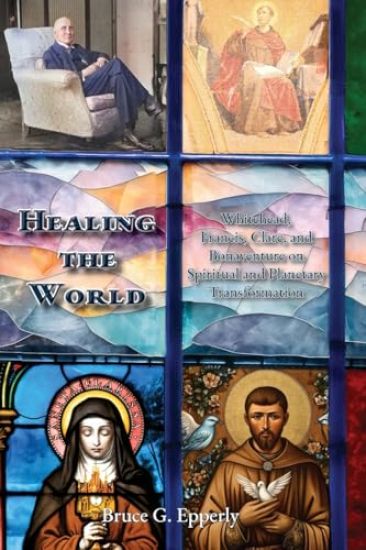
For four years in a row, Bruce Epperly has spent the Twelve Days of Christmas with spiritual companions-authors and thinkers from ages past and present-and then he has shared his twelve-day journey with the rest of us. Last year, Bruce's spiritual companions were Saint Francis and Saint Clare. During the Twelve Days of Christmas, Clare and her spiritual companion Francis ask us to consider the following questions: Where do I see Christ in my life and the world? What clutters my life, spiritually and physically? What one action can I take to simplify my life in order to protect the environment and promote the well-being of others? In the lull after Christmas Day, join Bruce, Francis, and Clare on their quest to repair the world, taking you beyond presents and parties to world loyalty and holy restlessness.
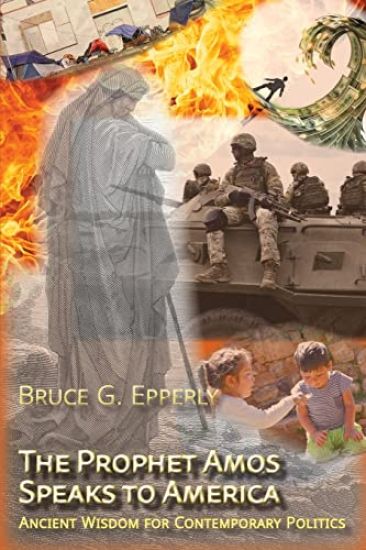
The prophet Amos is known for fiery messages directed at the elites of the northern kingdom of Israel in ancient times. Can this prophet also speak to us in America today? This book looks at the message that Amos proclaimed and applies it to parallel situations in modern America. Issues such as the worship of wealth (greed), privilege, and elites living off the labor of others are more similar in these two times and places than one might initially assume. How can we respond as people of faith to the evils of our own time? Are we responsible to notice and take action? Is taking such action part of our faith? If we listen to the prophet Amos, the answer is a resounding "yes." God cares about the weak, the oppressed, and the downtrodden, and looks to those with the means to help implement change. We are truly asked to take responsibility for the well-being of our neighbor. Christians would be especially challenged by this book and the message of the prophet Amos, because so much of that message was also proclaimed by Jesus, who based judgment on how one treated the least, rather than those who are great. With study and thought questions with each chapter, and an abundance of suggestions for practical action, this book is a great tool to use in a church-wide study combined with a call to action.
The incarnation is a central Christian doctrine. Many books have been dedicated to attempting to understand its mystery and how it fits with the rest of Christian theology. But what about the way this doctrine can and should impact the way we live? Process theologian and pastor Bruce Epperly addresses this topic in this easy-to-read but challenging book. Starting with a look forward in Advent and moving through the seasons of the Christian year and indeed of life, he examines different elements of both the story and the doctrine. From expectation we move through the various "messy" ways in which God acts, Christmas, Epiphany, Pentecost, and the emerging kingdom of Christ. This book is theology where it meets practice, reflection put into practical action, and ethics drawn from the deepest wells of the Christ story. It will drive you deeper into scripture and spiritual growth from a variety of perspectives and sources, reflecting the chasms crossed in the one very messy incarnation.
This book takes its inspiration from the familiar Gospel Nativity stories-but it is far more than a Christmas book. As we revisit the characters of the familiar Christmas stories, we are invited to a new understanding of the Incarnation. We realize that, like Mary, we too are called to be the wombs and midwives of Divine revelation. We may receive Divine guidance and inspiration in dreams, just as Joseph did, and like him, find the courage to go against our society's expectations. Like the shepherds, we are welcomed to see the ongoing glorious pageant of God-made-flesh. And finally, we learn from the magis' example to widen our spiritual horizons and explore new paths. In Jesus, the Word is made flesh; God has skin, cells, a reproductive system, and circulatory system. Our own souls and cells also reveal God's artistry, for they too embody the Source of all life. In fact, incarnation is everywhere we turn, revealing the marriage of Creator and creature in all its messiness. Embodiment in all its wonder declares the glory of God-and calls us to build a world where justice and kindnessreplace oppression and violence.
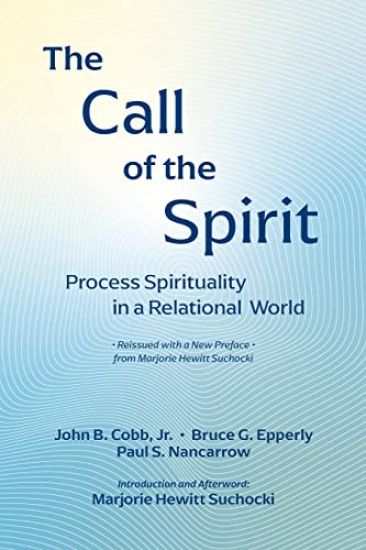
The Call of the Spirit
John B Cobb; Bruce G Epperly; Paul S Nancarrow
Process Century Press
2022
pokkari
In a process-relational world, to love God is to be swept up into God's own love for the world. It is to become a participant in God's great compassion. To develop spirituality in this relational world of ours is to develop the habit of attentiveness to the call of the Spirit, which will lead us ever more deeply into lives that are marked by compassion of God. These nine essays form an integral whole, combining a careful analysis of relational dynamics with very practical suggestions for personal and communal ways of intensifying our spirituality. The essays flow from the wellsprings of spirituality in each of our authors; they are "lived" essays, and not simply theoretical discussions. To read the essays, then, is to be invited into the privilege of seeing how the call of the Spirit has been answered in each of these three lives. One can join with them by reading this book meditatively, reflecting on one's own responses to the issues named. But one can also read this book as a kind of manual, giving tested instruction for persons and for communities to focus intentionally on increasing our spiritual awareness. In this sense, then, perhaps the book functions according to its apt title-it may, indeed, represent for us the call of the Spirit. Marjorie Hewitt Suchocki, Professor Emerita, Claremont School of Theology