Kirjailija
Bruce Gordon
Kirjat ja teokset yhdessä paikassa: 17 kirjaa, julkaisuja vuosilta 1992–2026, suosituimpiin kuuluu Clerical Discipline and the Rural Reformation. Vertaile teosten hintoja ja tarkista saatavuus suomalaisista kirjakaupoista.
17 kirjaa
Kirjojen julkaisuvuodet: 1992–2026.
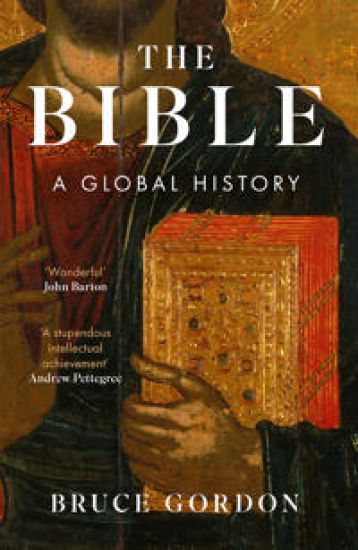
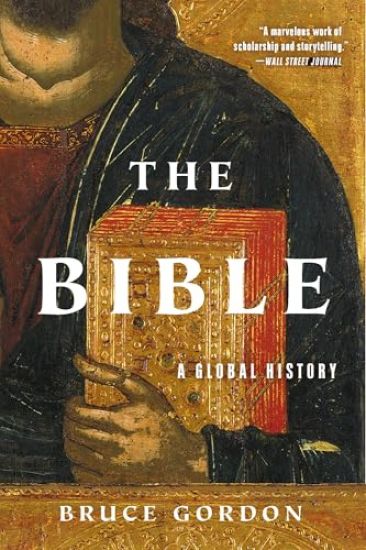
A global history of the world's best-known and most influential book "A marvelous work of scholarship and storytelling."--Wall Street Journal For Christians, the Bible is a book inspired by God, but its eternal words are transmitted across the world by fallible human hands. In The Bible, Bruce Gordon recounts the astounding story of the Bible's journey around the globe and across more than two thousand years, showing how it has shaped and been shaped by changing beliefs and believers' radically different needs. God speaks with one voice, but the people who receive it are scattered and divided--found in desert monasteries and Chinese house churches, in Byzantine cathedrals and Guatemalan villages. Breathtakingly global in scope, The Bible tells the story of this sacred book through the stories of its many and diverse human encounters, revealing not a static text but a living, dynamic cultural force.
'Wonderful' JOHN BARTON'A stupendous intellectual achievement' ANDREW PETTEGREE'A stunning love song to the Bible . . . this will be a classic' CHINE MCDONALDThe remarkable story of the most influential book in human history. The Bible is the world's best-known text. Yet, it is a book that never was - its original form does not exist and probably never did. What we have is the inheritance of generation after generation of Christians who have sought to hear God speak. Available in over three thousand languages and taking innumerable forms, each version is a revelation, evolving as a reflection of its own culture and moment. Bruce Gordon traces the Bible's astounding journey from its emergence as a codex in the second century, to the Reformation, to the spectacular growth of Christianity in the Global South today. For centuries a source of inspiration, it has also been a tool for violence and oppression, weaponised in the name of colonialism, and it has expressed hopes for freedom in the struggle for liberation. Found in desert monasteries and Chinese house churches, in Byzantine cathedrals and Guatemalan villages, it has been a book in motion from its very beginnings, a product of more than two thousand years of wandering, restlessness and change. Breathtakingly global in scope, The Bible is a sweeping history of this sacred book told through the stories of its diverse human encounters in search of the divine - revealing not a static text but a living, dynamic cultural force.
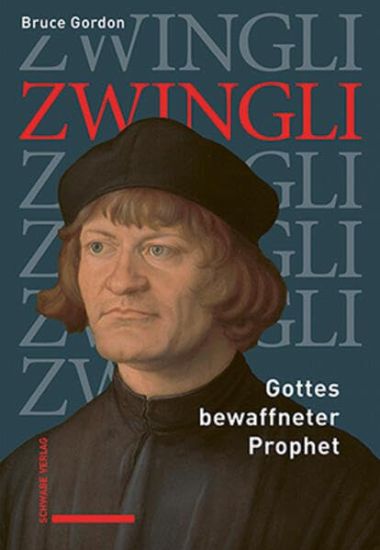
Following Zwingli explores history, scholarship, and memory in Reformation Zurich. The humanist culture of this city was shaped by a remarkable sodality of scholars, many of whom had been associated with Erasmus. In creating a new Christian order, Zwingli and his colleagues sought biblical, historical, literary, and political models to shape and defend their radical reforms. After Zwingli’s sudden death, the next generation was committed to the institutional and intellectual establishment of the Reformation through ongoing dialogue with the past. The essays of this volume examine the immediacy of antiquity, early Christianity, and the Middle Ages for the Zurich reformers. Their reading and appropriation of history was no mere rhetorical exercise or polemical defence. The Bible, theology, church institutions, pedagogy, and humanist scholarship were the lifeblood of the Reformation. But their appropriation depended on the interplay of past ideals with the pressing demands of a sixteenth-century reform movement troubled by internal dissention and constantly under attack. This book focuses on Zwingli’s successors and on their interpretations of the recent and distant past: the choices they made, and why. How those pasts spoke to the present and how they were heard tell us a great deal not only about the distinctive nature of Zurich and Zwinglianism, but also about locality, history, and religious change in the European Reformation.
The remarkable story of the most influential book in human history. The Bible is the world's best-known text. Yet, it is a book that never was - its original form does not exist and likely never did. What we have is the inheritance of generation after generation of Christians who have sought to hear God speak. Available in over 3,000 languages and taking innumerable forms, each version is a revelation, evolving as a reflection of its own culture and moment. Bruce Gordon traces the Bible's astounding journey from its emergence as a codex in the second century, to the Reformation of the Middle Ages, to the spectacular growth of Christianity in the Global South today. It has been a tool for violence and oppression, weaponised in the name of colonialism, and it has expressed hopes for freedom in the struggle for liberation. Found in desert monasteries and Chinese house churches, in Byzantine cathedrals and Guatemalan villages, it has been a book in motion from its very beginnings, a product of more than two thousand years of wandering, restlessness and change. Breathtakingly global in scope, The Bible is a sweeping history of this sacred book told through the stories of its diverse human encounters in search of the divine - revealing not a static text but a living, dynamic cultural force.
'Wonderful' JOHN BARTON'A stupendous intellectual achievement' ANDREW PETTEGREE'A stunning love song to the Bible . . . this will be a classic' CHINE MCDONALDThe remarkable story of the most influential book in human history. The Bible is the world's best-known text. Yet, it is a book that never was - its original form does not exist and probably never did. What we have is the inheritance of generation after generation of Christians who have sought to hear God speak. Available in over three thousand languages and taking innumerable forms, each version is a revelation, evolving as a reflection of its own culture and moment. Bruce Gordon traces the Bible's astounding journey from its emergence as a codex in the second century, to the Reformation, to the spectacular growth of Christianity in the Global South today. For centuries a source of inspiration, it has also been a tool for violence and oppression, weaponised in the name of colonialism, and it has expressed hopes for freedom in the struggle for liberation. Found in desert monasteries and Chinese house churches, in Byzantine cathedrals and Guatemalan villages, it has been a book in motion from its very beginnings, a product of more than two thousand years of wandering, restlessness and change. Breathtakingly global in scope, The Bible is a sweeping history of this sacred book told through the stories of its diverse human encounters in search of the divine - revealing not a static text but a living, dynamic cultural force.
In this 52-week devotional, Bruce Gordon challenges the idea that youth is the best part of life. He asserts that we make too little of age: You were made for more than the golf course or the rocking chair These practical devotions, steeped in Scripture, will help all adults transition to a time of life that can be rich with purpose, significance, and hope as you serve God. You'll be encouraged and empowered to build a life that matters for now and for eternity. Discover for yourself that the best years--the most impactful years of your life--are still to come.
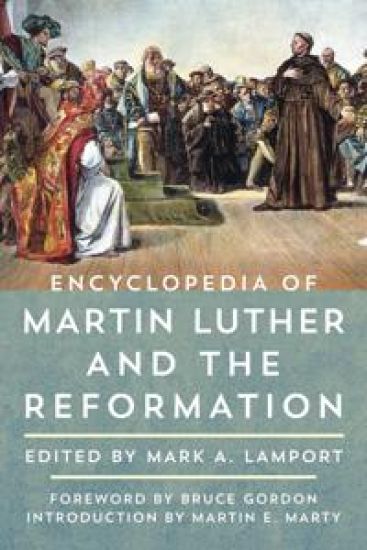
The Encyclopedia of Martin Luther and the Reformation is a comprehensive global study of the life and work of Martin Luther and the movements that followed him—in history and through today. Organized by a stellar advisory board of Luther and Reformation scholars, the encyclopedia features nearly five hundred entries that examine Luther’s life and impact worldwide. The two-volume set provides overviews of basics such as the 95 Theses as well as more complex topics such as reformational distinctions. Entries explore Luther’s contributions to theology, sacraments, his influence on the church and contemporaries, his character, and more. The work also discusses Luther’s controversies and topics such as gender, sexuality, and race. Publishing at the five hundredth anniversary of the Reformation, this is an essential reference work for understanding the Reformation and its legacy today.
John Calvin's Institutes of the Christian Religion
Bruce Gordon
PRINCETON UNIVERSITY PRESS
2016
sidottu
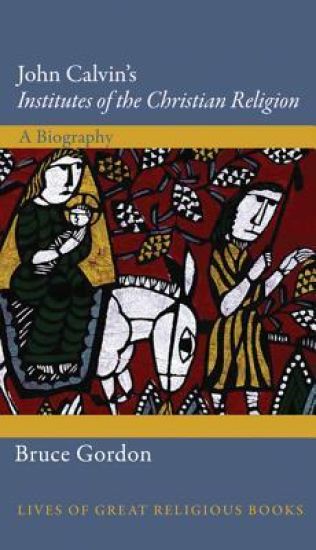
John Calvin's Institutes of the Christian Religion is a defining book of the Reformation and a pillar of Protestant theology. First published in Latin in 1536 and in Calvin's native French in 1541, the Institutes argues for the majesty of God and for justification by faith alone. The book decisively shaped Calvinism as a major religious and intellectual force in Europe and throughout the world. Here, Bruce Gordon provides an essential biography of Calvin's influential and enduring theological masterpiece, tracing the diverse ways it has been read and interpreted from Calvin's time to today. Gordon explores the origins and character of the Institutes, looking closely at its theological and historical roots, and explaining how it evolved through numerous editions to become a complete summary of Reformation doctrine. He shows how the development of the book reflected the evolving thought of Calvin, who instilled in the work a restlessness that reflected his understanding of the Christian life as a journey to God. Following Calvin's death in 1564, the Institutes continued to be reprinted, reedited, and reworked through the centuries. Gordon describes how it has been used in radically different ways, such as in South Africa, where it was invoked both to defend and attack the horror of apartheid. He examines its vexed relationship with the historical Calvin--a figure both revered and despised--and charts its robust and contentious reception history, taking readers from the Puritans and Voltaire to YouTube, the novels of Marilynne Robinson, and to China and Africa, where the Institutes continues to find new audiences today.
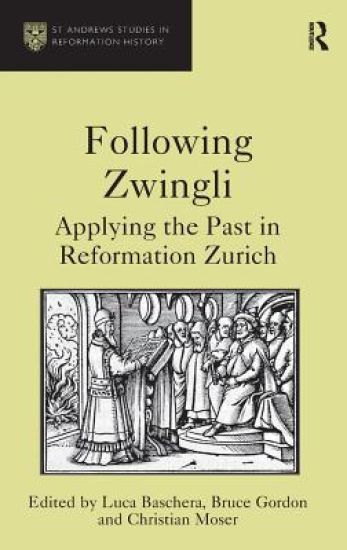
Following Zwingli explores history, scholarship, and memory in Reformation Zurich. The humanist culture of this city was shaped by a remarkable sodality of scholars, many of whom had been associated with Erasmus. In creating a new Christian order, Zwingli and his colleagues sought biblical, historical, literary, and political models to shape and defend their radical reforms. After Zwingli’s sudden death, the next generation was committed to the institutional and intellectual establishment of the Reformation through ongoing dialogue with the past. The essays of this volume examine the immediacy of antiquity, early Christianity, and the Middle Ages for the Zurich reformers. Their reading and appropriation of history was no mere rhetorical exercise or polemical defence. The Bible, theology, church institutions, pedagogy, and humanist scholarship were the lifeblood of the Reformation. But their appropriation depended on the interplay of past ideals with the pressing demands of a sixteenth-century reform movement troubled by internal dissention and constantly under attack. This book focuses on Zwingli’s successors and on their interpretations of the recent and distant past: the choices they made, and why. How those pasts spoke to the present and how they were heard tell us a great deal not only about the distinctive nature of Zurich and Zwinglianism, but also about locality, history, and religious change in the European Reformation.
Sebastian Castellio, 1515-1563
Hans R. Guggisberg; Bruce Gordon
Ashgate Publishing Limited
2003
sidottu
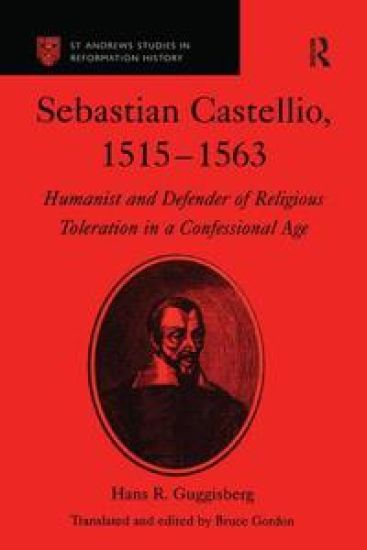
Sebastian Castellio, linguist, humanist and religious reformer, is one of the most remarkable figures of the Reformation. Attracted by Calvin's reforms, Castellio moved to Geneva in the 1540s, where he wrote his influential work on educational reform. Ironically, it was Castellio's work as a scholar in Geneva, which was to lead to his falling out with Calvin, and ultimately his forced departure from Geneva and his resettlement in Basle. Exiled from Geneva, Castellio soon attracted a circle of like-minded reformers who opposed the intolerant attitude of Calvin, exemplified by the execution of the heretical Michael Servetus. It is Castellio's residence in Basle, where he developed his 'liberal' humanist approach to religious toleration in opposition to Calvin's dogmatic othodoxy, which forms the core of this study. It explores what toleration meant and how both sides argued their case. Much attention is paid to Castellio's most important work 'On Heretics', in which he argues against the execution of those who err in the faith. By telling the fascinating tale of Castellio's life, this work illuminates the furious debate which he unleashed and how it marked a crucial stage in the development of Protestant thought.
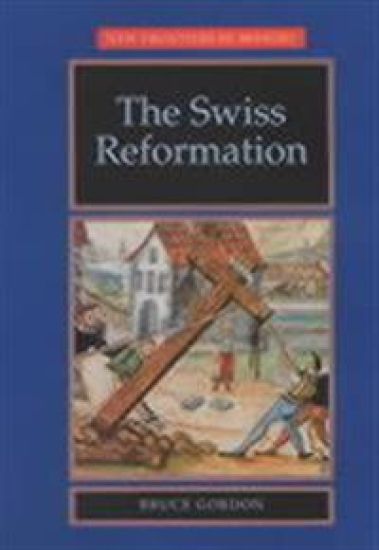
The Swiss Reformation was a seminal event of the sixteenth century which created a Protestant culture whose influence spread across Europe from Transylvania to Scotland. Offers the first comprehensive study of the Swiss Reformation and argues that the movement must be understood in terms of the historical evolution of the Swiss Confederation, its unique and fluid structures, the legacy of the mercenary trade, the distinctive character of Swiss theology, the powerful influence of Renaissance humanism, and, most decisively, the roles played by the dominant figures, Huldrych Zwingli and Heinrich Bullinger. Marked by astounding creative energy, incendiary preaching, burning political passions, peasant revolts, and breath-taking scholarship, as well as by painful divisions, civil war, executions and dashed hopes, the story of the Swiss Reformation is told with extensive use of primary sources. Explores the narrative of events before turning to consider themes such as the radical opposition, church and community, daily life in the Confederation, cultural achievements and the Swiss place in the wider European Reformation world.
Clerical Discipline and the Rural Reformation
Bruce Gordon
Herbert Cie Lang AG, Buchhandlung Antiquariat
1992
nidottu
After the defeat at Kappel in 1531, the political and religious leaders of Zurich had to reckon with both the weak position of the Reformation in the Confederation and the precarious situation in their own rural territories. The reformation of these areas depended crucially upon the ability of both church and state to define and control the lives and doctrines of the ministers who preached in their name. Based on extensive archival research, this book offers a study of the historical and theological background to the first reformed disciplinary institution, the synod in Zurich. The emphasis is upon the individual cases of the ministers, which bring into sharp relief the multifarious difficulties of their positions and of the often disharmonious relationship between the -new faith- and the religious needs of the people. The sensitive and perceptive means by which clerical discipline was administered in Zurich during the period between Kappel and the rise of Confessionalism testifies to Heinrich Bullinger's grasp of the complexities involved in reforming both the clergy and the laity. This book makes a unique contribution to the current debate on the implementation and reception of the Reformation in the countryside."