

Kirjailija
Bruce Grant
Kirjat ja teokset yhdessä paikassa: 19 kirjaa, julkaisuja vuosilta 1995–2026, suosituimpiin kuuluu First Verse. Vertaile teosten hintoja ja tarkista saatavuus suomalaisista kirjakaupoista.
19 kirjaa
Kirjojen julkaisuvuodet: 1995–2026.




Fight for a City: The Story of the Union League Club of Chicago and Its Times, 1880-1955
Bruce Grant; Herbert Hoover; Joseph A. Matter
Literary Licensing, LLC
2012
sidottu
""Fight For A City: The Story Of The Union League Club Of Chicago And Its Times, 1880-1955"" by Grant Bruce is a comprehensive historical account of the Union League Club of Chicago, a private social club that played a significant role in the development of Chicago's business, political, and cultural scenes during the late 19th and early 20th centuries. The book chronicles the club's founding in 1879, its early years as a bastion of Republican politics, and its evolution into a leading voice for progressive reform in the city. The author also provides an in-depth analysis of the club's members, including prominent business leaders, politicians, and cultural figures, and their impact on the city's growth and development. The book is a fascinating look at the intersection of politics, business, and social life in Chicago during a critical period of its history.""This scarce antiquarian book is a facsimile reprint of the old original and may contain some imperfections such as library marks and notations. Because we believe this work is culturally important, we have made it available as part of our commitment for protecting, preserving, and promoting the world's literature in affordable, high quality, modern editions, that are true to their original work.

Fight for a City: The Story of the Union League Club of Chicago and Its Times, 1880-1955
Bruce Grant; Herbert Hoover; Joseph A. Matter
Literary Licensing, LLC
2012
nidottu
Eagle of the Sea: The Story of Old Ironsides
Bruce Grant; Gordon Grant
Literary Licensing, LLC
2011
nidottu
Warpath: A Tale of the Plains Indians
Bruce Grant; Jacob Landau
Literary Licensing, LLC
2011
nidottu
Eagle of the Sea: The Story of Old Ironsides
Bruce Grant; Gordon Grant
Literary Licensing, LLC
2011
sidottu
""Eagle of the Sea: The Story of Old Ironsides"" is a historical non-fiction book written by Bruce Grant. It tells the story of the USS Constitution, a legendary American warship that played a significant role in the War of 1812. The book traces the history of the ship from its construction in the late 18th century to its famous battles against British ships during the War of 1812. The author provides a detailed account of the ship's design, construction, and the lives of the sailors who served on board. The book also explores the political and social context of the time, including the tensions between the United States and Britain that led to the war. The author's vivid descriptions of the battles and the ship's heroic exploits make for a thrilling read. Overall, ""Eagle of the Sea"" is a fascinating account of one of America's most iconic warships and its role in shaping the country's history. This scarce antiquarian book is a facsimile reprint of the old original and may contain some imperfections such as library marks and notations. Because we believe this work is culturally important, we have made it available as part of our commitment for protecting, preserving, and promoting the world's literature in affordable, high quality, modern editions, that are true to their original work.
Encyclopedia of Rawhide and Leather Braiding
Bruce Grant
Schiffer Publishing Ltd
2009
sidottu
Halvin toimitettuna 29,50 €
The Encyclopedia of Rawhide and Leather Braiding is the definitive work on the subject and results from the late Bruce Grant’s many years of interest and experience as a braider and writer on the subject. It combines most of the material published in Leather Braiding and How to Make Cowboy Horse Gear with a mass of completely new material. The book’s more than 350 illustrations are arranged so that the step-by-step instructions face the picture being described, making it very easy to follow. While the book is primarily for those interested in leathercraft, in nearly all cases the methods of braiding are applicable to many other materials, such as silk, cotton, plastic, catgut, or horsehair. Braidwork takes many forms, and its applications are practical as well as decorative. The combination of beauty and utility lends itself to an array of items—personal gear or clothing, working or show gear for a horse, decoration of plain, carved, or tooled leather work. Truly a book to be used as well as read, Encyclopedia of Rawhide and Leather Braiding provides all the information needed for this satisfying pastime.
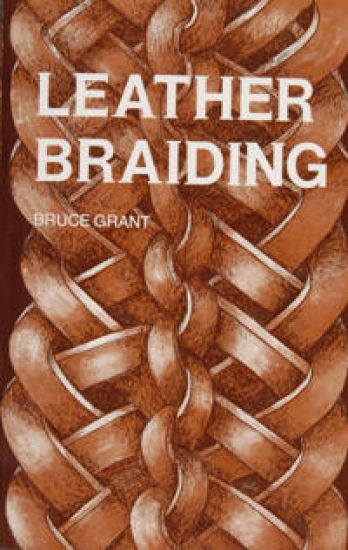
For over four decades, Leather Braiding has reigned as the authoritative book in its realm. Grant’s meticulously crafted manual unveils the intricate world of leather braiding with unparalleled clarity, offering an abundance of richly detailed illustrations, meticulous step-by-step instructions, and a treasure trove of captivating insights. Embracing both practical and leisurely pursuits, this literary masterpiece demystifies leather craftsmanship, empowering even the most-inexperienced enthusiasts to fashion an array of utilitarian and ornamental wonders. From the ingenious braided button to the awe-inspiring masterpieces of thong appliqué, the book showcases a vast array of techniques suitable for novices and experts alike. Delving deeper, it presents a captivating historical panorama of leather’s enduring significance in society, explores the indispensable tools of the trade in a dedicated chapter, and provides an indispensable glossary of terms to ensure a comprehensive understanding of the subject matter. With its profound depth and comprehensive scope, Leather Braiding remains an indispensable companion for anyone seeking mastery in this age-old art form.
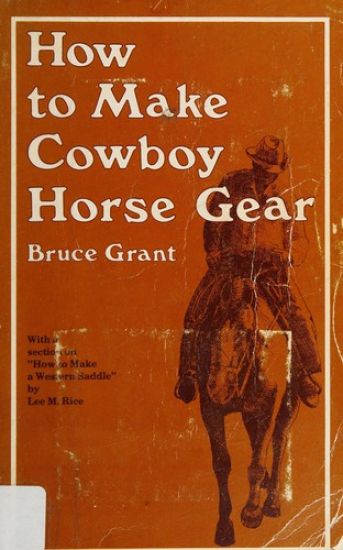
Written by a man who made a lifelong study of leather craft and rawhide work, How to Make Cowboy Horse Gear is the answer to many requests for how-to-do-it information from cowboys, horsemen in show business, dude ranchers, and many other people interested in riding horses and their gear. Bridles, hackamores, reins, reatas, quirts, and riding crops are among the articles of gear that can be made using this well-illustrated book as a guide. Most of the pieces described here are made of rawhide; however, leather thongs and plastic string can be worked in the same manner. Clear and detailed drawings show from beginning to end how to make the articles of gear the horseman uses to “work or show” his horse to best advantage.
The Caucasus region of Eurasia, wedged in between the Black and Caspian Seas, encompasses the modern territories of Armenia, Azerbaijan, and Georgia, as well as the troubled republic of Chechnya in southern Russia. A site of invasion, conquest, and resistance since the onset of historical record, it has earned a reputation for fearsome violence and isolated mountain redoubts closed to outsiders. Over extended efforts to control the Caucasus area, Russians have long mythologized stories of their countrymen taken captive by bands of mountain brigands. In The Captive and the Gift, the anthropologist Bruce Grant explores the long relationship between Russia and the Caucasus and the means by which sovereignty has been exercised in this contested area. Taking his lead from Aleksandr Pushkin's 1822 poem "Prisoner of the Caucasus," Grant explores the extraordinary resonances of the themes of violence, captivity, and empire in the Caucasus through mythology, poetry, short stories, ballet, opera, and film. Grant argues that while the recurring Russian captivity narrative reflected a wide range of political positions, it most often and compellingly suggested a vision of Caucasus peoples as thankless, lawless subjects of empire who were unwilling to acknowledge and accept the gifts of civilization and protection extended by Russian leaders. Drawing on years of field and archival research, Grant moves beyond myth and mass culture to suggest how real-life Caucasus practices of exchange, by contrast, aimed to control and diminish rather than unleash and increase violence. The result is a historical anthropology of sovereign forms that underscores how enduring popular narratives and close readings of ritual practices can shed light on the management of pluralism in long-fraught world areas.
The Caucasus region of Eurasia, wedged in between the Black and Caspian Seas, encompasses the modern territories of Armenia, Azerbaijan, and Georgia, as well as the troubled republic of Chechnya in southern Russia. A site of invasion, conquest, and resistance since the onset of historical record, it has earned a reputation for fearsome violence and isolated mountain redoubts closed to outsiders. Over extended efforts to control the Caucasus area, Russians have long mythologized stories of their countrymen taken captive by bands of mountain brigands. In The Captive and the Gift, the anthropologist Bruce Grant explores the long relationship between Russia and the Caucasus and the means by which sovereignty has been exercised in this contested area. Taking his lead from Aleksandr Pushkin's 1822 poem "Prisoner of the Caucasus," Grant explores the extraordinary resonances of the themes of violence, captivity, and empire in the Caucasus through mythology, poetry, short stories, ballet, opera, and film. Grant argues that while the recurring Russian captivity narrative reflected a wide range of political positions, it most often and compellingly suggested a vision of Caucasus peoples as thankless, lawless subjects of empire who were unwilling to acknowledge and accept the gifts of civilization and protection extended by Russian leaders. Drawing on years of field and archival research, Grant moves beyond myth and mass culture to suggest how real-life Caucasus practices of exchange, by contrast, aimed to control and diminish rather than unleash and increase violence. The result is a historical anthropology of sovereign forms that underscores how enduring popular narratives and close readings of ritual practices can shed light on the management of pluralism in long-fraught world areas.

At the outset of the twentieth century, the Nivkhi of Sakhalin Island were a small population of fishermen under Russian dominion and an Asian cultural sway. The turbulence of the decades that followed would transform them dramatically. While Russian missionaries hounded them for their pagan ways, Lenin praised them; while Stalin routed them in purges, Khrushchev gave them respite; and while Brezhnev organized complex resettlement campaigns, Gorbachev pronounced that they were free to resume a traditional life. But what is tradition after seven decades of building a Soviet world? Based on years of research in the former Soviet Union, Bruce Grant's book draws upon Nivkh interviews, newly opened archives, and rarely translated Soviet ethnographic texts to examine the effects of this remarkable state venture in the construction of identity. With a keen sensitivity, Grant explores the often paradoxical participation by Nivkhi in these shifting waves of Sovietization and poses questions about how cultural identity is constituted and reconstituted, restructured and dismantled. Part chronicle of modernization, part saga of memory and forgetting, In the Soviet House of Culture is an interpretive ethnography of one people's attempts to recapture the past as they look toward the future. This is a book that will appeal to anthropologists and historians alike, as well as to anyone who is interested in the people and politics of the former Soviet Union.