Kirjojen hintavertailu – 12 859 824 kirjaa ja 27 kauppaa

Kirjailija

Bruce Hoffman

Kirjat ja teokset yhdessä paikassa: 21 kirjaa, julkaisuja vuosilta 1995–2025, suosituimpiin kuuluu Countering the New Terrorism. Vertaile teosten hintoja ja tarkista saatavuus suomalaisista kirjakaupoista.

21 kirjaa

Kirjojen julkaisuvuodet: 1995–2025.

Anonymous Soldiers: The Struggle for Israel, 1917-1947

Anonymous Soldiers: The Struggle for Israel, 1917-1947

Bruce Hoffman

Knopf Doubleday Publishing Group
2016
nidottu
Winner of the National Jewish Book AwardWinner of the Washington Institute Book PrizeOne of the Best Books of the YearSt. Louis Post-Dispatch * Kirkus Reviews In this groundbreaking work, Bruce Hoffman--America's leading expert on terrorism--brilliantly re-creates the crucial thirty-year period that led to the birth of Israel. Drawing on previously untapped archival resources in London, Washington, D. C., and Jerusalem, Anonymous Soldiers shows how the efforts of two militant Zionist groups brought about the end of British rule in the Middle East. Hoffman shines new light on the bombing of the King David Hotel, the assassination of Lord Moyne in Cairo, the leadership of Menachem Begin, the life and death of Abraham Stern, and much else. Above all, he shows exactly how the underdog "anonymous soldiers" of Irgun and Lehi defeated the British and set in motion the chain of events that resulted in the creation of the formidable nation-state of Israel. One of the most detailed and sustained accounts of a terrorist and counterterrorist campaign ever written, Hoffman has crafted the definitive account of the struggle for Israel--and an impressive investigation of the efficacy of guerilla tactics. Anonymous Soldiers is essential to anyone wishing to understand the current situation in the Middle East.
Countering the New Terrorism

Countering the New Terrorism

Ian O. Lesser; Bruce Hoffman; John Arquilla; David F. Ronfeldt; Michele Zanini; Michael Brian Jenkins

RAND
1999
pokkari
Recent bombings of U. S. embassies in Africa remind us that U. S. citizens and U. S. interest are not immune to terrorism. Featuring the works of world-renowned experts, this book traces the recent evolution of international terrorism against civilian and U. S. military targets, looks ahead to where terrorism is going, and assesses how it might be contained.
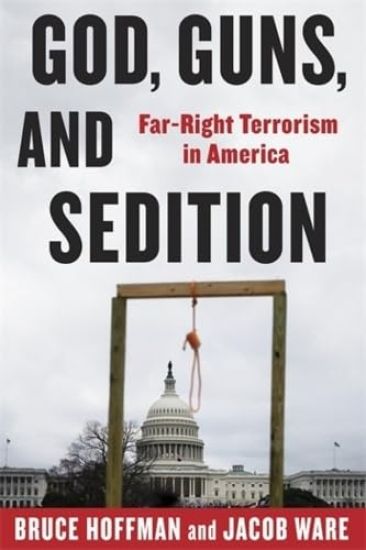
God, Guns, and Sedition

God, Guns, and Sedition

Bruce Hoffman; Jacob Ware

Columbia University Press
2025
pokkari
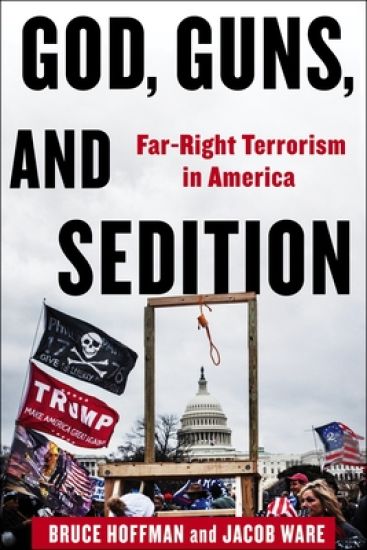
Winner, 2025 Airey Neave Memorial Book Prize, Airey Neave TrustShocking acts of terrorism have erupted from violent American far-right extremists in recent years, including the 2015 mass murder at a historic Black church in Charleston and the January 6, 2021, attack on the U. S. Capitol. These incidents, however, are neither novel nor unprecedented. They are the latest flashpoints in a process that has been unfolding for decades, in which vast conspiracy theories and radical ideologies such as white supremacism, racism, antisemitism, xenophobia, and hostility to government converge into a deadly threat to democracy. God, Guns, and Sedition offers the definitive account of the rise of far-right terrorism in the United States—and how to counter it. Leading experts Bruce Hoffman and Jacob Ware trace the historical trajectory and assess the present-day dangers of this violent extremist movement, along with the harm it poses to U. S. national security. They combine authoritative, nuanced analysis with gripping storytelling and portraits of the leaders behind this violence and their followers. Hoffman and Ware highlight key terrorist tactics, such as the use of cutting-edge communications technology; the embrace of leaderless resistance or lone-wolf strategies; infiltration and recruitment in the military and law enforcement; and the movement’s intricate relationship with mainstream politics. An unparalleled examination of one of today’s great perils, God, Guns, and Sedition ends with an array of essential practical recommendations to halt the growth of violent far-right extremism and address this global terrorist threat.
God, Guns, and Sedition

God, Guns, and Sedition

Bruce Hoffman; Jacob Ware

Columbia University Press
2024
sidottu
Winner, 2025 Airey Neave Memorial Book Prize, Airey Neave TrustShocking acts of terrorism have erupted from violent American far-right extremists in recent years, including the 2015 mass murder at a historic Black church in Charleston and the January 6, 2021, attack on the U. S. Capitol. These incidents, however, are neither novel nor unprecedented. They are the latest flashpoints in a process that has been unfolding for decades, in which vast conspiracy theories and radical ideologies such as white supremacism, racism, antisemitism, xenophobia, and hostility to government converge into a deadly threat to democracy. God, Guns, and Sedition offers the definitive account of the rise of far-right terrorism in the United States—and how to counter it. Leading experts Bruce Hoffman and Jacob Ware trace the historical trajectory and assess the present-day dangers of this violent extremist movement, along with the harm it poses to U. S. national security. They combine authoritative, nuanced analysis with gripping storytelling and portraits of the leaders behind this violence and their followers. Hoffman and Ware highlight key terrorist tactics, such as the use of cutting-edge communications technology; the embrace of leaderless resistance or lone-wolf strategies; infiltration and recruitment in the military and law enforcement; and the movement’s intricate relationship with mainstream politics. An unparalleled examination of one of today’s great perils, God, Guns, and Sedition ends with an array of essential practical recommendations to halt the growth of violent far-right extremism and address this global terrorist threat.
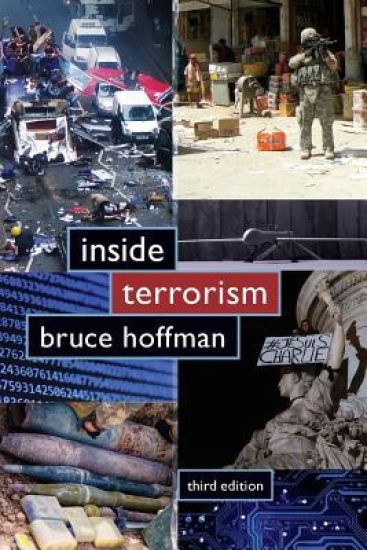
Inside Terrorism

Inside Terrorism

Bruce Hoffman

Columbia University Press
2017
pokkari

Halvin toimitettuna 25,70 €

Bruce Hoffman's Inside Terrorism has remained the seminal work for understanding the historical evolution of terrorism and the terrorist mind-set. In this revised third edition of his classic text, Hoffman analyzes the latest developments in global terrorism, offering insight into new adversaries, motivations, strategies, and tactics. He focuses on the rise of ISIS and the resilience of al-Qaeda; terrorist exploitation of the Internet and embrace of social media; radicalization of foreign fighters; and potential future trends, including the repercussions of a post-caliphate ISIS. Hoffman examines the demographics of contemporary terrorist leaders and recruits; the continued use of suicide bombers; and the likelihood of a chemical, biological, radiological, or nuclear terrorist strike. He also considers the resurgence of violent antigovernment militants, including white supremacists and opponents of abortion. He argues that the war on terrorism did not end with Osama bin Laden's death and that ongoing instability and strife in Syria, Iraq, Afghanistan, Libya, and Yemen, among other places, will both sustain terrorist movements and have broad implications for domestic and international security around the globe.
Inside Terrorism

Inside Terrorism

Bruce Hoffman

Columbia University Press
2017
sidottu
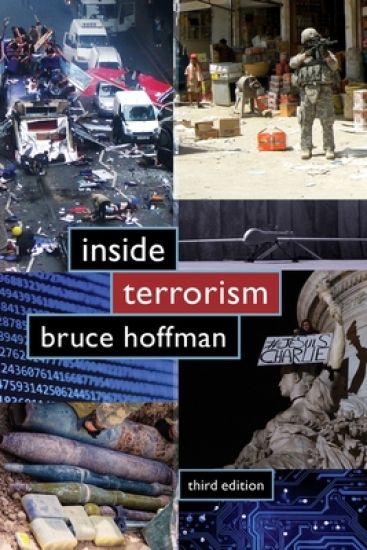
Bruce Hoffman's Inside Terrorism has remained the seminal work for understanding the historical evolution of terrorism and the terrorist mind-set. In this revised third edition of his classic text, Hoffman analyzes the latest developments in global terrorism, offering insight into new adversaries, motivations, strategies, and tactics. He focuses on the rise of ISIS and the resilience of al-Qaeda; terrorist exploitation of the Internet and embrace of social media; radicalization of foreign fighters; and potential future trends, including the repercussions of a post-caliphate ISIS. Hoffman examines the demographics of contemporary terrorist leaders and recruits; the continued use of suicide bombers; and the likelihood of a chemical, biological, radiological, or nuclear terrorist strike. He also considers the resurgence of violent antigovernment militants, including white supremacists and opponents of abortion. He argues that the war on terrorism did not end with Osama bin Laden's death and that ongoing instability and strife in Syria, Iraq, Afghanistan, Libya, and Yemen, among other places, will both sustain terrorist movements and have broad implications for domestic and international security around the globe.
Lianas of the Guianas

Lianas of the Guianas

Bruce Hoffman

KIT Publishers
2017
sidottu
Lianas (woody vines) are iconic symbols of tropical forests around the world. These plants use the energetically expensive investment of trees in woody stems to gain relatively inexpensive access to the light-rich canopy. Lianas contribute significantly to tropical forest diversity (25-40 percent of species), carbon sequestration, biomass, plant-animal interactions, and forest gap dynamics. Although they are often considered pests in commercial forestry, woody climbers are important to many traditional peoples as medicines, subsistence fibers and non-timber forest products. Largely due to their inaccessibility, lianas and other climbers remain among the most poorly documented lifeforms in the tropics. This book aims to facilitate learning and identification of woody climbers of the Guianas (Guyana, French Guiana, and Suriname) for specialists and non-specialists by using an image-rich format, common and scientific names, simplified botanical terminology, and character icon guides, and by describing ecology and uses. The primary focus of the guide for identification is upon family and genus recognition, but identification of common species will be possible in many cases.
The Radicalization of Diasporas and Terrorism
Certain Diaspora communities, frustrated by a perceived war against the Muslim world, have turned against their adopted homelands, targeting the government and its people by supporting terrorist attacks against Western countries through recruitment, fundraising, and training. The problem is exacerbated by the open borders of globalization. Emerging threats must be identified without alienating Diaspora communities and thereby playing into terrorist hands.
The Victims of Terrorism

The Victims of Terrorism

Bruce Hoffman

RAND
2007
pokkari
Organized groups of victims' families and friends have emerged since September 11, 2001, to become a powerful voice in U. S. counterterrorist policy and legislation. These groups were remarkably successful in getting the 9/11 Commission established and in getting the commission's most important recommendations enacted. This report documents these groups and compares them to groups formed in response to other terrorist attacks.
Pacification in Algeria

Pacification in Algeria

David Galula; Bruce Hoffman

RAND
2006
pokkari
When Algerian nationalists launched a rebellion against French rule in November 1954, France was forced to cope with a varied and adaptable Algerian strategy. In this volume, originally published in 1963, David Galula reconstructs the story of his highly successful command at the height of the rebellion. This groundbreaking work, with a new foreword by Bruce Hoffman, remains relevant to present-day counterinsurgency operations.
Trends in Terrorism

Trends in Terrorism

Peter Chalk; Bruce Hoffman; Robert T. Reville; Anna-Britt Kasupski

RAND
2005
pokkari
Providing a description of the evolving terrorist threat, this book's goal is to compare the underlying risk of attack to the architecture of financial protection that has been facilitated by the Terrorism Risk Insurance Act (TRIA). The Terrorism Risk Insurance Act (TRIA) requires insurers to offer commercial insurance that will pay on claims that occur from a terrorist attack, and for losses on the scale of 9/11, TRIA provides a "backstop" in the form of free reinsurance. The authors describe the evolving terrorist threat with the goal of comparing the underlying risk of attack to the architecture of financial protection that has been facilitated by TRIA.
The United States, Europe, and the Wider Middle East

The United States, Europe, and the Wider Middle East

Shahram Chubin; Bruce Hoffman; William Rosenau

RAND
2005
pokkari
The proceedings of a group of experts who gathered to discuss the insurgency in Iraq, the Arab-Israeli situation, the terrorist threat, internal security in Saudi Arabia, and Iran and the proliferation of weapons of mass destruction These proceeding present an informal discussion among a group of experts who explored a set of five topics: the insurgency in Iraq, the Arab-Israeli situation, the terrorist threat, internal security in Saudi Arabia, and Iran and the proliferation of WMD. Each topic was addressed with an eye toward understanding their implications for the region as a whole and exploring what the broader consequences might be for American and European policy.
Insurgency and Counterinsurgency in Iraq
This analysis describes in counterinsurgency terms where the United States has gone wrong in Iraq; what unique challenges the conflict presents to coalition military forces; and what light both shed on future counterinsurgency planning, operations, and requirements. 450-character abstract: For 50 years, the United States has had ill-fated experiences in effectively fighting insurgencies. In counterinsurgency terms, Vietnam and Iraq form two legs of a historically fraught triangle-with El Salvador providing the connecting leg. In light of this history, the author analyzes where the United States has gone wrong in Iraq; what unique challenges the conflict presents to coalition forces deployed there; and what light both shed on future counterinsurgency planning, operations, and requirements.
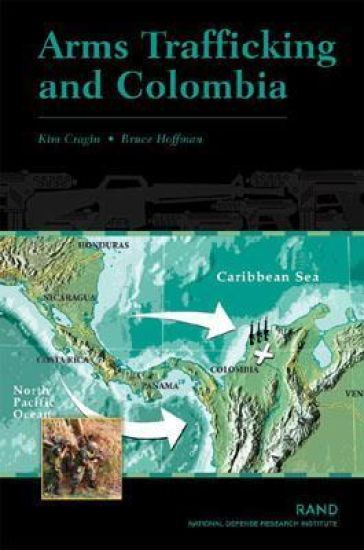
Arms Trafficking and Colombia

Arms Trafficking and Colombia

Kim Cragin; Bruce Hoffman

RAND
2003
pokkari
Many factors have contributed to extreme political instability and violence in Colombia-the drug trade, a protracted insurgent conflict, corruption-but small arms proliferation remains one of the key underlying problems. The authors analyze the black- and gray-market sources of small/light arms, explosives, equipment, and materiel which are available to terrorist and insurgent organizations currently active in Colombia, as well as policy implications for the country and the United States.
Security in the National Capital and the Closure of Pennsylvania Avenue
Acts of terrorism are not a new threat to Washington, D. C. Over the past two centuries, there have been several organized terrorist attacks, as well as numerous assaults by unstable individuals acting alone, that have targeted the White House and U. S. Capitol building and the President or U. S. Congressmen within the city limits of the District of Columbia. Nevertheless, it was not until the 1980s that such incidents evoked heightened security around the White House, initiating a process of fortification that culminated with President Clinton's decision in April 1995 to close the section of Pennsylvania Avenue running in front of the executive mansion. While some have criticized the move as a knee-jerk reaction that symbolizes a "bunker mentality" at odds with the perceived strengths of American democracy and freedom, others have vigorously defended the action as a reasonable contingency in the face of a potentially serious and realistic threat. The book considers how Pennsylvania Avenue can be re-opened while still ensuring to the greatest extent possible the safety and security of the President of the United States. The research was conducted as part of a larger project aimed at reassessing and reconsidering the physical security measures that have been imposed on the District of Columbia in recent years.
Trends in Outside Support for Insurgent Movements

Trends in Outside Support for Insurgent Movements

Daniel L. Byman; Peter Chalk; Bruce Hoffman; William Rosenau; David Brannan

RAND
2001
pokkari
Outside supporters, including state and non-state sponsors, of insurgent movements offer various forms of assistance to insurgents based on a wide range of motivations. The most useful forms of outside support for an insurgent movement include safe havens, financial support, political backing, and direct military assistance. Because states are able to provide all of these types of assistance, their support has had a profound impact on the effectiveness of many rebel movements since the end of the Cold War. However, state support is no longer the only, or indeed necessarily the most important, game in town. Diasporas have played a particularly important role in sustaining several strong insurgencies. More rarely, refugees, guerrilla groups, or other types of non-state supporters play a significant role in creating or sustaining an insurgency, offering fighters, training, or other forms of assistance. This report assesses post-Cold War trends in external support for insurgent movements. It describes the frequency that states, diasporas, refugees, and other non-state actors back guerrilla movements. It also assesses the motivations of these actors and which types of support matter most. This book concludes by assessing the implications for analysts of insurgent movements.
Domestic Terrorism

Domestic Terrorism

Kevin Jack Riley; Bruce Hoffman

RAND
1995
pokkari
This study analyzes states' and municipalities' terrorism preparedness as a means of providing law enforcement with information about the prevention and control of terrorist activities in the United States. This document reports the results of a 24-month research effort to survey and analyze the key problems and issues confronting state and local law enforcement agencies in countering such threats. The study's three principal tasks were (1) to conduct a national survey of these agencies to assess how they perceive the threat of terrorism and to identify counterterrorism programs currently being used, (2) to select 10 jurisdictions to examine in detail how they have adapted to the threat of terrorism, and (3) to identify agencies' programs developed to counter potential future terrorist threats in conjunction with the development of a prospective future research agenda.