Kirjojen hintavertailu – 12 903 725 kirjaa ja 27 kauppaa

Kirjailija

Bruce I Newman

Kirjat ja teokset yhdessä paikassa: 11 kirjaa, julkaisuja vuosilta 1987–2016, suosituimpiin kuuluu The Marketing of the President. Vertaile teosten hintoja ja tarkista saatavuus suomalaisista kirjakaupoista.

Nimi esiintyy myös muodoissa: Bruce I. Newman

11 kirjaa

Kirjojen julkaisuvuodet: 1987–2016.

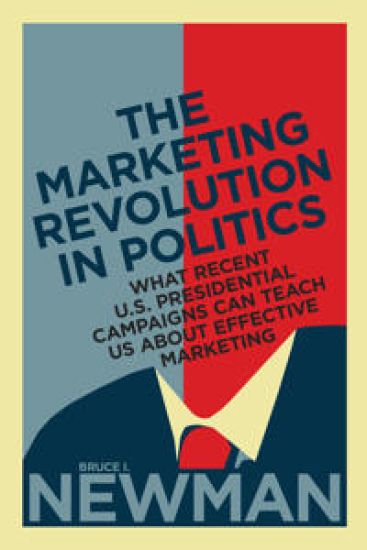
The Marketing Revolution in Politics

The Marketing Revolution in Politics

Bruce I. Newman

Rotman/UTP Publishing
2016
sidottu
In 2008, Barack Obama’s presidential campaign used an innovative combination of social media, big data, and micro-targeting to win the White House. In 2012, the campaign did it again, further honing those marketing tools and demonstrating that political marketing is on the cutting edge when it comes to effective branding, advertising, and relationship-building. The challenges facing a presidential campaign may be unique to the political arena, but the creative solutions are not. The Marketing Revolution in Politics shows how recent US presidential campaigns have adopted the latest marketing techniques and how organizations in the for-profit and non-profit sectors can benefit from their example. Distilling the marketing practices of successful political campaigns down into seven key lessons, Bruce I. Newman shows how organizations of any size can apply the same innovative, creative, and cost-effective marketing tactics as today’s presidential hopefuls. A compelling study of marketing in the make-or-break world of American politics, this book should be a must-read for managers, students of marketing and political marketing, and anyone interested in learning more about how presidential campaigns operate. Winner of the 2016 International Book Award in the "Business: Marketing & Advertising" category.
Political Marketing:

Political Marketing:

Wojciech Cwalina; Andrzej Falkowski; Bruce I. Newman

Routledge
2011
nidottu
Comprehensive and clearly organized, this is the first integrated theory-to-practice text on marketing's role in the political process. It incorporates insights and concepts drawn from the disciplines of Marketing, Psychology, and Political Science, and covers every aspect of marketing's infiltration into politics, including campaign strategy, market segmentation, and media strategy. Using examples and models drawn from countries around the globe, the authors elucidate the importance of political marketing techniques for the stability of democratic institutions. They also note the potential threats to democracy, especially the use of marketing techniques to manipulate voters at the subconscious level. They conclude with a set of normative do's and dont's for political marketing practice that strengthens civic education and democratic governance.
Political Marketing:

Political Marketing:

Wojciech Cwalina; Andrzej Falkowski; Bruce I. Newman

Routledge
2011
sidottu
Comprehensive and clearly organized, this is the first integrated theory-to-practice text on marketing's role in the political process. It incorporates insights and concepts drawn from the disciplines of Marketing, Psychology, and Political Science, and covers every aspect of marketing's infiltration into politics, including campaign strategy, market segmentation, and media strategy. Using examples and models drawn from countries around the globe, the authors elucidate the importance of political marketing techniques for the stability of democratic institutions. They also note the potential threats to democracy, especially the use of marketing techniques to manipulate voters at the subconscious level. They conclude with a set of normative do's and dont's for political marketing practice that strengthens civic education and democratic governance.
A Cross-Cultural Theory of Voter Behavior

A Cross-Cultural Theory of Voter Behavior

Wojciech Cwalina; Andrzej Falkowski; Bruce I Newman

Routledge Member of the Taylor and Francis Group
2008
sidottu
The rapid development of democracy and political freedoms has created new and sophisticated psychology-based methods of influencing the way voters choose, as well as political systems based on free market principles. A Cross-Cultural Theory of Voter Behavior uses advanced empirical testing to determine whether the behavior of voters in established and emerging democracies around the world is predictable. The results of the testing suggest the theory is a ground-breaking cross-cultural model with theoretical and strategic global implications. This unique book examines the many facets of political marketing and its direct relationship with the voter. A comprehensive theory meticulously tested in the dynamic political waters of the U. S. and Europe, this text bridges the latest theoretical developments in the emerging and advanced democracies. A Cross-Cultural Theory of Voter Behavior offers an innovative and seldom seen international perspective that integrates up-to-date literature in political science with advanced political marketing to provide readers with useable, unified information. In addition, the text is replete with detailed references and illustrated with a wealth of informative tables and graphics to made pertinent data accessible and easily understood. Some of the topics discussed in A Cross-Cultural Theory of Voter Behavior include politics in an age of manufactured images, partisanship and party identification, candidate-centered politics, political cognition, social categorization of politicians, the role of advertising and emotion, among others. An ideal text for students, academics, and researchers, the information presented in A Cross-Cultural Theory of Voter Behavior is also a vital resource for political practitioners such as consultants, candidates, lobbyists, political action committees, fund-raisers, pollsters, government officials, ad specialists, journalists, public relations executives, and congressional aides.
A Cross-Cultural Theory of Voter Behavior

A Cross-Cultural Theory of Voter Behavior

Wojciech Cwalina; Andrzej Falkowski; Bruce I Newman

Routledge Member of the Taylor and Francis Group
2007
nidottu
The rapid development of democracy and political freedoms has created new and sophisticated psychology-based methods of influencing the way voters choose, as well as political systems based on free market principles. A Cross-Cultural Theory of Voter Behavior uses advanced empirical testing to determine whether the behavior of voters in established and emerging democracies around the world is predictable. The results of the testing suggest the theory is a ground-breaking cross-cultural model with theoretical and strategic global implications. This unique book examines the many facets of political marketing and its direct relationship with the voter. A comprehensive theory meticulously tested in the dynamic political waters of the U. S. and Europe, this text bridges the latest theoretical developments in the emerging and advanced democracies. A Cross-Cultural Theory of Voter Behavior offers an innovative and seldom seen international perspective that integrates up-to-date literature in political science with advanced political marketing to provide readers with useable, unified information. In addition, the text is replete with detailed references and illustrated with a wealth of informative tables and graphics to made pertinent data accessible and easily understood. Some of the topics discussed in A Cross-Cultural Theory of Voter Behavior include politics in an age of manufactured images, partisanship and party identification, candidate-centered politics, political cognition, social categorization of politicians, the role of advertising and emotion, among others. An ideal text for students, academics, and researchers, the information presented in A Cross-Cultural Theory of Voter Behavior is also a vital resource for political practitioners such as consultants, candidates, lobbyists, political action committees, fund-raisers, pollsters, government officials, ad specialists, journalists, public relations executives, and congressional aides.
Communication of Politics

Communication of Politics

Bruce I Newman

Routledge Member of the Taylor and Francis Group
2003
sidottu
Learn how political marketing and public relations affect the electoral process! Communication of Politics: Cross-Cultural Theory Building in the Practice of Public Relations and Political Marketing examines how communication and marketing experts influence politics. The book reviews the state of the art in political communication management and marketing through a cross-cultural integration of research and theoretical approaches. An international panel of authors presents a comparative assessment of the impact of candidate and party appeals on the electorate, examines case studies from elections in the United States and Europe, and offers innovative models of voter behavior in the United States, Poland, and Slovenia. Communication of Politics provides valuable insights into the merger of political marketing and public relations. The book examines the cause and effect of the increasing role of communications professionals in the political process and documents the relationship between politicians and communications professionals working in electoral committees, political parties, governments, government agencies, consultancies, and polling agencies. Topics addressed by the international panel of scholars and practitioners include: a critical assessment of strategies used in the 2000 United States Presidential election branding as a means of establishing party values and winning support the expanding roles of polls, focus groups and Internet-based research on elections the relationship between foreign affairs/diplomacy and media/public relations Quangos (Quasi-Autonomous Non-Governmental Organizations) and much more! Communication of Politics: Cross-Cultural Theory Building in the Practice of Public Relations and Political Marketing examines the innovativeand sometimes controversialuses of contemporary electoral marketing. The book is an essential resource for academics, journalists, and political practitioners, including campaign managers, charity fundraisers, public service managers, party-policy-makerseven candidates.
Communication of Politics

Communication of Politics

Bruce I Newman

Routledge Member of the Taylor and Francis Group
2003
nidottu
Learn how political marketing and public relations affect the electoral process! Communication of Politics: Cross-Cultural Theory Building in the Practice of Public Relations and Political Marketing examines how communication and marketing experts influence politics. The book reviews the state of the art in political communication management and marketing through a cross-cultural integration of research and theoretical approaches. An international panel of authors presents a comparative assessment of the impact of candidate and party appeals on the electorate, examines case studies from elections in the United States and Europe, and offers innovative models of voter behavior in the United States, Poland, and Slovenia. Communication of Politics provides valuable insights into the merger of political marketing and public relations. The book examines the cause and effect of the increasing role of communications professionals in the political process and documents the relationship between politicians and communications professionals working in electoral committees, political parties, governments, government agencies, consultancies, and polling agencies. Topics addressed by the international panel of scholars and practitioners include: a critical assessment of strategies used in the 2000 United States Presidential election branding as a means of establishing party values and winning support the expanding roles of polls, focus groups and Internet-based research on elections the relationship between foreign affairs/diplomacy and media/public relations Quangos (Quasi-Autonomous Non-Governmental Organizations) and much more! Communication of Politics: Cross-Cultural Theory Building in the Practice of Public Relations and Political Marketing examines the innovativeand sometimes controversialuses of contemporary electoral marketing. The book is an essential resource for academics, journalists, and political practitioners, including campaign managers, charity fundraisers, public service managers, party-policy-makerseven candidates.
The Mass Marketing of Politics

The Mass Marketing of Politics

Bruce I Newman

SAGE Publications Inc
1999
nidottu
Bruce I. Newman tells us briskly, firmly what our instincts also tell us: We are mass marketing images rather than providing real leadership. --Paul Simon, Former U. S. Senator, Public Policy Institute, Southern Illinois University "Gatorade and Coke do it, so do candidates for high office—they manufacture images and manipulate reality to win our favor. In this insightful and compelling study, Bruce I. Newman demonstrates what politicians and interest groups are doing to us and what we need to do to strengthen our democracy." --Dennis W. Johnson, Associate Dean, George Washington University "Bruce Newman has written an incisive account of the role that marketing plays in contemporary politics. He argues persuasively that mass marketing techniques are profoundly changing and corroding American politics. His book provides an enlightful analysis of the ways in which marketers have transformed the presidential election." --Richard M. Perloff, author of Political Communication: Politics, Press and Public in America "This book is a must read for anyone concerned about the growing trend of sound bite over substance, willful manipulation of the media over honest engagement of the American Public." --David Wilhelm, Former Chair of the Democratic National Committee "While marketing has led to better quality in most markets, we are beginning to have serious doubts about what is doing to the quality of political life. Bruce Newman raises serious questions about whether anyone of merit can get elected today without the support of expensive and sophisticated marketing machinery." --Philip Kotler, S. C. Johnson & Son Distinguished Professor of International Marketing, Northwestern University Marketing, not ideology, drives America's contemporary political system, with an emphasis on image over substance, personality over issues, and 30-second sound bites over meaningful dialogue. Through the use of carefully crafted messages meant to manipulate voter thinking, the same marketing tactics used by Fortune 500 companies is shaping public opinion. The Mass Marketing of Politics details how marketing tactics are being used to determine public opinion, win votes, and shape public policy in the White House and Congress. The book points out the pitfalls of relying too heavily on marketing as a campaign and governance tool and offers solutions to fix our political system before it is too late. Bruce I. Newman is the author of The Marketing of the President (Sage, 1993) and the forthcoming Handbook of Political Marketing. He has served as a communication advisor to top White House officials and has written widely on the subject of political marketing in both scholarly and popular media. The Mass Marketing of Politics is provocative and essential reading for anyone interested in American politics, marketing, political communication, and media studies.

The Mass Marketing of Politics

The Mass Marketing of Politics

Bruce I Newman

SAGE Publications Inc
1999
sidottu
Bruce I. Newman tells us briskly, firmly what our instincts also tell us: We are mass marketing images rather than providing real leadership. --Paul Simon, Former U. S. Senator, Public Policy Institute, Southern Illinois University "Gatorade and Coke do it, so do candidates for high office—they manufacture images and manipulate reality to win our favor. In this insightful and compelling study, Bruce I. Newman demonstrates what politicians and interest groups are doing to us and what we need to do to strengthen our democracy." --Dennis W. Johnson, Associate Dean, George Washington University "Bruce Newman has written an incisive account of the role that marketing plays in contemporary politics. He argues persuasively that mass marketing techniques are profoundly changing and corroding American politics. His book provides an enlightful analysis of the ways in which marketers have transformed the presidential election." --Richard M. Perloff, author of Political Communication: Politics, Press and Public in America "This book is a must read for anyone concerned about the growing trend of sound bite over substance, willful manipulation of the media over honest engagement of the American Public." --David Wilhelm, Former Chair of the Democratic National Committee "While marketing has led to better quality in most markets, we are beginning to have serious doubts about what is doing to the quality of political life. Bruce Newman raises serious questions about whether anyone of merit can get elected today without the support of expensive and sophisticated marketing machinery." --Philip Kotler, S. C. Johnson & Son Distinguished Professor of International Marketing, Northwestern University Marketing, not ideology, drives America's contemporary political system, with an emphasis on image over substance, personality over issues, and 30-second sound bites over meaningful dialogue. Through the use of carefully crafted messages meant to manipulate voter thinking, the same marketing tactics used by Fortune 500 companies is shaping public opinion. The Mass Marketing of Politics details how marketing tactics are being used to determine public opinion, win votes, and shape public policy in the White House and Congress. The book points out the pitfalls of relying too heavily on marketing as a campaign and governance tool and offers solutions to fix our political system before it is too late. Bruce I. Newman is the author of The Marketing of the President (Sage, 1993) and the forthcoming Handbook of Political Marketing. He has served as a communication advisor to top White House officials and has written widely on the subject of political marketing in both scholarly and popular media. The Mass Marketing of Politics is provocative and essential reading for anyone interested in American politics, marketing, political communication, and media studies.
The Marketing of the President

The Marketing of the President

Bruce I Newman

SAGE Publications Inc
1994
nidottu
Professor Bruce I. Newman correctly points out that in this information age, a candidate and his staff can test a new issue or idea very quickly, and if it looks salable, arrange to have the candidate get it before the correct bloc of voters in a very short period of time. . . . Newman is also correct in noting that the political party, as an institution, is no longer as dominant in elections. . . . Political junkies will love this material. --Conservative Review The Marketing of the President documents how political candidates are marketed by the same sophisticated techniques that experts use to sell legal and medical services. Bruce I. Newman addresses issues of serious concern to the health of the political process as he examines the roles of polling, direct mail, 900 numbers, and television in advertising. Using the 1992 presidential election as a case study, this extraordinary volume reveals how the American political process has been transformed--for better or worse--by the use of marketing techniques.
A Theory of Political Choice Behavior

A Theory of Political Choice Behavior

Bruce I. Newman; Jagdish N. Sheth

Praeger Publishers Inc
1987
sidottu
The first book to examine voter behavior from both psychological and marketing perspectives, A Theory of Political Choice Behavior provides the tools politicians need to understand today's voter. It puts forth a comprehensive theory of voting behavior and empirically tests it on four recent elections; its prediction rate is as high as 95 percent in some cases. Section A examines the need to understand voter behavior and analyzes the traditional methods researchers have used in the past; Section B puts forth the author's new theory; Section C tests that theory; and Section D describes its implications for the present and the future. A tested recipe book for public policymakers as well as candidates, their media people, and their campaign strategists on all levels, this volume also includes sample surveys which pollsters can use to design their own polls.