Kirjojen hintavertailu – 12 903 725 kirjaa ja 27 kauppaa

Kirjailija

Bruce Jackson

Kirjat ja teokset yhdessä paikassa: 33 kirjaa, julkaisuja vuosilta 1987–2026, suosituimpiin kuuluu A Lonesome Long Sit. Vertaile teosten hintoja ja tarkista saatavuus suomalaisista kirjakaupoista.

33 kirjaa

Kirjojen julkaisuvuodet: 1987–2026.

Voices from Death Row

Voices from Death Row

Bruce Jackson; Diane Christian

STATE UNIVERSITY OF NEW YORK PRESS
2022
sidottu
A searing, personal look at conditions on Texas's Death Row—told in the words of the prisoners themselves. Voices from Death Row is considered a classic work on the strange "living limbo" inhabited by condemned men in Texas, who await resolution of their sentence in execution, death by other causes, commutation to a term of life sentence, or exoneration. This book offers first-person accounts of life on death row that still holds for condemned men and women today. The accessibility the authors had to Texas Death Row in 1979-to sit in the cells and listen-is unimaginable in today's closed prison environment. Today, however, conditions on Texas's Death Row are far more punishing and brutal; and, while the number of death sentences has declined, the number of sentences of life without parole has increased hugely. This second edition updates and expands on the original stories that these men told, revealing the names of those men whose stories have ended with either exoneration or death. New photographs enhance the text to give it a full picture of the brutal conditions that these prisoners experienced.
Voices from Death Row

Voices from Death Row

Bruce Jackson; Diane Christian

STATE UNIVERSITY OF NEW YORK PRESS
2022
pokkari

Halvin toimitettuna 30,60 €

A searing, personal look at conditions on Texas's Death Row—told in the words of the prisoners themselves. Voices from Death Row is considered a classic work on the strange "living limbo" inhabited by condemned men in Texas, who await resolution of their sentence in execution, death by other causes, commutation to a term of life sentence, or exoneration. This book offers first-person accounts of life on death row that still holds for condemned men and women today. The accessibility the authors had to Texas Death Row in 1979-to sit in the cells and listen-is unimaginable in today's closed prison environment. Today, however, conditions on Texas's Death Row are far more punishing and brutal; and, while the number of death sentences has declined, the number of sentences of life without parole has increased hugely. This second edition updates and expands on the original stories that these men told, revealing the names of those men whose stories have ended with either exoneration or death. New photographs enhance the text to give it a full picture of the brutal conditions that these prisoners experienced.
The Story Is True, Second Edition

The Story Is True, Second Edition

Bruce Jackson

STATE UNIVERSITY OF NEW YORK PRESS
2022
sidottu
Delves into the meaning of stories, their tellers, and those who experience them. In The Story Is True, folklorist, filmmaker, and professor of English Bruce Jackson explores the ways we use the stories that become a central part of our public and private lives. Describing and explaining how stories are made and used, Jackson examines how stories narrate and bring meaning to our lives. Jackson writes about his family and friends, acquaintances, and experiences, focusing on more than a dozen personal stories. From oral histories to public stories-such as what happened when Bob Dylan "went electric" at the 1965 Newport Folk Festival-Jackson gets at how the "truth" is constantly shifting depending on the perspective, memory, and social meaning that is ascribed to various events-both real and imaginary. The book is ideal for students and writers of oral history and storytelling but goes beyond those topics to encompass how we interpret and understand the real-life "stories" that we encounter in our daily experience. This edition includes new sections on how stories are related to historical facts and new chapters on contemporary films (expanding the discussion of visual storytelling) and on conspiracy narratives and Trump's Big Lie. Fresh examples tie together new material with the existing stories.
Thom Jons

Thom Jons

Bruce Jackson

Fulton Books
2022
pokkari
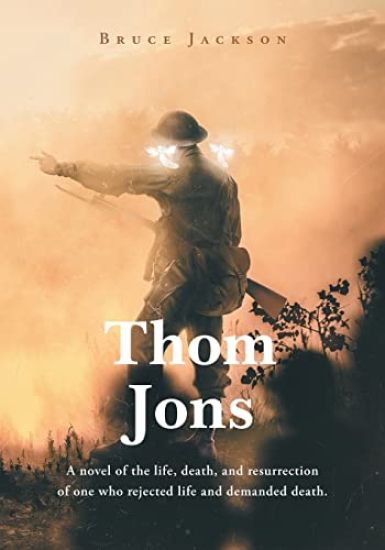
What is universal reality? Is this world interested in a realistic vision of what life is like beyond death? Is our world curious about how an understanding of a realistic presentation of heaven might impact our lives in this age of alternative truth, unreality, entrenched self-interest, and systemic racism? Would individuals be interested in a narrative about our universe that is neither a Star Wars fantasy nor a fiction perpetrated by religionists with a social/religious agenda? Would anyone have an interest in discovering what universal teachers or resurrected beings might say to us beyond the veil of death? Is racism, evil, hate, cheating, greed, lying, murder, rape, selfishness, and etcetera something that is okay with our universe? If it is, then the very concept of eternal life has no meaning and is utterly inviable. We humans of the Planet of the Cross have known this for well over two thousand years. So why are these issues such a problem on our planet today? Are our universal leaders pleased with our progress? We live in an age where our greatest human handicap is our lack of understanding of our ascendant future and the reality of our universal lives. On earth, we are embryonic souls locked within the limits of the womb. From earth, we pass into universal infancy. What happens when our eyes open? Premise: "There are as many paths to the Portals of Paradise as there are Ascending Pilgrims going there. Each ascenders path is utterly unique. Any religious practice that believes that it has the 'one and only truth' speaks more in arrogance than in the knowledge of universal truth." This fictional work reflects on our mortal lives from the perspective of unseen universal beings and from the experiences of ascenders who have passed through the veil of human death. As all beings are the children of our Mother/Father God, all are truly equal siblings; "there is no racial supremacy because there are no racists in heaven." This novel calls for the cultivation of genuine human equality through the end of systemic racism. It suggests a new perspective on ascendant living for mortal beings. Plot: The narrative covers the progression of life in a Southern American town during the first three decades of the twentieth century. The characters experience social divisions, poverty, World War I, pandemic, prohibition, suffrage, clerical rape, lynching, gay marriage, economic collapse, and systemic racism. The story is presented from the perspective of a diverse cast of characters ranging from judges, politicians, hoodlums, teachers, businessmen, soldiers, wealthy whites, lower-class whites, and folks from a colored community. Their lives are reflected upon by their guardian angels and unseen universal teachers. Part 1 covers the lives of folks around Thom Jons, a war hero and entrepreneur who gradually descends into rejecting life by demanding death. Part 2 begins after the dispensational resurrection of the souls onto Mansion One. All the resurrected characters protest that Thom Jons had failed to be resurrected. They demand and win a tribunal before Melchizedek to convince Thom to be born into the reality of ascendant eternal life. After introductions by Melchizedek, the tribunal consists of the reflections of each ascender on their earthly lives, Thom's positive mortal legacy, and their experiences, lessons, and new perspectives learned after their resurrection. They invite Thom to join them in the adventure of universal progress, spiritual development, and an ever-evolving living faith. For they have understood the experience of the Ascendant Will of God in the fulfillment of their personal spiritual assignments by God the Father and their communal service experience with the Eternal Mother.

Inside the Wire

Inside the Wire

Bruce Jackson

University of Texas Press
2013
sidottu
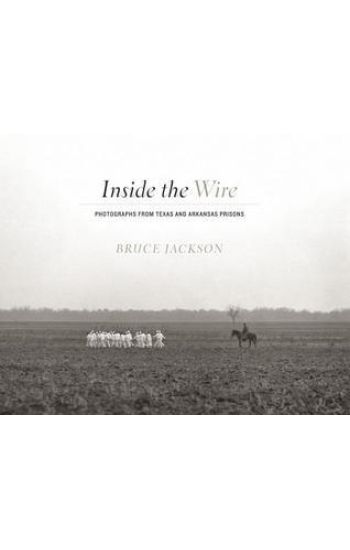
As recently as the 1970s, many inmates in southern prisons lived and worked on prison farms that were not only modeled after the American slave plantation, but even occupied lands that literally were slave plantations before the Civil War, and on which working and living conditions had not changed much a century after the war. Bruce Jackson began visiting some of these prison farms in the 1960s to study black convict worksongs and folk culture. He took a camera along as means of visual note taking, but soon realized that he had an extraordinary opportunity to document a world whose harshness was so extreme that at least one prison had been declared unconstitutional. Allowed unsupervised access to prison farms in Texas and Arkansas, Jackson created an astonishing photographic record, most of which has never before been published in book form. Inside the Wire presents a complete, irreplaceable portrait of the southern prison farm. With freedom to wander the fields and facilities and hang out with inmates for extended periods, Jackson captured everything from the hot, backbreaking work of hand-picking cotton, to the cacophony and lack of all privacy in the cell blocks, to the grim solitude of death row. He also includes some early twentieth-century prisoner identification shots, taken by anonymous convict photographers for the prison files, that survive as profoundly evocative human portraits. These images and Jackson’s photographs document, as no previous work has, the humanity of the people and the inhumanity of the institutions in which they labor and languish. As Jackson says, “sometimes kindness happens with prison, but prison itself is a cruel world outsiders can scarcely imagine. I hope nothing in this book suggests otherwise.”
Disorderly Conduct

Disorderly Conduct

Bruce Jackson

University of Illinois Press
1992
sidottu
This gathering of essays by the maverick social observer Bruce Jackson will stir memories, give insights, and provoke strong reactions. Selections range freely over a wide spectrum of American social conditions, public policy, and crime and punishment issues from the mid-1960s to the present. The essays remain remarkably fresh and crucially central to issues in contemporary American society. They will appeal to the general reader as well as to readers with more specialized interests in the criminal justice system and social policy.
Fieldwork

Fieldwork

Bruce Jackson

University of Illinois Press
1987
nidottu
Fieldwork deals with the practical, mechanical, ethical, and theoretical aspects of collecting data. Jackson discusses how fieldworkers define their role, how they relate to others in the field, and how they go about recording for later use what occurred in their presence. This treatment offers an abundance of useful information to those who do folklore fieldwork as well as those who work in any of the other social sciences or humanities. An appendix relates the author's own experiences while documenting Texas's death row.