Kirjojen hintavertailu – 12 903 741 kirjaa ja 27 kauppaa

Kirjailija

Bruce Silver

Kirjat ja teokset yhdessä paikassa: 9 kirjaa, julkaisuja vuosilta 2011–2020, suosituimpiin kuuluu Philosophy as Frustration. Vertaile teosten hintoja ja tarkista saatavuus suomalaisista kirjakaupoista.

9 kirjaa

Kirjojen julkaisuvuodet: 2011–2020.

CMMN Method and Style

CMMN Method and Style

Bruce Silver

Cody-Cassidy Press
2020
pokkari
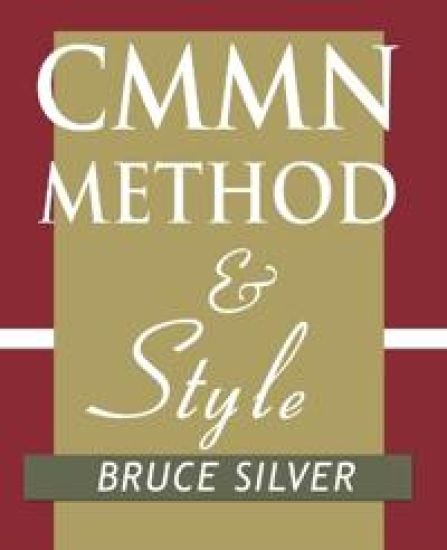
Case management is a branch of business process management dealing with unstructured and event-driven processes. CMMN is a business-oriented diagramming language standard for creating case models, for both case logic description and execution. Following the author's popular BPMN Method and Style and DMN Method and Style, this book shows how to use CMMN to create case models in which the logic is both clear from the printed diagrams and executable on a business automation platform. Unlike BPMN for structured processes, which adopts the familiar look of swimlane flowcharts, CMMN's diagrams are unfamiliar to most modelers. In addition, CMMN logic is declarative, each task and stage in the model independently defining its own prerequisites. Aimed at business users, the book explains how to use the diagramming notation in a range of modeling styles, including: User-driven, in which what happens next is determined primarily by knowledge worker decisions Event-condition-action (ECA), in which what happens next is determined primarily by business events Hierarchical, in which CMMN stages are used as exclusive states of the case, with a top-level diagram describing the overall case logic and child-level diagrams describing the logic of each stage. On top of the rules of the language defined in the specification, the author adds additional conventions called Method and Style, aimed at ensuring the case logic is clear from the printed diagrams. Many details needed to understand the logic are visible only to modelers with access to the design tool, not to stakeholders in the business who see only what is in the printed diagrams. Method and Style prescribes various additional connectors and labeling conventions that make these logic details visible to all. These conventions are formulated as "style rules" that can be validated in a CMMN tool. The book provides detailed explanation of CMMN's declarative logic patterns, illustrated by examples from the field of Social Care. In addition, it provides an exhaustive list of CMMN Method and Style patterns together with their more familiar BPMN Method and Style equivalents. The book is useful for modelers who need to go beyond BPMN's structured process constraints and for implementers who are interested in using this standard language in their business automation offerings.
Grammar, Philosophy, and Logic

Grammar, Philosophy, and Logic

Bruce Silver

Springer International Publishing AG
2018
nidottu
This book argues that a basic grasp of philosophy and logic can produce written and spoken material that is both grammatically correct and powerful. The author analyses errors in grammar, word choice, phrasing and sentences that even the finest writers can fail to notice; concentrating on subtle missteps and errors that can make the difference between good and excellent prose. Each chapter addresses how common words and long-established grammatical rules are often misused or ignored altogether – including such common words as ‘interesting’, ‘possible’, and ‘apparent’. By tackling language in this way, the author provides an illuminating and practical stylistic guide that will interest students and scholars of grammar and philosophy, as well as readers looking to improve their technical writing skills.
Grammar, Philosophy, and Logic

Grammar, Philosophy, and Logic

Bruce Silver

Springer International Publishing AG
2017
sidottu
This book argues that a basic grasp of philosophy and logic can produce written and spoken material that is both grammatically correct and powerful. The author analyses errors in grammar, word choice, phrasing and sentences that even the finest writers can fail to notice; concentrating on subtle missteps and errors that can make the difference between good and excellent prose. Each chapter addresses how common words and long-established grammatical rules are often misused or ignored altogether – including such common words as ‘interesting’, ‘possible’, and ‘apparent’. By tackling language in this way, the author provides an illuminating and practical stylistic guide that will interest students and scholars of grammar and philosophy, as well as readers looking to improve their technical writing skills.
BPMN Quick and Easy Using Method and Style

BPMN Quick and Easy Using Method and Style

Bruce Silver

Cody-Cassidy Press
2017
pokkari

Halvin toimitettuna 50,40 €

BPMN 2.0 is the industry standard diagramming language for business process models. The meaning of the shapes and symbols is defined by a specification, independent of the tool employed. But creating models that communicate the process logic clearly and completely demands more than a dictionary of shapes and symbols. It also requires a methodology for properly structuring the process information and additional best practices specified as "style rules" that can be validated in a tool: Method and Style. Based on training over 4000 students, this book zeroes in on the elements process modelers need to know in order to create Good BPMN: usage of the important shapes and symbols; the Method, a systematic procedure for translating process details gathered in stakeholder workshops into properly structured models that communicate the process logic clearly and completely; and style rules, additional conventions that make the process logic evident from the printed diagrams alone. Chapter 1, What Is BPMN?, discusses key differences between BPMN and traditional flowcharts, and explains the limitations of BPMN. It explains the real meaning of BPMN's most fundamental concepts - activity and process - and the issues that arise when BPM Architecture and other segments of the BPM domain use those terms much more loosely. Chapter 2, BPMN by Example, builds up an order process bit by bit using elements of the Level 1 working set, illustrating basic usage of tasks and subprocesses, start and end events, gateways, pools, and lanes, and message flow, plus the basics of Method and Style, including process levels and end states, with label matching between gateways in the parent level and end states in the child level. Chapter 3, The Method, describes a systematic procedure that deals with the real challenge of process modeling, turning process details gathered from stakeholder workshops into properly structured BPMN that communicates the process logic clearly. Chapter 4, BPMN Style, explains the most important style rules, illustrating both violations and correct BPMN style. Chapter 5, DMN and Decision Tasks, discusses why embedding decision logic in process models as a chain of gateways is Bad BPMN, and how integrating BPMN with the new companion standard DMN fixes the problem. Chapter 6, Parallel Flow, explains proper merging of sequence flows, depending upon whether they are exclusive alternatives, unconditionally parallel, or conditionally parallel. Chapter 7, Events, discusses common usage patterns with Timer, Message, and Error events. Using intermediate events and event subprocesses, eaders learn how to model deadline-triggered actions, wait for a message or a timeout, handle cancellation or update of a process in flight, and use error throw-catch patterns. Chapter 8, Instance Alignment, deals with the spec's requirement that the instance of every activity in a BPMN process must correspond 1:1 with the process instance. Since batching is commonplace in real processes, this chapter discusses various ways to handle it: loop and multi-instance activities, multi-process structures, and non-interrupting event subprocesses. Chapter 9, Becoming Proficient, discusses how to go beyond "book learning" and become really proficient at Good BPMN. It takes practice, testing your understanding, and hands-on experience with real tools. Bruce Silver is the leading provider of BPMN training and certification. He has been providing BPMN training since early 2007 and is regarded as an authority in the field. He was a member of the BPMN 2.0 technical committee in OMG, and his methodandstyle.com website is a popular source of news and commentary about all matters related to BPMN.
Philosophy as Frustration

Philosophy as Frustration

Bruce Silver

Brill
2013
Sidottu
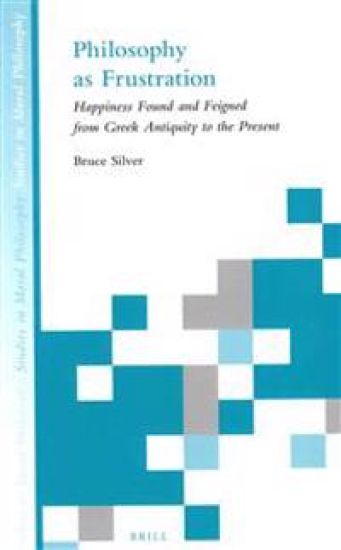
In Philosophy as Frustration: Happiness Found and Feigned from Greek Antiquity to Present Bruce Silver analyzes important views of happiness from Greek antiquity into the present. He argues that in many cases philosophers and positive psychologists do a poor job of defending the views of happiness they promote. Too often the philosophical approaches to what constitutes happiness are at odds with themselves and with possibilities for living happily. In some cases readers discover that the phrase “happy human being” is oxymoronic and that the most a person can expect is a life that is a measure of calm.
Taming the Unpredictable: Real World Adaptive Case Management: Case Studies and Practical Guidance
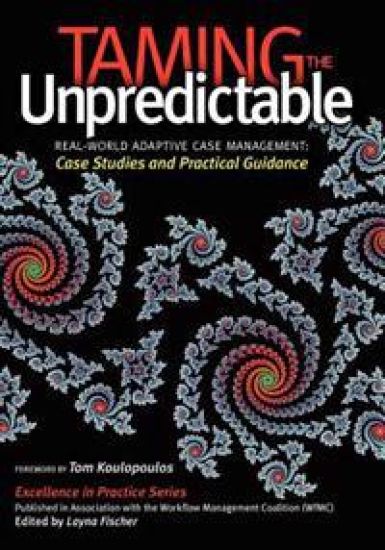
Taming the Unpredictable Real World Adaptive Case Management: Case Studies and Practical Guidance "The most valuable assets of a 20th-century company were its production equipment. The most valuable asset of a 21st-century institution, whether business or non-business, will be its knowledge workers and their productivity." Peter F Drucker The core element of Adaptive Case Management (ACM) is the support for real-time decision-making by knowledge workers. Taming the Unpredictable presents the logical starting point for understanding how to take advantage of ACM. This book goes beyond talking about concepts, and delivers actionable advice for embarking on your own journey of ACM-driven transformation. In award-winning case studies covering industries as a diverse as law enforcement, transportation, insurance, banking, legal services, and healthcare, you will find instructive examples for how to transform your own organization.