

Kirjailija
Bruce Watson
Kirjat ja teokset yhdessä paikassa: 11 kirjaa, julkaisuja vuosilta 1994–2020, suosituimpiin kuuluu Jon Stewart: Beyond The Moments Of Zen. Vertaile teosten hintoja ja tarkista saatavuus suomalaisista kirjakaupoista.
11 kirjaa
Kirjojen julkaisuvuodet: 1994–2020.
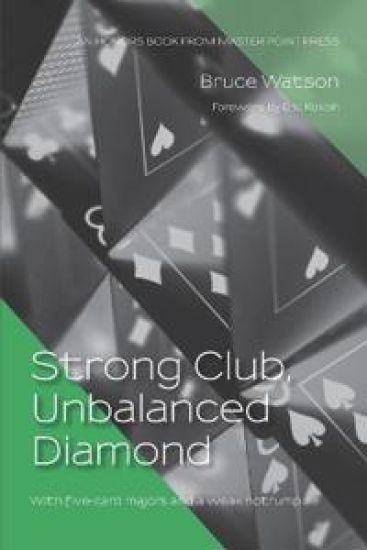
The basis for the system described in this book was first suggested by Marshall Miles in My System: the Unbalanced Diamond (Master Point Press, 2007). The core of SCUD is the same as in Miles' book; that is, strong club, unbalanced diamond, five-card majors and a weak notrump. However, author Bruce Watson felt that the original treatments for the Two Club and Two Diamond openings needed to change. In addition, he wanted to use transfer responses to the strong club but retain the negative One Diamond response. And the end product had to comply with the Open Chart of the ACBL, so it could be played in all but restricted games. SCUD will appeal to any partnership interested in learning a very effective bidding system that is fun to play. Or, whether you currently favor a strong club or a more natural approach, you may find a treatment in SCUD that you can graft on to your favorite system.

Jon Stewart: Beyond The Moments Of Zen
Bruce Watson
Createspace Independent Publishing Platform
2016
nidottu
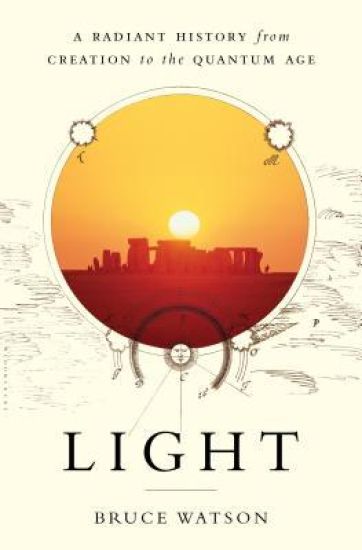
Light begins at Stonehenge, where crowds cheer a solstice sunrise. After sampling myths explaining First Light, the story moves on to early philosophers' queries, then through the centuries, from Buddhist temples to Biblical scripture, when light was the soul of the divine. Battling darkness and despair, Gothic architects crafted radiant cathedrals while Dante dreamed a "heaven of pure light." Later, following Leonardo's advice, Renaissance artists learned to capture light on canvas. During the Scientific Revolution, Galileo gathered light in his telescope, Descartes measured the rainbow, and Newton used prisms to solidify the science of optics. But even after Newton, light was an enigma. Particle or wave? Did it flow through an invisible "ether"? Through the age of Edison and into the age of lasers, Light reveals how light sparked new wonders--relativity, quantum electrodynamics, fiber optics, and more. Although lasers now perform everyday miracles, light retains its eternal allure. "For the rest of my life," Einstein said, "I will reflect on what light is." Light explores and celebrates such curiosity.

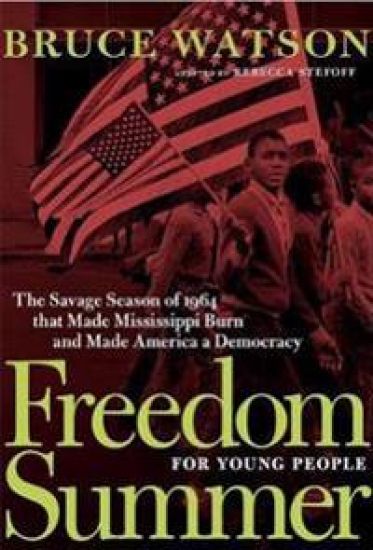
A riveting account of one of the most remarkable episodes in American history. In his critically acclaimed history Freedom Summer, award- winning author Bruce Watson presents powerful testimony about a crucial episode in the American civil rights movement. During the sweltering summer of 1964, more than seven hundred American college students descended upon segregated, reactionary Mississippi to register black voters and educate black children. On the night of their arrival, the worst fears of a race-torn nation were realized when three young men disappeared, thought to have been murdered by the Ku Klux Klan. Taking readers into the heart of these remarkable months, Freedom Summer shines new light on a critical moment of nascent change in America. Recreates the texture of that terrible yet rewarding summer with impressive verisimilitude. -Washington Post
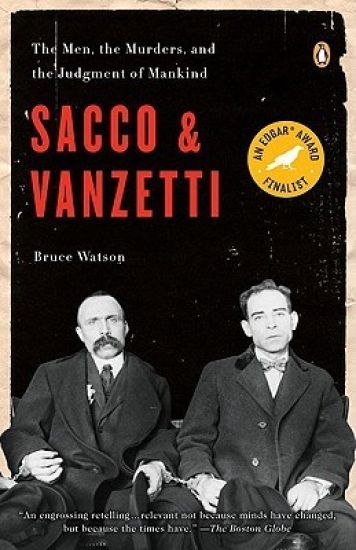
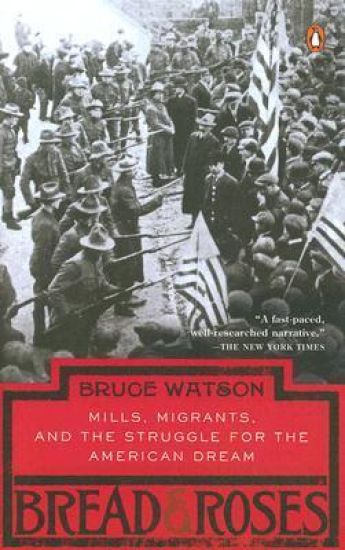
On January 12, 1912, an army of textile workers stormed out of the mills in Lawrence, Massachusetts, commencing what has since become known as the "Bread and Roses" strike. Based on newspaper accounts, magazine reportage, and oral histories, Watson reconstructs a Dickensian drama involving thousands of parading strikers from fifty-one nations, unforgettable acts of cruelty, and even a protracted murder trial that tested the boundaries of free speech. A rousing look at a seminal and overlooked chapter of the past, Bread and Roses is indispensable reading.

Chronology of the Cold War at Sea, 1945-1991
Norman C. Polmar; Eric M. Wertheim; Andrew Bahjat; Bruce Watson
Naval Institute Press
1998
sidottu
The Cold War that dominated world political, economic and military activities for almost half of the 20th century was, in many respects, ""fought"" at sea between the United States and the Soviet Union. The U. S. Navy played a central role from the outset, projecting America's presence and power to the far corners of the globe while attempting to stop Soviet aggressions and to advance its own agenda. This useful reference provides a detailed chronological outline of Cold War developments and events as they relate to U. S. and Soviet naval forces and their allies. Chronology covers naval forward-presence and combat operations from the Berlin crisis, Korea, the Suez campaign, and the Vietnam War to the Iran-Iraq conflict, the Falkands War, and the Gulf War. Smaller-scale confrontations are also included. Events of the Cuban Missile Crisis, Stalin's massive naval expansion, the largest peace-time U. S. naval buildup in history during the 1980s, and other crucial events are presented. The authors present a wealth of information on naval technological and personnel developments, such as the unveiling of new ship types, advances in missile technology, the introduction of new aircraft, and changes in naval leadership. By showcasing new information made available through the opening of Russian archives, this book serves as a walk through history as well as an indispensable reference for naval history buffs and serious students of the Cold War.
Summability methods are transformations that map sequences (or functions) to sequences (or functions). A prime requirement for a "good" summability method is that it preserves convergence. Unless it is the identity transformation, it will do more: it will transform some divergent sequences to convergent sequences. An important type of theorem is called a Tauberian theorem. Here, we know that a sequence is summable. The sequence satisfies a further property that implies convergence. Borel's methods are fundamental to a whole class of sequences to function methods. The transformation gives a function that is usually analytic in a large part of the complex plane, leading to a method for analytic continuation. These methods, dated from the beginning of the 20th century, have recently found applications in some problems in theoretical physics.