Kirjojen hintavertailu – 12 859 818 kirjaa ja 27 kauppaa

Kirjailija

Bryan Froehle

Kirjat ja teokset yhdessä paikassa: 4 kirjaa, julkaisuja vuosilta 2010–2022, suosituimpiin kuuluu Mystic Bonfires. Vertaile teosten hintoja ja tarkista saatavuus suomalaisista kirjakaupoista.

4 kirjaa

Kirjojen julkaisuvuodet: 2010–2022.

Mystic Bonfires

Mystic Bonfires

Kevin Goodrich; Bryan Froehle

Wipf Stock Publishers
2022
pokkari
For centuries, people have been drawn to the Christian mystics--women and men who have known God in powerful and experiential ways. Mystic Bonfires is for students, scholars, and practitioners of ministry, theology, and spiritual formation. It explores theology and theory and shares insights for practice and prayer. Readers will encounter classical concepts about the spiritual life and how to apply these concepts to their ministries in faithful and creative ways. Mystic Bonfires includes questions for students in academic and formation settings as well as project ideas for congregations. Mystic Bonfires explores the intersection of spiritual theology and practical theology. Walter Hilton, a 14th century English mystic and a contemporary of Julian of Norwich serves as a case study for the intersection of these fields called practical spiritual theology.

Mystic Bonfires

Mystic Bonfires

Kevin Goodrich; Bryan Froehle

Wipf Stock Publishers
2022
sidottu
For centuries, people have been drawn to the Christian mystics--women and men who have known God in powerful and experiential ways. Mystic Bonfires is for students, scholars, and practitioners of ministry, theology, and spiritual formation. It explores theology and theory and shares insights for practice and prayer. Readers will encounter classical concepts about the spiritual life and how to apply these concepts to their ministries in faithful and creative ways. Mystic Bonfires includes questions for students in academic and formation settings as well as project ideas for congregations. Mystic Bonfires explores the intersection of spiritual theology and practical theology. Walter Hilton, a 14th century English mystic and a contemporary of Julian of Norwich serves as a case study for the intersection of these fields called practical spiritual theology.
The Disappearing God Gap?

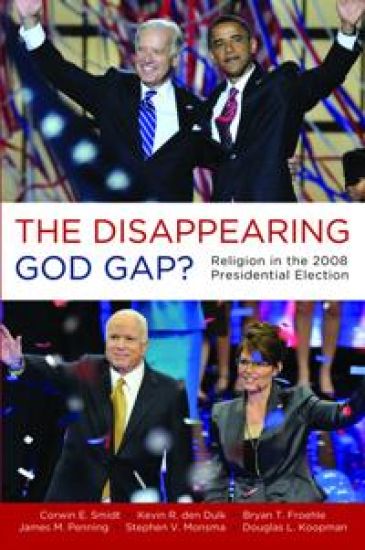
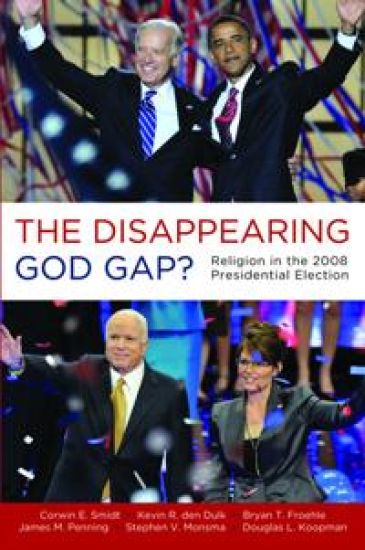
The Disappearing God Gap?

Corwin Smidt; Kevin den Dulk; Bryan Froehle; James Penning; Stephen Monsma; Douglas Koopman

Oxford University Press Inc
2010
sidottu
After the reelection of George W. Bush in 2004, the "God Gap" became a hotly debated political issue. Religious voters were seen as the key to Bush's victory, and Democrats began scrambling to reach out to them. Four years later, however, with the economy in a tailspin on election day, religion barely seemed to register on people's radar screens. In this book, a team of well-regarded scholars digs deeper to examine the role religion played in the 2008 campaign. They take a long view, placing the election in historical context and looking at the campaign as a whole, from the primaries through all the way through election day. At the heart of their analysis is data gleaned from a national survey conducted by the authors, in which voters were interviewed in the spring of 2008 and then re-interviewed after the election.
The Disappearing God Gap?

The Disappearing God Gap?

Corwin Smidt; Kevin den Dulk; Bryan Froehle; James Penning; Stephen Monsma; Douglas Koopman

Oxford University Press Inc
2010
nidottu
After the reelection of George W. Bush in 2004, the "God Gap" became a hotly debated political issue. Religious voters were seen as the key to Bush's victory, and Democrats began scrambling to reach out to them. Four years later, however, with the economy in a tailspin on election day, religion barely seemed to register on people's radar screens. In this book, a team of well-regarded scholars digs deeper to examine the role religion played in the 2008 campaign. They take a long view, placing the election in historical context and looking at the campaign as a whole, from the primaries through all the way through election day. At the heart of their analysis is data gleaned from a national survey conducted by the authors, in which voters were interviewed in the spring of 2008 and then re-interviewed after the election.