Kirjojen hintavertailu – 12 859 818 kirjaa ja 27 kauppaa

Kirjailija

Buchanan

Kirjat ja teokset yhdessä paikassa: 4 kirjaa, julkaisuja vuosilta 2006–2015, suosituimpiin kuuluu Navigate: Intermediate B1+: Coursebook, e-book and Oxford Online Skills Program. Vertaile teosten hintoja ja tarkista saatavuus suomalaisista kirjakaupoista.

4 kirjaa

Kirjojen julkaisuvuodet: 2006–2015.

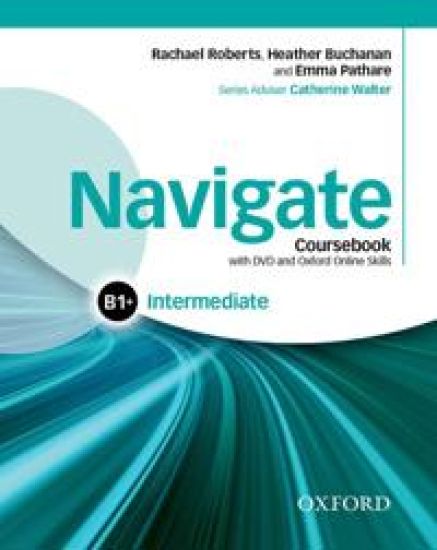
Navigate: Intermediate B1+: Coursebook, e-book and Oxford Online Skills Program
Navigate is a brand new, six-level General English course tailored exclusively to adults. The course takes an innovative approach to reading and listening based on academic research as to how adults best learn languages. It teaches reading and listening from the bottom up, giving learners the skills they need to understand the next text they will read and hear, not just the one they are reading or hearing now. The content has been extensively piloted and reviewed in ELT classrooms across the world, giving teachers the confidence that it really works.
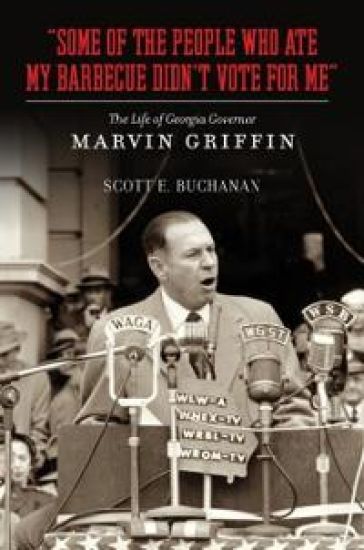
Some of the People Who Ate My Barbecue Didn't Vote for Me Some of the People Who Ate My Barbecue Didn't Vote for Me
Marvin Griffin was Georgia's seventy-second governor. Apart from that simple fact, virtually everything else about his career is the subject of controversy. Griffin governed at a point in the late 1950s when the state was undergoing a profound political transition from a rural-dominated, segregationist culture to a more urban landscape. As he attempted to guide Georgia through years of tumultuous change and upheaval throughout the South, Griffin developed a reputation for being inflammatory on racial issues and merciless to his political enemies. In Some of the People Who Ate My Barbecue Didn't Vote for Me, Scott Buchanan portrays Marvin Griffin as a Yellow Dog Democrat struggling against inevitable change. Griffin was viewed by many as a charismatic voice of resistance in the Georgia and the South in the wake of Brown v. Board of Education. He combined a staunch segregationist approach with economically progressive policies, assisting in Georgia's transformation from an agrarian economy to a more industrialized one. Ironically, it was these efforts and the larger shift in politics that doomed Griffin's career, ensuring his administration would last only one term. In many ways, Griffin stands as a clear dividing line between the Old South and the New.
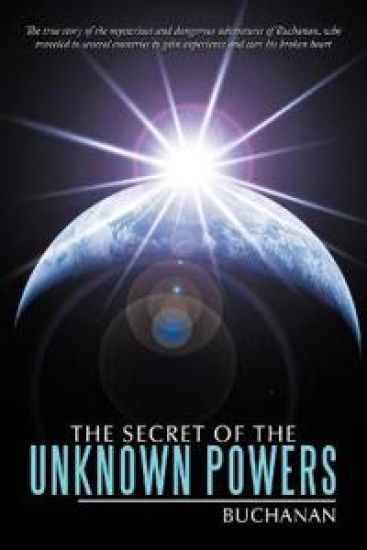
The Secret of the Unknown Powers
A wondrous land of enchantment, Jamaica boasts a climate and terrain as beautiful as anywhere on earth. In addition to possessing a unique beauty, this land can also boast of an unusual people, with a mystical outlook on life. For this is a land of voodoo, of magical chants and mysteries, a place that few tourists can hope to really understand. And one of the mysteries of this realm of magic is unfolded within the pages of this book, "The Secret of the Unknown Powers." The author of this book, Buchanan, is a Christian, yet one deeply influenced by the beliefs of his homeland, Jamaica. He has had a hard life, one that has made him particularly open to realizing that there are many things beyond man's understanding. When Buchanan was but a child, his father was wrongly accused of murder. This incident would haunt Buchanan, causing him to go by an assumed name and travel throughout the West Indies and Mexico, hoping no one would discover his identity. During these travels, he began to see visions and have prophetic dreams. Indeed, this true story reads like a novel, but as they say, truth is stranger than fiction. If the fantastic qualities of everyday life, with or without visions, interest you, you will find "The Secret of the Unknown Powers" enthralling.
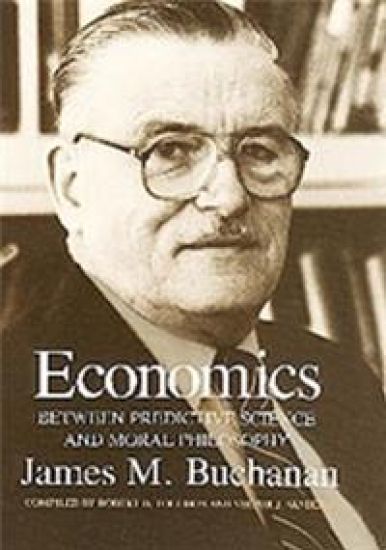
Economics:between Predictive Science & Moral Ph

Economics:between Predictive Science & Moral Ph

Buchanan

Texas A M University Press
2006
nidottu
This book presents twenty-six of the major papers of 1986 Nobel Laureate James M. Buchanan, who played a key role in the development of "theoretical institutional economics" and was awarded the Nobel Prize in economic science for his contributions to a theory of political economy as well as his leadership of the public choice movement. These articles, written from the early 1950s to the mid-1980s and spanning various subfields of economics from public finance to methodology, form the core of Buchanan's work. In each paper the constitutional economics paradigm--viewed by the author as a modern revival of classical political economy--is modified, extended, and applied to particular issues. Contemporary economics grew out of the eighteenth century's moral philosophy--today's social science. Over years of disciplinary separation and specialization within the social sciences, economics has increasingly moved away from the issues about which its founders were concerned, issues that are central to the identity of the economic paradigm. A particular target of criticism has been the tendency to define and analyze economic processes as if they occur in an institutional vacuum. A number of new theoretical developments--among them public choice and the new political economy--have been initiated to refocus economists' attention to the institutional framework of economic activity. Buchanan is perhaps best known as a man who changed the ideas of a generation of scholars about the way the social and economic world works. Rather than working within a tradition, he created his own in the Virginia school of political economy. Aside from published works, his influence has been felt in lectures, conferences, and comments on his colleagues' work. This book will be valuable both to first-time readers of Buchanan's writings and to those already familiar with his contributions to economics.