Kirjojen hintavertailu – 12 859 819 kirjaa ja 27 kauppaa

Kirjailija

Bumba Mukherjee

Kirjat ja teokset yhdessä paikassa: 11 kirjaa, julkaisuja vuosilta 2014–2025, suosituimpiin kuuluu Principles of International Political Economy. Vertaile teosten hintoja ja tarkista saatavuus suomalaisista kirjakaupoista.

11 kirjaa

Kirjojen julkaisuvuodet: 2014–2025.

The IMF, Financial Crisis, and Repression of Human Rights

The IMF, Financial Crisis, and Repression of Human Rights

Bumba Mukherjee; Vineeta Yadav

Springer International Publishing AG
2025
nidottu
This book seeks to answer a number of key questions about the relationship between the IMF, developing states and the impact of financial crises on human rights abuses, including: Why do some but not other IMF-assisted developing states experience the joint outbreak of currency and sudden reversal crises under the Fund’s program?; What are some of the short-term political ramifications of such crises?; Why do human rights violation by governments increase sharply in the wake of twin currency and sudden reversal crisis in some but not all crisis-affected countries?
The IMF, Financial Crisis, and Repression of Human Rights

The IMF, Financial Crisis, and Repression of Human Rights

Bumba Mukherjee; Vineeta Yadav

Springer International Publishing AG
2024
sidottu
This book seeks to answer a number of key questions about the relationship between the IMF, developing states and the impact of financial crises on human rights abuses, including: Why do some but not other IMF-assisted developing states experience the joint outbreak of currency and sudden reversal crises under the Fund’s program?; What are some of the short-term political ramifications of such crises?; Why do human rights violation by governments increase sharply in the wake of twin currency and sudden reversal crisis in some but not all crisis-affected countries?
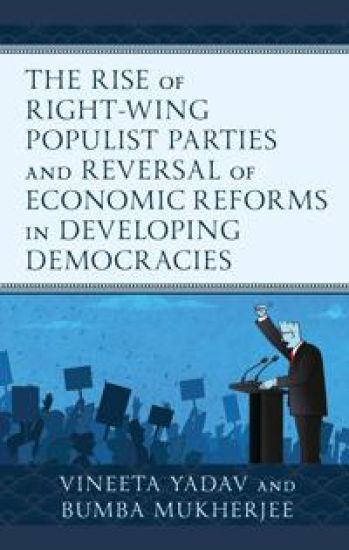
The Rise of Right-Wing Populist Parties and Reversal of Economic Reforms in Developing Democracies
When and why are right-wing populist (RWP) parties electorally successful in developing democracies? What are the consequences of their electoral success? The Rise of Right-Wing Populist Parties and Reversal of Economic Reforms in Developing Democracies presents an original theoretical framework that is grounded in the socio-economic characteristics of developing countries to answer these questions. Vineeta Yadav and Bumba Mukherjee argue that when a sudden reversal financial crisis occurs in a highly clientelist developing democracy, RWP parties can successfully win the electoral support of voters, particularly those belonging to the traditional group in society. They secure their win by promising to adopt nationalist economic policies to restore the social and economic status of voters, particularly those belonging to the traditional groups. Upon winning elections, they deliver on this program by adopting protectionist trade policies and reducing the independence of their country’s central banks so they can manipulate monetary policy to support dominant group voters. Consequently, they reverse key elements of economic globalization. To provide evidence for these claims the authors conduct in-depth analyses of two important cases – the Bharatiya Janata Party (BJP) of India and the Partido Social Liberal (PSL) of Brazil using survey experiments and qualitative evidence, and they analyze Time-Series Cross-Sectonial data for 58 developing countries from 1980 to 2018 to establish the generalizability of their arguments.
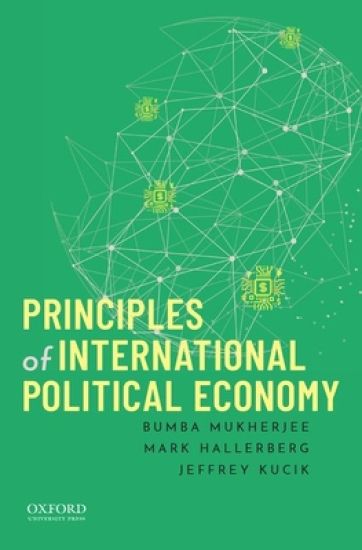
Principles of International Political Economy

Principles of International Political Economy

Bumba Mukherjee; Mark Hallerberg; Jeffrey Kucik

Oxford University Press Inc
2020
nidottu
Principles of International Political Economy is the only text to bridge the gap between the real world of politics underlying the international economy and the tools that researchers use to understand IPE. Utilizing a central theoretical framework, the book provides a systematic and widespread introduction to the standard topics covered in an IPE course. It also emphasizes the role of domestic and international institutions in IPE and incorporates several subject areas that are not covered well in other texts, including political determinants and consequences of financial crises; implications of the rise of the BRICs; international environmental politics; the political origins and effect of sovereign debt; and the politics of foreign aid and its effect on development, democracy, and human rights.
The Politics of Mass Killing in Autocratic Regimes

The Politics of Mass Killing in Autocratic Regimes

Bumba Mukherjee; Ore Koren

Springer Nature Switzerland AG
2018
nidottu
This book develops a detailed, disaggregated theoretical and empirical framework that explains variations in mass killing by authoritarian regimes globally, with a specific focus on Pakistan, Indonesia, and Malaysia. Using a combination of game-theoretic, statistical, and qualitative approaches, this project explicates when civilians within nondemocratic states will mobilize against the ruling elite, and when such mobilization will result in mass killing. In doing so, it illustrates the important role urbanization and food insecurity historically played, and will continue to play, in generating extreme forms of civilian victimization.
The Politics of Mass Killing in Autocratic Regimes

The Politics of Mass Killing in Autocratic Regimes

Bumba Mukherjee; Ore Koren

Springer International Publishing AG
2018
sidottu
This book develops a detailed, disaggregated theoretical and empirical framework that explains variations in mass killing by authoritarian regimes globally, with a specific focus on Pakistan, Indonesia, and Malaysia. Using a combination of game-theoretic, statistical, and qualitative approaches, this project explicates when civilians within nondemocratic states will mobilize against the ruling elite, and when such mobilization will result in mass killing. In doing so, it illustrates the important role urbanization and food insecurity historically played, and will continue to play, in generating extreme forms of civilian victimization.
Democracy and Trade Policy in Developing Countries

Democracy and Trade Policy in Developing Countries

Bumba Mukherjee

University of Chicago Press
2016
nidottu
Since the 1970s, two major trends have emerged among developing countries: the rise of new democracies and the rush to free trade. For some, the confluence of these events suggests that a free-market economy complements a fledgling democracy. Others argue that the two are inherently incompatible and that exposure to economic globalization actually jeopardizes new democracies. Which view is correct? Bumba Mukherjee argues that the reality of how democracy and trade policy unravel in developing countries is more nuanced than either account. Mukherjee offers the first comprehensive cross-national framework for identifying the specific economic conditions that influence trade policy in developing countries. Laying out the causes of variation in trade policy in four developing or recently developed countries—Brazil, India, Indonesia, and South Africa—he argues persuasively that changing political interactions among parties, party leaders, and the labor market are often key to trade policy outcome. For instance, if workers are in a position to benefit from opening up to trade, party leaders in turn support trade reforms by decreasing tariffs and other trade barriers. At a time when discussions about the stability of new democracies are at the forefront, Democracy and Trade Policy in Developing Countries provides invaluable insight into the conditions needed for a democracy to survive in the developing world in the context of globalization.
Democracy and Trade Policy in Developing Countries

Democracy and Trade Policy in Developing Countries

Bumba Mukherjee

University of Chicago Press
2016
sidottu
Since the 1970s, two major trends have emerged among developing countries: the rise of new democracies and the rush to free trade. For some, the confluence of these events suggests that a free-market economy complements a fledgling democracy. Others argue that the two are inherently incompatible and that exposure to economic globalization actually jeopardizes new democracies. Which view is correct? Bumba Mukherjee argues that the reality of how democracy and trade policy unravel in developing countries is more nuanced than either account. Mukherjee offers the first comprehensive cross-national framework for identifying the specific economic conditions that influence trade policy in developing countries. Laying out the causes of variation in trade policy in four developing or recently developed countries—Brazil, India, Indonesia, and South Africa—he argues persuasively that changing political interactions among parties, party leaders, and the labor market are often key to trade policy outcome. For instance, if workers are in a position to benefit from opening up to trade, party leaders in turn support trade reforms by decreasing tariffs and other trade barriers. At a time when discussions about the stability of new democracies are at the forefront, Democracy and Trade Policy in Developing Countries provides invaluable insight into the conditions needed for a democracy to survive in the developing world in the context of globalization.
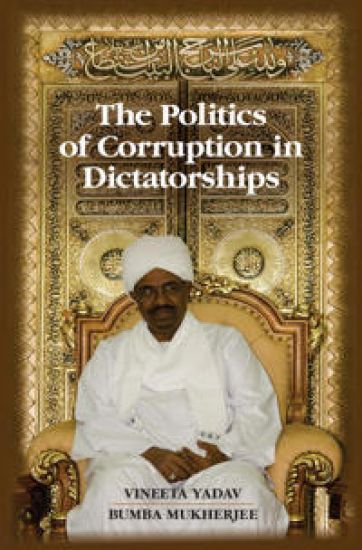
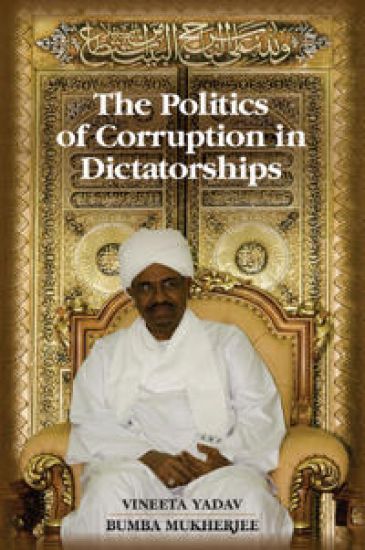
The Politics of Corruption in Dictatorships

The Politics of Corruption in Dictatorships

Vineeta Yadav; Bumba Mukherjee

Cambridge University Press
2015
sidottu
The Politics of Corruption in Dictatorships studies how institutional and social factors influence corruption in dictatorships. Dictatorships are often synonymous with high levels of corruption, yet Vineeta Yadav and Bumba Mukherjee argue otherwise. The authors ask why corruption has declined in some but not other authoritarian regimes. What are the main political factors that drive some autocrats to curb corruption? The book explores the role that business mobilization can play in reducing corruption under some conditions in dictatorships. It investigates how political competition for an elected legislature affects the incentives of dictators to engage in corruption. The study relies on case studies from Jordan, Malaysia, and Uganda. The book is accessible to a wide audience without requiring sophisticated statistical training.
The Politics of Corruption in Dictatorships

The Politics of Corruption in Dictatorships

Vineeta Yadav; Bumba Mukherjee

Cambridge University Press
2015
pokkari
The Politics of Corruption in Dictatorships studies how institutional and social factors influence corruption in dictatorships. Dictatorships are often synonymous with high levels of corruption, yet Vineeta Yadav and Bumba Mukherjee argue otherwise. The authors ask why corruption has declined in some but not other authoritarian regimes. What are the main political factors that drive some autocrats to curb corruption? The book explores the role that business mobilization can play in reducing corruption under some conditions in dictatorships. It investigates how political competition for an elected legislature affects the incentives of dictators to engage in corruption. The study relies on case studies from Jordan, Malaysia, and Uganda. The book is accessible to a wide audience without requiring sophisticated statistical training.
Democracy, Electoral Systems, and Judicial Empowerment in Developing Countries

Democracy, Electoral Systems, and Judicial Empowerment in Developing Countries

Bumba Mukherjee; Vineeta Yadav

The University of Michigan Press
2014
sidottu
The power granted to the courts, both in a nation’s constitution and in practice, reveals much about the willingness of the legislative and executive branches to accept restraints on their own powers. For this reason, an independent judiciary is considered an indication of a nation’s level of democracy. Vineeta Yadav and Bumba Mukherjee use a data set covering 159 developing countries, along with comparative case studies of Brazil and Indonesia, to identify the political conditions under which de jure independence is established. They find that the willingness of political elites to grant the courts authority to review the actions of the other branches of government depends on the capacity of the legislature and expectations regarding the judiciary’s assertiveness. Moving next to de facto independence, Yadav and Mukherjee bring together data from 103 democracies in the developing world, complemented by case studies of Brazil, India, and Indonesia. Honing in on the effects of electoral institutions, the authors find that, when faced with short time horizons, governments that operate in personal vote electoral systems are likely to increase de facto judicial independence whereas governments in party-centered systems are likely to reduce it.