Kirjojen hintavertailu – 12 903 724 kirjaa ja 27 kauppaa

Kirjailija

C. Hamann

Kirjat ja teokset yhdessä paikassa: 5 kirjaa, julkaisuja vuosilta 1981–2011, suosituimpiin kuuluu Organische Leiter, Halbleiter Und Photoleiter. Vertaile teosten hintoja ja tarkista saatavuus suomalaisista kirjakaupoista.

Nimi esiintyy myös muodoissa: C Hamann

5 kirjaa

Kirjojen julkaisuvuodet: 1981–2011.

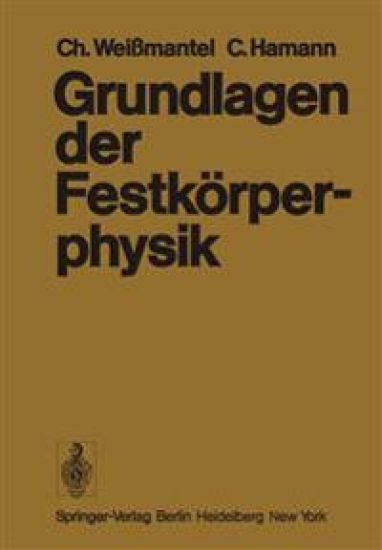
Grundlagen der Festkörperphysik

Grundlagen der Festkörperphysik

C. Weissmantel; C. Hamann

Springer-Verlag Berlin and Heidelberg GmbH Co. K
2011
nidottu
Die Festkörperphysik ist in den letzten Jahrzehnten zu einer relativ eigenständigen und außerordentlich umfangreichen Disziplin innerhalb der Physik ge'Y0rden. An ihrer weiteren dynamischen Entwicklung wird im internationalen Maßstab mit großen Forschungskapazitäten auf einem hohen theoretischen Niveau und unter Nutzung einer modernen experimentellen Technik gearbeitet. Ein entsprechender wissenschaftlicher Vorlauf gerade auf diesem Gebiet ist auch für die Volkswirtschaft der DDR von erheblicher Bedeutung, tragen doch die Forschungsergebnisse der Festkörperphysik in immer stärkerem Maße zur Entstehung bzw. Vervollkommnung wichtiger Gebiete der Technik bei: Die Halbleitertechnik und die Mikroelektronik leiten sich weitgehend aus der gezielten Nutzung festkörperphysikalischer Erkennt­ nisse und Methoden ab; aber auch die meisten anderen Zweige der Technik werden durch die Festkörperphysik wissenschaftlich befruchtet. Das gilt beispielsweise für die Technik der Werkstoffbe- und -verarbeitung, für den Maschinenbau, die Elektro­ technik und die Konsumgüterindustrie, ferner für die Filmindustrie, wichtige Teil­ gebiete der technischen Chemie, wie etwa die Katalyse, oder für den wissenschaft­ lichen Gerätebau. Indem wissenschaftliche Erkenntnisse über die Eigenschaften und Veränderungen von Festkörpern gewonnen werden, ergeben sich wachsende Mög­ lichkeiten für die Optimierung technischer Prozesse und für die Entwicklung besserer Werkstoffe und Erzeugnisse. Auf vielen Gebieten, z. B. der Rechentechnik, der Nachrichtentechnik, des Fernsehens, der Konsumelektronik u. a. , ist zu verfolgen, wie festkörperphysikalische Forschung zu einer Generationsfolge von immer vollkommene­ ren Produkten beiträgt. Auf diese Weise hat die Festkörperphysik auch maßgeblichen Anteil an der Verbesserung der Materialökonomie, der Erhöhung der Zuverlässigkeit und des Gebrauchswertes verschiedenster Erzeugnisse.
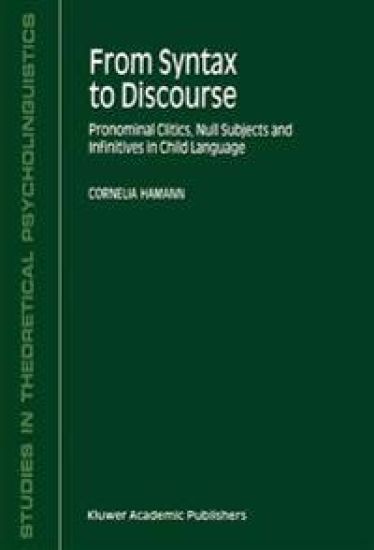
From Syntax to Discourse

From Syntax to Discourse

C. Hamann

Springer-Verlag New York Inc.
2002
sidottu
claim is that such morphological processes can be learnt without symbolization and innate knowledge. See Rumelhart and McClelland (1986) for the original model of past tense acquisition, Plunkett and Marchman (1993), Nakisa, Plunkett and Hahn (1996) and Elman et al. (1996) for developments and extensions to other morphological processes, and Marcus et al. (1992) and Pinker and Prince (1988) for criticism. One line of investigation supporting the view of language as a genetic endowment is closely linked to traditional research on language acquisition and argues as follows: If language is innate there must be phenomena that should be accessible from birth in one form or the other. Thus it is clear that the language of children, especially young children and preferably babies should be investigated. As babies unfortunately don't talk, the abilities that are available from birth must be established in ways different from the usual linguistic analysis. Psycholinguistic research of the last few years has shown that at the age of 4 and 8 months and even during their first week of life children already have important language skills. From the fourth day, infants distinguish their mother tongue from other languages. From the first months children prefer the sound of speech to 'other noise'. At the age of 4 months, infants prefer pauses at syntactic boundaries to random pauses.
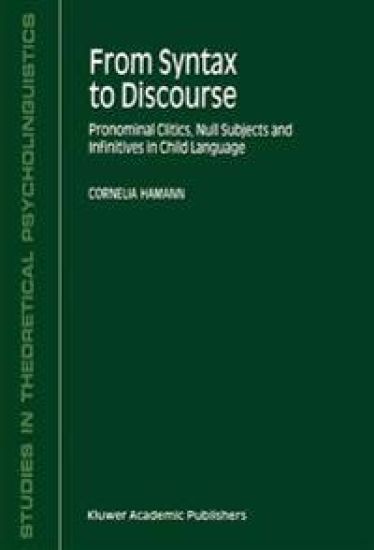
From Syntax to Discourse

From Syntax to Discourse

C. Hamann

Springer-Verlag New York Inc.
2002
nidottu
claim is that such morphological processes can be learnt without symbolization and innate knowledge. See Rumelhart and McClelland (1986) for the original model of past tense acquisition, Plunkett and Marchman (1993), Nakisa, Plunkett and Hahn (1996) and Elman et al. (1996) for developments and extensions to other morphological processes, and Marcus et al. (1992) and Pinker and Prince (1988) for criticism. One line of investigation supporting the view of language as a genetic endowment is closely linked to traditional research on language acquisition and argues as follows: If language is innate there must be phenomena that should be accessible from birth in one form or the other. Thus it is clear that the language of children, especially young children and preferably babies should be investigated. As babies unfortunately don't talk, the abilities that are available from birth must be established in ways different from the usual linguistic analysis. Psycholinguistic research of the last few years has shown that at the age of 4 and 8 months and even during their first week of life children already have important language skills. From the fourth day, infants distinguish their mother tongue from other languages. From the first months children prefer the sound of speech to 'other noise'. At the age of 4 months, infants prefer pauses at syntactic boundaries to random pauses.