
Kirjojen hintavertailu – 12 859 819 kirjaa ja 27 kauppaa

Kirjailija

C. Vance Haynes

Kirjat ja teokset yhdessä paikassa: 2 kirjaa, julkaisuja vuosilta 2007–2010, suosituimpiin kuuluu Arch Lake Woman. Vertaile teosten hintoja ja tarkista saatavuus suomalaisista kirjakaupoista.

2 kirjaa

Kirjojen julkaisuvuodet: 2007–2010.

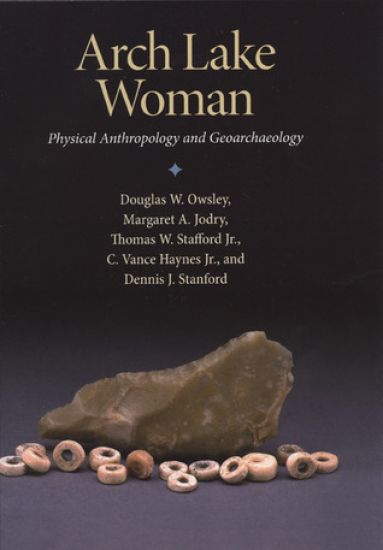
Arch Lake Woman

Arch Lake Woman

Douglas W. Owsley; Margaret A. Jodry; Thomas W. Stafford; C. Vance Haynes; Dennis J. Stanford

Texas A M University Press
2010
sidottu
The Arch Lake human burial site, discovered in 1967 in eastern New Mexico, contains the third-oldest known remains in North America. Since its original excavation and removal to Eastern New Mexico University’s Blackwater Draw Museum, the 10,000 radiocarbon-year-old burial has been known only locally. In February 2000 an interdisciplinary team led by Douglas W. Owsley reexamined the osteology, geology, archaeology, and radiocarbon dating of the burial. In this first volume in Peopling of the Americas Publications—released by Texas A&M University Press for the Center for the Study of the First Americans—Arch Lake Woman presents the results of this recent analysis of the skeleton and site. In addition to color and black-and-white illustrations, Arch Lake Woman includes extensive tables describing the team’s discoveries and comparing their results with those of other ancient burials.
Murray Springs

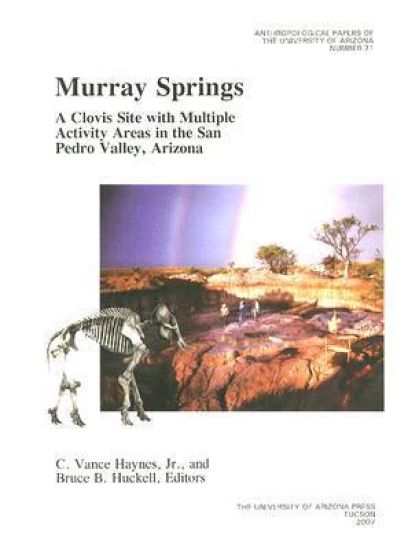
Murray Springs

C. Vance Haynes; Bruce B. Huckell

University of Arizona Press
2007
nidottu
The Murray Springs Site in the upper San Pedro River Valley of southeast Arizona is one of the most significant Clovis sites ever found. It contained a multiple bison kill, a mammoth kill, and possibly a horse kill in a deeply stratified sedimentary context. Scattered across the buried occupation surface with the bones of late Pleistocene animals were several thousand stone tools and waste flakes from their manufacture and repair. Because of the unique occurrence of an algal black mat that buried the Clovis-age surface immediately after abandonment, the distributional integrity of the artifacts and debitage clusters is exceptional for Paleoindian sites. Excavation of the Clovis hunters? camp 50 to 150 meters south of the kills revealed artifactual evidence typical of hunting camp activity, including hide working and weapons repair. Impact flakes conjoining with Clovis points clearly tied the camp to the bison kill. The unique nature of the site and this comprehensive study of the excavated material constitute one of the most important contributions to our knowledge of Paleoindian hunters in the New World.