

Kirjailija
C. W. Leadbeater
Kirjat ja teokset yhdessä paikassa: 397 kirjaa, julkaisuja vuosilta 1985–2025, suosituimpiin kuuluu Clairvoyance. By: C.W. Leadbeater. Vertaile teosten hintoja ja tarkista saatavuus suomalaisista kirjakaupoista.
Nimi esiintyy myös muodoissa: C W Leadbeater, C.W. Leadbeater, C.W Leadbeater
397 kirjaa
Kirjojen julkaisuvuodet: 1985–2025.

Renowned esoteric author, C. W. Leadbeater, breaks down the philosophy of Theosophical belief. What it is, the principles, religious aspects and much more.
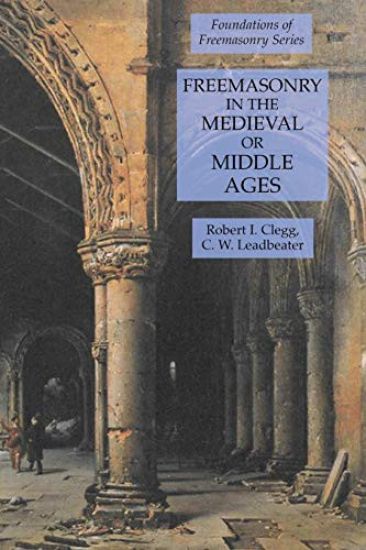
Freemasonry in the Medieval or Middle Ages
C W Leadbeater; Robert I Clegg
Lamp of Trismegistus
2020
pokkari
Two masonic scholars examine an aspect of the fraternity's history that often gets overlooked. Brother Clegg looks at Freemasonry and Monasticism in the Middle Ages, while Brother Leadbeater examines a wide range of historical topics within both speculative and operative masonry, from that era of history.

Prolific writer C. W. Leadbeater explores the ancient side of the masonic fraternity and its potential roots in Ancient Egypt. He examines various Egyptian deities and how their symbology plays a role in the masonic ritual. He also takes a look at why we participate in the Mysteries to begin with and our connection to them.


Charles Webster Leadbeater (16 February 1854 - 1 March 1934) was a member of the Theosophical Society, author on occult subjects and co-initiator with J. I. Wedgwood of the Liberal Catholic Church. Originally a priest of the Church of England, his interest in spiritualism caused him to end his affiliation with Anglicanism in favor of the Theosophical Society, where he became an associate of Annie Besant. He became a high-ranking officer of the Society. His interest in Theosophy was stimulated by A. P. Sinnett's Occult World, and he joined the Theosophical Society in 1883. The next year he met Helena Petrovna Blavatsky when she came to London; she accepted him as a pupil and he became a vegetarian. Around this time he wrote a letter to Kuthumi, asking to be accepted as his pupil. Shortly afterward, an encouraging response influenced him to go to India; he arrived at Adyar in 1884. He wrote that while in India, he had received visits and training from some of the "Masters" that according to Blavatsky were the inspiration behind the formation of the Theosophical Society, and were its hidden guides. This was the start of a long career with the Theosophical Society. Leadbeater wrote 69 books and pamphlets during the period from 1895 to his death in 1934, many of which continued to be published until 1955. Two noteworthy titles, Astral Plane and the Devachanic Plane (or The Heaven World) both of which contained writings on the realms the soul passes through after death." For the first time among occultists, a detailed investigation had been made of the Astral Plane as a whole, in a manner similar to that in which a botanist in an Amazonian jungle would set to work in order to classify its trees, plants and shrubs, and so write a botanical history of the jungle. For this reason the little book, The Astral Plane, was definitely a landmark, and the Master as Keeper of the Records desired to place its manuscript in the great Museum." Highlights of his writing career included addressing topics such as: the existence of a loving God, The Masters of Wisdom, what happens after death, immortality of the human soul, reincarnation, Karma or the Law of Consequence, development of clairvoyant abilities, the nature of thought forms, dreams, vegetarianism, Esoteric ChristianityHe also became one of the best known speakers of the Theosophical Society for a number of years and served as Secretary of the London Lodge. (wikipedia.org)

Charles Webster Leadbeater (16 February 1854 - 1 March 1934) was a member of the Theosophical Society, author on occult subjects and co-initiator with J. I. Wedgwood of the Liberal Catholic Church. Originally a priest of the Church of England, his interest in spiritualism caused him to end his affiliation with Anglicanism in favor of the Theosophical Society, where he became an associate of Annie Besant. He became a high-ranking officer of the Society. His interest in Theosophy was stimulated by A. P. Sinnett's Occult World, and he joined the Theosophical Society in 1883. The next year he met Helena Petrovna Blavatsky when she came to London; she accepted him as a pupil and he became a vegetarian. Around this time he wrote a letter to Kuthumi, asking to be accepted as his pupil. Shortly afterward, an encouraging response influenced him to go to India; he arrived at Adyar in 1884. He wrote that while in India, he had received visits and training from some of the "Masters" that according to Blavatsky were the inspiration behind the formation of the Theosophical Society, and were its hidden guides. This was the start of a long career with the Theosophical Society. Leadbeater wrote 69 books and pamphlets during the period from 1895 to his death in 1934, many of which continued to be published until 1955. Two noteworthy titles, Astral Plane and the Devachanic Plane (or The Heaven World) both of which contained writings on the realms the soul passes through after death." For the first time among occultists, a detailed investigation had been made of the Astral Plane as a whole, in a manner similar to that in which a botanist in an Amazonian jungle would set to work in order to classify its trees, plants and shrubs, and so write a botanical history of the jungle. For this reason the little book, The Astral Plane, was definitely a landmark, and the Master as Keeper of the Records desired to place its manuscript in the great Museum." Highlights of his writing career included addressing topics such as: the existence of a loving God, The Masters of Wisdom, what happens after death, immortality of the human soul, reincarnation, Karma or the Law of Consequence, development of clairvoyant abilities, the nature of thought forms, dreams, vegetarianism, Esoteric ChristianityHe also became one of the best known speakers of the Theosophical Society for a number of years and served as Secretary of the London Lodge. (wikipedia.org)



Charles Leadbeater was one of the most well known names within Theosophy. An early adherent of the movement and one of its main figures, he was a prolific author- among his works, this stands out as one of the better texts. It breaks dreams apart into the physical, etheric, and astral, and relates several tales of dreams being utilized to predict future events. It finishes off with a fairly good list of works by both Leadbeater and other authors on several subjects as a springboard for the occultist interested in perusing other topics.
Kirjan tekijä oli englantilainen selvänäkijä, kirjailija, luennoitsija ja teosofi C. W. Leadbeater (1854-1934). Kirja sisältää:Muinaiset mysteeriotIntuitiosta Elinvoima ja magnetismiJälleensyntyminenAuran värien merkitysAjatuksia kundalinitulestaEläinten näkymättömästä puolestaMielisairaudestaFyysinen ruumis
An Unabridged Edition to include: Introductory - What It Is - General Principles - The Deity - The Constitution of Man - Reincarnation - The Wider Outlook - Death - Man's Past and Future - Cause and Effect - What Theosophy Does for Us

An unabridged edition to include SCENERY (The Seven Subdivisions - Degrees of Materiality - Characteristics of Astral Vision - The Aura - The Etheric Double - Power of Magnifying Minute Objects - The "Summerland" - Records of the Astral Light) INHABITANTS (I. Human. (1) Living: - The Adept or Chela in M y vir pa - The Psychically Developed Person - The Ordinary Person in Astral Body - The Black Magician. (2) Dead: - The Nirm nak ya - The Chela awaiting Reincarnation - The Ordinary Person after Death - The Shade - The Shell - The Vitalized Shell - The Suicide - The Victim of Sudden Death - The Vampire - The Werewolf - The Black Magician after Death. II. Non-human: - The Elemental Essence - The K mar pas of Animals - Various Classes of Nature-Spirits, commonly called Fairies - K madevas - R padevas - Ar padevas - The Devar jahs III. Artificial: - Elementals formed Unconsciously - Guardian Angels - Elementals formed Consciously - Human Artificials - The True Origin of Spiritualism) PHENOMENA (Churchyard Ghosts - Apparitions of the Dying - Haunted Localities - Family Ghosts - Bell-ringing, Stone-throwing, etc. - Fairies - Communicating Entities - Astral Resources - Clairvoyance - Prevision - Second-Sight - Astral Forces - Etheric Currents - Etheric Pressure - Latent Energy - Sympathetic Vibration - Mantras - Disintegration - Materialization - Why Darkness is required at a S ance - Spirit Photographs - Reduplication - Precipitation of Letters and Pictures - Slate-writing - Levitation - Spirit Lights - Handling Fire - Transmutation - Repercussion)

Thought-Forms, the standpoint of Theosophy, describes the visualization of thoughts, experiences, emotions and music. In 1895, the authors began to investigate "the subtle matter of the universe." They were interested in the human mind as, according their claim, the workings of the mind "extrudes into the external world" as expressed by "thought-forms." In September 1896, Besant described how "two clairvoyant Theosophists" had started "observing the substance of thought." She published an article titled "Thought-Forms" in the Theosophical Society's journal describing these experiences. The article eventually was expanded upon to produce this "small but influential book," first published in 1901, which contains colour pictures of thought-forms that the authors said are created "in subtle spirit-matter." This new edition includes all the illustrations in either colour or black and white as they were originally published.

The Life After Death: And How Theosophy Unveils It
C. W. Leadbeater
Createspace Independent Publishing Platform
2018
nidottu
"The Life After Death" is one of a number of contemporary and similar works penned by theosophists during the 1910s. Primarily revolving around the form of the spirit world and the activities of theosophists to help spirits through the occult, it is both well written and expansive on its content. Because of its era of manufacture- the Victorian Era- some of its eastern content is not complete in accuracy.

Les choses invisibles sont les plus nombreuses. Dans cette oeuvre classique de recherche par clairvoyance publi e pour la premi re fois en 1913, Charles Webster Leadbeater, clairvoyant, r v le les aspects cach s du monde physique qui, une fois vus, impr gnent la vie d'une signification encore insoup onn e, d'un bonheur et d'un sens infiniment plus grands. Normalement per us par seulement quelques-uns d'entre-nous, ces royaumes cach s qui nous entourent composent ce que l'on nomme la quatri me dimension, le monde sup rieur, et le plan (et but) existentiel. Leadbeater nous montre comment tous ces trois plans influencent nos vies quotidiennes, dans un remarquable travail d'exploration qui sera appr ci par tous ceux qui se sont d j demand Est-ce vraiment tout ce qu'il y a ? L'auteur de cet ouvrage fut un l ve direct de H. P. Blavatsky, fondatrice du mouvement th osophique moderne. Ce que nous prenons pour le monde r el, tel que nos sens le per oivent, est tr s restreint par rapport une r alit dont nous n'avons pas id e. Cet ouvrage nous invite faire reculer les limites de notre vision du monde, transformer notre compr hension de l'existence et appr cier l'importance de cette portion beaucoup plus consid rable de la Vie qui se trouve au-del de la port e de notre monde physique et visible.

Les choses invisibles sont les plus nombreuses. Dans cette oeuvre classique de recherche par clairvoyance publi e pour la premi re fois en 1913, Charles Webster Leadbeater, clairvoyant, r v le les aspects cach s du monde physique qui, une fois vus, impr gnent la vie d'une signification encore insoup onn e, d'un bonheur et d'un sens infiniment plus grands. Normalement per us par seulement quelques-uns d'entre-nous, ces royaumes cach s qui nous entourent composent ce que l'on nomme la quatri me dimension, le monde sup rieur, et le plan (et but) existentiel. Leadbeater nous montre comment tous ces trois plans influencent nos vies quotidiennes, dans un remarquable travail d'exploration qui sera appr ci par tous ceux qui se sont d j demand Est-ce vraiment tout ce qu'il y a ? L'auteur de cet ouvrage fut un l ve direct de H. P. Blavatsky, fondatrice du mouvement th osophique moderne. Ce que nous prenons pour le monde r el, tel que nos sens le per oivent, est tr s restreint par rapport une r alit dont nous n'avons pas id e. Cet ouvrage nous invite faire reculer les limites de notre vision du monde, transformer notre compr hension de l'existence et appr cier l'importance de cette portion beaucoup plus consid rable de la Vie qui se trouve au-del de la port e de notre monde physique et visible.

La mort n'est pas la fin du voyage. La vie se poursuit au del du d c s... Ce petit livre apporte aide et paix tous ceuxqui souffrent de la perte d'un tre cher. La mortest-elle une ouverture sur une vie plus belle ? Enquelques pages, le lecteur verra la mort et les tatspost-mortem sous un angle nouveau. L'auteur, clairvoyant, offre un aper u diff rent etr confortant pour comprendre ce qui se passesuite au d c s afin de rendre cette preuve plusfacile g rer motionnellement dans la s r nit etle silence du coeur.

Cet ouvrage est le premier d'une importante s rie comportant des donn es nouvelles, du plus haut int r t, sur de nombreux sujets: Le th osophe apr s la mort - Les rapports des d c d s avec la terre - Les tats apr s la mort - De l'obsession chez l'animal - Les aides invisibles - Le souvenir des exp riences dans l'au-del - Les dimensions - Les pens es psychiques - Le nom occulte des individus - Comment on peut lire les vies pass es - Comment on peut pr voir l'avenir - Les Esprits de la nature - La construction d'un syst me des mondes - Les cha nes plan taires - Les vagues de vie - Les monades de la lune - La cha ne terrestre - Notes sur les Races - Sur la r incarnation - Sur le Karma humain et celui des animaux - Et bien plus encore. Du commencement la fin, l'auteur nous emm ne avec lui derri re les voiles de la Nature et les pr cieux enseignements qu'il nous donne sont de nature int resser tous les milieux tant par la source de renseignements qu'il nous offre que par ses aper us philosophiques, scientifiques, occultes, historiques et davantage. Nous sommes certains que le pr sent ouvrage saura trouver une place de choix dans la biblioth que du lecteur avide de r ponses propos de tout ce qui touche de pr s comme de loin les mondes invisibles.
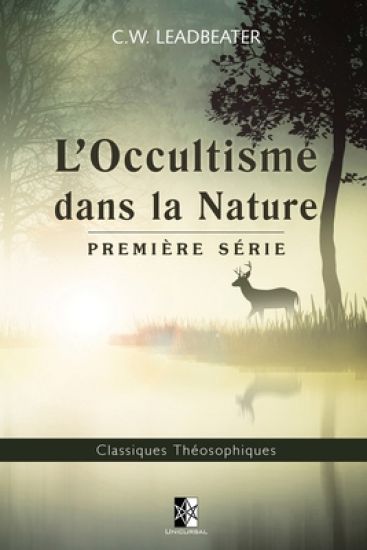
Cet ouvrage est le premier d'une importante s rie comportantdes donn es nouvelles, du plus haut int r t, sur de nombreuxsujets: Le th osophe apr s la mort - Les rapports des d c d s avec laterre - Les tats apr s la mort - De l'obsession chez l'animal -Les aides invisibles - Le souvenir des exp riences dans l'au-del -Les dimensions - Les pens es psychiques - Le nom occulte desindividus - Comment on peut lire les vies pass es - Comment onpeut pr voir l'avenir - Les Esprits de la nature - La constructiond'un syst me des mondes - Les cha nes plan taires - Les vaguesde vie - Les monades de la lune - La cha ne terrestre - Notessur les Races - Sur la r incarnation - Sur le Karma humain etcelui des animaux - Et bien plus encore. Du commencement la fin, l'auteur nous emm ne avec luiderri re les voiles de la Nature et les pr cieux enseignementsqu'il nous donne sont de nature int resser tous les milieuxtant par la source de renseignements qu'il nous offre que parses aper us philosophiques, scientifiques, occultes, historiqueset davantage. Nous sommes certains que le pr sent ouvrage saura trouverune place de choix dans la biblioth que du lecteur avide der ponses propos de tout ce qui touche de pr s comme deloin les mondes invisibles.