Kirjojen hintavertailu – 12 859 819 kirjaa ja 27 kauppaa

Kirjailija

C. Winter Han

Kirjat ja teokset yhdessä paikassa: 6 kirjaa, julkaisuja vuosilta 2015–2023, suosituimpiin kuuluu Racism and Gay Men of Color. Vertaile teosten hintoja ja tarkista saatavuus suomalaisista kirjakaupoista.

6 kirjaa

Kirjojen julkaisuvuodet: 2015–2023.

Racism and Gay Men of Color

Racism and Gay Men of Color

Sulaimon Giwa; C. Winter Han

BLOOMSBURY PUBLISHING PLC
2023
nidottu
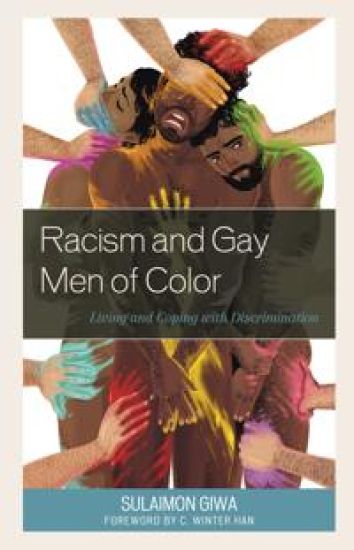
Sulaimon Giwa’s aptly named Racism and Gay Men of Color arrives at a time when many of the sociocultural issues it raises have come to national attention. Yet gay men of color in Canadian GLBT communities are still subject to racism and excluded, both online and offline. If a gay man of color is not the “right” color, he is often the recipient of stereotypical racial epithets and denied sexual approbation within an erotic world where sexual desires are structured along the lines of race, ethnicity, age, disability, and class. Giwa warns against the denial that underlies much of this monolithic racism and highlights the strategies used by gay men of color to counter racism in their communities and to lead strong, effective lives. This important book will inspire advocates and activists, students and scholars, and will become indispensable in university and college courses on sexuality and race studies.
Racism and Gay Men of Color

Racism and Gay Men of Color

Sulaimon Giwa; C. Winter Han

BLOOMSBURY PUBLISHING PLC
2022
sidottu
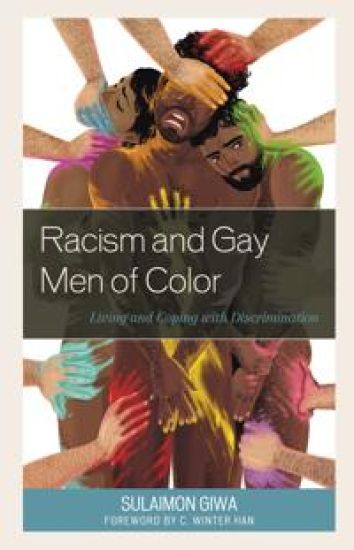
Sulaimon Giwa’s aptly named Racism and Gay Men of Color arrives at a time when many of the sociocultural issues it raises have come to national attention. Yet gay men of color in Canadian GLBT communities are still subject to racism and excluded, both online and offline. If a gay man of color is not the “right” color, he is often the recipient of stereotypical racial epithets and denied sexual approbation within an erotic world where sexual desires are structured along the lines of race, ethnicity, age, disability, and class. Giwa warns against the denial that underlies much of this monolithic racism and highlights the strategies used by gay men of color to counter racism in their communities and to lead strong, effective lives. This important book will inspire advocates and activists, students and scholars, and will become indispensable in university and college courses on sexuality and race studies.
Racial Erotics

Racial Erotics

C. Winter Han

University of Washington Press
2021
pokkari
Finalist for the 2022 Lambda Literary Award for LGBTQ Studies Finalist for the 2022 Randy Shilts Award, sponsored by The Publishing TriangleHonorable Mention for the 2024 John Leo and Dana Heller Award for Best Single Work, Anthology, Multi-Authored, or Edited Book in LGBTQ Studies, sponsored by the Popular Culture Association Exposes a racial hierarchy of desire that centers whiteness in queer social worldsSexual desire, often understood as personal erotic preference, is frequently seen as neutral, natural, or inevitable. Countering these commonplace assumptions, Racial Erotics shows how sexual partnering within communities of gay men is deeply embedded within larger social structures that define whiteness as desirable and normative while othering men of color. In queer erotic economies this othering may take the form of sexual rejection or fetishization of men of color, but C. Winter Han argues that the real danger of sexual racism is that it creates a hierarchy of racial worth that extends outside of erotic encounters into the everyday lives of gay men of color. In this way, sexual racism perpetuates a larger project of racial erasing that equates gayness with whiteness to secure acceptance for gay white men at the expense of queers of color. With vivid examples from interviews, media representations, and online dating sites, Han highlights the creative means through which gay men of color, cordoned off in spaces both gay and straight, produce alternative frameworks to combat dominant narratives. Racial Erotics offers a new paradigm for understanding the connection of race and queer desire, demonstrating how race profoundly shapes sexual desires among men while racialized notions of desire construct beliefs about belonging.
Racial Erotics

Racial Erotics

C. Winter Han

University of Washington Press
2021
sidottu
Finalist for the 2022 Lambda Literary Award for LGBTQ Studies Finalist for the 2022 Randy Shilts Award, sponsored by The Publishing TriangleHonorable Mention for the 2024 John Leo and Dana Heller Award for Best Single Work, Anthology, Multi-Authored, or Edited Book in LGBTQ Studies, sponsored by the Popular Culture Association Exposes a racial hierarchy of desire that centers whiteness in queer social worldsSexual desire, often understood as personal erotic preference, is frequently seen as neutral, natural, or inevitable. Countering these commonplace assumptions, Racial Erotics shows how sexual partnering within communities of gay men is deeply embedded within larger social structures that define whiteness as desirable and normative while othering men of color. In queer erotic economies this othering may take the form of sexual rejection or fetishization of men of color, but C. Winter Han argues that the real danger of sexual racism is that it creates a hierarchy of racial worth that extends outside of erotic encounters into the everyday lives of gay men of color. In this way, sexual racism perpetuates a larger project of racial erasing that equates gayness with whiteness to secure acceptance for gay white men at the expense of queers of color. With vivid examples from interviews, media representations, and online dating sites, Han highlights the creative means through which gay men of color, cordoned off in spaces both gay and straight, produce alternative frameworks to combat dominant narratives. Racial Erotics offers a new paradigm for understanding the connection of race and queer desire, demonstrating how race profoundly shapes sexual desires among men while racialized notions of desire construct beliefs about belonging.
Geisha of a Different Kind

Geisha of a Different Kind

C. Winter Han

New York University Press
2015
pokkari
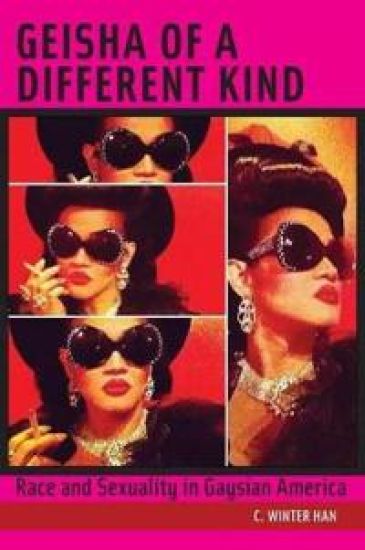
In gay bars and nightclubs across America, and in gay-oriented magazines and media, the buff, macho, white gay man is exalted as the ideal—the most attractive, the most wanted, and the most emulated type of man. For gay Asian American men, often viewed by their peers as submissive or too 'pretty,' being sidelined in the gay community is only the latest in a long line of racially-motivated offenses they face in the United States. Repeatedly marginalized by both the white-centric queer community that values a hyper-masculine sexuality and a homophobic Asian American community that often privileges masculine heterosexuality, gay Asian American men largely have been silenced and alienated in present-day culture and society. In Geisha of a Different Kind, C. Winter Han travels from West Coast Asian drag shows to the internationally sought-after Thai kathoey, or "ladyboy," to construct a theory of queerness that is inclusive of the race and gender particularities of the gay Asian male experience in the United States. Through ethnographic observation of queer Asian American communities and Asian American drag shows, interviews with gay Asian American men, and a reading of current media and popular culture depictions of Asian Americans, Han argues that gay Asian American men, used to gender privilege within their own communities, must grapple with the idea that, as Asians, they have historically been feminized as a result of Western domination and colonization, and as a result, they are minorities within the gay community, which is itself marginalized within the overall American society. Han also shows that many Asian American gay men can turn their unusual position in the gay and Asian American communities into a positive identity. In their own conception of self, their Asian heritage and sexuality makes these men unique, special, and, in the case of Asian American drag queens, much more able to convey a convincing erotic femininity. Challenging stereotypes about beauty, nativity, and desirability, Geisha of a Different Kind makes a major intervention in the study of race and sexuality in America.

Geisha of a Different Kind

Geisha of a Different Kind

C. Winter Han

New York University Press
2015
sidottu
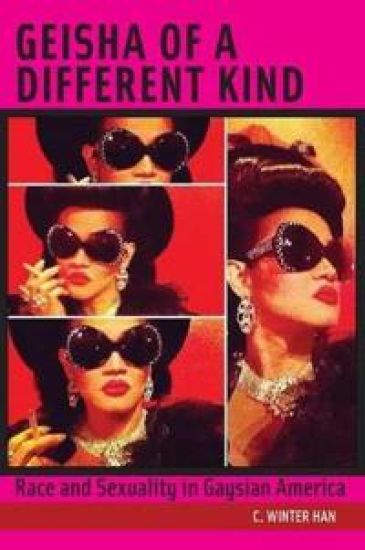
In gay bars and nightclubs across America, and in gay-oriented magazines and media, the buff, macho, white gay man is exalted as the ideal—the most attractive, the most wanted, and the most emulated type of man. For gay Asian American men, often viewed by their peers as submissive or too 'pretty,' being sidelined in the gay community is only the latest in a long line of racially-motivated offenses they face in the United States. Repeatedly marginalized by both the white-centric queer community that values a hyper-masculine sexuality and a homophobic Asian American community that often privileges masculine heterosexuality, gay Asian American men largely have been silenced and alienated in present-day culture and society. In Geisha of a Different Kind, C. Winter Han travels from West Coast Asian drag shows to the internationally sought-after Thai kathoey, or "ladyboy," to construct a theory of queerness that is inclusive of the race and gender particularities of the gay Asian male experience in the United States. Through ethnographic observation of queer Asian American communities and Asian American drag shows, interviews with gay Asian American men, and a reading of current media and popular culture depictions of Asian Americans, Han argues that gay Asian American men, used to gender privilege within their own communities, must grapple with the idea that, as Asians, they have historically been feminized as a result of Western domination and colonization, and as a result, they are minorities within the gay community, which is itself marginalized within the overall American society. Han also shows that many Asian American gay men can turn their unusual position in the gay and Asian American communities into a positive identity. In their own conception of self, their Asian heritage and sexuality makes these men unique, special, and, in the case of Asian American drag queens, much more able to convey a convincing erotic femininity. Challenging stereotypes about beauty, nativity, and desirability, Geisha of a Different Kind makes a major intervention in the study of race and sexuality in America.