Kirjojen hintavertailu – 12 859 819 kirjaa ja 27 kauppaa

Kirjailija

C. Wright Mills

Kirjat ja teokset yhdessä paikassa: 11 kirjaa, julkaisuja vuosilta 1951–2022, suosituimpiin kuuluu The Power Elite. Vertaile teosten hintoja ja tarkista saatavuus suomalaisista kirjakaupoista.

11 kirjaa

Kirjojen julkaisuvuodet: 1951–2022.

Essays i sosiologi

Essays i sosiologi

C. Wright Mills

Cappelen Damm akademisk
2022
nidottu
Amerikaneren C. Wright Mills (1916-1962) var sosiologiens enfant terrible, en storkjeftet bråkmaker som la seg ut med alle, men han var også en visjonær tenker på vegne av sosiologien og samfunnsvitenskapene. Mest berømt ble Mills for boken om The Sociological Imagination fra 1959. Hans ideer om den sosiologiske fantasien har inspirert flere generasjoner av samfunnsvitere og innledningskapitlet i boken er inkludert i denne essaysamlingen. Mills skrev om en lang rekke temaer, og denne samlingen tekster gir et innsyn i det mangfoldige ved hans tenkning. Her er en analyse av maktstrukturen i det amerikanske samfunnet, en kritikk av liberal tenkning og en teori om massemedia og offentlig opinion. Essaysamlingen inkluderer også en lite kjent tekst av Mills: en kritisk, men likevel positivt imøtekommende omtale av Simone de Beauvoirs Det annet kjønn.

Den sociologiske fantasi

Den sociologiske fantasi

C. Wright Mills

Gyldendal
2020
nidottu
Den amerikanske sociolog og samfundsdebattør C. Wright Mills’ hovedværk Den sociologiske fantasi fra 1959 er et opgør med samtidens sociologer, der efter Mills’ mening stod for en alt for teoretisk og abstrakt – det vil sige fantasiforladt – måde at bedrive videnskab på. Ifølge Mills bør de, der bedriver samfundsvidenskab, udover at besidde teoretisk indsigt og metodisk bevidsthed navnligt belyse vekselvirkningen mellem individ og samfund. Det er nødvendigt at være opmærksom på forholdet mellem individuel biografi og kulturel historie, for derved vil man kunne forstå og forklare sammenhængen mellem sociale og individuelle problemer. C. Wright Mills’ Den sociologiske fantasi er en bog, der opfordrer til at lære af fortiden for at udfordre nutiden med henblik på at forbedre kvaliteten af menneskelivet i fremtiden. Den sociologiske fantasi er blevet en sociologisk klassiker, og nu foreligger så andenudgaven af den danske oversættelse fra 2002 med nyt forord af professor i sociologi Michael Hviid Jacobsen. Bogen vil forhåbentligt fortsætte med at inspirere nutidige og kommende generationer af samfundsforskere. Oversat fra amerikansk efter The Sociological Imagination af Tom Havemann.
Soziologische Phantasie

Soziologische Phantasie

C. Wright Mills

Springer Fachmedien Wiesbaden
2016
nidottu
Soziologische Phantasie, die erstmals 1963 erschienene deutsche Übersetzung von C. Wright Mills‘ The Sociological Imagination, darf zurecht als Meilenstein wissenschaftlich-politischer Debatten in den Vereinigten Staaten betrachtet werden und zählt auch heute noch zu einer der wichtigsten Selbstkritiken der Soziologie. Mills schlägt hier einen dritten Weg zwischen bloßem Empirismus und abgehobener Theorie ein: Er plädiert für eine kritische Sozialwissenschaft, die sich weder bürokratisch instrumentalisieren lässt noch selbstverliebt vor sich hin prozessiert, sondern gesellschaftliche Bedeutung erlangt, indem sie den Zusammenhang von persönlichen Schwierigkeiten und öffentlichen Problemen erhellt. Eben dies sei Aufgabe und Verheißung einer Soziologie, die sich viel zu häufig „einer merkwürdigen Lust an der Attitüde des Unbeteiligten“ hingebe.
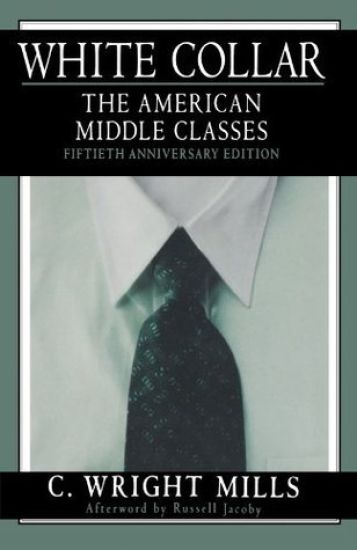
White Collar

White Collar

C. Wright Mills; Russell Jacoby

Oxford University Press Inc
2002
nidottu

Halvin toimitettuna 25,70 €

In print for fifty years, White Collar by C. Wright Mills is considered a standard on the subject of the new middle class in twentieth-century America. This landmark volume demonstrates how the conditions and styles of middle class life--originating from elements of both the newer lower and upper classes--represent modern society as a whole. By examining white-collar life, Mills aimed to learn something about what was becoming more typically "American" than the once-famous Western frontier character. He painted a picture instead of a society that had evolved into a business-based milieu, viewing America instead as a great salesroom, an enormous file, and a new universe of management. Russell Jacoby, author of The End of Utopia and The Last Intellectuals, contributes a new Afterword to this edition, in which he reflects on the impact White Collar had at its original publication and considers what it means to our society today. "A book that persons of every level of the white collar pyramid should read and ponder. It will alert them to their condition for their better salvation."-Horace M. Kaellen, The New York Times (on the first edition)
Den sociologiske fantasi

Den sociologiske fantasi

C. Wright Mills

Gyldendal
2002
nidottu
Den amerikanske sociolog og samfundsdebattør C. Wright Mills’ (1916-1962) hovedværk Den sociologiske fantasi fra 1959 er et opgør med samtidens sociologer der efter Mills’ mening stod for en alt for teoretisk og abstrakt – det vil sige fantasiforladt – måde at bedrive videnskab på. Det er blandt andre samfundsteoretikeren Talcott Parsons (1902-1979) der står for skud i Den sociologiske fantasi. Parsons er ifølge Mills medlem af den gruppe af videnskabsmænd som han benævner ”høje teoretikere”, det vil sige dem der ikke er i stand til – eller ikke ønsker – at formulere deres teorier på et forståeligt sprog. Det (for) høje abstraktionsniveau afstedkommer at man glemmer hvad sociologien i bund og grund handler om, nemlig samfundet og de mennesker der i det. Mills citerer længere passager fra Parsons’ værker for herefter at bruge blot et par linjer på at ”omskrive” Parsons-citatet til et mere forståeligt sprog. Mills’ position inden for samfundsvidenskaberne er svær at klassificere. Han trak på et væld af kilder og stillede sig på tværs af traditionelle skoledannelser. Hans primære inspirationskilder var formentlig Marx og Weber. Fra Weber lånte han en vis kulturel pessimisme og fra Marx troen på mulighederne for et nyt og bedre samfund. Samtidig havde Mills en stærk liberalistisk tilbøjelighed der bevirkede at individet altid stod centralt i hans bevidsthed. Mills’ konfliktsøgende stil bevirkede, at han som person, men ofte også som sociolog, ikke blev betragtet som salonfähig. Hans slet skjulte kærlighed til kvinder og motorcykler bidrog også til billedet af en alternativ akademiker. Oversat fra amerikansk efter The Sociological Imagination af Tom Havemann.
C. Wright Mills

C. Wright Mills

C. Wright Mills

University of California Press
2001
pokkari
One of the leading public intellectuals of twentieth-century America and a pioneering and brilliant social scientist, C. Wright Mills left a legacy of interdisciplinary and hard-hitting work including two books that changed the way many people viewed their lives and the structure of power in the United States: "White Collar" (1951) and "The Power Elite" (1956). Mills persistently challenged the status quo within his profession - as in "The Sociological Imagination" (1959) - and within his country, until his untimely death in 1962. This collection of letters and writings, edited by his daughters, allows readers to see behind Mills' public persona for the first time. Mills' letters to prominent figures - including Saul Alinsky, Daniel Bell, Lewis Coser, Carlos Fuentes, Hans Gerth, Irving Howe, Dwight MacDonald, Robert K. Merton, Ralph Miliband, William Miller, David Riesman, and Harvey Swados - are joined by his letters to family members, letter-essays to an imaginary friend in Russia, personal narratives by his daughters, and annotations drawing on published and unpublished material, including the FBI file on Mills.
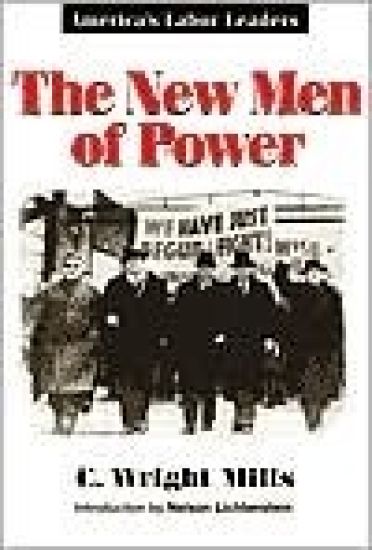
The New Men of Power

The New Men of Power

C. Wright Mills

University of Illinois Press
2001
nidottu
When C. Wright Mills published The New Men of Power in 1948, he thought labor leaders a new strategic elite and the unions a set of vanguard organizations that were crucial to "stopping the main drift towards war and slump." Today, as the unions once again seek to play a decisive role in American life, Mills' remarkable probe into the structure and ideology of mid-twentieth-century trade unionism remains essential reading. A new introduction by historian Nelson Lichtenstein offers insight into the Millsian political world at the time he wrote The New Men of Power.
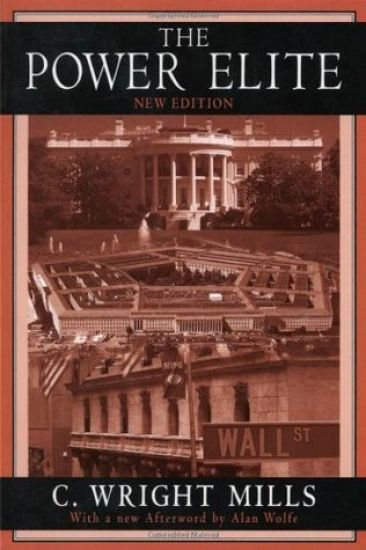
The Power Elite

The Power Elite

C. Wright Mills; Alan Wolfe

Oxford University Press Inc
1999
nidottu

Halvin toimitettuna 25,20 €

First published in 1956, The Power Elite stands as a contemporary classic of social science and social criticism. C. Wright Mills examines and critiques the organization of power in the United States, calling attention to three firmly interlocked prongs of power: the military, corporate, and political elite. The Power Elite can be read as a good account of what was taking place in America at the time it was written, but its underlying question of whether America is as democratic in practice as it is in theory continues to matter very much today. What The Power Elite informed readers of in 1956 was how much the organization of power in America had changed during their lifetimes, and Alan Wolfe's astute afterword to this new edition brings us up to date, illustrating how much more has changed since then. Wolfe sorts out what is helpful in Mills book and which of his predictions have not come to bear, laying out the radical changes in American capitalism, from intense global competition and the collapse of communism to rapid technological transformations and ever changing consumer tastes. The Power Elite has stimulated generations of readers to think about the kind of society they have and the kind of society they might want, and deserves to be read by every new generation.
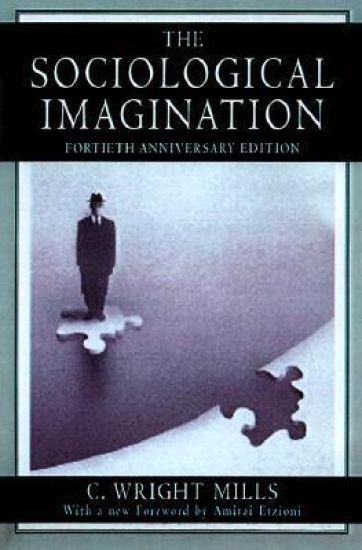
The Sociological Imagination

The Sociological Imagination

C. Wright Mills; Amitai Etzioni

Oxford University Press Inc
1999
nidottu

Halvin toimitettuna 24,00 €

C. Wright Mills is best remembered for his highly acclaimed work The Sociological Imagination, in which he set forth his views on how social science should be pursued. Hailed upon publication as a cogent and hard-hitting critique, The Sociological Imagination took issue with the ascendant schools of sociology in the United States, calling for a humanist sociology connecting the social, personal, and historical dimensions of our lives. The sociological imagination Mills calls for is a sociological vision, a way of looking at the world that can see links between the apparently private problems of the individual and important social issues. Leading sociologist Amitai Etzioni brings this fortieth anniversary edition up to date with a lucid introduction in which he considers the ways social analysis has progressed since Mills first published his study in 1959. A classic in the field, this book still provides rich food for our imagination.
Den sociologiska visionen

Den sociologiska visionen

C. Wright Mills

Arkiv förlag/A-Z förlag
1997
nidottu
Mills utmanar två dominerande riktningar inom modern sociologi: tron att statistiska analyser av opinionsundersökningar eller ett abstrakt teoribygge skulle kunna ge viktig kunskap om samhället. Hans eget vetenskapsideal betonar den enskilde forskarens politiska och moraliska ansvar; att vägra underordna sig maktfullkomliga byråkratier och i stället klargöra sambandet mellan människornas upplevda problem och den historiska processen. Till denna Arkivs andra, omarbetade upplaga har Bengt Gesser skrivit en ny utförlig presentation av Mills. Boken har nu också en mer läsvänlig layout.
White Collar: The American Middle Classes - The Classic Sociological Study of the Office Worker and the Bureaucracies
C. Wright Mills' incisive analysis of the American white-collar worker is a classic of sociology, the author's ideas and terms making a lasting effect on sociological enquiry and popular consciousness. Writing in 1950, most of Mills' study concerns the first half of the 20th century; the trends underpinning a change in workplace culture, such as increasing urban populations and workers in the services industry. This new class of worker was invariably based in some form of office, wearing formal white buttoned shirts - hence, white-collar workers. The culture and behaviors of these workers are described, how many are part of an expanding bureaucracy, and have new standards of prestige and consumption. For the first time, phenomena such as the career woman and the worker employed chiefly for charisma or personality is observed. While previously a rare curiosity, both sexes striving for success and recognition in urban careers underpins the overall culture. Mills also contrasts white-collar culture as consisting mostly of mental rather than physical labor. The sector in general is shown as reluctant to unionize; partly this is due to unions being unavailable, and partly it is a sense held by white-collar workers that their life situation differs from factory or other manual labor.