Kirjojen hintavertailu – 12 859 818 kirjaa ja 27 kauppaa

Kirjailija

Caitlin Blanchfield

Kirjat ja teokset yhdessä paikassa: 5 kirjaa, julkaisuja vuosilta 2016–2026, suosituimpiin kuuluu Significant Impact: Contesting Surveillance Infrastructure on Indigenous Lands. Vertaile teosten hintoja ja tarkista saatavuus suomalaisista kirjakaupoista.

5 kirjaa

Kirjojen julkaisuvuodet: 2016–2026.

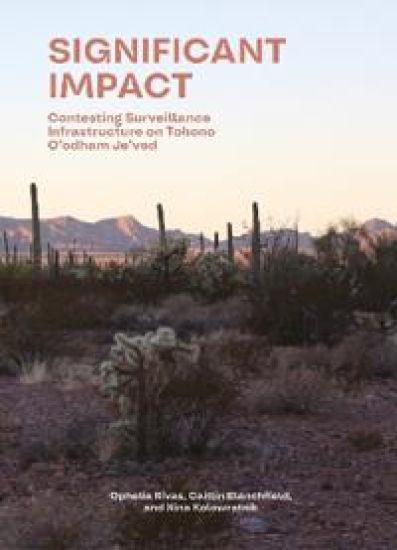
Significant Impact: Contesting Surveillance Infrastructure on Indigenous Lands

Significant Impact: Contesting Surveillance Infrastructure on Indigenous Lands

Caitlin Blanchfield; Nina Kolowratnik; Ophelia Rivas

ACTAR
2026
nidottu
This book documents the impact of U. S. surveillance infrastructure on the Tohono O'odham Nation, challenging militarized environmental assessments and Western land protocols. Through traditional knowledge, spatial research, and Indigenous narratives, it reframes land as interconnected life and genealogy. It brings together critical mappings, essays, and a Counter Environmental Assessment to document and describe the effects of surveillance infrastructure on the Tohono O'odham Nation. Through traditional knowledge, research, spatial analysis, oral history-based writing, and critical essays, this book advocates against militarized infrastructures on Indigenous lands and challenges common protocols of environmental review, along with the Western frameworks of scientific classification and land as property embedded in them. The project highlights the impact of surveillance when considered through Indigenous sovereignty and an O'odham understanding of land--through interconnected forms of life and genealogies of place. Authored with informed consent, it asserts Indigenous sovereignty while protecting sacred knowledge.
The Avery Review: Climates

The Avery Review: Climates

James Graham; Caitlin Blanchfield; Jacob Moore; Jordan Carver; Alissa Anderson

GSAPP Books
2021
nidottu
The essays in this volume examine what we talk about when we talk about climate, particularly in relation to architecture and its allied fields. How does climate inflect our understanding of human settlement, global migration, spatial violence, and resource extraction? How does climate figure into our conception of what architecture is and does? What are the material and conceptual infrastructures that render climate legible, knowable, and actionable? How do these questions offer new vantage points on the architectural ramifications of climate change, amplifying our understanding of resiliency, sustainability, and ecotechnology? Investigating climatic territories, imaginaries, and visibility, these essays clarify the exigencies of environment through design.
Modern Management Methods – Architecture, Historical Value, and the Electromagnetic Image

Modern Management Methods – Architecture, Historical Value, and the Electromagnetic Image

Caitlin Blanchfield; Farzin Lotfi–jam

Columbia Books on Architecture and the City
2019
nidottu
Modernists of the early twentieth century were transfixed by the X-ray—a means of seeing through skin into systems of bones and tissue. What, nearly a century later, can X-rays reveal about the systems of modernism itself? Modern Management Methods asks how the value of a building is produced through instruments of expertise, management ideologies, and historical narratives. Through unorthodox survey practices, the project uses the imaging techniques of conservation and the documentary detritus of heritage preservation to show how scientific methods attempt to produce stable notions of history and value. Deploying the medium of the X-ray, Caitlin Blanchfield and Farzin Lotfi-Jam tell two related histories of building conservation, internationalism, and the making of modernist meaning through the architect Le Corbusier’s building Stuttgart’s Weissenhofsiedlung and the United Nations Headquarters in New York City.
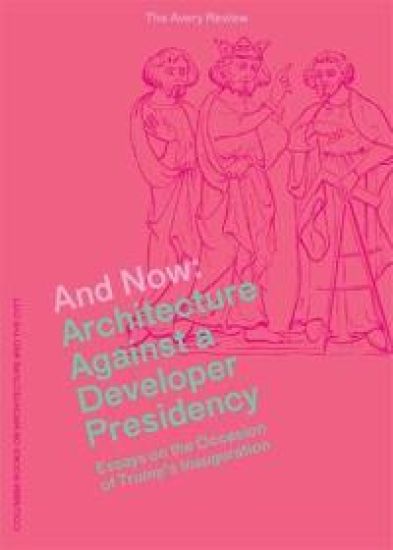
And Now – Architecture Against a Developer Presidency (Essays on the Occasion of Trump`s Inauguration)

And Now – Architecture Against a Developer Presidency (Essays on the Occasion of Trump`s Inauguration)

James Graham; Alissa Anderson; Caitlin Blanchfield; Jordan Carver; Jacob Moore

Columbia Books on Architecture and the City
2017
nidottu
The election and inauguration of Donald J. Trump as the president of the United States of America have provoked an unprecedented intensity of reflection in virtually all academic disciplines. The professions of architecture and planning, faced with the phenomenon of a self-proclaimed "builder-in-chief," have found themselves facing a series of fundamental questions, both old and new. How should we think, teach, and practice under a developer presidency? What sort of walls will we and won't we choose to build? What are our commitments of critical thought, and what obligations should we turn our energies toward? The essays gathered in And Now explore the nature of architecture's many long-standing complicities. Architecture coordinates colossal expenditures (of material, of energy); it scripts forms of labor (in its construction, in its operation, and in the programs it houses); and it is both a repository and generator of capital. Architecture participates, centrally, in defining modes of life, whether for the privileged or the dispossessed-designing and building the boundaries between the "haves" and the "have-nots." This fundamental reality of architectural practice need not inspire either nihilism or defensiveness but should rather be understood, quite simply, as the terrain we navigate. Naming these complicities and the injustices they perpetuate is a first step toward addressing them.
Columbia in Manhattanville

Columbia in Manhattanville

Caitlin Blanchfield

Columbia Books on Architecture and the City
2016
nidottu
In 2003, Columbia University began planning an expansion into neighboring Manhattanville, the site of the soon-to-open campus designed by the Renzo Piano Building Workshop and Skidmore, Owings & Merrill. The story of the project is a complex one-a university bursting at the seams, the changing imperatives of research facilities, large-scale investment in underground infrastructures, a controversial use of eminent domain, the commissioning of celebrated architects, and a remarkable campaign of community engagement all combining to reshape the public face of a venerable institution. Bringing together conversations with the architects and planners designing the Manhattanville campus, the educators who will inhabit its buildings, and essays from urban and architectural historians, this book both documents the making of Manhattanville and engages the contested history of public planning and the private university. Featuring contributions from Amale Andraos, Carol Becker, Elizabeth Diller, Steven Gregory, Maxine Griffith, Tom Jessell, Robert Kasdin, Laura Kurgan, Reinhold Martin, Lois Mazzitelli, Philip Palmgren, Charles Renfro, Marilyn Taylor, and Anthony Vaccione.