Kirjojen hintavertailu – 12 903 725 kirjaa ja 27 kauppaa

Kirjailija

Caitlin Talmadge

Kirjat ja teokset yhdessä paikassa: 4 kirjaa, julkaisuja vuosilta 2015–2020, suosituimpiin kuuluu The Dictator's Army. Vertaile teosten hintoja ja tarkista saatavuus suomalaisista kirjakaupoista.

4 kirjaa

Kirjojen julkaisuvuodet: 2015–2020.

US Defense Politics

US Defense Politics

Harvey M. Sapolsky; Eugene Gholz; Caitlin Talmadge

Routledge
2020
nidottu
This book provides an accessible overview of US defense politics for upper-level students. This new edition has been updated and revised, with new material on the Trump Administration and Space Force. Analyzing the ways in which the United States prepares for war, the authors demonstrate how political and organizational interests determine US defense policy and warn against over-emphasis on planning, centralization, and technocracy. Focusing on the process of defense policy-making rather than just the outcomes of that process, US Defense Politics departs from the traditional style of many textbooks. Designed to help students understand the practical side of American national security policy, the book examines the following key themes: US grand strategy; the roles of the president and the Congress in controlling the military; organizational interests and civil-military relations; who joins America's military; what happens to veterans after wars; how and why weapons are bought; the management of defense and intra- and inter-service relations; public attitudes toward the military; homeland security and the intelligence community. The fourth edition will be essential reading for students of US defense politics, national security policy, and homeland security, and highly recommended for students of US foreign policy, public policy, and public administration.
US Defense Politics

US Defense Politics

Harvey M. Sapolsky; Eugene Gholz; Caitlin Talmadge

Routledge
2020
sidottu
This book provides an accessible overview of US defense politics for upper-level students. This new edition has been updated and revised, with new material on the Trump Administration and Space Force. Analyzing the ways in which the United States prepares for war, the authors demonstrate how political and organizational interests determine US defense policy and warn against over-emphasis on planning, centralization, and technocracy. Focusing on the process of defense policy-making rather than just the outcomes of that process, US Defense Politics departs from the traditional style of many textbooks. Designed to help students understand the practical side of American national security policy, the book examines the following key themes: US grand strategy; the roles of the president and the Congress in controlling the military; organizational interests and civil-military relations; who joins America's military; what happens to veterans after wars; how and why weapons are bought; the management of defense and intra- and inter-service relations; public attitudes toward the military; homeland security and the intelligence community. The fourth edition will be essential reading for students of US defense politics, national security policy, and homeland security, and highly recommended for students of US foreign policy, public policy, and public administration.
The Dictator's Army

The Dictator's Army

Caitlin Talmadge

Cornell University Press
2015
pokkari

Halvin toimitettuna 43,00 €

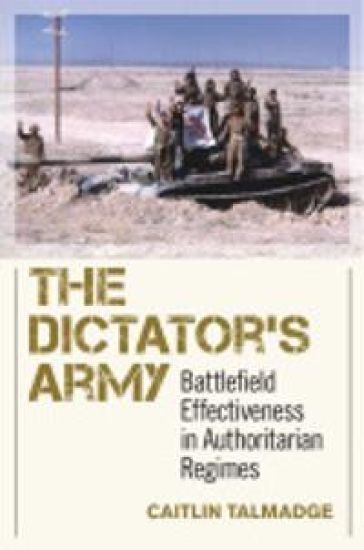
In The Dictator's Army, Caitlin Talmadge presents a compelling new argument to help us understand why authoritarian militaries sometimes fight very well—and sometimes very poorly. Talmadge's framework for understanding battlefield effectiveness focuses on four key sets of military organizational practices: promotion patterns, training regimens, command arrangements, and information management. Different regimes face different domestic and international threat environments, leading their militaries to adopt different policies in these key areas of organizational behavior. Authoritarian regimes facing significant coup threats are likely to adopt practices that squander the state's military power, while regimes lacking such threats and possessing ambitious foreign policy goals are likely to adopt the effective practices often associated with democracies. Talmadge shows the importance of threat conditions and military organizational practices for battlefield performance in two paired comparisons of states at war: North and South Vietnam (1963–1975) and Iran and Iraq (1980–1988). Drawing on extensive documentary sources, her analysis demonstrates that threats and practices can vary not only between authoritarian regimes but also within them, either over time or across different military units. The result is a persuasive explanation of otherwise puzzling behavior by authoritarian militaries. The Dictator's Army offers a vital practical tool for those seeking to assess the likely course, costs, and outcomes of future conflicts involving nondemocratic adversaries, allies, or coalition partners.
The Dictator's Army

The Dictator's Army

Caitlin Talmadge

Cornell University Press
2015
sidottu
In The Dictator's Army, Caitlin Talmadge presents a compelling new argument to help us understand why authoritarian militaries sometimes fight very well—and sometimes very poorly. Talmadge's framework for understanding battlefield effectiveness focuses on four key sets of military organizational practices: promotion patterns, training regimens, command arrangements, and information management. Different regimes face different domestic and international threat environments, leading their militaries to adopt different policies in these key areas of organizational behavior. Authoritarian regimes facing significant coup threats are likely to adopt practices that squander the state's military power, while regimes lacking such threats and possessing ambitious foreign policy goals are likely to adopt the effective practices often associated with democracies. Talmadge shows the importance of threat conditions and military organizational practices for battlefield performance in two paired comparisons of states at war: North and South Vietnam (1963–1975) and Iran and Iraq (1980–1988). Drawing on extensive documentary sources, her analysis demonstrates that threats and practices can vary not only between authoritarian regimes but also within them, either over time or across different military units. The result is a persuasive explanation of otherwise puzzling behavior by authoritarian militaries. The Dictator's Army offers a vital practical tool for those seeking to assess the likely course, costs, and outcomes of future conflicts involving nondemocratic adversaries, allies, or coalition partners.