Kirjojen hintavertailu – 12 903 725 kirjaa ja 27 kauppaa

Kirjailija

Callum G. Brown

Kirjat ja teokset yhdessä paikassa: 20 kirjaa, julkaisuja vuosilta 1997–2027, suosituimpiin kuuluu Ninety Humanists and the Ethical Transition of Britain. Vertaile teosten hintoja ja tarkista saatavuus suomalaisista kirjakaupoista.

Nimi esiintyy myös muodoissa: Callum G Brown

20 kirjaa

Kirjojen julkaisuvuodet: 1997–2027.

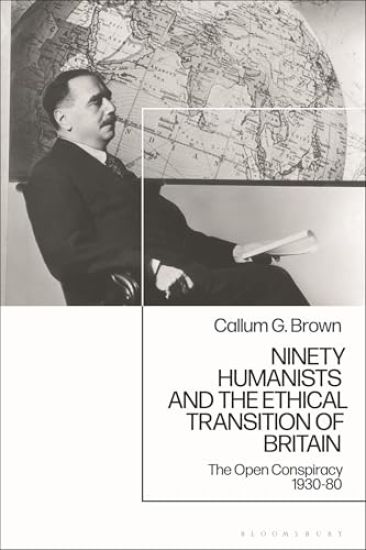
Ninety Humanists and the Ethical Transition of Britain

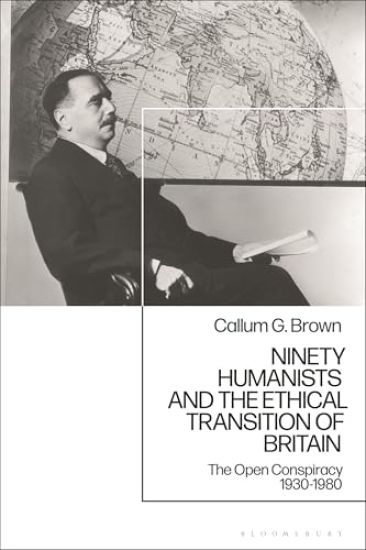
Ninety Humanists and the Ethical Transition of Britain

Callum G. Brown

BLOOMSBURY PUBLISHING PLC
2025
sidottu
This book re-writes the origins of the progressive 1960s. It argues that 94 leading British intellectuals, nearly all humanists, were inspired by H. G. Wells to amend the ethical laws of the nation under a banner of “The Open Conspiracy”. Using a wealth of correspondence and other materials covering 1930 to 1980, Callum Brown identifies a new motivation behind ethical change. Whilst established narratives attribute most changes to youth revolt, the sex revolution and feminism, he shows how a humanist-led network realigned much of the British state to the principles of humanitarianism, the autonomy of the individual, and internationalism. The author examines the network’s campaigns and the work of individual intellectuals. High profile members come into focus, including Bertrand Russell, Julian Huxley, and Barbara Wootton. Highlighting the amazing breadth of the group's work, the book reveals 11 main areas of ethical ambition, ranging from abolishing world hunger, hanging, child beating and women’s entrapment in abusive marriages, to nuclear disarmament and the promotion of federal world government. The result is a compelling new perspective on modern British history, and the key social and moral reforms of the past century.
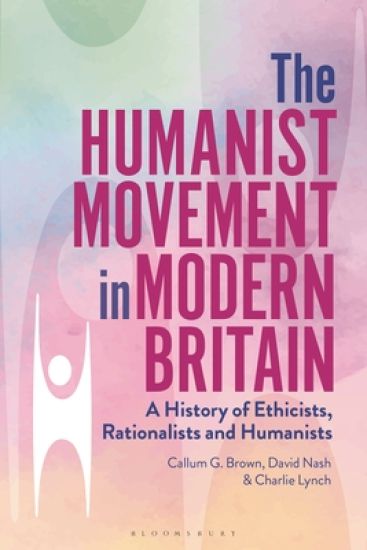
The Humanist Movement in Modern Britain

The Humanist Movement in Modern Britain

Callum G. Brown; David Nash; Charlie Lynch

BLOOMSBURY PUBLISHING PLC
2023
sidottu
Humanists have been a major force in British life since the turn of the 20th century. Here, leading historians of religious non-belief Callum Brown, David Nash, and Charlie Lynch examine how humanist organisations brought ethical reform and rationalism to the nation as it faced the moral issues of the modern world. This book provides a long overdue account of this dynamic group. Developing through the Ethical Union (1896), the Rationalist Press Association (1899), the British Humanist Association (1963) and Humanists UK (2017), Humanists sought to reduce religious privilege but increase humanitarian compassion and human rights. After pioneering legislation on blasphemy laws, dignity in dying and abortion rights, they went on to help design new laws on gay marriage, and sex and moral education. Internationally, they endeavoured to end war and world hunger. And with Humanist marriages and celebration of life through Humanist funerals, national ritual and culture have recently been transformed. Based on extensive archival and oral-history research, this is the definitive history of Humanists as an ethical force in modern Britain.
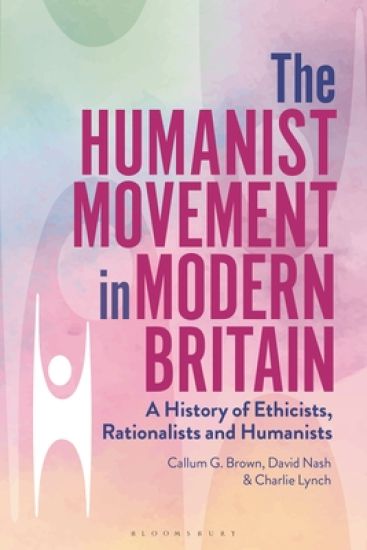
The Humanist Movement in Modern Britain

The Humanist Movement in Modern Britain

Callum G. Brown; David Nash; Charlie Lynch

BLOOMSBURY PUBLISHING PLC
2023
nidottu
Humanists have been a major force in British life since the turn of the 20th century. Here, leading historians of religious non-belief Callum Brown, David Nash, and Charlie Lynch examine how humanist organisations brought ethical reform and rationalism to the nation as it faced the moral issues of the modern world. This book provides a long overdue account of this dynamic group. Developing through the Ethical Union (1896), the Rationalist Press Association (1899), the British Humanist Association (1963) and Humanists UK (2017), Humanists sought to reduce religious privilege but increase humanitarian compassion and human rights. After pioneering legislation on blasphemy laws, dignity in dying and abortion rights, they went on to help design new laws on gay marriage, and sex and moral education. Internationally, they endeavoured to end war and world hunger. And with Humanist marriages and celebration of life through Humanist funerals, national ritual and culture have recently been transformed. Based on extensive archival and oral-history research, this is the definitive history of Humanists as an ethical force in modern Britain.
The Battle for Christian Britain

The Battle for Christian Britain

Callum G. Brown

Cambridge University Press
2019
sidottu
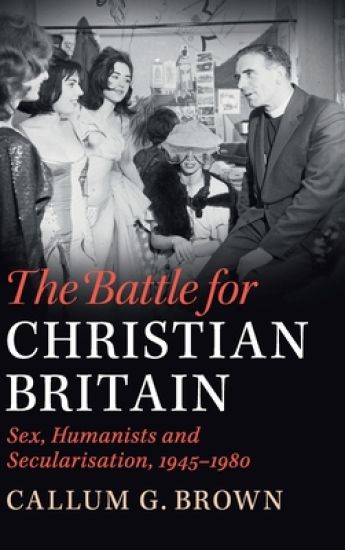
Post-war British culture was initially dominated by religious-led sexual austerity and, from the sixties, by secular liberalism. Using five case studies of local licensing and a sixth on the BBC, conservative Christians are exposed here as the nation's censors, fighting effectively for purity on stage, screen and in public places. The Anglican-led Public Morality Council was astonishingly successful in restraining sex in London's media in the fifties, but a brazen sexualised culture thrived amongst the millions of tourists to Blackpool, whilst Glasgow and the Isle of Lewis were gripped by conservatism. But come the late 1960s, tourists took Blackpool's sexual liberalism home, whilst progressive Humanism burrowed into Parliament and the BBC to secularise moral reform and the national narrative. Using extensive archival research, Callum G. Brown adopts a secular gaze to show how conservative Christians lost the battle for the nation's moral culture.
The Battle for Christian Britain

The Battle for Christian Britain

Callum G. Brown

Cambridge University Press
2019
pokkari
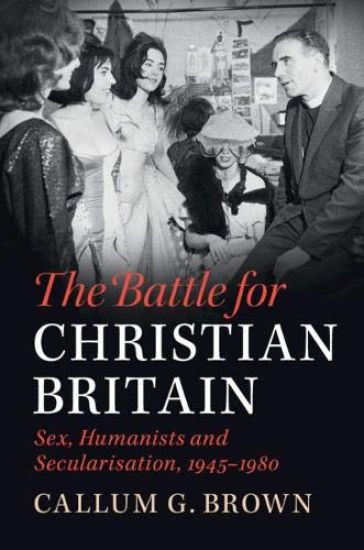
Post-war British culture was initially dominated by religious-led sexual austerity and, from the sixties, by secular liberalism. Using five case studies of local licensing and a sixth on the BBC, conservative Christians are exposed here as the nation's censors, fighting effectively for purity on stage, screen and in public places. The Anglican-led Public Morality Council was astonishingly successful in restraining sex in London's media in the fifties, but a brazen sexualised culture thrived amongst the millions of tourists to Blackpool, whilst Glasgow and the Isle of Lewis were gripped by conservatism. But come the late 1960s, tourists took Blackpool's sexual liberalism home, whilst progressive Humanism burrowed into Parliament and the BBC to secularise moral reform and the national narrative. Using extensive archival research, Callum G. Brown adopts a secular gaze to show how conservative Christians lost the battle for the nation's moral culture.
Becoming Atheist

Becoming Atheist

Callum G. Brown

Bloomsbury Academic
2017
sidottu
The Western World is becoming atheist. In the space of three generations churchgoing and religious belief have become alien to millions. We are in the midst of one of humankind’s great cultural changes. How has this happened? Becoming Atheist explores how people of the sixties’ generation have come to live their lives as if there is no God. It tells the life narratives of those from Britain, Western Europe, the United States and Canada who came from Christian, Jewish and other backgrounds to be without faith. Based on interviews with 85 people born in 18 countries, Callum Brown shows how gender, ethnicity and childhood shape how individuals lose religion. This book moves from statistical and broad cultural analysis to use frank, humorous and sometimes harrowing personal testimony. Becoming Atheist exposes people’s role in renegotiating their own identities, and fashioning a secular and humanist culture for the Western world.
Becoming Atheist

Becoming Atheist

Callum G. Brown

Bloomsbury Academic
2017
nidottu
The Western World is becoming atheist. In the space of three generations churchgoing and religious belief have become alien to millions. We are in the midst of one of humankind’s great cultural changes. How has this happened? Becoming Atheist explores how people of the sixties’ generation have come to live their lives as if there is no God. It tells the life narratives of those from Britain, Western Europe, the United States and Canada who came from Christian, Jewish and other backgrounds to be without faith. Based on interviews with 85 people born in 18 countries, Callum Brown shows how gender, ethnicity and childhood shape how individuals lose religion. This book moves from statistical and broad cultural analysis to use frank, humorous and sometimes harrowing personal testimony. Becoming Atheist exposes people’s role in renegotiating their own identities, and fashioning a secular and humanist culture for the Western world.
Religion and Society in Twentieth-Century Britain
During the twentieth century, Britain turned from one of the most deeply religious nations of the world into one of the most secularised nations. This book provides a comprehensive account of religion in British society and culture between 1900 and 2000. It traces how Christian Puritanism and respectability framed the people amidst world wars, economic depressions, and social protest, and how until the 1950s religious revivals fostered mass enthusiasm. It then examines the sudden and dramatic changes seen in the 1960’s and the appearance of religious militancy in the 1980s and 1990s. With a focus on the themes of faith cultures, secularisation, religious militancy and the spiritual revolution of the New Age, this book uses people’s own experiences and the stories of the churches to display the diversity and richness of British religion. Suitable for undergraduate students studying modern British history, church history and sociology of religion.
Postmodernism for Historians

Postmodernism for Historians

Callum G. Brown

Routledge
2016
sidottu
Postmodernism is an essential approach to History. This is the first dedicated primer on postmodernism for the historian. It offers a step-by-step guide to postmodern theory, includes a guide to how historians have applied the theory, and provides a review of why its critics are wrong. In simple and clear language, it takes the reader through the chain of theory that developed in the 20th century to become now, in the early 21st century, the leading stimulant of new forms of research in History. With separate chapters on The Sign, The Discourse, Post/Structuralism, The Text, The Self, and Morality, this book will encourage a new critical awareness of Theory when reading books of History, and when writing essays and dissertations. Armed with the principal ideas of Saussure, Barthes, Foucault, and Derrida, the historians can formulate how to combine empirical History with the excitement of fresh perspectives and new skills, merged in the new moral impetus of the postmodern condition. Designed for the beginner this is the essential postmodern starting point.
Britain Since 1707

Britain Since 1707

Hamish Fraser; Callum G. Brown

Routledge
2015
sidottu
Britain since 1707 is the first single-volume book to cover the complex and multi-layered history of Great Britain from its inception until 2007. Bringing together political, economic, social and cultural history, the book offers a reliable and balanced account of the nation over a 300 year period. It looks at major developments – such as the Enlightenment, the growth of democracy and gender change – while also tracing the distinctive experience of different, the book’s additional features include: social and ethnic groups through the decades. Fully integrating Scotland, Wales and the Irish experience, the book’s comprehensive sweep includes coverage of the industrial revolution, the British Empire, the two world wars and today’s multicultural society. Ideally structured to support courses and classes on British history· ‘Focus On’ sections with original documents and sources· Timelines and tables to aid understanding · Historical sources and further reading suggestions at the end of each chapter · Illuminating contemporary illustrations From Queen Anne to Gordon Brown, this wide-ranging and accessible book provides a complete and up-to-date history of Britain. Offering a coherent account of the evolution of the nation and its people, it will be essential reading for all students of British history.
Religion and the Demographic Revolution

Religion and the Demographic Revolution

Callum G. Brown

The Boydell Press
2012
sidottu
A much-awaited new book by the foremost scholar of secularisation and religion in the modern world. In the 1960s, two great social and cultural changes of the western world began. The first was the rapid decline of Christian religious practice and identity and the rise of the people of 'no religion'. The second was the transformation in women's lives that spawned a demographic revolution in sex, family and work. Both phenomena were sudden though not uniform in their impact. The argument of this book is that the two were intimately connected, triggered byan historic confluence of factors in the 1960s. Canada, Ireland, UK and USA represent different stages of secularisation for the book's study. The religious collapse in mainland Britain and most of Canada was sharp and spectacular but contrasted with the more resilient religious cultures of the United States, the Canadian Maritimes, Ireland and Northern Ireland. Using statistical evidence from government censuses, the book demonstrates how secularisation was deeply linked to demographic change. Starting with the distinctive features of the 1960s, the book quantifies secularisation's scale, timing and character in each nation. Then, the intense links of women's sexual revolution to religious decline are explored. From there, women's changing patterns of marriage, coupling and birthing are correlated with diminishing religiosity. The final exploration is into the secularising consequences of economic change, higher education and women's expanding work roles. This book transforms the way in which secularisation is imagined. Religion matters more than mere belief, practice and the churches; it shapes how populations construct their sexual practices, families and life-course. In nations where religion has been dissolving since 1960 into apathy and atheism, the process has been part of a demographic revolution built on new moral codes. Connecting religious history with the history of population, this volume unveils how the historian and sociologist need to engage with the demographic enormity of the decline of Christendom. CALLUM G. BROWN is Professor of Religiousand Cultural History at the University of Dundee.

Britain Since 1707

Britain Since 1707

Fraser Hamish; Callum G. Brown

Routledge
2010
nidottu
Britain since 1707 is the first single-volume book to cover the complex and multi-layered history of Great Britain from its inception until 2007. Bringing together political, economic, social and cultural history, the book offers a reliable and balanced account of the nation over a 300 year period. It looks at major developments – such as the Enlightenment, the growth of democracy and gender change – while also tracing the distinctive experience of different, the book’s additional features include: social and ethnic groups through the decades. Fully integrating Scotland, Wales and the Irish experience, the book’s comprehensive sweep includes coverage of the industrial revolution, the British Empire, the two world wars and today’s multicultural society. Ideally structured to support courses and classes on British history · ‘Focus On’ sections with original documents and sources · Timelines and tables to aid understanding · Historical sources and further reading suggestions at the end of each chapter · Illuminating contemporary illustrations From Queen Anne to Gordon Brown, this wide-ranging and accessible book provides a complete and up-to-date history of Britain. Offering a coherent account of the evolution of the nation and its people, it will be essential reading for all students of British history.
The Death of Christian Britain

The Death of Christian Britain

Callum G. Brown

Routledge
2009
sidottu
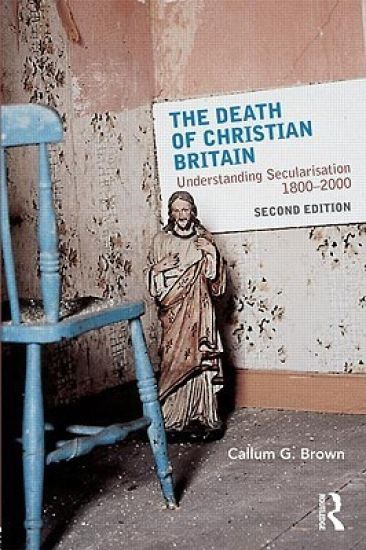
The Death of Christian Britain examines how the nation’s dominant religious culture has been destroyed. Callum Brown challenges the generally held view that secularization was a long and gradual process dating from the industrial revolution. Instead, he argues that it has been a catastrophic and abrupt cultural revolution starting in the 1960s. Using the latest techniques of gender analysis, and by listening to people's voices rather than purely counting heads, the book offers new formulations of religion and secularization. In this expanded second edition, Brown responds to commentary on his ideas, reviews the latest research, and provides new evidence to back his claims.
The Death of Christian Britain

The Death of Christian Britain

Callum G. Brown

Routledge
2009
nidottu
The Death of Christian Britain examines how the nation’s dominant religious culture has been destroyed. Callum Brown challenges the generally held view that secularization was a long and gradual process dating from the industrial revolution. Instead, he argues that it has been a catastrophic and abrupt cultural revolution starting in the 1960s. Using the latest techniques of gender analysis, and by listening to people's voices rather than purely counting heads, the book offers new formulations of religion and secularization. In this expanded second edition, Brown responds to commentary on his ideas, reviews the latest research, and provides new evidence to back his claims.
Religion and Society in Twentieth-Century Britain
During the twentieth century, Britain turned from one of the most deeply religious nations of the world into one of the most secularised nations. This book provides a comprehensive account of religion in British society and culture between 1900 and 2000. It traces how Christian Puritanism and respectability framed the people amidst world wars, economic depressions, and social protest, and how until the 1950s religious revivals fostered mass enthusiasm. It then examines the sudden and dramatic changes seen in the 1960’s and the appearance of religious militancy in the 1980s and 1990s. With a focus on the themes of faith cultures, secularisation, religious militancy and the spiritual revolution of the New Age, this book uses people’s own experiences and the stories of the churches to display the diversity and richness of British religion. Suitable for undergraduate students studying modern British history, church history and sociology of religion.
Postmodernism for Historians

Postmodernism for Historians

Callum G. Brown

Longman
2004
nidottu

Halvin toimitettuna 54,50 €

Postmodernism is an essential approach to History. This is the first dedicated primer on postmodernism for the historian. It offers a step-by-step guide to postmodern theory, includes a guide to how historians have applied the theory, and provides a review of why its critics are wrong. In simple and clear language, it takes the reader through the chain of theory that developed in the 20th century to become now, in the early 21st century, the leading stimulant of new forms of research in History. With separate chapters on The Sign, The Discourse, Post/Structuralism, The Text, The Self, and Morality, this book will encourage a new critical awareness of Theory when reading books of History, and when writing essays and dissertations. Armed with the principal ideas of Saussure, Barthes, Foucault, and Derrida, the historians can formulate how to combine empirical History with the excitement of fresh perspectives and new skills, merged in the new moral impetus of the postmodern condition. Designed for the beginner this is the essential postmodern starting point.
The University Experience 1945-1975

The University Experience 1945-1975

Callum G Brown; Arthur J. McIvor; Neil Rafeek

Edinburgh University Press
2004
nidottu
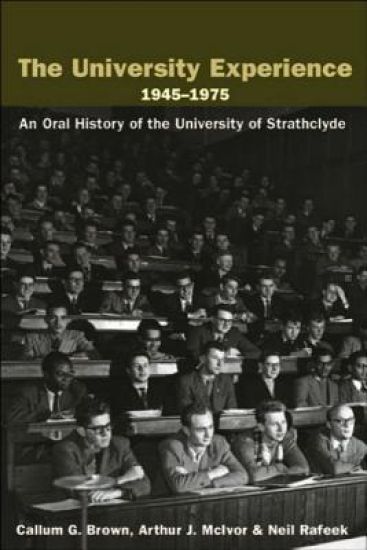
This is the first book devoted to an oral history of a British university during the 'swinging sixties'. Students, lecturers and support staff are interviewed about teaching and working on campus in the mid-twentieth century. Told in their own words, it is a story of struggle and sacrifice, pride and commitment. It reveals how the modern university transformed lives, how new technologies propelled path-breaking research, and how with new skills its graduates could remodel society. The University of Strathclyde was created in central Glasgow in 1964 from the merger of two higher-education colleges. The Andersonian started in 1796 as Britain's first college to offer technical-based higher education to both women and artisans, whilst the Commercial College's opening literary night in 1847 was chaired by Charles Dickens. By the 1950s, both colleges still offered students 'useful knowledge' in engineering and commercial subjects, and launched them into local employment according to family traditions. But then in the mid-1960s, industrial decline struck Glasgow. Against the backdrop of the city's tough reputation and devastating social problems, lecturers and students with a mission to improve society came to a new University that offered opportunity -- especially to women, mature students, the working classes and minority groups. Eschewing institutional history, this book debunks the myth of the drop-out generation of sixties' students, their drugs and underground culture. It shows how one University developed as a community of the dedicated and brilliant, creating the learning and researching environment which made 'Going to the Unie' the classic formative experience of the British people in the late twentieth century.
The Death of Christian Britain

The Death of Christian Britain

Callum G. Brown

TAYLOR FRANCIS LTD
2000
sidottu
The Death of Christian Britain uses the latest techniques to offer new formulations of religion and secularisation and explores what it has meant to be 'religious' and 'irreligious' during the last 200 years. By listening to people's voices rather than purely counting heads, it offers a fresh history of de-christianisation, and predicts that the British experience since the 1960s is emblematic of the destiny of the whole of western Christianity. Challenging the generally held view that secularization has been a long and gradual process beginning with the industrial revolution, it proposes that it has been a catastrophic short term phenomenon starting with the 1960's. Is Christianity in Britain nearing extinction? Is the decline in Britain emblematic of the fate of western Christianity? Topical and controversial, The Death of Christian Britain is a bold and original work that will bring some uncomfortable truths to light.
Religion and Society in Scotland since 1707

Religion and Society in Scotland since 1707

Callum G Brown

Edinburgh University Press
1997
nidottu
From current day sectarianism to the Free Church, religion has had a dominant effect upon society in Scotland for centuries. In this topical and thought-provoking book, Callum Brown examines the role of religion in the making of modern Scottish society. Tackling important contemporary themes such as the role of the Kirk in national identity and the growth of secularisation, he explains the history of Catholicism, Presbyterianism and Episcopalism over the last 250 years in an accessible and readable way.