Kirjojen hintavertailu – 12 859 828 kirjaa ja 27 kauppaa

Kirjailija

Calvin Brown

Kirjat ja teokset yhdessä paikassa: 11 kirjaa, julkaisuja vuosilta 2010–2026, suosituimpiin kuuluu Frank Stella Unbound. Vertaile teosten hintoja ja tarkista saatavuus suomalaisista kirjakaupoista.

11 kirjaa

Kirjojen julkaisuvuodet: 2010–2026.

Frank Stella Unbound

Frank Stella Unbound

Mitra Abbaspour; Calvin Brown; Erica Cooke

Yale University Press
2018
sidottu
Focusing on the vital role of literature in the development of the artistic practice of Frank Stella (b. 1936), this insightful book looks at four transformative series of prints made between 1984 and 1999. Each of these series is named after a literary work—the Had Gadya (a playful song traditionally sung at the end of the Passover Seder), Italian Folktales, compiled by Italo Calvino, Moby-Dick by Herman Melville, and The Dictionary of Imaginary Places by Alberto Manguel and Gianni Guadalupi. This investigation offers a critical new perspective on Stella: an examination of his interdisciplinary process, literary approach, and interest in the lessons of art history as crucial factors for his artistic development as a printmaker. Mitra Abbaspour, Calvin Brown, and Erica Cooke examine how Stella’s dynamic engagement with literature paralleled the artist’s experimentation with unconventional printmaking techniques and engendered new ways of representing spatial depth to unleash the narrative potential of abstract forms. Distributed for the Princeton University Art MuseumExhibition Schedule:Princeton University Art Museum (05/19/18–09/23/18)Museum of Contemporary Art Jacksonville (10/06/18–01/13/19)

Locked Down Cookin'

Locked Down Cookin'

Freebird Publishers; Calvin Brown

Freebird Publishers
2020
nidottu
The recipes in this book come from my culinary knowledge and creativity; they are my own original recipes, and they have been a blessing to me in making people happy through my cooking. Each has been prepared repeatedly until perfected. Measurements are not a big thing in these recipes, and that's what makes them so quick and easy. The ingredients you'll find here come from the prison canteen lists and from meal trays served to prisoners. These low budget foods are available on most prison canteens/commissaries /stores. You may need to substitute some ingredients if they are not available to you. Other ingredients may come from your own institution's dining hall or kitchen. Know that you have to use what ingredients are available to you; just try to keep them similar to what you find in the recipes. If you are using this book in the free world, please refer to the canteen list in back of the book for brand names and amounts. You have to be creative when cooking. I took my own canteen list and said to myself, "Creativity, be free " Then I used my culinary touch and taste buds to produce meals "The Big Cal Way."
Gauguin's Paradise Remembered

Gauguin's Paradise Remembered

Alastair Wright; Calvin Brown

Yale University Press
2010
pokkari
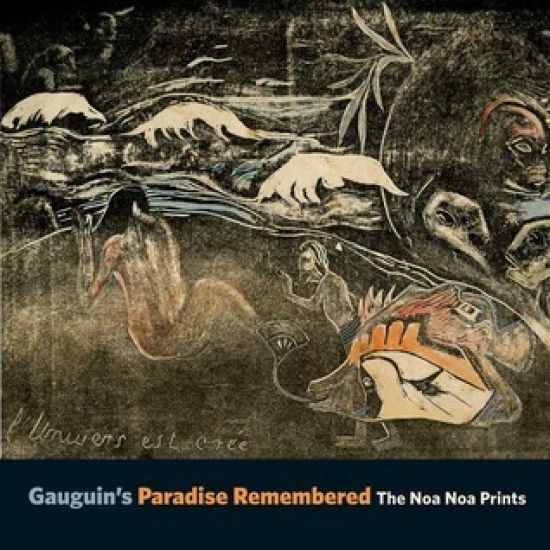
In 1891, Paul Gauguin (1848–1903) traveled to Tahiti in an effort to live simply and to draw inspiration from what he saw as the island’s exotic native culture. Although the artist was disappointed by the rapidly westernizing community he encountered, his works from this period nonetheless celebrate the myth of an untainted Tahitian idyll, a myth he continued to perpetuate upon his return to Paris. He created a travel journal entitled Noa Noa (fragrant scent), a largely fictionalized account that recalled his immersion into the spiritual world of the South Seas. To illustrate his text, Gauguin turned for the first time to the woodcut medium, creating a series of ten dark and brooding prints that he intended to publish alongside his journal—a publication that was never realized. The woodcuts crystallized important themes from his work and are the focus of this major new study. Gauguin's Paradise Remembered addresses both the artist’s representation of Tahiti in the woodcut medium and the impact these works had on his artistic practice. Through its combined sense of immediacy (in the apparent directness of the printing process) and distance (through the mechanical repetition of motifs), the woodcut offered Gauguin the ideal medium to depict a paradise whose real attraction lay in its remaining always unattainable. With two insightful essays, this book posits that Gauguin’s Noa Noa prints allowed him to convey his deeply Symbolist conception of his Tahitian experience while continuing his experiments with reproductive processes and other technical innovations that engaged him at the time. Distributed for the Princeton University Art MuseumExhibition Schedule:Princeton University Art Museum(09/25/10-01/02/11)