Kirjojen hintavertailu – 12 859 818 kirjaa ja 27 kauppaa

Kirjailija

Camilo José Cela

Kirjat ja teokset yhdessä paikassa: 13 kirjaa, julkaisuja vuosilta 1991–2026, suosituimpiin kuuluu La Colmena (Edición Conmemorativa de la Rae Y La Asale) / The Hive. Commemorative Edition. Vertaile teosten hintoja ja tarkista saatavuus suomalaisista kirjakaupoista.

Nimi esiintyy myös muodoissa: Camilo Jose Cela

13 kirjaa

Kirjojen julkaisuvuodet: 1991–2026.

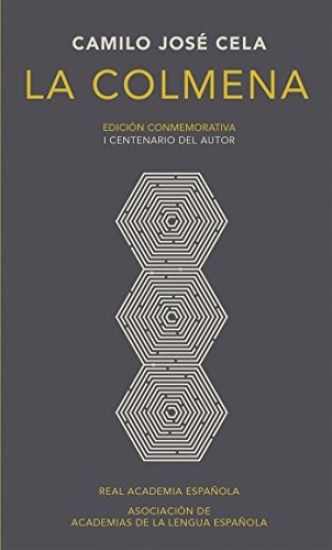
La Colmena (Edición Conmemorativa de la Rae Y La Asale) / The Hive. Commemorative Edition
Nueva edici n conmemorativa de la Real Academia Espa ola y la Asociaci n de Academias de la Lengua Espa ola para celebrar el centenario de Camilo Jos Cela, uno de los escritores espa oles m s importantes del siglo XX. Considerada una de las mejores novelas espa olas del siglo XX, La colmena es una obra coral ambientada en el Madrid de posguerra, durante unos pocos d as de 1943. Con ella el autor quiso mostrar la realidad social de esos dif ciles a os de la historia de Espa a. Los protagonistas pertenecen a la clase media y llevan una vida que parece estar paralizada, sin un futuro real y esperanzador, por la situaci n del pa s. Las peque as escenas que se narran en esta obra ocurren simult neamente. Las vidas de los personajes se entrecruzan formando un mosaico como las celdas de una colmena. Para sortear la censura, Camilo Jos Cela se vio obligado a eliminar algunas escenas en las que se trataban temas de contenido sexual. Una vez acabado el franquismo, estas escenas nunca fueron restituidas en ninguna de las numerosas ediciones que se llevaron a cabo. Esta edici n incluye esas escenas: con ellas, La colmena se presenta ante el lector, por primera vez, de manera ntegra, tal y como el autor la concibi . Esta edici n presenta estudios complementarios escritos por algunos de los principales cr ticos, escritores y acad micos espa oles, adem s de un glosario, un ndice de nombres propios y una bibliograf a selecta sobre la obra de Cela. ENGLISH DESCRIPTION This new commemorative edition by the Real Academia Espa ola and the Asociaci n de Academias de la Lengua espa ola celebrates the 100 years since the birth of one of the most important Spanish authors of the 20th Century: the Nobel Prize winner, Camilo Jose Cela. Considered one of the best Spanish novels of the 20th Century, La colmena was originally published in Argentina due to the Franco censorships in Spain. The story line is set in a postwar Madrid during a few days in 1943. It is a work in which the author wanted to depict the social reality of those difficult years in Spain's history. The middle class protagonists lead a stale life, without any hope for a real future due to the country's political situation. The lives of these characters are intertwined forming a mosaic, a sort of web that looks like a hive. In order to get around the censorship of those times, Camilo Jose Cela had to take out some parts of the book that were deemed too sexual. After Franco left power Cela never felt the need to insert those deleted scenes back into any newly published editions. Now, for the first time, this new commemorative edition includes those never before read scenes, and just like that, the novel is now published as it was originally written. This new edition includes complementary studies and essays written by the most notable critics, writers, and Spanish and Latinamerican professors. Also, a glossary, and a selected bibliography about Cela's works is included.
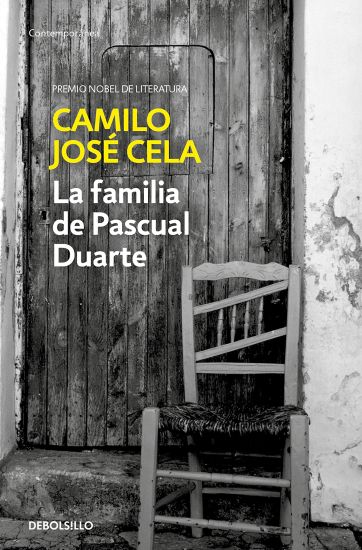
The Family of Pascual Duarte

The Family of Pascual Duarte

Camilo Jose Cela

Dalkey Archive Press
2023
pokkari

Halvin toimitettuna 26,50 €

Confined to a prison cell, thrice-murderer Pascual Duarte recounts his journey from a violent childhood to a life of pain and misfortune; juxtaposing tableaus of country poverty against scenes of bare brutality, Nobel laureate Camilo José Cela crafts a powerful meditation on cruelty and anomie. The Family of Pascual Duarte follows his upbringing in the poor Spanish province of Extremadura to his eventual imprisonment—and impending death sentence. Death permeates Duarte’s world: his father’s grotesque death to rabies, his young brother’s drowning in an oil vat, and the loss of his children. But it is his wife’s sudden death that condemns him to the darkest path when, losing all faith and driven by blind revenge, he kills her souteneur. Now an alien to the world around him, Pascual Duarte resigns himself to his bloodied fate—yet never gives up his search for peace. Camilo José Cela has been recognized as one of the pioneers of Spanish literary realism, and his masterwork The Family of Pascual Duarte proves the power of his prose. The novel, which birthed the transgressive and groundbreaking tremendismo movement, roils with emotion and unflinching inhumanity, painting the Spanish countryside in bloodshed, eroticism, and an unshakeable feeling of grief. Blending the political with the personal with the philosophic, the result is an unparalleled exploration of the fraught relationship between man and society, and the past’s inescapable hold on the present.
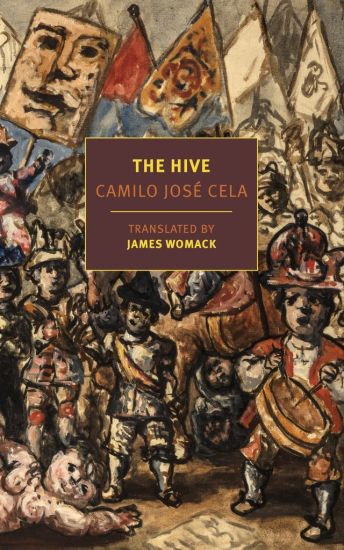
The Hive

The Hive

Camilo José Cela; James Womack

New York Review Books
2023
nidottu

Halvin toimitettuna 20,30 €

Complete and uncensored in English for the very first time, a fragmented, daringly irreverent depiction of decadence and decay in Franco's Spain written by the 1989 winner of the Nobel Prize in Literature. The translator Anthony Kerrigan compared Camilo Jos Cela, the 1989 winner of the Nobel Prize in Literature, to Louis-Ferdinand C line and Curzio Malaparte--all "ferocious writers, truculent, badly spoken, even foulmouthed." However provocative and disturbing, Cela's novels are also flat-out dazzling, their sentences as rigorous as they are riotous, lodging like knives in the reader's mind. Cela called himself a proponent of "uglyism," of "nothingism." But he has the knack, to quote another critic, Am rico Castro, of deploying those "nothings and lacks" to construct beauty. The Hive is set over the course of a few days in the Madrid of 1943, not long after the end of the Spanish Civil War, when the regime of General Francisco Franco was at its most oppressive. The book includes more than three hundred characters whose comings and goings it tracks to hypnotic effect. Scabrous, scandalous, and profane, The Hive is a virtuosic group portrait of a wounded and sick society.
La Familia de Pascual Duarte / The Family of Pascual Duarte
La primera novela de Camilo Jos Cela, hito en la literatura espa ola de la posguerra. La familia de Pascual Duarte vio la luz en 1942 y tuvo un enorme impacto en el panorama literario espa ol del momento. Primer libro de Camilo Jos Cela, supuso un valioso punto de partida para la narrativa espa ola de posguerra. La vida tr gica de su arquet pico protagonista, gobernada por la m s salvaje violencia, era un comentario indirecto sobre la barbarie padecida por los espa oles durante la reci n concluida Guerra Civil, al tiempo que daba carta de naturaleza a una tendencia literaria renovadora, luego conocida como «tremendismo . ENGLISH DESCRIPTION The first novel by Camilo Jos Cela, a landmark in postwar Spanish literature. The Family of Pascual Duarte first saw the light in 1942 and had a huge impact on the Spanish literary scene of the time. Camilo Jos Cela's first book was a valuable starting point for postwar Spanish narrative. The tragic life of its archetypal protagonist, who lived submersed in anguish, pain, and the most savage violence, was an indirect reflection of the cruelty and savagery suffered by Spaniards during the recently concluded Civil War, while at the same it opened the door to a new literary style, later known as "tremendismo", which is characterized by a tendency to emphasize violence and grotesque imagery.
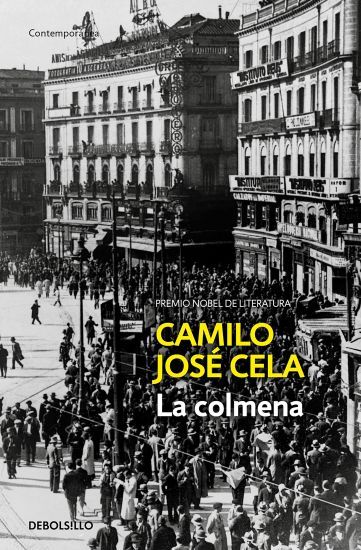
La Colmena / The Hive

La Colmena / The Hive

Camilo Jose Cela

Debolsillo
2020
nidottu
La gran novela urbana de Camilo Jos Cela. En el Madrid de los a os inmediatamente posteriores a la Guerra Civil, los destinos de numerosos individuos de varias clases sociales y con diferentes actitudes ante la vida desfilan en una secuencia de breves y fascinantes vi etas narrativas. Con la ciudad como personaje, el conjunto es el retrato de una sociedad en la que el estraperlo, el hambre, la prostituci n y el miedo conviven con ef meros destellos de ternura y humor. Publicada en 1951 en Buenos Aires debido a los problemas con la censura, La colmena, una de las obras maestras de Cela, constituye un hito fundamental de la narrativa espa ola, que contribuy a renovar de manera decisiva. ENGLISH DESCRIPTION In this extraordinary novel of life in Madrid after the Spanish Civil War, Camilo Jose Cela conveys with startling immediacy not only the brutality but also the vitality of life in the city. His style--economical but vivid--carries the reader through a series of vignettes, following Cela's many characters through the streets and tenements and brothels and, above all, the caf s of the great beehive--la colmena--of Madrid. Both a social document of its time and place and a moving tale of human suffering--and human triumph--under a totalitarian regime, The Hive is "a brilliant and original work" (Gerald Brenan, The New York Times Book Review).
Mazurka for Two Dead Men

Mazurka for Two Dead Men

Camilo Jose Cela

New Directions Publishing Corporation
2018
nidottu
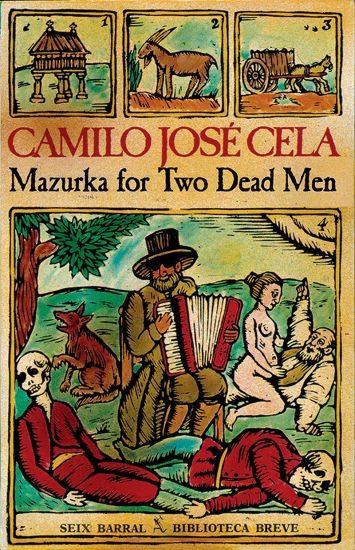
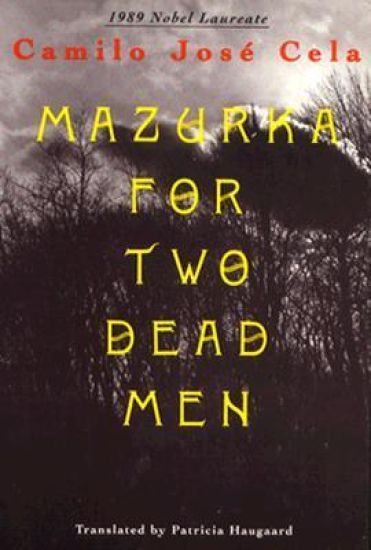
Mazurka for Two Dead Men, the culmination of Camilo Jos Cela's literary art, opens in 1936 at the beginning of the Spanish Civil War: Lionheart Gamuzo is savagely murdered. In 1939, as the war ends, his brother avenges his death. For both deaths, the blind accordion player Gaudencio plays the same mazurka. Set in backward rural Galicia, Cela's excellent novel portrays a reign of fools, and works like contrapuntal music, its themes calling and responding, alternately brutal, melancholy, funny, lyrical, and coarse.
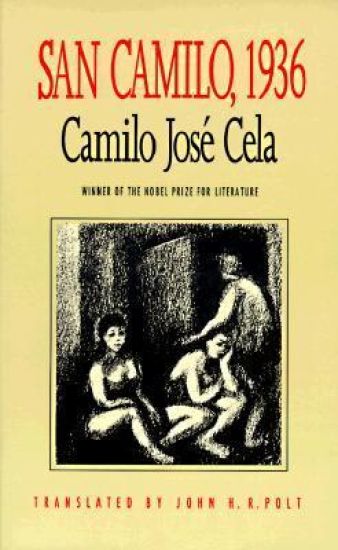
San Camilo, 1936

San Camilo, 1936

Camilo José Cela

Duke University Press
1991
sidottu
Widely regarded as one of the best works by the winner of the 1989 Nobel Prize for Literature, San Camilo, 1936 appears here for the first time in English translation. One of Spain’s most popular writers, Camilo JosÉ Cela is recognized for his experiments with language and with difficult subject matter. In San Camilo, 1936, first published in 1969, these concerns converge in a fascinating narrative that is as challenging as it is rewarding, as troubling as it is compelling. A story of history as it happens, by turns confusing and startingly clear, echoing with news and rumors, defined by grand gestures and intimate pauses, the novel leads the reader into the ordinary life of extraordinary times. Beginning on the eve of the Spanish Civil War, San Camilo, 1936 follows a twenty-year-old student’s attempts to sort out his private affairs (sex, money, career) in the midst of the turmoil overtaking his country. In vivid and richly textured prose that distinguishes Cela’s work, the emotional reality of civil war takes on a vibrant immediacy that is humorous, tender, and ultimately transforming as a young man tries to come to terms with the historical moment he inhabits-and hopes to survive. Readers new to Cela will find in this novel ample reason for the author’s growing reputation among audiences worldwide.