Kirjojen hintavertailu – 12 859 818 kirjaa ja 27 kauppaa

Kirjailija

Campbell McCutcheon

Kirjat ja teokset yhdessä paikassa: 35 kirjaa, julkaisuja vuosilta 2002–2015, suosituimpiin kuuluu Bradshaw's Guide West Coast Main Line Manchester to Glasgow. Vertaile teosten hintoja ja tarkista saatavuus suomalaisista kirjakaupoista.

35 kirjaa

Kirjojen julkaisuvuodet: 2002–2015.

Titanic and Her Sisters

Titanic and Her Sisters

Janette McCutcheon; Campbell McCutcheon

Amberley Publishing
2014
nidottu
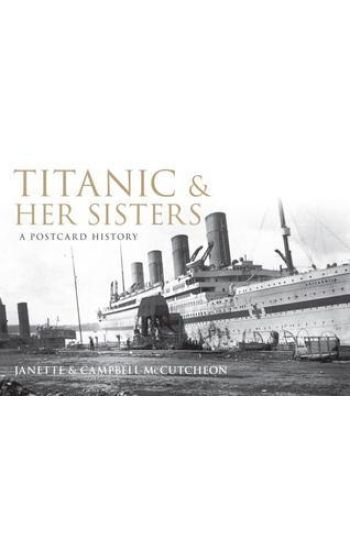
In 1908, the White Star Line announced it was constructing a pair of sister ships at the Harland & Wolff yard in Belfast. The new behemoths would dwarf even the largest ships of the time, being fully one-third larger than any ship afloat. They would also be the most sumptuous vessels built to date, carrying their millionaire passengers in unsurpassed luxury. The two ships, Olympic and Titanic, were to be followed by a third sister, originally to be called Gigantic, but renamed as Britannic after the sinking of Titanic in April 1912. Janette and Campbell McCutcheon tell the story of the White Star trio using a fabulous collection of original postcards and photos of the three sisters, only one of which was ever to make a return voyage from New York. With the loss of Titanic in 1912, work was suspended on Britannic, but she was to sink on her sixth voyage as a hospital ship, during the First World War. Despite sinking a U-boat by ramming it, Olympic survived the war and was scrapped in Jarrow in 1935 after twenty-four years of service for White Star.
Bradshaw's Guide Scotlands Railways West Coast - Carlisle to Inverness

Bradshaw's Guide Scotlands Railways West Coast - Carlisle to Inverness

John Christopher; Campbell McCutcheon

Amberley Publishing
2014
nidottu
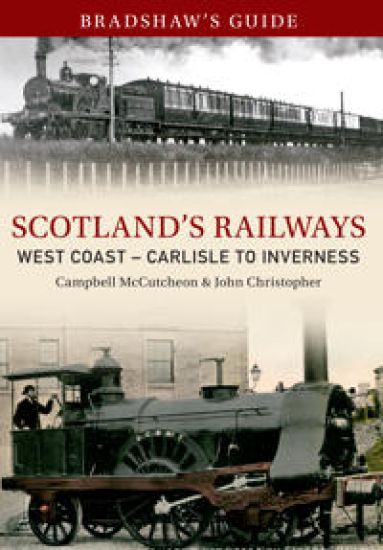
Bradshaw's Guide of 1863 was the staple book to what's what and where's where for the mid-Victorians and it gives the reader a unique insight into the world of the nineteenth century travellers. The railways themselves opened up Scotland properly to tourism for the first time, and many journeys that once took days to complete could now be undertaken in hours, bringing its many attractions within the reaches of the masses. This illustrated guide records the sights to be seen in the towns and cities encountered along the route. 'Bradshaw's Guides were invaluable in their time and they provide the modern-day reader with a fascinating insight into the nineteenth century rail traveller's experience.' Campbell McCutcheon takes us through the west coast and Highlands of Bradshaw's Scotland, using contemporary Victorian and Edwardian photographs and postcards to illustrate the scenes that the users of Bradshaw's Guide to Scotland's Railways would have experienced. This volume covers primarily the lines of the Caledonian, Glasgow & South Western, Scottish Central and Highland Railways and the geographical area of the west coast and highlands.
Locomotives of the Highland Railway

Locomotives of the Highland Railway

John Christopher; Campbell McCutcheon

Amberley Publishing
2014
nidottu
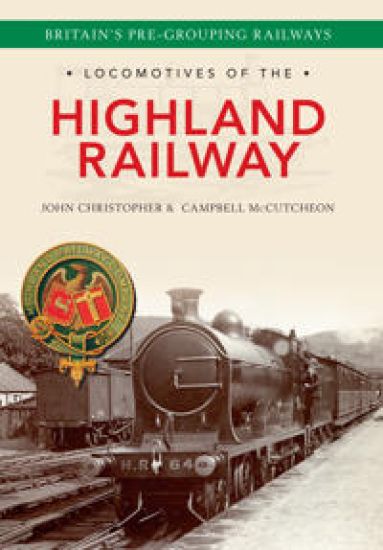
Formed from the merger of the Inverness & Aberdeen Junction and the Inverness & Perth Junction railways in 1865, the Highland ran from Perth in Central Scotland north to Inverness and then on up to Wick and Thurso. From Dingwall it ran west to Kyle of Lochalsh to serve Skye and the Western Isles. Another line ran east from Inverness to Keith, where it connected with the line to Aberdeen. Several branches were built to serve nearby towns. In addition to inheriting several locomotives from its constituent companies, the Highland Railway was renowned for its distinctive stable of locomotives. Many of these were built at the company's works at Lochgorm, Inverness. Locomotive superintendents for the HR were William Barclay, William Stroudley, David Jones, Peter Drummond, F. G. Smith and Christopher Cumming. Jones and Cumming in particular produced some outstanding designs such as the F 'Bruce', Strath, Jones Goods, the Small and Large Ben (mountain), the K 'Barney' classes, not to mention the Snaigows and the Clans. They included not only the large named trains for passenger services, but also the humble shunters. A fascinating new archive of the Highland Railway's locomotives featuring over 150 photographs and images.
The Ships of Scapa Flow

The Ships of Scapa Flow

Campbell McCutcheon

Amberley Publishing
2013
nidottu
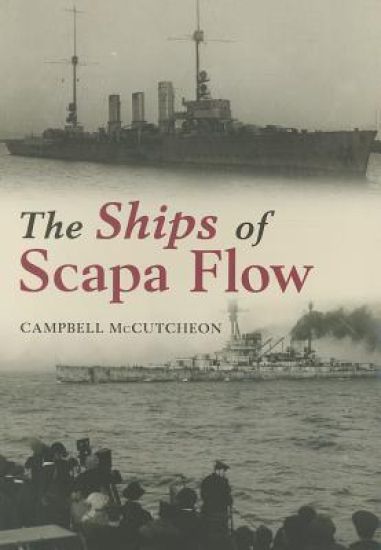
The islands surrounding Scapa Flow made one of Britain's best natural harbours, while the location at the north of Scotland protected the approaches to the North Sea and Atlantic. The naval base was important during both wars but what makes Scapa Flow famous is its wrecks, the remains of a German fleet, which once numbered some 74 vessels, most of which were scuttled in 1919, as well as the war graves of HMS Royal Oak and HMS Vanguard. The wrecks of the navy ships still survive, along with eight German warships for which a second war came and prevented salvage. Now a divers' paradise, the wrecks of Scapa Flow bring divers from all over the world and employ many in Orkney itself. This is the story of the ships of Scapa Flow, their sinking and their salvage, using many previously unseen images of the recovery and subsequent removal of many of the German battleships and cruisers to Rosyth dockyard in Fife for breaking up.
Port of Tilbury in the 60s and 70s

Port of Tilbury in the 60s and 70s

Campbell McCutcheon

Amberley Publishing
2013
nidottu
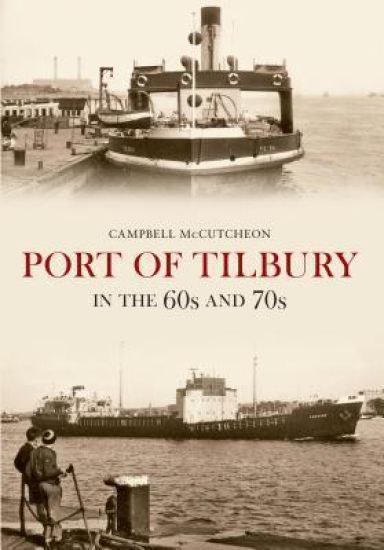
The 1960s saw a gradual movement of shipping from central London and the quays, wharves and docks of the upper River Thames down river to Tilbury and Harwich. There was a managed closure of the dock system west of Tilbury and between the early 1970s and 1980s, the Surrey Commercial, India & Millwall Docks and the Royal Docks all closed down. Down river, Tilbury was booming still, with expansion to cater for container ships and a still-burgeoning passenger traffic from the Tilbury Landing Stage. Tilbury embraced containerisation, which had been the death knell of the upper docks, and has continued to expand. The Landing Stage was a busy place to spot passenger ships, from Greece, Italy, Scandinavia, the USSR and Britain itself. Nowadays, the Port of London, comprising primarily Tilbury and Harwich docks, is still Britain's second busiest cargo port. Campbell McCutcheon takes us on a tour of the docks in Tilbury, and the Landing Stage, and shows us the ships that called in the days immediately prior to the great containerisation boom of the 1970s and 1980s. The previously unpublished images show Tilbury at its zenith, and the transition from passenger travel to cruising, and from general cargo shipping to container ships, as well as the loss of the ferries that once called regularly at the port from Sweden, the Netherlands and France.
Thames Shipping in the 1960s and 1970s

Thames Shipping in the 1960s and 1970s

Campbell McCutcheon

Amberley Publishing
2013
nidottu
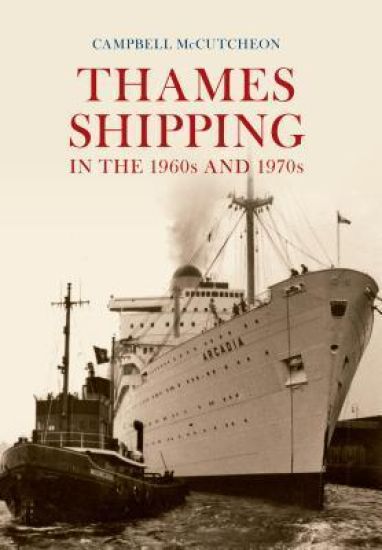
At one point London had one of the largest dock systems in the world, and certainly one of the busiest. From Gravesend and Tilbury all the way to the Pool of London, the sides of the river were crowded with ships, with large dock systems full of ships loading and unloading their cargoes. Passenger ships called too, as well as numerous coasters feeding the power stations that served London. Campbell McCutcheon uses a unique collection of images, all taken by the one person, to show the docks, wharves and the river as it was, teaming with ships from Blue Funnel, Clan Line, Ben Line, British India Steam Navigation Company, P&O, Union Castle Line and navy vessels as well as numerous foreign ships, ferries, ocean liners, cruise ships, tugs and barges. With nostalgic views of the Pool of London, ships being repaired in the numerous dry docks, all of the docks, and some of the creeks, the book sets out to show the docks at the peak of their importance before the long decline of the 1970s and 1980s and the wholesale redevelopment of the London Docklands and the banks of the Thames.
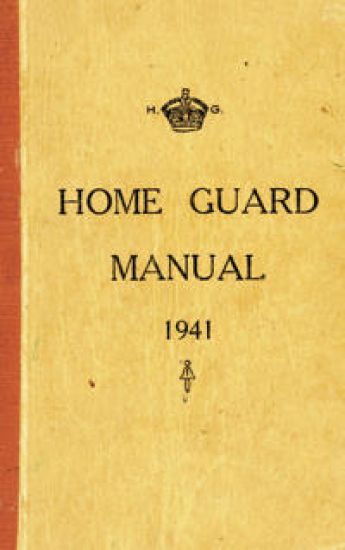
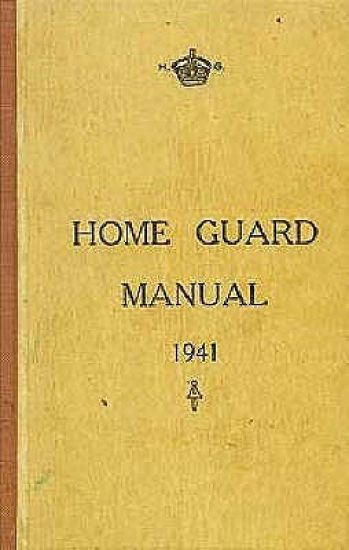
Home Guard Manual 1941

Home Guard Manual 1941

Campbell McCutcheon

Amberley Publishing
2010
pokkari
Two weeks before Dunkirk, Anthony Eden, Minister of War, announced to the nation on BBC radio his concept of a Local Defence Volunteer force. It was a grim time! The Germans were routing the French and British in Belgium and France, Norway was lost, and within two weeks, the cream of Britain's fighting forces would be weaponless and kit-less, seeking rescue from the beaches of Dunkirk. Eden's words echoed around every living room in the country: 'In order to volunteer, what you have to do is give in your name at your local police station; and then, as and when we want you, we will let you know.' The motley assortment of men, most either too old or too young to join the army, became the nucleus of the Home Guard. Untried and without weapons, they would be called upon to halt the invasion that Hitler planned as he stood on the cliffs near Calais, eyeing Britain and its populace as his next conquest. Over a period of a few months, this rag-tag group was armed, uniformed and trained, using the Home Guard Manual. Learning how to construct booby traps, destroy tanks, ambush the enemy, survive in the open, use basic camouflage, read maps and send signals, the fledgling volunteer was turned into a veritable fighting machine, leaving the army to retrain, re-equip and fight elsewhere.
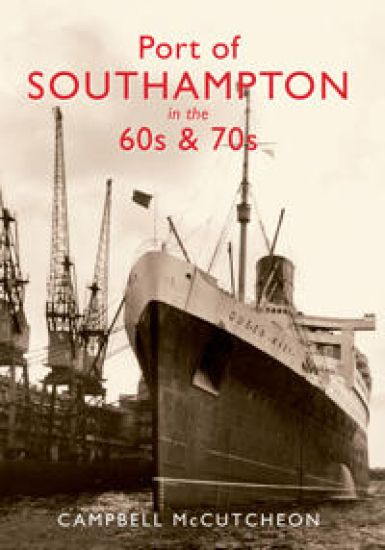
Port of Southampton in the 60s & 70s

Port of Southampton in the 60s & 70s

Campbell McCutcheon

Amberley Publishing
2009
nidottu
The Port of Southampton saw many changes in the 1960s and 1970s. These two decades saw the decline of the liner trade, a major strike that all but killed the British shipping industry, the rapid growth of containerization, and the early shoots of Britain's cruise ship phenomenon. Using a unique collection of images, none previously published before, and all taken by one man on his frequent visits to the port during the 1960s and 1970s, this book shows many vessels long gone, companies who no longer sail and ways of life that have disappeared. From liners to tramp steamers, from pleasure boats to ferries, Port of Southampton in the 1960s and 1970s shows the changing face of the South Coast's largest port. Vessels from major companies such as Shaw Savill, Cunard, P&O, Orient Line, and smaller ones such as Sitmar, Rotterdam Lloyd, Lauro and Aznar are all illustrated, as are ferries, warships, pleasure craft and cargo vessels.
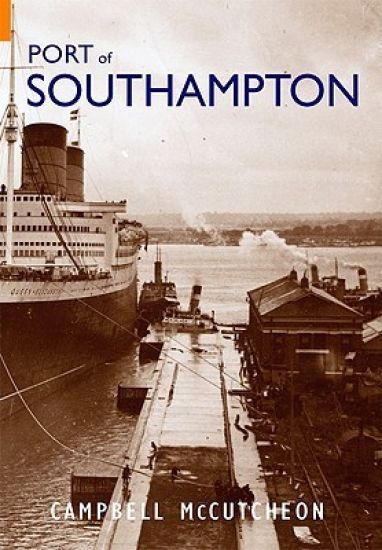
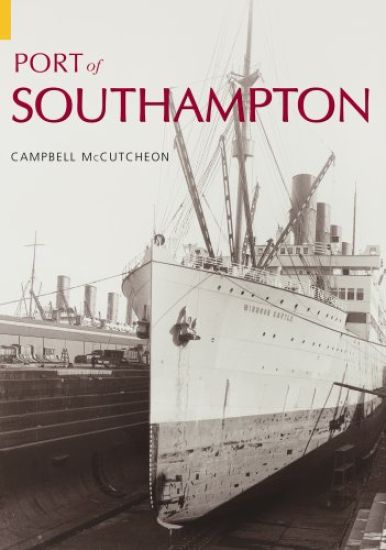
Port of Southampton

Port of Southampton

Campbell McCutcheon

Amberley Publishing
2008
nidottu
'Port of Southampton' is the story of the Hampshire port from Roman times to the present day, illustrated by a colelction of images showing everything from seaman's strikes to shipwrecks, the Titanic and Queen Mary, as well as the other famous ocean liners that have called at the port since the 1840s.
Port of Southampton

Port of Southampton

Campbell McCutcheon

NPI Media Group
2007
nidottu
Sheltered by the Isle of Wight, Southampton has for centuries been a trading port. It was in 1838 that expansion of the port from a small series of wharfs began in earnest. Still under development today, the Port of Southampton grew to being the biggest passenger port in the UK. Today, it is still busy and is the biggest cruise ship terminal in the UK with over 250 visits per year. Cargo has played an important part in the growth of the port too and cargoes as varied as bananas and frozen beef have passed through. Ships called from all corners of the world. Today, the cargoes are cars and containers, with oil at Fawley refinery. This collection of photographs will hopefully bring back memories of Southampton's port to those who have sailed through or worked there. Many of the images are published here for the first time and they cover all aspects of the docks from shipbuilding to disasters and the ferries, cargo and passenger ships that have used the port since the dawn of photography.
Home Guard Manual 1941

Home Guard Manual 1941

Campbell McCutcheon

The History Press Ltd
2007
nidottu
It was May 1940 and Hitler stood on the cliffs at Calais to eye up his next conquest: England! There was a call to arms that saw the founding of the Home Guard, a motley collection of men, poorly armed, many too old to fight in the war. The Home Guard was untried in war, often without weapons or training, and they were Britain's last defence against Nazi Germany. But all was not lost and over a few months this ragtag group was armed, uniformed and trained using the Home Guard Manual. Taught basic fieldcraft, how to survive in the open, how to destroy tanks, ambush the invaders, make boobytraps, read maps and send signals, the fledgling volunteer was turned into a veritable fighting machine... or was he just another member of 'Dad's Army'?
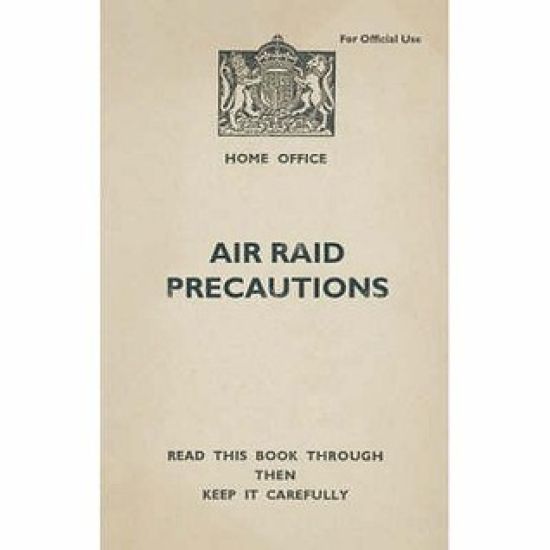
Air Raid Precautions

Air Raid Precautions

Campbell McCutcheon

The History Press Ltd
2007
sidottu
During the late 1930s it was finally realised that war with Hitler's Germany was a major possibility. As the armed forces began their re-arming, the Home Front was not neglected. In the intervening twenty years since the end of the First World War, war had changed for the worse. Aircraft had progressed and had become much more potent, machines capable of flying huge distances with large payloads of bombs. The realities of 'Total War' and of the 'Blitz' were almost upon Britain and Air Raid Precautions was sent out to almost every home in the land. Filled with useful advice, much of which was to become second nature to those in our industrial heartland and large cities, it became a classic of wartime reading, so much so that Britain's Air Raid Precautions was printed in its entirety, with no changes, for the American, New Zealand and Australian householder.
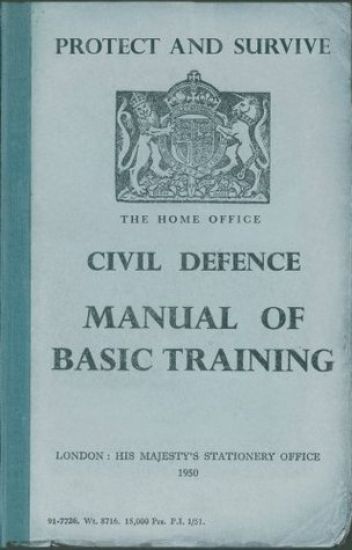
Protect and Survive: The Home Office Civil Defence Manual of Basic Training
The end of the Second World War heralded the start of a new war. It was the war in name only, fought out by the superpowers through propaganda, and using smaller nations as pawns in the military build-up that became known as the Cold War. New and chilling phrases entered the vocabulary - mutually assured destruction, nuclear proliferation, hydrogen bomb, airburst and fallout. The UK Government, like that of many other nations, considered the effects on the population at large. Plans were drawn up, secret nuclear bunkers built and a new civil defence network created to counter the threat of all-out nuclear war. Manuals were issued to those in the know and the civilian populace became used to the sounds of nuclear air-raid warning sirens being tested, of adverts informing them how to convert their house into a shelter, what to do with dead bodies, how to counteract radiation sickness, etc. The government also issued a whole series of pamphlets and educational films for the masses. Out of these has come Protect and Survive - The Civil Defence Manual, which brings together, for the first time, the Government's own pamphlets for Civil Defence volunteers and the populace at large.
St. Kilda

St. Kilda

Campbell McCutcheon

NPI Media Group
2002
nidottu
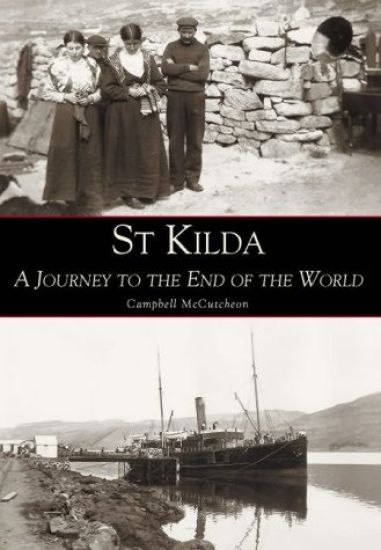
The chance find of a photograph album from 1912 at an antique fair in Bristol led Campbell McCutcheon to chronicle the story of St Kilda and one of the ships that sailed there. At the far flung western corner of the British Isles is a group of islands called St Kilda, made famous for being the remotest inhabited part of Britain. Countless tourists have visited this World Heritage Site over the past three hundred years to see at first hand the lives of the natives. Evacuated in 1930, the island has been uninhabited since, save for an army base and thousands of birds, some unique to the island. The book chronicles just one visit to the island in 1912 using a collection of unique photographs discovered in Bristol. This is the tale of a tour by the SS Hebrides from Glasgow to the island at the end of the world.