Kirjojen hintavertailu – 12 859 829 kirjaa ja 27 kauppaa

Kirjailija

Candace R. Kuby

Kirjat ja teokset yhdessä paikassa: 6 kirjaa, julkaisuja vuosilta 2013–2019, suosituimpiin kuuluu Critical Literacy in the Early Childhood Classroom. Vertaile teosten hintoja ja tarkista saatavuus suomalaisista kirjakaupoista.

6 kirjaa

Kirjojen julkaisuvuodet: 2013–2019.

Critical Literacy in the Early Childhood Classroom

Critical Literacy in the Early Childhood Classroom

Candace R. Kuby; Vivian Vasquez

Teachers' College Press
2013
sidottu
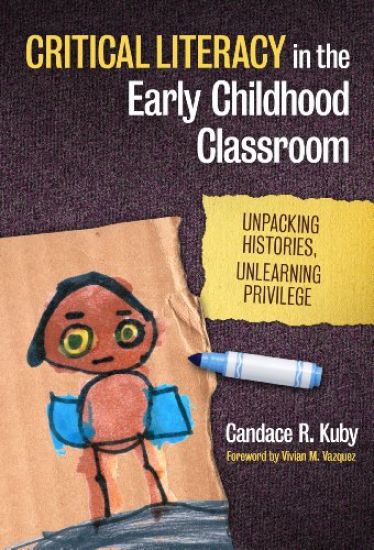
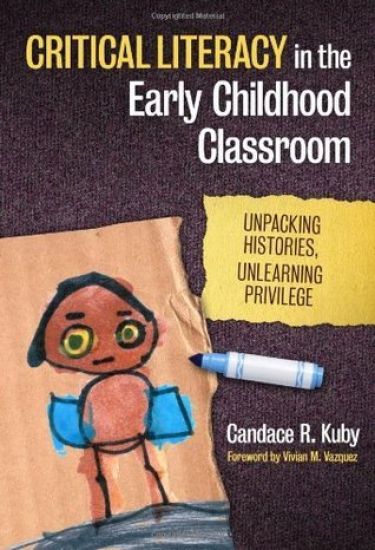
Using narrative inquiry, this book shares the author’s transformative journey as a literacy teacher/researcher examining her experience as a White, middle-class female. The author argues that it is not enough for teachers to implement curricula and pedagogical strategies designed to foster inclusiveness. Instead, teachers must look inward, questioning their personal histories, biases, and beliefs in order to develop better self-awareness. In this book, Kuby reflects on how her self-interrogation shaped her interactions with 5- and 6-year-olds and influenced her critical literacy teaching. The book discusses five key questions:Witnessing: What Do You Do With What You See and Know? Whiteness: How Was Curriculum Shaped by My Histories? What is a Negotiated Critical Literacy Inquiry?“We, Them, White, Black”: What Language Should Educators Use? Can Social Action be Embodied Over Time and Space? This practical text includes a parent questionnaire, an example of a summer programme newsletter, and reflective exercises for pre- and in-service teachers.
Critical Literacy in the Early Childhood Classroom

Critical Literacy in the Early Childhood Classroom

Candace R. Kuby; Vivian Vasquez

Teachers' College Press
2013
nidottu
Using narrative inquiry, this book shares the author’s transformative journey as a literacy teacher/researcher examining her experience as a White, middle-class female. The author argues that it is not enough for teachers to implement curricula and pedagogical strategies designed to foster inclusiveness. Instead, teachers must look inward, questioning their personal histories, biases, and beliefs in order to develop better self-awareness. In this book, Kuby reflects on how her self-interrogation shaped her interactions with 5- and 6-year-olds and influenced her critical literacy teaching. The book discusses five key questions:Witnessing: What Do You Do With What You See and Know? Whiteness: How Was Curriculum Shaped by My Histories? What is a Negotiated Critical Literacy Inquiry?“We, Them, White, Black”: What Language Should Educators Use? Can Social Action be Embodied Over Time and Space? This practical text includes a parent questionnaire, an example of a summer programme newsletter, and reflective exercises for pre- and in-service teachers.
Speculative Pedagogies of Qualitative Inquiry

Speculative Pedagogies of Qualitative Inquiry

Candace R. Kuby; Rebecca C. Christ

Routledge
2019
nidottu
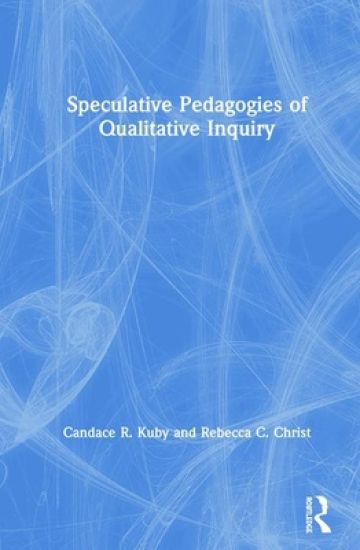
In Speculative Pedagogies of Qualitative Inquiry, the authors discuss what "inquiry" is and how we teach it — and if it is even possible to teach. With a proliferation of how-to manuals for doing qualitative research, the time is ripe for a discussion not only on what we teach (curriculum) but also how we teach (pedagogy). This book seeks to teach students to become qualitative inquirers, not with a formulaic recipe but rather by showing them how to think from a place of uncertain, (w)rest(full), relational liveliness. The authors seek to create qualitative inquiry courses that create spaces that consider our abilities to respond to, come to know (epistemology), be (ontology), and do (axiology) qualitative inquiry. Thus, a main thread of this book is (re)thinking and (re)imagining inquiry that they come to conceptualize as (in)query. The authors use both data from graduate level research courses and theoretical concepts from poststructuralism, posthumanism, and feminist "new" materialism. This book is timely in the face of a growing neoliberal academy that values prescription and repetition over innovation, thinking differently, and engaging with research. It will be an invaluable resource for graduate students looking to use qualitative inquiry in their research.
Speculative Pedagogies of Qualitative Inquiry

Speculative Pedagogies of Qualitative Inquiry

Candace R. Kuby; Rebecca C. Christ

Routledge
2019
sidottu
In Speculative Pedagogies of Qualitative Inquiry, the authors discuss what "inquiry" is and how we teach it — and if it is even possible to teach. With a proliferation of how-to manuals for doing qualitative research, the time is ripe for a discussion not only on what we teach (curriculum) but also how we teach (pedagogy). This book seeks to teach students to become qualitative inquirers, not with a formulaic recipe but rather by showing them how to think from a place of uncertain, (w)rest(full), relational liveliness. The authors seek to create qualitative inquiry courses that create spaces that consider our abilities to respond to, come to know (epistemology), be (ontology), and do (axiology) qualitative inquiry. Thus, a main thread of this book is (re)thinking and (re)imagining inquiry that they come to conceptualize as (in)query. The authors use both data from graduate level research courses and theoretical concepts from poststructuralism, posthumanism, and feminist "new" materialism. This book is timely in the face of a growing neoliberal academy that values prescription and repetition over innovation, thinking differently, and engaging with research. It will be an invaluable resource for graduate students looking to use qualitative inquiry in their research.
Go Be a Writer!

Go Be a Writer!

Candace R. Kuby; Tara Gutshall Rucker; Jennifer Rowsell

Teachers' College Press
2016
sidottu
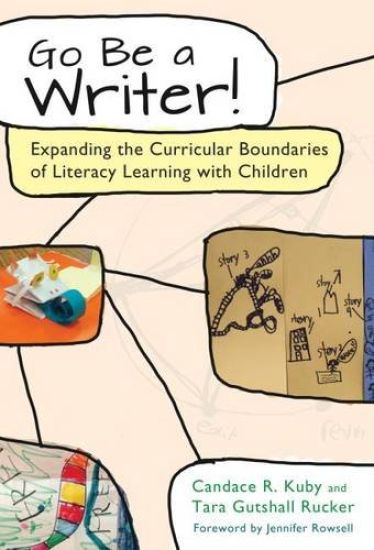
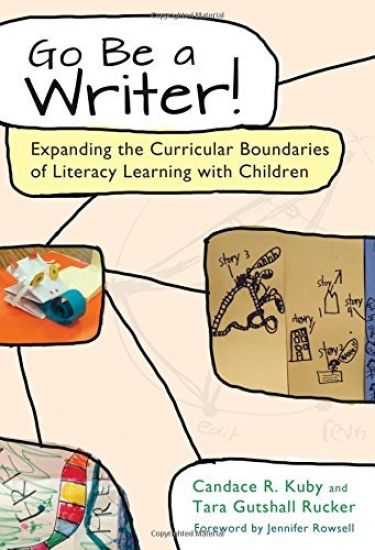
This book provides an introduction to poststructural and posthumanist theories in order to imagine new possibilities for expanding literacy education. The authors put to work these theories in the context of an elementary school classroom, examining literacy-based activities that occur as students participate with materials in a multimedia writers’ studio. Focusing on literacy processes, the book emphasizes the fluid and sometimes unintentional ways multimodal artifacts come into being through intra-actions with human and nonhuman materials. Because these theories emphasize the unplanned, nonlinear aspects of literacy, the authors demonstrate an approach to literacy that works against the grain of standardization and rigid curricular models. Go Be a Writer! reveals that when educators appreciate the value of unscripted intra-actions they allow for more authentic learning.
Go Be a Writer!

Go Be a Writer!

Candace R. Kuby; Tara Gutshall Rucker; Jennifer Rowsell

Teachers' College Press
2016
nidottu
This book provides an introduction to poststructural and posthumanist theories in order to imagine new possibilities for expanding literacy education. The authors put to work these theories in the context of an elementary school classroom, examining literacy-based activities that occur as students participate with materials in a multimedia writers’ studio. Focusing on literacy processes, the book emphasizes the fluid and sometimes unintentional ways multimodal artifacts come into being through intra-actions with human and nonhuman materials. Because these theories emphasize the unplanned, nonlinear aspects of literacy, the authors demonstrate an approach to literacy that works against the grain of standardization and rigid curricular models. Go Be a Writer! reveals that when educators appreciate the value of unscripted intra-actions they allow for more authentic learning.