Kirjojen hintavertailu – 12 859 818 kirjaa ja 27 kauppaa

Kirjailija

Canisia Lubrin

Kirjat ja teokset yhdessä paikassa: 7 kirjaa, julkaisuja vuosilta 2020–2026, suosituimpiin kuuluu Sound--At the Interregnum. Vertaile teosten hintoja ja tarkista saatavuus suomalaisista kirjakaupoista.

7 kirjaa

Kirjojen julkaisuvuodet: 2020–2026.

The World After Rain

The World After Rain

Canisia Lubrin

Silver Press
2026
pokkari
‘How incandescent the language is, each line emitting light through the membrane of time and anticipated grief. The work has a rigorousness, the poet pushing through the ache of experience from the first to the last word.’ Dionne Brand In her signature epic vision, Canisia Lubrin distills a radiant elegy for her mother along an interwoven and unresolvable axis of astonishment, belonging as much to history as to today. Grief, tender and searing, is the channel through which the poet refracts the realm of contemporary life to reveal the paradox of its private and public entanglements. This is poetry of haunting gravity and resonance, with meditations on love, time, and loss, at once meticulously far-seeing, interior and inexpressible.
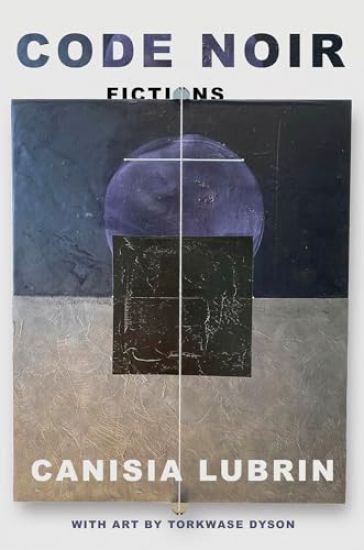
Code Noir

Code Noir

Canisia Lubrin

Oneworld Publications
2026
nidottu
Winner of the Carol Shields Prize for Fiction * Finalist for the Atwood Gibson Writers' Trust Fiction Prize * A Globe and Mail Best Book of 2024 'A revelation... Lubrin is one of the finest writers and thinkers of our time.' Maaza Mengiste 'Code Noir is storytelling at its deepest and most intimate.' Dionne Brand *** A dazzling political tour de force from multi-award-winning author Canisia Lubrin The original Code Noir was an infamous set of fifty-nine decrees passed by King Louis XIV. The Code enforced strict rules governing the lives of slaves in the French colonies for over a hundred years. Canisia Lubrin's stunning debut brings together fifty-nine linked fictions, riffing on the historical to take an electrifying new look at the present day. Interspersed with original black-and-white drawings by acclaimed visual artist Torkwase Dyson, this inventive, shape-shifting braid of narratives ranges from contemporary reality to unexpected dystopia, futuristic fantasy to historical adventure. Linked by the determination of individuals to look beyond official decrees, beyond the ruins of the past, and to create meaning – and freedom – for themselves, the fictions of Code Noir combine immense literary and political force in unforgettable, multi-layered fragments.
The World After Rain

The World After Rain

Canisia Lubrin

McClelland Stewart Inc.
2025
sidottu
"How incandescent the language is, each line emitting light through the membrane of time and anticipated grief. The work has a rigorousness, the poet pushing through the ache of experience from the first to the last word."--Dionne Brand In her signature epic vision, Canisia Lubrin distills a radiant elegy for her mother along an interwoven and unresolvable axis of astonishment, belonging as much to history as to today. Grief, tender and searing, is the channel through which the poet refracts the realm of contemporary life to reveal the blistering paradox of its private and public entanglements. This is poetry of haunting gravity and resonance, with meditations on love, time, and loss, at once meticulously far-seeing, interior, and inexpressible. woman from fine-print time, disclose to the world: the forecast of our noontime births outdoors; how I distrustevery form of authority, chiefly my own astonishment this poisoned wish is why I love, I bow to deserts, these claychildren of forests everywhere I love the rain, this is no secret, I love the solar wind; hold their elliptical life in the wasteland of our third mouths where flowers are invisible and bones are sanded and amusing, and every heliopause cloud senses our head, how we astonish our memories vining where no shade is enough, since many who'll feed me will refuse me their names, and good, who knows what bargains I would makewith their meanings, more bundles of thyme . . . tournaments of family recipes with you at my question,

Code Noir: Fictions

Code Noir: Fictions

Canisia Lubrin

SOFT SKULL
2025
sidottu

Halvin toimitettuna 28,70 €

Winner of the Carol Shields Prize for Fiction "Code Noir is storytelling at its deepest and most intimate. These stories are magic and you must enter them as if you, too, are wondrous." --Dionne Brand, author of Nomenclature, Theory, and Map to the Door of No Return Canisia Lubrin's debut fiction is that rare work of art--a brilliant, startlingly original book that combines immense literary and political force. Its structure, deceptively simple, is based on the infamous Code Noir, a set of real historical decrees originally passed in 1685 by King Louis XIV of France defining the conditions of slavery in the French colonial empire. The original code had fifty-nine articles; Code Noir has fifty-nine linked fictions--vivid, unforgettable, multilayered fragments filled with globe-wise characters who desire to live beyond the ruins of the past. Accompanied by black-and-white drawings--one at the start of each fiction--by acclaimed visual artist Torkwase Dyson, and with a foreword by Christina Sharpe, Code Noir ranges in style from contemporary realism to dystopian literature, from futuristic fantasy to historical fiction. This inventive, shape-shifting braid of narratives exists far beyond the boundaries of an official decree.
The Dyzgraphxst

The Dyzgraphxst

Canisia Lubrin

McClelland Stewart Inc.
2020
nidottu

Halvin toimitettuna 25,60 €

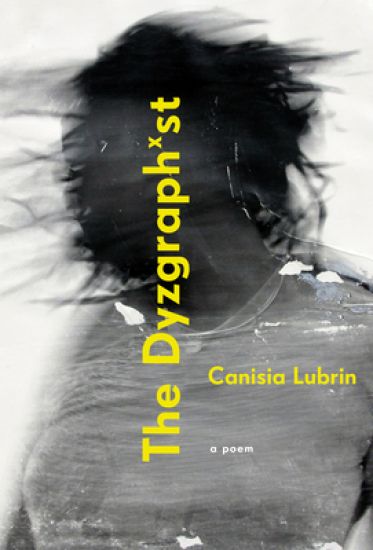
Canisia Lubrin returns with a mesmerizing new collection, the follow-up to her breakout book, Voodoo Hypothesis. The Dyzgraphxst presents seven inquiries into selfhood through the perennial figure Jejune. Polyvocal in register, the book moves to mine meanings of kinship through the wide and intimate reach of language across geographies and generations. Against the contemporary backdrop of intensified capitalist fascism, toxic nationalism, and climate disaster, the figure Jejune asks, how have I come to make home out of unrecognizability. Marked by and through diasporic life, Jejune declares, I was not myself. I am not myself. My self resembles something having nothing to do with me.