Kirjailija
Captain Frederick Marryat
Kirjat ja teokset yhdessä paikassa: 68 kirjaa, julkaisuja vuosilta 2004–2025, suosituimpiin kuuluu Frank Mildmay; or, The naval officer By: Captain (Frederick) Marryat: (World's classic's). Vertaile teosten hintoja ja tarkista saatavuus suomalaisista kirjakaupoista.
Nimi esiintyy myös muodoissa: Captain (Frederick) Marryat
68 kirjaa
Kirjojen julkaisuvuodet: 2004–2025.
Mr. Midshipman Easy
Captain Frederick Marryat
Createspace Independent Publishing Platform
2018
nidottu
The dog fiend, or, Snarleyyow. By: Captain Frederick Marryat: Novel (World's classic's)
Captain Frederick Marryat
Createspace Independent Publishing Platform
2017
nidottu
Captain Frederick Marryat (10 July 1792 - 9 August 1848) was a British Royal Navy officer, a novelist, and an acquaintance of Charles Dickens. He is noted today as an early pioneer of the sea story, particularly for his semi-autobiographical novel Mr Midshipman Easy (1836), for his children's novel The Children of the New Forest (1847), and for a widely used system of maritime flag signalling, known as Marryat's Code. Early life and naval career: Marryat was born in Great George Street, Westminster, London, the son of Joseph Marryat (1757-1824), a "merchant prince" and member of Parliament, and his American wife Charlotte, n e von Geyer. After trying to run away to sea several times, Marryat was permitted to enter the Royal Navy in 1806 as a midshipman on board HMS Imperieuse, a frigate commanded by Lord Cochrane (who later served as inspiration for Marryat as well as other authors). Marryat's time aboard the Imperieuse included action off the Gironde, the rescue of a fellow midshipman who had fallen overboard, captures of many ships off the Mediterranean coast of Spain, and the capture of the castle of Montgat. The Imperieuse shifted to operations in the Scheldt in 1809, where Marryat contracted malaria; he returned to England on the 74-gun HMS Victorious. After recuperating, Marryat returned to the Mediterranean in the 74-gun HMS Centaur and again saved a shipmate by leaping into the sea after him. He then sailed as a passenger to Bermuda in the 64-gun HMS Atlas, and from there to Halifax, Nova Scotia on the schooner HMS Chubb, where he joined the 32-gun frigate HMS Aeolus on 27 April 1811. A few months later, Marryat again earned distinction by leading the effort to cut away the Aeolus's mainyard to save the ship during a storm and, continuing a pattern, he also saved one of the men from the sea. Shortly thereafter, he moved to the frigate HMS Spartan, participating in the capture of a number of American ships (the War of 1812 having begun). On 26 December 1812, he was promoted to lieutenant, and as such served in the sloop HMS Espiegle and in HMS Newcastle. Marryat led four barges from the latter ship on a punishing raid to Orleans, Massachusetts on December 19, 1814, the last combat in New England during the war. The affair had mixed results. Initially, Marryat cut out an American schooner and three sloops, but managed to escape with just one sloop. The local militia avoided casualties while killing one Royal marine. He was promoted to commander on 13 June 1815, just as peace broke out.......... From 1832 to 1835, Marryat edited The Metropolitan Magazine. Additionally, he kept producing novels; his biggest success came with Mr Midshipman Easy in 1836. He lived in Brussels for a year, travelled in Canada and the United States, then moved to London in 1839, where he was in the literary circle of Charles Dickens and others. He was in North America in 1837 when the Rebellion of that year broke out in Lower Canada, and served with the British forces in suppressing it. Marryat was named a Fellow of the Royal Society in recognition of his invention and other achievements. In 1843, he moved to a small farm at Manor Cottage in Norfolk, where he died in 1848. His daughter Florence Marryat later became well known as a writer and actress. His son Francis Samuel Marryat completed his late novel The Little Savage...........
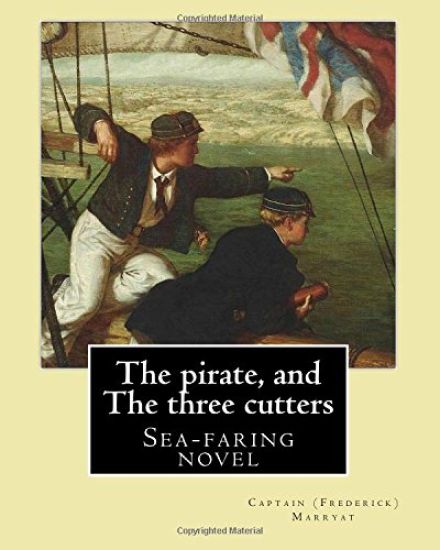
The pirate, and The three cutters By: Captain (Frederick) Marryat, illustrated By: Clarkson (Frederick) Stanfield RA (3 December 1793 - 18 May 1867):
Clarkson (Frederick) Stanfield Ra; Captain (Frederick) Marryat
Createspace Independent Publishing Platform
2017
nidottu
From the legendary adventures of Robinson Crusoe to the tribulations and trials of C. S. Forester's Horatio Hornblower, the great characters of the sea-faring novel have long been etched into the national consciousness. One of the authors whose work stood on the prow amidst the first breaking waves of this genre was Captain Frederick Marryat. Based largely on personal experience of a long and highly decorated career in the Royal Navy, his work has an immediacy and authenticity that is hard to match. The Pirate & the Three Cutters is a collection of two of his novels, and two of the finest examples of tales that will delight the imagination........ Clarkson Frederick Stanfield RA (3 December 1793 - 18 May 1867) was a prominent English marine painter; he is often though inaccurately called William Clarkson Stanfield. He was born at Sunderland, the son of James Field Stanfield (1749-1824) an Irish-born author, actor and former seaman. Clarkson was named after Thomas Clarkson, the slave trade abolitionist, whom his father knew, and this was the only forename he used, although there is reason to believe Frederick was a second one. Stanfield probably inherited artistic talent from his mother, who is said to have been an artist but died in 1801. He was briefly apprenticed to a coach decorator in 1806, but left owing to the drunkenness of his master's wife and joined a South Shields collier to become a sailor. In 1808 he was pressed into the Royal Navy, serving in the guardship HMS Namur at Sheerness. Discharged on health grounds in 1814, he then made a voyage to China in 1815 on the East Indiaman Warley and returned with many sketches.......... Captain Frederick Marryat (10 July 1792 - 9 August 1848) was a British Royal Navy officer, a novelist, and an acquaintance of Charles Dickens. He is noted today as an early pioneer of the sea story, particularly for his semi-autobiographical novel Mr Midshipman Easy (1836), for his children's novel The Children of the New Forest (1847), and for a widely used system of maritime flag signalling, known as Marryat's Code. Early life and naval career: Marryat was born in Great George Street, Westminster, London, the son of Joseph Marryat (1757-1824), a "merchant prince" and member of Parliament, and his American wife Charlotte, n e von Geyer. After trying to run away to sea several times, Marryat was permitted to enter the Royal Navy in 1806 as a midshipman on board HMS Imperieuse, a frigate commanded by Lord Cochrane (who later served as inspiration for Marryat as well as other authors). Marryat's time aboard the Imperieuse included action off the Gironde, the rescue of a fellow midshipman who had fallen overboard, captures of many ships off the Mediterranean coast of Spain, and the capture of the castle of Montgat. The Imperieuse shifted to operations in the Scheldt in 1809, where Marryat contracted malaria; he returned to England on the 74-gun HMS Victorious. After recuperating, Marryat returned to the Mediterranean in the 74-gun HMS Centaur and again saved a shipmate by leaping into the sea after him. He then sailed as a passenger to Bermuda in the 64-gun HMS Atlas, and from there to Halifax, Nova Scotia on the schooner HMS Chubb, where he joined the 32-gun frigate HMS Aeolus on 27 April 1811.....
The King's Own (1830). By: Captain Frederick Marryat (Volume I.): Novel (Original Classics), in three volumes
Captain Frederick Marryat
Createspace Independent Publishing Platform
2017
nidottu
Captain Frederick Marryat (10 July 1792 - 9 August 1848) was a British Royal Navy officer, a novelist, and an acquaintance of Charles Dickens. He is noted today as an early pioneer of the sea story, particularly for his semi-autobiographical novel Mr Midshipman Easy (1836), for his children's novel The Children of the New Forest (1847), and for a widely used system of maritime flag signalling, known as Marryat's Code. Early life and naval career: Marryat was born in Great George Street, Westminster, London, the son of Joseph Marryat (1757-1824), a "merchant prince" and member of Parliament, and his American wife Charlotte, n e von Geyer. After trying to run away to sea several times, Marryat was permitted to enter the Royal Navy in 1806 as a midshipman on board HMS Imperieuse, a frigate commanded by Lord Cochrane (who later served as inspiration for Marryat as well as other authors). Marryat's time aboard the Imperieuse included action off the Gironde, the rescue of a fellow midshipman who had fallen overboard, captures of many ships off the Mediterranean coast of Spain, and the capture of the castle of Montgat. The Imperieuse shifted to operations in the Scheldt in 1809, where Marryat contracted malaria; he returned to England on the 74-gun HMS Victorious. After recuperating, Marryat returned to the Mediterranean in the 74-gun HMS Centaur and again saved a shipmate by leaping into the sea after him. He then sailed as a passenger to Bermuda in the 64-gun HMS Atlas, and from there to Halifax, Nova Scotia on the schooner HMS Chubb, where he joined the 32-gun frigate HMS Aeolus on 27 April 1811. A few months later, Marryat again earned distinction by leading the effort to cut away the Aeolus's mainyard to save the ship during a storm and, continuing a pattern, he also saved one of the men from the sea. Shortly thereafter, he moved to the frigate HMS Spartan, participating in the capture of a number of American ships (the War of 1812 having begun). On 26 December 1812, he was promoted to lieutenant, and as such served in the sloop HMS Espiegle and in HMS Newcastle. Marryat led four barges from the latter ship on a punishing raid to Orleans, Massachusetts on December 19, 1814, the last combat in New England during the war. The affair had mixed results. Initially, Marryat cut out an American schooner and three sloops, but managed to escape with just one sloop. The local militia avoided casualties while killing one Royal marine. He was promoted to commander on 13 June 1815, just as peace broke out......................
Newton Forster, or, The merchant service. By: Captain Frederick Marryat: Novel (World's classic's)
Captain Frederick Marryat
Createspace Independent Publishing Platform
2017
nidottu
Newton Forster is a troubled young man who survives impressment into the Navy, imprisonment in France, and a shipwreck in the West Indies before gaining a post on British East India Company vessel bound for Asia. Forster faces a thrill a chapter-murder, insanity, press gangs, prison, pirates, treachery, and romance............... Captain Frederick Marryat (10 July 1792 - 9 August 1848) was a British Royal Navy officer, a novelist, and an acquaintance of Charles Dickens. He is noted today as an early pioneer of the sea story, particularly for his semi-autobiographical novel Mr Midshipman Easy (1836), for his children's novel The Children of the New Forest (1847), and for a widely used system of maritime flag signalling, known as Marryat's Code. Early life and naval career: Marryat was born in Great George Street, Westminster, London, the son of Joseph Marryat (1757-1824), a "merchant prince" and member of Parliament, and his American wife Charlotte, n e von Geyer. After trying to run away to sea several times, Marryat was permitted to enter the Royal Navy in 1806 as a midshipman on board HMS Imperieuse, a frigate commanded by Lord Cochrane (who later served as inspiration for Marryat as well as other authors). Marryat's time aboard the Imperieuse included action off the Gironde, the rescue of a fellow midshipman who had fallen overboard, captures of many ships off the Mediterranean coast of Spain, and the capture of the castle of Montgat. The Imperieuse shifted to operations in the Scheldt in 1809, where Marryat contracted malaria; he returned to England on the 74-gun HMS Victorious. After recuperating, Marryat returned to the Mediterranean in the 74-gun HMS Centaur and again saved a shipmate by leaping into the sea after him. He then sailed as a passenger to Bermuda in the 64-gun HMS Atlas, and from there to Halifax, Nova Scotia on the schooner HMS Chubb, where he joined the 32-gun frigate HMS Aeolus on 27 April 1811. A few months later, Marryat again earned distinction by leading the effort to cut away the Aeolus's mainyard to save the ship during a storm and, continuing a pattern, he also saved one of the men from the sea. Shortly thereafter, he moved to the frigate HMS Spartan, participating in the capture of a number of American ships (the War of 1812 having begun). On 26 December 1812, he was promoted to lieutenant, and as such served in the sloop HMS Espiegle and in HMS Newcastle. Marryat led four barges from the latter ship on a punishing raid to Orleans, Massachusetts on December 19, 1814, the last combat in New England during the war. The affair had mixed results. Initially, Marryat cut out an American schooner and three sloops, but managed to escape with just one sloop. The local militia avoided casualties while killing one Royal marine. He was promoted to commander on 13 June 1815, just as peace broke out..........................

The kings own; The pirate, and The three cutters. By: Captain Frederick Marryat, introduction By: W. L. Courtney (1850 - 1 November 1928).: Novel (Ill
W. L. Courtney; Captain Frederick Marryat
Createspace Independent Publishing Platform
2017
nidottu
William Leonard Courtney (1850 - 1 November 1928) was an English author, born at Poona, India, and educated at Oxford. In 1873 he became headmaster of Somersetshire College, Bath, and in 1894 editor of the Fortnightly Review. He married in 1874 Cordelia Blanche Place and had seven children, she died in 1907. In 1911 he married Janet Elizabeth Hogarth (Janet E. Courtney), a scholar, writer and feminist, born in Barton-on-Humber (27 November 1865 - 24 September 1954)................. Captain Frederick Marryat (10 July 1792 - 9 August 1848) was a British Royal Navy officer, a novelist, and an acquaintance of Charles Dickens. He is noted today as an early pioneer of the sea story, particularly for his semi-autobiographical novel Mr Midshipman Easy (1836), for his children's novel The Children of the New Forest (1847), and for a widely used system of maritime flag signalling, known as Marryat's Code. Early life and naval career: Marryat was born in Great George Street, Westminster, London, the son of Joseph Marryat (1757-1824), a "merchant prince" and member of Parliament, and his American wife Charlotte, n e von Geyer. After trying to run away to sea several times, Marryat was permitted to enter the Royal Navy in 1806 as a midshipman on board HMS Imperieuse, a frigate commanded by Lord Cochrane (who later served as inspiration for Marryat as well as other authors). Marryat's time aboard the Imperieuse included action off the Gironde, the rescue of a fellow midshipman who had fallen overboard, captures of many ships off the Mediterranean coast of Spain, and the capture of the castle of Montgat. The Imperieuse shifted to operations in the Scheldt in 1809, where Marryat contracted malaria; he returned to England on the 74-gun HMS Victorious. After recuperating, Marryat returned to the Mediterranean in the 74-gun HMS Centaur and again saved a shipmate by leaping into the sea after him. He then sailed as a passenger to Bermuda in the 64-gun HMS Atlas, and from there to Halifax, Nova Scotia on the schooner HMS Chubb, where he joined the 32-gun frigate HMS Aeolus on 27 April 1811. A few months later, Marryat again earned distinction by leading the effort to cut away the Aeolus's mainyard to save the ship during a storm and, continuing a pattern, he also saved one of the men from the sea. Shortly thereafter, he moved to the frigate HMS Spartan, participating in the capture of a number of American ships (the War of 1812 having begun). On 26 December 1812, he was promoted to lieutenant, and as such served in the sloop HMS Espiegle and in HMS Newcastle. Marryat led four barges from the latter ship on a punishing raid to Orleans, Massachusetts on December 19, 1814, the last combat in New England during the war. The affair had mixed results. Initially, Marryat cut out an American schooner and three sloops, but managed to escape with just one sloop. The local militia avoided casualties while killing one Royal marine. He was promoted to commander on 13 June 1815, just as peace broke out................
The King's Own (1830). By: Captain Frederick Marryat (Complete set Volume I, II and III.): Novel (Original Classics)
Captain Frederick Marryat
Createspace Independent Publishing Platform
2017
nidottu
Captain Frederick Marryat (10 July 1792 - 9 August 1848) was a British Royal Navy officer, a novelist, and an acquaintance of Charles Dickens. He is noted today as an early pioneer of the sea story, particularly for his semi-autobiographical novel Mr Midshipman Easy (1836), for his children's novel The Children of the New Forest (1847), and for a widely used system of maritime flag signalling, known as Marryat's Code. Early life and naval career: Marryat was born in Great George Street, Westminster, London, the son of Joseph Marryat (1757-1824), a "merchant prince" and member of Parliament, and his American wife Charlotte, nee von Geyer. After trying to run away to sea several times, Marryat was permitted to enter the Royal Navy in 1806 as a midshipman on board HMS Imperieuse, a frigate commanded by Lord Cochrane (who later served as inspiration for Marryat as well as other authors). Marryat's time aboard the Imperieuse included action off the Gironde, the rescue of a fellow midshipman who had fallen overboard, captures of many ships off the Mediterranean coast of Spain, and the capture of the castle of Montgat. The Imperieuse shifted to operations in the Scheldt in 1809, where Marryat contracted malaria; he returned to England on the 74-gun HMS Victorious. After recuperating, Marryat returned to the Mediterranean in the 74-gun HMS Centaur and again saved a shipmate by leaping into the sea after him. He then sailed as a passenger to Bermuda in the 64-gun HMS Atlas, and from there to Halifax, Nova Scotia on the schooner HMS Chubb, where he joined the 32-gun frigate HMS Aeolus on 27 April 1811. A few months later, Marryat again earned distinction by leading the effort to cut away the Aeolus's mainyard to save the ship during a storm and, continuing a pattern, he also saved one of the men from the sea. Shortly thereafter, he moved to the frigate HMS Spartan, participating in the capture of a number of American ships (the War of 1812 having begun). On 26 December 1812, he was promoted to lieutenant, and as such served in the sloop HMS Espiegle and in HMS Newcastle. Marryat led four barges from the latter ship on a punishing raid to Orleans, Massachusetts on December 19, 1814, the last combat in New England during the war. The affair had mixed results. Initially, Marryat cut out an American schooner and three sloops, but managed to escape with just one sloop. The local militia avoided casualties while killing one Royal marine. He was promoted to commander on 13 June 1815, just as peace broke out. From 1832 to 1835, Marryat edited The Metropolitan Magazine. 3] Additionally, he kept producing novels; his biggest success came with Mr Midshipman Easy in 1836. He lived in Brussels for a year, travelled in Canada and the United States, then moved to London in 1839, where he was in the literary circle of Charles Dickens and others. He was in North America in 1837 when the Rebellion of that year broke out in Lower Canada, and served with the British forces in suppressing it. Marryat was named a Fellow of the Royal Society in recognition of his invention and other achievements. In 1843, he moved to a small farm at Manor Cottage in Norfolk, where he died in 1848. His daughter Florence Marryat later became well known as a writer and actress. His son Francis Samuel Marryat completed his late novel The Little Savage. 7] Marryat's novels are characteristic of their time, with concerns of family connections and social status often overshadowing the naval action, but they are interesting as fictional renditions of the author's 25 years' experience at sea, and were much admired by men such as Mark Twain, Joseph Conrad, and Ernest Hemingway. They were among the first nautical novels, serving as models for later works by C. S. Forester and Patrick O'Brian, also set in the time of Nelson and telling of young men rising through the ranks through successes as naval officers....
The King's Own (1830). By: Captain Frederick Marryat (Volume III.): Novel (Original Classics), in three volumes
Captain Frederick Marryat
Createspace Independent Publishing Platform
2017
nidottu
Captain Frederick Marryat (10 July 1792 - 9 August 1848) was a British Royal Navy officer, a novelist, and an acquaintance of Charles Dickens. He is noted today as an early pioneer of the sea story, particularly for his semi-autobiographical novel Mr Midshipman Easy (1836), for his children's novel The Children of the New Forest (1847), and for a widely used system of maritime flag signalling, known as Marryat's Code. Early life and naval career: Marryat was born in Great George Street, Westminster, London, the son of Joseph Marryat (1757-1824), a "merchant prince" and member of Parliament, and his American wife Charlotte, nee von Geyer. After trying to run away to sea several times, Marryat was permitted to enter the Royal Navy in 1806 as a midshipman on board HMS Imperieuse, a frigate commanded by Lord Cochrane (who later served as inspiration for Marryat as well as other authors). Marryat's time aboard the Imperieuse included action off the Gironde, the rescue of a fellow midshipman who had fallen overboard, captures of many ships off the Mediterranean coast of Spain, and the capture of the castle of Montgat. The Imperieuse shifted to operations in the Scheldt in 1809, where Marryat contracted malaria; he returned to England on the 74-gun HMS Victorious. After recuperating, Marryat returned to the Mediterranean in the 74-gun HMS Centaur and again saved a shipmate by leaping into the sea after him. He then sailed as a passenger to Bermuda in the 64-gun HMS Atlas, and from there to Halifax, Nova Scotia on the schooner HMS Chubb, where he joined the 32-gun frigate HMS Aeolus on 27 April 1811. A few months later, Marryat again earned distinction by leading the effort to cut away the Aeolus's mainyard to save the ship during a storm and, continuing a pattern, he also saved one of the men from the sea. Shortly thereafter, he moved to the frigate HMS Spartan, participating in the capture of a number of American ships (the War of 1812 having begun). On 26 December 1812, he was promoted to lieutenant, and as such served in the sloop HMS Espiegle and in HMS Newcastle. Marryat led four barges from the latter ship on a punishing raid to Orleans, Massachusetts on December 19, 1814, the last combat in New England during the war. The affair had mixed results. Initially, Marryat cut out an American schooner and three sloops, but managed to escape with just one sloop. The local militia avoided casualties while killing one Royal marine. He was promoted to commander on 13 June 1815, just as peace broke out.... From 1832 to 1835, Marryat edited The Metropolitan Magazine. Additionally, he kept producing novels; his biggest success came with Mr Midshipman Easy in 1836. He lived in Brussels for a year, travelled in Canada and the United States, then moved to London in 1839, where he was in the literary circle of Charles Dickens and others. He was in North America in 1837 when the Rebellion of that year broke out in Lower Canada, and served with the British forces in suppressing it. Marryat was named a Fellow of the Royal Society in recognition of his invention and other achievements. In 1843, he moved to a small farm at Manor Cottage in Norfolk, where he died in 1848. His daughter Florence Marryat later became well known as a writer and actress. His son Francis Samuel Marryat completed his late novel The Little Savage. Marryat's novels are characteristic of their time, with concerns of family connections and social status often overshadowing the naval action, but they are interesting as fictional renditions of the author's 25 years' experience at sea, and were much admired by men such as Mark Twain, Joseph Conrad, and Ernest Hemingway. They were among the first nautical novels, serving as models for later works by C. S. Forester and Patrick O'Brian, also set in the time of Nelson and telling of young men rising through the ranks through successes as naval officers....
The King's Own (1830). By: Captain Frederick Marryat (Volume II.): Novel (Original Classics), in three volumes
Captain Frederick Marryat
Createspace Independent Publishing Platform
2017
nidottu
Captain Frederick Marryat (10 July 1792 - 9 August 1848) was a British Royal Navy officer, a novelist, and an acquaintance of Charles Dickens. He is noted today as an early pioneer of the sea story, particularly for his semi-autobiographical novel Mr Midshipman Easy (1836), for his children's novel The Children of the New Forest (1847), and for a widely used system of maritime flag signalling, known as Marryat's Code. Early life and naval career: Marryat was born in Great George Street, Westminster, London, the son of Joseph Marryat (1757-1824), a "merchant prince" and member of Parliament, and his American wife Charlotte, nee von Geyer. After trying to run away to sea several times, Marryat was permitted to enter the Royal Navy in 1806 as a midshipman on board HMS Imperieuse, a frigate commanded by Lord Cochrane (who later served as inspiration for Marryat as well as other authors). Marryat's time aboard the Imperieuse included action off the Gironde, the rescue of a fellow midshipman who had fallen overboard, captures of many ships off the Mediterranean coast of Spain, and the capture of the castle of Montgat. The Imperieuse shifted to operations in the Scheldt in 1809, where Marryat contracted malaria; he returned to England on the 74-gun HMS Victorious. After recuperating, Marryat returned to the Mediterranean in the 74-gun HMS Centaur and again saved a shipmate by leaping into the sea after him. He then sailed as a passenger to Bermuda in the 64-gun HMS Atlas, and from there to Halifax, Nova Scotia on the schooner HMS Chubb, where he joined the 32-gun frigate HMS Aeolus on 27 April 1811. A few months later, Marryat again earned distinction by leading the effort to cut away the Aeolus's mainyard to save the ship during a storm and, continuing a pattern, he also saved one of the men from the sea. Shortly thereafter, he moved to the frigate HMS Spartan, participating in the capture of a number of American ships (the War of 1812 having begun). On 26 December 1812, he was promoted to lieutenant, and as such served in the sloop HMS Espiegle and in HMS Newcastle. Marryat led four barges from the latter ship on a punishing raid to Orleans, Massachusetts on December 19, 1814, the last combat in New England during the war. The affair had mixed results. Initially, Marryat cut out an American schooner and three sloops, but managed to escape with just one sloop. The local militia avoided casualties while killing one Royal marine. He was promoted to commander on 13 June 1815, just as peace broke out......................

Mr. Midshipman Easy
Captain Frederick Marryat
Createspace Independent Publishing Platform
2015
nidottu
Frank Mildmay, the Naval Officer
Captain Frederick Marryat
Createspace Independent Publishing Platform
2015
nidottu
Newton Forster: Or the Merchant Service
Captain Frederick Marryat
Literary Licensing, LLC
2014
nidottu