Kirjojen hintavertailu – 12 903 725 kirjaa ja 27 kauppaa

Kirjailija

Carissa Veliz

Kirjat ja teokset yhdessä paikassa: 8 kirjaa, julkaisuja vuosilta 2021–2026, suosituimpiin kuuluu Liberties Journal of Culture and Politics. Vertaile teosten hintoja ja tarkista saatavuus suomalaisista kirjakaupoista.

Nimi esiintyy myös muodoissa: Carissa Véliz

8 kirjaa

Kirjojen julkaisuvuodet: 2021–2026.

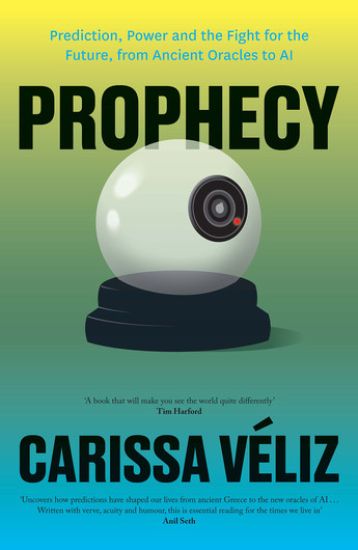
Prophecy

Prophecy

Carissa Véliz

Swift Press
2026
sidottu
Today’s computer scientists play the same role as the oracles of the ancient world and the astrologers of the Middle Ages. Modern predictions not only advise on war, crop output, and marriages, but algorithms and statisticians also now determine whether we can get a loan, a job, an apartment, or an organ transplant. And when we cede ground to these predictions, we lose control of our own lives. In this powerful, refreshing new look at the many ways prediction shapes our everyday lives, University of Oxford professor Carissa Véliz explains how putting too much stock in others’ predictions makes us vulnerable to charlatans, con artists, dubious technology, and self-deception. Examining a wide range of subjects both personal and societal, including medicine, climate, technology, society, and others, Véliz uncovers a number of insights: predictions about humans tend to be self-fulfilling; more data doesn’t guarantee better outcomes; AI is more likely to increase risk than decrease it; and a free and robust society requires not more prediction, but better preparation. Véliz argues in this incisive and bracingly original book that the main promise of prediction is not knowledge of the future, but rather power over others. Prophecy is an invitation to defy those orders and live life on our own terms.
Prophecy

Prophecy

Carissa Véliz

RANDOM HOUSE USA INC
2026
sidottu
From an award-winning University of Oxford professor comes a brilliant, urgent new look at prophecies--the predictions that determine our lives, from our personal finances and the quality of our healthcare to the news and social media we consume and the products foisted upon us. Today's computer scientists play the same role as the oracles of the ancient world and the astrologers of the Middle Ages. Modern predictions not only advise on war, crop output, and marriages, but algorithms and statisticians also now determine whether we can get a loan, a job, an apartment, or an organ transplant. And when we cede ground to these predictions, we lose control of our own lives. In this powerful, refreshing new look at the many ways prediction shapes our everyday lives, University of Oxford professor Carissa V liz explains how putting too much stock in others' predictions makes us vulnerable to charlatans, con artists, dubious technology, and self-deception. Examining a wide range of subjects both personal and societal, including medicine, climate, technology, society, and others, V liz uncovers a number of insights: predictions about humans tend to be self-fulfilling; more data doesn't guarantee better outcomes; AI is more likely to increase risk than decrease it; and a free and robust society requires not more prediction, but better preparation. V liz argues in this incisive and bracingly original book that the main promise of prediction is not knowledge of the future, but rather power over others. Prophecy is an invitation to defy those orders and live life on our own terms.
Liberties Journal of Culture and Politics

Liberties Journal of Culture and Politics

Carissa Veliz; Kirsch Adam; Gerecht Reuel Marc

Liberties Journal
2024
Nidottu
Liberties, a Journal of Culture and Politics, is essential reading for those engaged in the cultural and political issues of our time. In this edition of Liberties: Carissa Veliz — The Technology of Bullshit; Adam Kirsch — LiteratureGPT; Ryan Ruby — Reading and Time; Michael Walzer — Notes on A Dangerous Mistake; Reuel Marc Gerecht — Saudi Arabia: The Chimera of a Grand Alliance; David A. Bell — The Anti-Liberal; Emily Ogden — Dam Nation; Stephen Darwall — Money, Justice, and Effective Altruism; Kian Tajbakhsh — The Problem with Anti-Colonialism: Recovering Albert Memmi; Wendy Gan — Antigone in Hong Kong; Jennie Lightweis-Goff — Concept Creep: A Progressive’s Lament; John Summers — In The Counterlife of Autism; Helen Vendler — Can Poetry Be Abstract?; Celeste Marcus — After Rape: A Guide for the Torment; Leon Wieseltier — On Savagery and Solidarity; and, poetry by A. E. Stallings and Ange Mlinko. Published quarterly, Liberties, is a collection of the most significant writers today as well as launching the voices of tomorrow. Liberties features serious, independent, stylish, and controversial essays by significant writers and introduces the next generation of writers and poets to inspire and impact the intellectual and creative lifeblood of today’s culture and politics. Nobel Prize winners, leading scholars, well-known fiction and non-fiction writers, rising talents, and poets from around the world are part Liberties journal. There’s a reason why engaged citizens, cultural warriors, political leaders, opinion makers, and activists from across the cultural and political spectrum read and cherish Liberties.
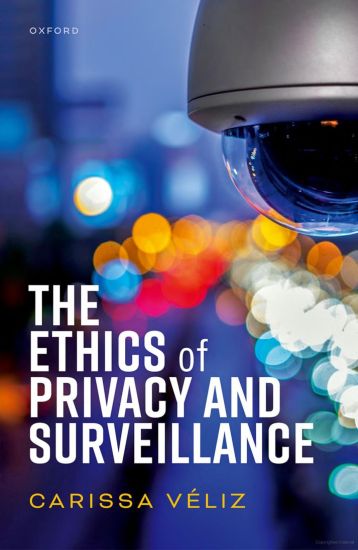
The Ethics of Privacy and Surveillance

The Ethics of Privacy and Surveillance

Carissa Véliz

Oxford University Press
2024
sidottu

Halvin toimitettuna 37,60 €

Privacy matters because it shields us from possible abuses of power. Human beings need privacy just as much as they need community. Our need for socialization brings with it risks and burdens which in turn give rise to the need for spaces and time away from others. To impose surveillance upon someone is an act of domination. The foundations of democracy quiver under surveillance. Given how important privacy is for individual and collective wellbeing, it is striking that it has not enjoyed a more central place in philosophy. The philosophical literature on privacy and surveillance is still very limited compared to that on justice, autonomy, or equality-and yet the former plays a role in protecting all three values. Perhaps philosophers haven't attended much to privacy because for most of the past two centuries there have been strong enough privacy norms in place and not enough invasive technologies. Privacy worked for most people most of the time, which made thinking about it unnecessary. It's when things stop working that the philosopher's attention is most easily caught-the owl of Minerva spreading its wings only with impending dusk. With the spread of machine learning, a kind of AI that often uses vast amounts of personal data, and a whole industry dedicated to the trade of personal data becoming one of the most popular business models of the 21st century, it's time for philosophy to look more closely at privacy. This book is intended to contribute to a better understanding of privacy from a philosophical point of view-what it is, what is at stake in its loss, and how it relates to other rights and values. The five parts that compose this book respond to five basic questions about privacy: Where does privacy come from? What is privacy? Why does privacy matter? What should we do about privacy? Where are we now?
Liberties Journal of Culture and Politics

Liberties Journal of Culture and Politics

Cass R. Sunstein; Carissa Veliz; Ekaterina Pravilova; Richard Taruskin; Claire Malroux; Richard Wolin; Mark Polizzotti; Jonathan Zimmerman; Marissa Grunes; Andrew Butterfield; Scott Spillman; Leora Batnitzky; Helen Vendler; Jared Marcel Pollen; Paula Bohince

Liberties Journal Foundation
2022
nidottu
“A Meteor of Intelligent Substance”“Something was Missing in our Culture, and Here It Is”"Invaluable""Liberties is THE place to be. Change starts in the mind.” Liberties, a journal of Culture and Politics, is essential reading for those engaged in the cultural and political issues and causes of our time. Liberties features serious, independent, stylish, and controversial essays by significant writers and leaders throughout the world; new poetry; and, introduces the next generation of writers and voices to inspire and impact the intellectual and creative lifeblood of today’s culture and politics. In this issue of Liberties: Cass R. Sunstein - The Supreme Court Gone Wrong; Carissa Veliz - Digitization is Surveillance; Ekaterina Pravilova - The Autocrat’s War; Richard Taruskin - What is Bad Taste; Jonathan Zimmerman - Memoirs of a White Savior; Richard Wolin - The Cult of Carl Schmitt; Mark Polizzotti - Surrealism and Cancellation; Andrew Butterfield - Dante During Covid; Scott Spillman - The Strange History of the Slave Songs; Leora Batnitzky - The Sacrifice of Edith Stein; Helen Vendler - Sylvia Plath on Motherhood; Jared Marcel Pollen - Was Havel Right?; Celeste Marcus - The Curse of the Radical Israeli Right; Leon Wieseltier - The Future of Nature; and new poems by Claire Malroux, Marissa Grunes, Paula Bohince.
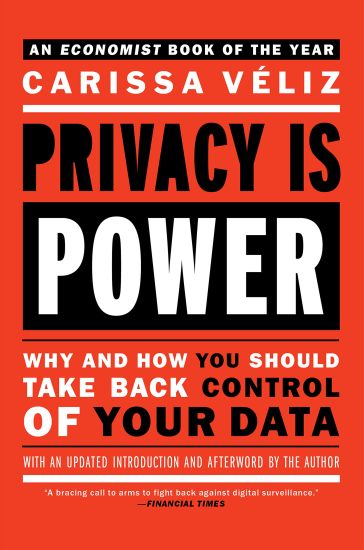
Privacy Is Power: Why and How You Should Take Back Control of Your Data
An Economist Book of the Year Every minute of every day, our data is harvested and exploited... It is time to pull the plug on the surveillance economy. Governments and hundreds of corporations are spying on you, and everyone you know. They're not just selling your data. They're selling the power to influence you and decide for you. Even when you've explicitly asked them not to. Reclaiming privacy is the only way we can regain control of our lives and our societies. These governments and corporations have too much power, and their power stems from us--from our data. Privacy is as collective as it is personal, and it's time to take back control. Privacy Is Power tells you how to do exactly that. It calls for the end of the data economy and proposes concrete measures to bring that end about, offering practical solutions, both for policymakers and ordinary citizens.
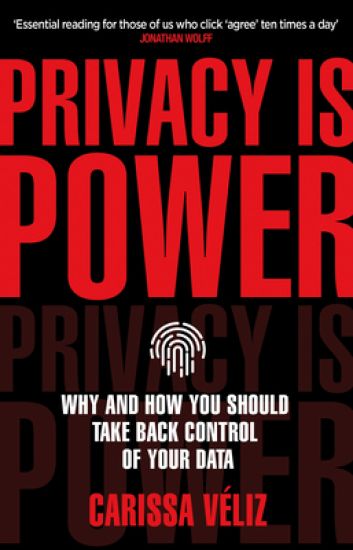
Privacy is Power

Privacy is Power

Carissa Véliz

Corgi Books
2021
pokkari

Halvin toimitettuna 17,00 €

An Economist BEST BOOK OF THE YEARAs the data economy grows in power, Carissa Véliz exposes how our privacy is eroded by big tech and governments, why that matters and what we can do about it. The moment you check your phone in the morning you are giving away your data. Before you've even switched off your alarm, a whole host of organisations have been alerted to when you woke up, where you slept, and with whom. As you check the weather, scroll through your 'suggested friends' on Facebook, you continually compromise your privacy. Without your permission, or even your awareness, tech companies are harvesting your information, your location, your likes, your habits, and sharing it amongst themselves. They're not just selling your data. They're selling the power to influence you. Even when you've explicitly asked them not to. And it's not just you. It's all your contacts too. Digital technology is stealing our personal data and with it our power to make free choices. To reclaim that power and democracy, we must protect our privacy. What can we do? So much is at stake. Our phones, our TVs, even our washing machines are spies in our own homes. We need new regulation. We need to pressure policy-makers for red lines on the data economy. And we need to stop sharing and to adopt privacy-friendly alternatives to Google, Facebook and other online platforms. Short, terrifying, practical: Privacy is Power highlights the implications of our laid-back attitude to data and sets out how we can take back control. If you liked The Age of Surveillance Capitalism, you'll love Privacy is Power because it provides a philosophical perspective on the politics of privacy, and it offers a very practical outlook, both for policymakers and ordinary citizens.