
Kirjailija
Carl Gustav Jung
Kirjat ja teokset yhdessä paikassa: 17 kirjaa, julkaisuja vuosilta 1960–2026, suosituimpiin kuuluu Contributions to Analytical Psychology. Vertaile teosten hintoja ja tarkista saatavuus suomalaisista kirjakaupoista.
17 kirjaa
Kirjojen julkaisuvuodet: 1960–2026.

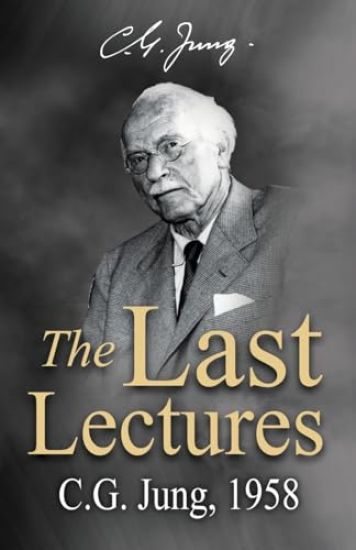
In 1958, just three years before his death, Carl Jung sat with students and followers offering some of his final instructions on working with patients in analysis. The event was transcribed, preserved and eventually translated to become this concise volume. This short book-never before published in English- brings together the thoughtful reflections of the master as he looks over the landscape he explored and charted with singular dedication. Whether he speaks to the shadow cast by Analytical Psychology or an early defeat upon realizing that he had overlooked the function of intuition, Jung's wisdom, humor, and humility shine through. While this book is published on the 150th anniversary of Jung's birth, the reader may feel like part of the audience for these last lectures of Jung.
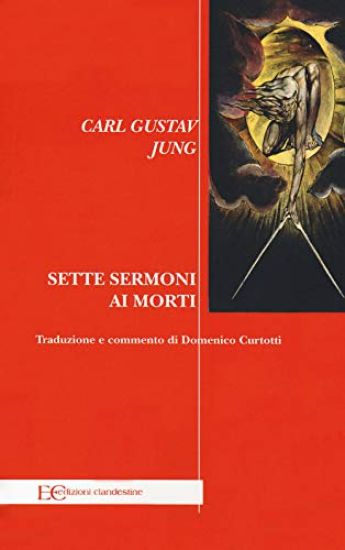
Nel 1916, in una condizione di profonda crisi personale e d'intensa esperienza visionaria, Carl Gustav Jung visitato da "spiriti" di ritorno da Gerusalemme. "Cominci con uno stato di inquietudine dentro di me, ma non sapevo che cosa significasse, o che cosa si volesse da me. C'era intorno a me un'atmosfera sinistra: avevo la strana sensazione che l'aria fosse pregna di entit spettrali. Gli, spiriti, provenienti dalla "terra dei morti", sono "le voci dell'Inesplicabile, dell'Irrisolto, dell'Irredento". Gli straordinari "Sette sermoni ai morti" con cui Jung cerca di portarli a consapevolezza e di placarli, scritti in una condizione prossima all'esperienza medianica, sono a un tempo una Teogonia, una Cosmogonia, una Psicogenesi, in un lucidissimo e controllatissimo "mythologein". Pagine complesse e ricchissime, imbarazzanti per gli stessi cultori di Jung, qui proposte attraverso un puntuale commento filosofico e teologico, sempre in rigorosa aderenza al pensiero di Jung.
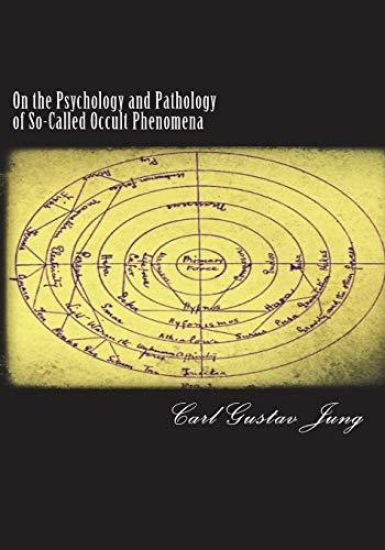
On the Psychology and Pathology of So-Called Occult Phenomena
Carl Gustav Jung
Createspace Independent Publishing Platform
2018
nidottu
Halvin toimitettuna 13,60 €
In that wide field of psychopathic deficiency where Science has demarcated the diseases of epilepsy, hysteria and neurasthenia, we meet scattered observations concerning certain rare states of consciousness as to whose meaning authors are not yet agreed. These observations spring up sporadically in the literature on narcolepsy, lethargy, automatisme ambulatoire, periodic amnesia, double consciousness, somnambulism, pathological dreamy states, pathological lying, etc. These states are sometimes attributed to epilepsy, sometimes to hysteria, sometimes to exhaustion of the nervous system, or neurasthenia, sometimes they are allowed all the dignity of a disease sui generis. Patients occasionally work through a whole graduated scale of diagnoses, from epilepsy, through hysteria, up to simulation. In practice, on the one hand, these conditions can only be separated with great difficulty from the so-called neuroses, sometimes even are indistinguishable from them; on the other, certain features in the region of pathological deficiency present more than a mere analogical relationship not only with phenomena of normal psychology, but also with the psychology of the supernormal, of genius. Various as are the individual phenomena in this region, there is certainly no case that cannot be connected by some intermediate example with the other typical cases. This relationship in the pictures presented by hysteria and epilepsy is very close. Recently the view has even been maintained that there is no clean-cut frontier between epilepsy and hysteria, and that a difference is only to be noted in extreme cases. Steffens says, for example 1]-"We are forced to the conclusion that in essence hysteria and epilepsy are not fundamentally different, but that the cause of the disease is the same but is manifest in a diverse form, in different intensity and permanence."
In 1935 Jung gave a now famous and controversial course of five lectures at the Tavistock Clinic in London. In them he presents, in lucid and compelling fashion, his theory of the mind and the methods he had used to arrive at his conclusions: dream analysis, word association and ‘active imagination.’ Immediately accessible to the general reader, the Tavistock lectures are a superb introduction to anyone coming to Jung’s psychology for the first time and crucial for understanding analytical psychology. A fascinating feature of the book is the inclusion of some of the questions posed to Jung at the end of each lecture. These questions, including those from leading psychoanalysts such as Wilfrid Bion, and the discussions that follow offer an outstanding example of a great thinker at the peak of their powers. Also amongst the audience was Samuel Beckett, who was deeply affected by what Jung had to say. With a new foreword by Kevin Lu

Written three years before his death, The Undiscovered Self combines acuity with concision in masterly fashion and is Jung at his very best. Offering clear and crisp insights into some of his major theories, such as the duality of human nature, the unconscious, human instinct and spirituality, Jung warns against the threats of totalitarianism and political and social propaganda to the free-thinking individual. As timely now as when it was first written, Jung's vision is a salutary reminder of why we should not become passive members of the herd. With a new foreword by Sonu Shamdasani.
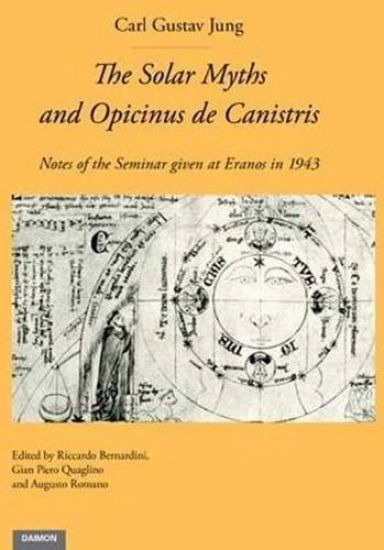
C. G. Jung held an extemporaneous seminar on "The Solar Myths and Opicinus de Canistris" at the 1943 Eranos Conference. In a complete version for the first time, this book presents all of the known material relating to the seminar, including notes taken by two of his students, Alwine von Keller and Rivkah Scharf Kluger, and the outline that Jung himself prepared. Opicinus de Canistris (1296 c. 1352) was a priest and cartographer from near Pavia, Italy. His typically medieval cartography is characterized by historical, theological, symbolic and astrological references along with a curious anthropomorphism, which depicted continents and oceans with human features. Jung recognized this as a projection of Opicinus inner world and interpreted the maps of the world as mandalas, where the integration of the shadow, the dark principle, was missing."
In 1935 Jung gave a now famous and controversial course of five lectures at the Tavistock Clinic in London. In them he presents, in lucid and compelling fashion, his theory of the mind and the methods he had used to arrive at his conclusions: dream analysis, word association and ‘active imagination.’ Immediately accessible to the general reader, the Tavistock lectures are a superb introduction to anyone coming to Jung’s psychology for the first time and crucial for understanding analytical psychology. A fascinating feature of the book is the inclusion of some of the questions posed to Jung at the end of each lecture. These questions, including those from leading psychoanalysts such as Wilfrid Bion, and the discussions that follow offer an outstanding example of a great thinker at the peak of their powers. Also amongst the audience was Samuel Beckett, who was deeply affected by what Jung had to say. With a new foreword by Kevin Lu
Written three years before his death, The Undiscovered Self combines acuity with concision in masterly fashion and is Jung at his very best. Offering clear and crisp insights into some of his major theories, such as the duality of human nature, the unconscious, human instinct and spirituality, Jung warns against the threats of totalitarianism and political and social propaganda to the free-thinking individual. As timely now as when it was first written, Jung's vision is a salutary reminder of why we should not become passive members of the herd. With a new foreword by Sonu Shamdasani.
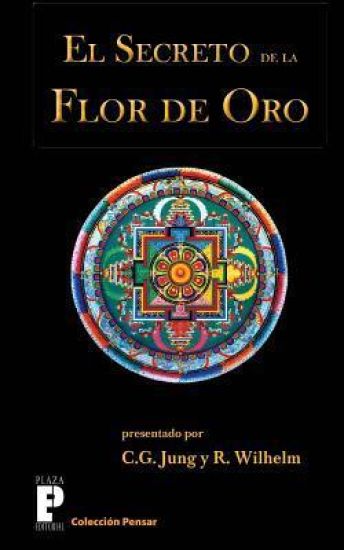
El secreto de la flor de oro
Richard Wilhelm; Carl Gustav Jung
Createspace Independent Publishing Platform
2012
nidottu
El secreto de la Flor de Oro es una obra tao sta china sobre meditaci n, que fue traducida por Richard Wilhelm. Wilhelm era amigo del psic logo Carl Gustav Jung. A pesar de la diversidad de impresiones, interpretaci n y opini n expresadas por Wilhelm y Jung, la t cnica de meditaci n descrita en El Secreto de la Flor De oro es una t cnica sencilla, silenciosa (la descripci n del libro de meditaci n ha sido caracterizada como Zen con detalles). La t cnica de meditaci n, enunciada en lenguaje po tico, se reduce a una f rmula sobre la postura, la respiraci n y la contemplaci n. La postura principalmente se relaciona con una posici n recta. El camino de la energ a asociado con la respiraci n ha sido descrito como semejante a una rueda interna alineada verticalmente con la columna vertebral. Cuando la respiraci n es constante, la rueda gira hacia adelante, con la energ a vital aumentando en la espalda y descendiendo en el frente. Malos h bitos de respiraci n (o mala postura, o incluso malos pensamientos) pueden ocasionar que la rueda no gire, o retroceda, inhibiendo la circulaci n de la energ a vital esencial. En contemplaci n, se observan los pensamientos como van surgiendo y retrocediendo.
Gesammelte Werke 17. Über die Entwicklung der Persönlichkeit
Carl Gustav Jung
Walter Verlag
1994
sidottu
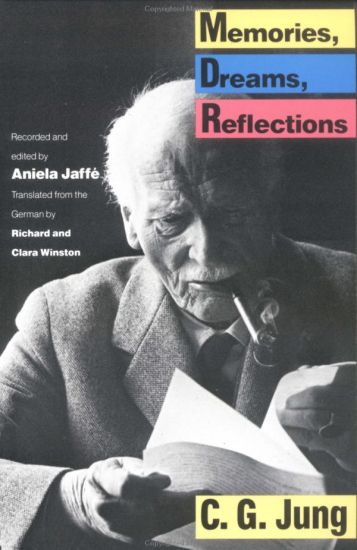
Memories, Dreams, Reflections
Carl Gustav Jung
Vintage Books
1989
nidottu
Halvin toimitettuna 20,30 €
In the spring of 1957, when he was eighty-one years old, C. G. Jung undertook the telling of his life story. At regular intervals he had conversations with his colleague and friend Aniela Jaffe, and collaborated with her in the preparation of the text based on these talks. On occasion, he was moved to write entire chapters of the book in his own hand, and he continued to work on the final stages of the manuscript until shortly before his death on June 6, 1961. This edition of Memories, Dreams, Reflections includes Jung's "VII Sermones ad Mortuos." It is a fully corrected edition.
Psychology and Religion
Carl Gustav Jung
Yale University Press
1960
pokkari
Halvin toimitettuna 27,60 €
“These compact vigorous essays constitute Dr. Jung’s most sustained interpretation of the religious function in individual experience.”—Journal of Social Philosophy “This psychological study of religion is particularly interesting in the light of current social and political movements throughout the world.”—The Personalist Dr. Carl Gustav Jung, author of some of the most provocative hypotheses in modern psychology, in this volume describes what he regards as an authentic religious function in the unconscious mind. Using a wealth of material from ancient and medieval gnostic, alchemistic, and occultistic literature, he discusses the religious symbolism of unconscious processes and the possible continuity of religious forms that have appeared and reappeared through the centuries.