Kirjojen hintavertailu – 12 859 819 kirjaa ja 27 kauppaa

Kirjailija

Carl James

Kirjat ja teokset yhdessä paikassa: 5 kirjaa, julkaisuja vuosilta 2010–2021, suosituimpiin kuuluu "How Do You Find Malaysia?". Vertaile teosten hintoja ja tarkista saatavuus suomalaisista kirjakaupoista.

5 kirjaa

Kirjojen julkaisuvuodet: 2010–2021.

"How Do You Find Malaysia?"

"How Do You Find Malaysia?"

Carl James

Authorhouse
2021
sidottu
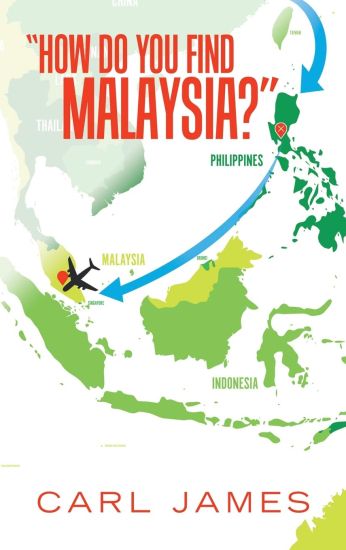
A chance meeting in early 1977 took the author on a forty year journey in South East Asia. This encounter triggered a journey of exploration, learning, and a deep immersion in cultures that challenges one's preconceived notions. This is a story of episodes, many of which may seem fiction, but they really are the absolute truth. Take a ride with the author and get drawn into Malaysian communities that never fail to delight and surprise. Malaysia in the 1970's was a nation in a period of growth, change, and of a rich multi-racial society that that was working feverishly to forge a united nation. As it should be, this book is a joyous appreciation of people from many backgrounds. From trishaw pullers to CEO's, to cooks in hawker centers to movie stars; they formed a tapestry of community. The author volunteered to go to Malaysia and teach high school math. He intended to impact the school and its students in a positive way. The opposite happened. The short time he was in Malaysia affected him deeply, and all for the better. Most of all, this story invites the reader to just come along.
"How Do You Find Malaysia?"

"How Do You Find Malaysia?"

Carl James

Authorhouse
2021
pokkari
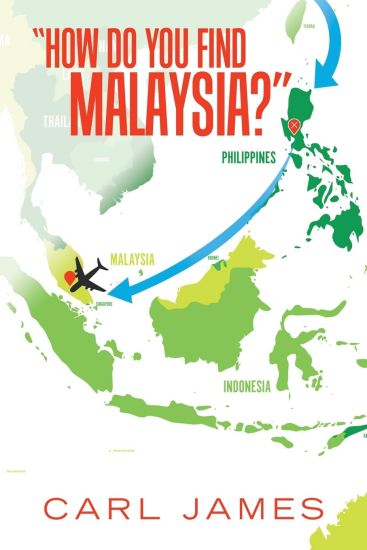
A chance meeting in early 1977 took the author on a forty year journey in South East Asia. This encounter triggered a journey of exploration, learning, and a deep immersion in cultures that challenges one's preconceived notions. This is a story of episodes, many of which may seem fiction, but they really are the absolute truth. Take a ride with the author and get drawn into Malaysian communities that never fail to delight and surprise. Malaysia in the 1970's was a nation in a period of growth, change, and of a rich multi-racial society that that was working feverishly to forge a united nation. As it should be, this book is a joyous appreciation of people from many backgrounds. From trishaw pullers to CEO's, to cooks in hawker centers to movie stars; they formed a tapestry of community. The author volunteered to go to Malaysia and teach high school math. He intended to impact the school and its students in a positive way. The opposite happened. The short time he was in Malaysia affected him deeply, and all for the better. Most of all, this story invites the reader to just come along.
Language Awareness in the Classroom

Language Awareness in the Classroom

Carl James; Peter Garrett; Christopher N. Candlin

Routledge
2016
sidottu
Language Awareness in the Classroom addresses the central educational question of the impact that explicit language knowledge has on learning and language learning. A substantial Introduction defines the issues and key concepts and relates them to contemporary educational policy and practice in Europe and internationally. The papers are organised into four thematic sections: the extent and nature of language awareness in teacher education; school-based language awareness programmes; tertiary education initiatives and modes of evaluation of language awareness programmes.
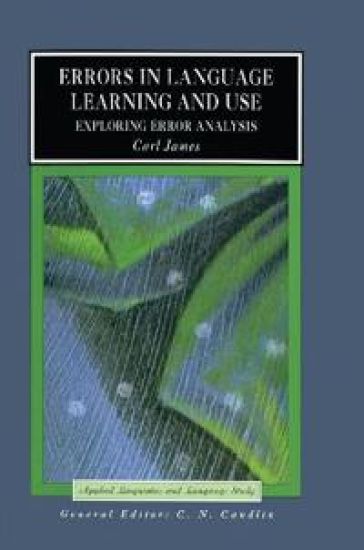
Errors in Language Learning and Use
Errors in Language Learning and Use is an up-to-date introduction and guide to the study of errors in language, and is also a critical survey of previous work. Error Analysis occupies a central position within Applied Linguistics, and seeks to clarify questions such as `Does correctness matter?', `Is it more important to speak fluently and write imaginatively or to communicate one's message?' Carl James provides a scholarly and well-illustrated theoretical and historical background to the field of Error Analysis. The reader is led from definitions of error and related concepts, to categorization of types of linguistic deviance, discussion of error gravities, the utility of teacher correction and towards writing learner profiles. Throughout, the text is guided by considerable practical experience in language education in a range of classroom contexts worldwide.