Kirjojen hintavertailu – 12 903 725 kirjaa ja 27 kauppaa
Kirjailija
Carl Phillips
Kirjat ja teokset yhdessä paikassa: 37 kirjaa, julkaisuja vuosilta 1999–2027, suosituimpiin kuuluu Writing the Self-Elegy. Vertaile teosten hintoja ja tarkista saatavuus suomalaisista kirjakaupoista.
Teresa Leo; Jennifer McCauley; John Chavez; Kasey Jueds; Catherine Kyle; Adam Crittenden; Rigoberto Gonzalez; Kyle McCord; Jane Wong; Naomi Ortiz; Denise Leto; Carol Berg; Kristy Bowen; Floydd Michael Elliot; Jehanne Dubrow; Carl Phillips; Bruce Bond; Kevin Prufer; Rusty Morrison; Sheila Black; Lauren Berry; Anne Kaier; TC Tolbert; Raymond Luczak; Stephanie Heit; Juliet Cook; Tanaya Winder
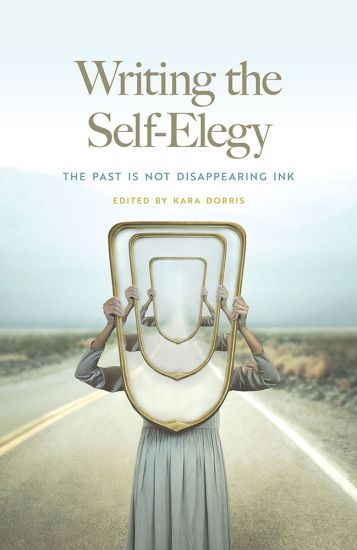
An innovative roadmap to facing our past and present selves Honest, aching, and intimate, self-elegies are unique poems focusing on loss rather than death, mourning versions of the self that are forgotten or that never existed. Within their lyrical frame, multiple selves can coexist—wise and nai¨ve, angry and resigned—along with multiple timelines, each possible path stemming from one small choice that both creates new selves and negates potential selves. Giving voice to pain while complicating personal truths, self-elegies are an ideal poetic form for our time, compelling us to question our close-minded certainties, heal divides, and rethink our relation to others. In Writing the Self-Elegy, poet Kara Dorris introduces us to this prismatic tradition and its potential to forge new worlds. The self-elegies she includes in this anthology mix autobiography and poetics, blending craft with race, gender, sexuality, ability and disability, and place—all of the private and public elements that build individual and social identity. These poems reflect our complicated present while connecting us to our past, acting as lenses for understanding, and defining the self while facilitating reinvention. The twenty-eight poets included in this volume each practice self-elegy differently, realizing the full range of the form. In addition to a short essay that encapsulates the core value of the genre and its structural power, each poet’s contribution concludes with writing prompts that will be an inspiration inside the classroom and out. This is an anthology readers will keep close and share, exemplifying a style of writing that is as playful as it is interrogative and that restores the self in its confrontation with grief.

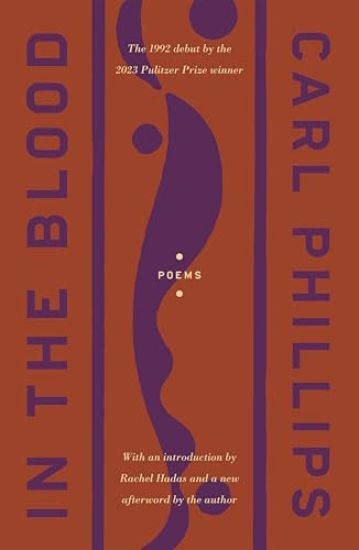
A new edition of the first book of poems from the Pulitzer Prize winner Carl Phillips, with a new afterword. I am no mystic. I know nothing rises that doesn't know how to already. In my ears, only the clubbed foot of routine, no voices, no clatter of dreams: but I saw what I saw Even in his first book of poems, the deep contradictions in Carl Phillips's work are already pronounced. Here is a subtle poet, attuned to the simple honesty of everyday speech, and yet steeped in classical allusion. Life here is quiet, yet burning with anger and unavoidable desire. Offering intimate statements of passion and yet retaining a private withholding, these poems take as their primary subject the body--growing, aging, loving--and spirit that fills the flesh. When In the Blood was selected for the 1992 Morse Poetry Prize, Carl Phillips was a high-school Latin teacher. Thirty years later, he has written seventeen books of poetry, has received the Pulitzer Prize, and is one of the most prominent voices in contemporary poetry.
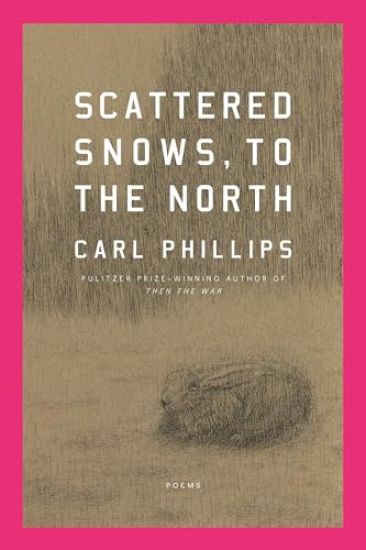
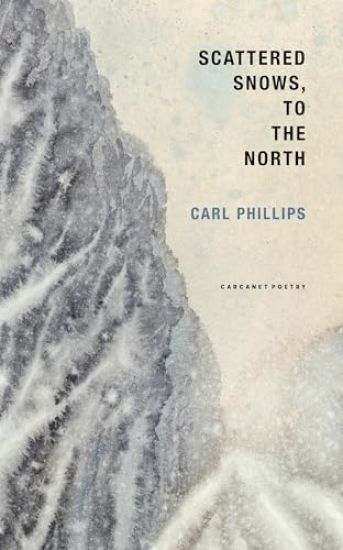
An arresting study of memory, perception, and the human condition, from the Pulitzer Prize winner Carl Phillips. Carl Phillips's Scattered Snows, to the North is a collection about distortion and revelation, about knowing and the unreliability of a knowing that's based on human memory. If the poet's last few books have concerned themselves with power, this one focuses on vulnerability: the usefulness of embracing it and of releasing ourselves from the need to understand our past. If we remember a thing, did it happen? If we believe it didn't, does that make our belief true? In Scattered Snows, to the North, Phillips looks though the window of the past in order to understand the essential sameness of the human condition--"Tears / were tears," mistakes were made and regretted or not regretted, and it mattered until it didn't, the way people live until they don't. And there was also joy. And beauty. "Yet the world's still / so beautiful . . . Sometimes // it is . . ." And it was enough. And it still can be.
Shortlisted for the T. S. Eliot Prize 2024A New York Times Poetry Book of the Year 2024Carl Phillips's Scattered Snows, to the North is a collection about distortion and revelation, about knowing and the unreliability of a knowledge that's rooted in (always unstable) human memory. If the poet's recent books have been engaged with the theme of power, this one focuses on vulnerability: the value of embracing it and thus of releasing ourselves from the compulsion to understand our past. If we remember a thing, did it really happen? If we believe it didn't, does that make our belief true? In Scattered Snows, to the North, Phillips looks through the window of the past in order to understand the essential sameness of the human condition - 'tears were tears', mistakes were made and regretted or not regretted, and it mattered until it didn't, the way people live until they don't. And there was also joy. And beauty. 'Yet the world's still so beautiful... Sometimes it is...' It was enough. And it still can be. Then the War: And Selected Poems 2007-2020, Phillips's first UK publication, won the 2023 Pulitzer Prize for Poetry. His most recent prose book is My Trade Is Mystery: Seven Meditations from a Life in Writing (Yale University Press, 2022). Phillips lives on Cape Cod, Massachusetts.
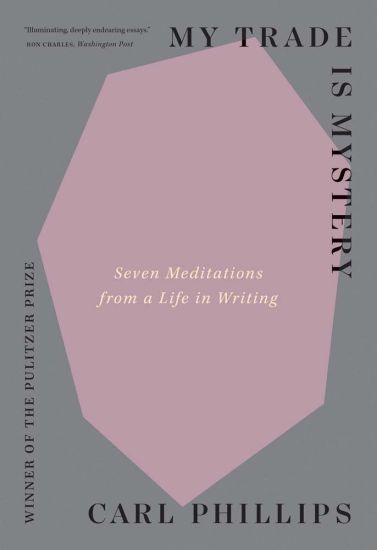
An invaluable companion for any writer seeking to make the writing life a more complex and cooperative venture “Illuminating, deeply endearing essays.”—Ron Charles, Washington Post “A lovely, loving letter to aspiring writers.”—Diego Báez, Booklist In these intimate and eloquent meditations, the award-winning poet Carl Phillips shares lessons he has learned about the writing life, an “apprenticeship to what can never fully be mastered.” Drawing on forty years of teaching and mentoring emerging writers, he weaves his experiences as a poet with the necessary survival skills, including ambition, stamina, silence, politics, practice, audience, and community. In the tradition of Anne Lamott’s Bird by Bird, Rainer Maria Rilke’s Letters to a Young Poet, and Marcus Aurelius’s Meditations, this is an invaluable companion for writers at every stage of their journey. Phillips’s book serves as a partner in speculation and an invitation to embrace mystery.
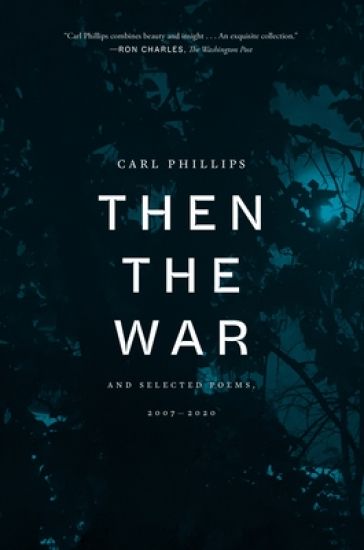
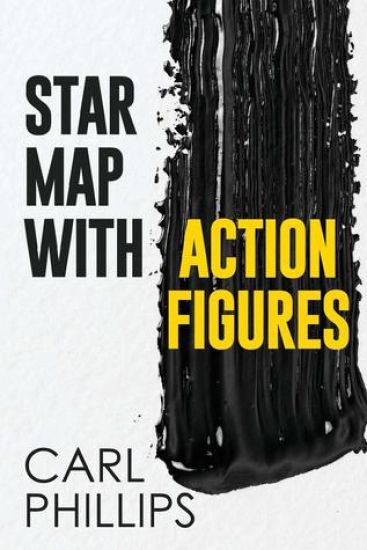
WINNER OF THE 2023 PULITZER PRIZE IN POETRYA new collection of poems from one of America's most essential, celebrated, and enduring poets, Carl Phillips's Then the War I'm a song, changing. I'm a light rain falling through a vast darkness toward a different darkness. Carl Phillips has aptly described his work as an "ongoing quest"; Then the War is the next step in that meaningful process of self-discovery for both the poet and his reader. The new poems, written in a time of rising racial conflict in the United States, with its attendant violence and uncertainty, find Phillips entering deeper into the landscape he has made his own: a forest of intimacy, queerness, and moral inquiry, where the farther we go, the more difficult it is to remember why or where we started. Then the War includes a generous selection of Phillips's work from the previous thirteen years, as well as his recent lyric prose memoir, "Among the Trees," and his chapbook, Star Map with Action Figures. Ultimately, Phillips refuses pessimism, arguing for tenderness and human connection as profound forces for revolution and conjuring a spell against indifference and the easy escapes of nostalgia. Then the War is luminous testimony to the power of self-reckoning and to Carl Phillips as an ever-changing, necessary voice in contemporary poetry.
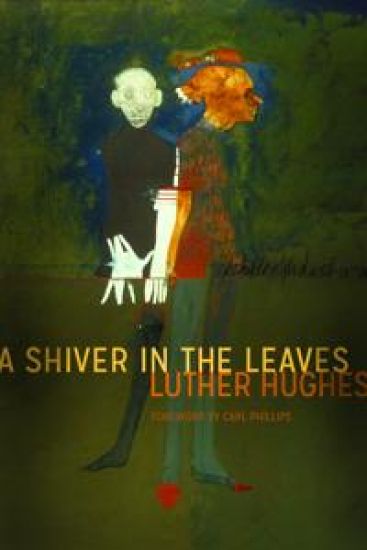
Nestled against the backdrop of Seattle's flora, fauna, and cityscape, Luther Hughes' debut poetry collection wrestles with the interior and exterior symbiosis of a gay Black man finding refuge from the threat of depression and death through love and desire. Hughes draws readers into a Seattle that is heavily entrenched in violent anti-Blackness, and full of vulnerable and personal encounters from both the speaker’s past and present. With reverent and careful imagery, Hughes fashions deeply saturated, tender vignettes that reckon relationships between family and friends, lovers, nature, and the police-state. A Shiver in the Leaves is stunningly cinematic in its layered portrayal of the never-ending dualities of a queer Black poet’s life in the city. Hughes's interrogation of selfhood renders a sharply intimate and viscerally powerful reimagining of what it means to be alive in a body, and what it can mean to live.
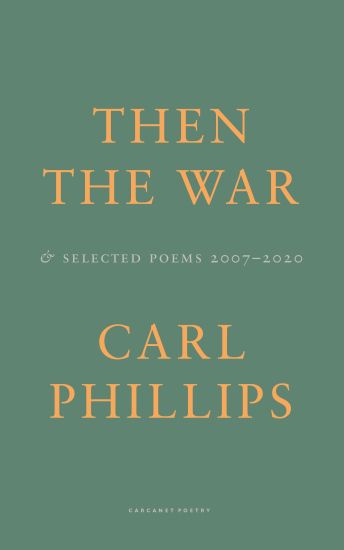
The first UK publication from this acclaimed US poet, one of the outstanding lyric poets of our time. Winner of the Pulitzer Prize for Poetry 2023. Then the War and Selected Poems, 2007-2020 is two books in one: a representative selection from seven of Carl Phillips's innovative earlier collections and a complete new book of poems, providing a powerful introduction to European readers. A seemingly gentle but resolute attention to the things of this world evokes the joyful and painful elements in the contemporary human condition, characterised by loneliness and an unquenchable thirst for love. He is a poet who knows the rules and bends or breaks them, a master of syntax and prosody, avoiding convention and pursuing the lines of desire. In a starred review of this book, Publishers Weekly said, 'These lyrically rich, insightful poems are full of palpable aching [...] and a human urge to understand. This remarkable compendium is a testament to the spirit of Phillips's work.'
WINNER OF THE 2023 PULITZER PRIZE IN POETRYA new collection of poems from one of America's most essential, celebrated, and enduring poets, Carl Phillips's Then the War I'm a song, changing. I'm a light rain falling through a vast darkness toward a different darkness. Carl Phillips has aptly described his work as an "ongoing quest"; Then the War is the next step in that meaningful process of self-discovery for both the poet and his reader. The new poems, written in a time of rising racial conflict in the United States, with its attendant violence and uncertainty, find Phillips entering deeper into the landscape he has made his own: a forest of intimacy, queerness, and moral inquiry, where the farther we go, the more difficult it is to remember why or where we started. Then the War includes a generous selection of Phillips's work from the previous thirteen years, as well as his recent lyric prose memoir, "Among the Trees," and his chapbook, Star Map with Action Figures. Ultimately, Phillips refuses pessimism, arguing for tenderness and human connection as profound forces for revolution and conjuring a spell against indifference and the easy escapes of nostalgia. Then the War is luminous testimony to the power of self-reckoning and to Carl Phillips as an ever-changing, necessary voice in contemporary poetry.
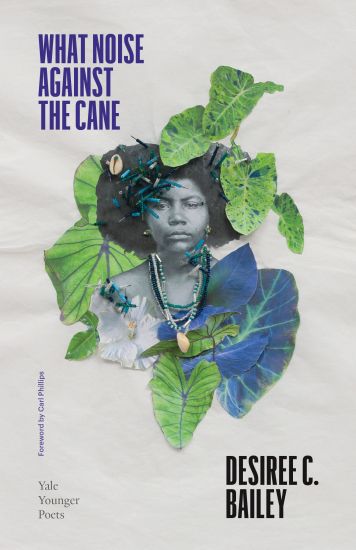
Finalist for the 2021 National Book Award for Poetry, this Yale Series of Younger Poets volume is a lyrical and polyvocal exploration of what it means to fight for yourself “Bailey invites us to see what twenty-first-century life is like for a young woman of the Black diaspora in the long wake of a history of slavery, brutality, and struggling for freedoms bodily and psychological.”—Carl Phillips, from the Foreword “Desiree C. Bailey sings true in her debut. Wherever this voice goes a Caribbean sun travels with it transfiguring what a maroon might overhear—a call awaiting response.”—Yusef Komunyakaa The 115th volume of the Yale Series of Younger Poets, What Noise Against the Cane is a lyric quest for belonging and freedom, weaving political resistance, Caribbean folklore, immigration, and the realities of Black life in America. Desiree C. Bailey begins by reworking the epic in an oceanic narrative of bondage and liberation in the midst of the Haitian Revolution. The poems move into the contemporary Black diaspora, probing the mythologies of home, belief, nation, and womanhood. Series judge Carl Phillips observes that Bailey’s “poems argue for hope and faith equally. . . . These are powerful poems, indeed, and they make a persuasive argument for the transformative powers of steady defiance.”
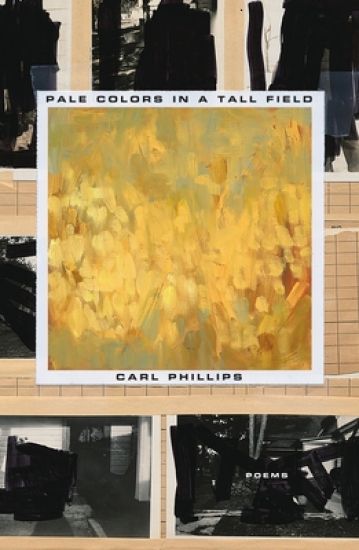
A powerful, inventive collection from one of America's most critically acclaimed poets. Carl Phillips's new poetry collection, Pale Colors in a Tall Field, is a meditation on the intimacies of thought and body as forms of resistance. The poems are both timeless and timely, asking how we can ever truly know ourselves in the face of our own remembering and inevitable forgetting. Here, the poems metaphorically argue that memory is made up of various colors, with those most prominent moments in a life seeming more vivid, though the paler colors are never truly forgotten. The poems in Pale Colors in a Tall Field approach their points of view kaleidoscopically, enacting the self's multiplicity and the difficult shifts required as our lives, in turn, shift. This is one of Phillips's most tender, dynamic, and startling books yet.
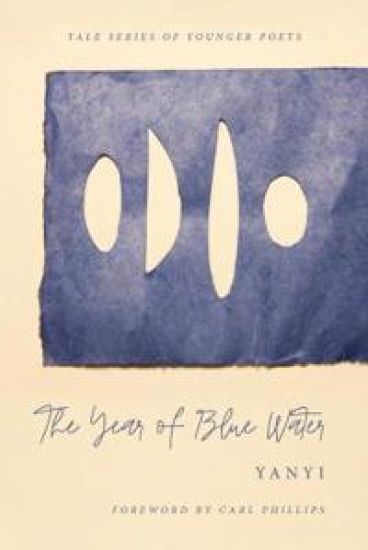
Winner of the 2018 Yale Series of Younger Poets prize“Weaves together descriptions of experiences of immigration as a Chinese-American and of racism, mental wellness, and gender from a queer and trans perspective.”—Publishers Weekly2020 Lambda Literary Awards finalist transgender poetry category How can a search for self-knowledge reveal art as a site of community? Yanyi’s arresting and straightforward poems weave experiences of immigration as a Chinese American, of racism, of mental wellness, and of gender from a queer and trans perspective. Between the contrast of high lyric and direct prose poems, Yanyi invites the reader to consider how to speak with multiple identities through trauma, transition, and ordinary life. These poems constitute an artifact of a groundbreaking and original author whose work reflects a long journey self-guided through tarot, therapy, and the arts. Foregrounding the power of friendship, Yanyi’s poems converse with friends as much as with artists both living and dead, from Agnes Martin to Maggie Nelson to Robin Coste Lewis. This instructive collection gives voice to the multifaceted humanity within all of us and inspires attention, clarity, and hope through art-making and community.
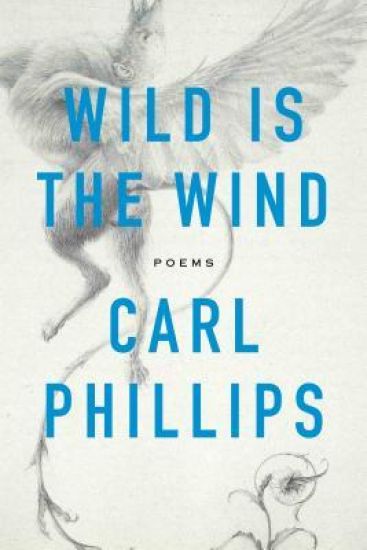
“What has restlessness been for?” In Wild Is the Wind, Carl Phillips reflects on love as depicted in the jazz standard for which the book is named - love that is at once restless, reckless, and yet desired for its potential to bring stability. In the process, he pitches estrangement against communion, examines the past as history versus the past as memory, and reflects on the past’s capacity both to teach and to mislead us - and also to make us hesitate in the face of love, given the loss and damage that are, often enough, love’s fallout. How “to say no to despair”? How to take perhaps that greatest risk, the risk of believing in what offers no guarantee? These poems that, in their wedding of the philosophical, meditative, and lyric modes, mark a new stage in his remarkable work, stand as further proof that “if Carl Phillips had not come onto the scene, we would have needed to invent him. His idiosyncratic style, his innovative method, and his unique voice are essential steps in the evolution of the craft” (Judith Kitchen, The Georgia Review).
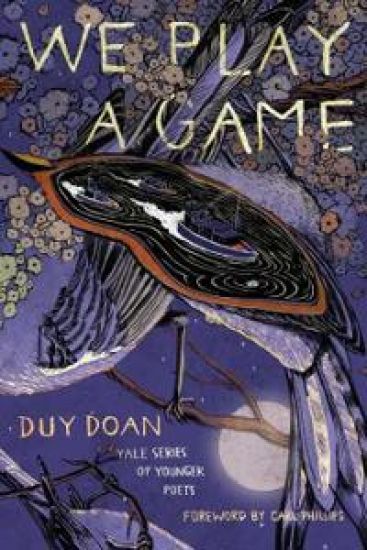
The 112th volume of the Yale Series of Younger Poets explores the Vietnamese-American experience Duy Doan’s striking debut reveals the wide resonance of the collection’s unassuming title, in poems that explore—now with abundant humor, now with a deeply felt reserve—the ambiguities and tensions that mark our effort to know our histories, our loved ones, and ourselves. These are poems that draw from Doan’s experience as a Vietnamese-American while at the same time making a case for—and masterfully playing with—the fluidity of identity, history, and language. Nothing is alien to these poems: the Saigon of a mother’s dirge, the footballer Zinedine Zidane, an owl that “talks to his other self in the well”—all have a place in Doan’s far-reaching and intimately human art.
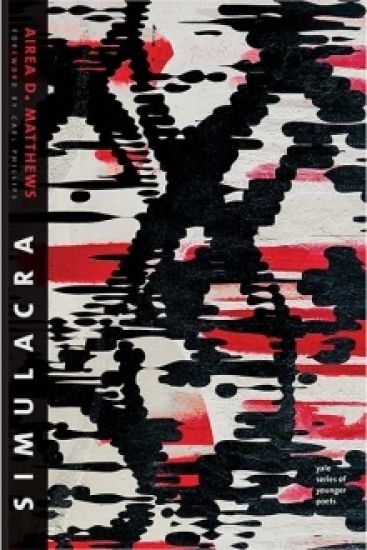
Winner of the 2016 Yale Series of Younger Poets prize A fresh and rebellious poetic voice, Airea D. Matthews debuts in the acclaimed series that showcases the work of exciting and innovative young American poets. Matthews’s superb collection explores the topic of want and desire with power, insight, and intense emotion. Her poems cross historical boundaries and speak emphatically from a racialized America, where the trajectories of joy and exploitation, striving and thwarting, violence and celebration are constrained by differentials of privilege and contemporary modes of communication. In his foreword, series judge Carl Phillips calls this book “rollicking, destabilizing, at once intellectually sly and piercing and finally poignant.” This is poetry that breaks new literary ground, inspiring readers to think differently about what poems can and should do in a new media society where imaginations are laid bare and there is no thought too provocative to send out into the world.
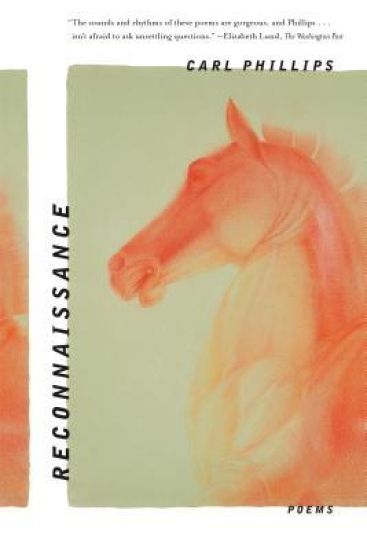
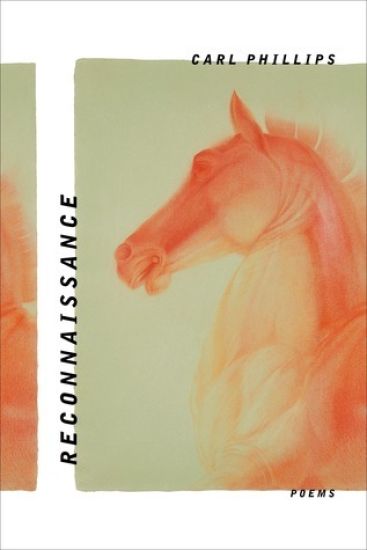
A powerful, inventive collection from one of America's most respected poets . . . There'sa trembling inside the both of us, there's a trembling, inside us both The territory of Reconnaissance is one where morals threaten to become merely "what the light falls through," "suffering seems] in fact for nothing," and maybe "all we do is all we can do." In the face of this, Carl Phillips, reconsidering and unraveling what we think we know, maps out the contours of a world in revision, where truth lies captured at one moment and at the next goes free, transformed. These are poems of searing beauty, lit by hope and shadowed by it, from a poet whose work "reinstates the possibility of finding meaning in a world that is forever ready to revoke the sources of meaning in our lives" (Jonathan Farmer, Slate).
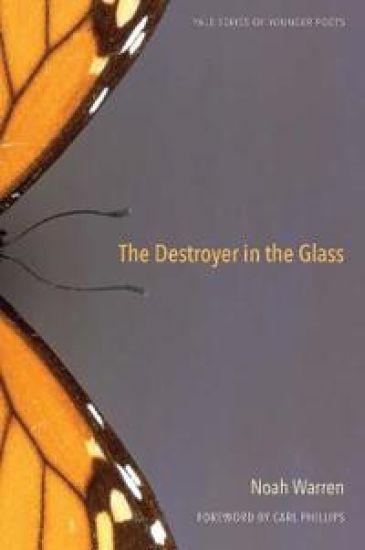
Winner of the 2015 Yale Series of Younger Poets prize Noah Warren’s brilliant collection of poetry, The Destroyer in the Glass, is the 110th recipient of the Yale Series of Younger Poets prize, the oldest annual literary award in the United States. Warren explores universal themes of isolation and the desire for human connection in a series of tightly crystallized poems that question the damage we have done—to ourselves and to others—in the pursuit of knowledge and a stable idea of who we are. Balancing a tendency toward form, rhyme, and allusion with a freer, expressive style, this exceptional young poet charts the development of the self through, by, and in language. Since 1919, the Yale Series of Younger Poets has launched the careers of poets as esteemed and varied as Adrienne Rich, John Ashbery, and Robert Hass. Judge Carl Phillips praises The Destroyer in the Glass for “its wedding of intellect, heart, sly humor, and formal dexterity, all in the service of negotiating those moments when an impulse toward communion with others competes with an instinct for a more isolated self.”
A powerful, inventive collection from one of America's most respected poets There'sa trembling inside the both of us, there's a trembling, inside us both. The territory of Reconnaissance is one where morals threaten to become merely "what the light falls through," "suffering seems] in fact for nothing," and "all we do is maybe all we can do." In the face of this, Carl Phillips, reconsidering and unraveling what we think we know, maps out the contours of a world in revision, where truth lies captured at one moment and at the next goes free, transformed. These are poems of searing beauty, lit by hope and shadowed by it, from a poet whose work "reinstates the possibility of finding meaning in a world that is forever ready to revoke the sources of meaning in our lives" (Jonathan Farmer, Slate).