Kirjojen hintavertailu – 12 859 818 kirjaa ja 27 kauppaa

Kirjailija

Carl Raschke

Kirjat ja teokset yhdessä paikassa: 9 kirjaa, julkaisuja vuosilta 1978–2026, suosituimpiin kuuluu Postmodern Theology. Vertaile teosten hintoja ja tarkista saatavuus suomalaisista kirjakaupoista.

9 kirjaa

Kirjojen julkaisuvuodet: 1978–2026.

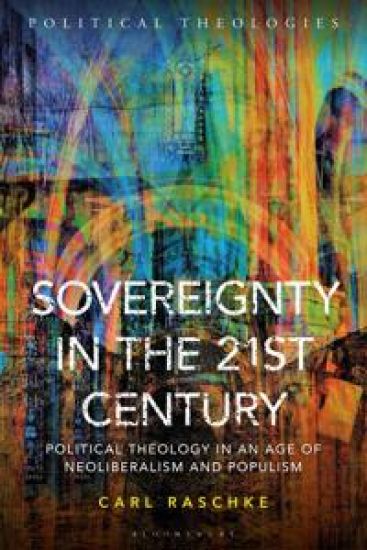
Sovereignty in the 21st Century

Sovereignty in the 21st Century

Carl Raschke

BLOOMSBURY PUBLISHING PLC
2026
pokkari
When God is "dead" and governments themselves are increasingly subject to the power of global corporations, massive movements of peoples, transnational political upheavals, and ecological disasters, what does sovereignty mean for the 21st century? Sovereignty in the 21st Century is Carl Raschke's deep theoretical dive into the meaning of sovereignty in both its historical and contemporary settings, showing how the idea can be expanded beyond politics and offer emancipatory strategies for previously marginalized peoples. Picking up Carl Schmitt's idea of sovereignty's 'divine' associations making it an implicitly theological concern, Raschke explains how political and religious thought have always been intertwined. These intertwined strands find their relevance today in debates around class, race and domination, making the question of sovereignty not just a political but a social and economic one. Bringing to light the ways in which great transnational conflicts today are not between authoritarianism and democracy but between neoliberalism and populism, this book brings us closer to a profound understanding of what we truly mean by democracy, or 'popular' sovereignty in the 21st-century.
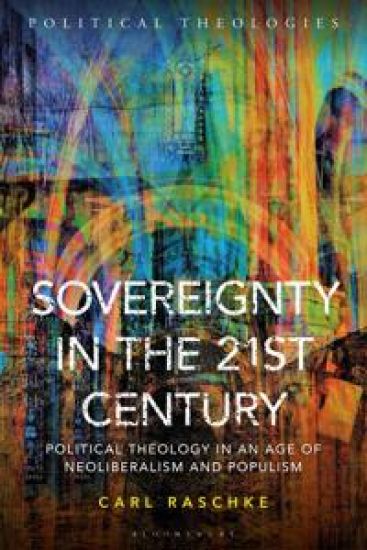
Sovereignty in the 21st Century

Sovereignty in the 21st Century

Carl Raschke

BLOOMSBURY PUBLISHING PLC
2024
sidottu
When God is “dead” and governments themselves are increasingly subject to the power of global corporations, massive movements of peoples, transnational political upheavals, and ecological disasters, what does sovereignty mean for the 21st century? Sovereignty in the 21st Century is Carl Raschke’s deep theoretical dive into the meaning of sovereignty in both its historical and contemporary settings, showing how the idea can be expanded beyond politics and offer emancipatory strategies for previously marginalized peoples. Picking up Carl Schmitt’s idea of sovereignty’s ‘divine’ associations making it an implicitly theological concern, Raschke explains how political and religious thought have always been intertwined. These intertwined strands find their relevance today in debates around class, race and domination, making the question of sovereignty not just a political but a social and economic one. Bringing to light the ways in which great transnational conflicts today are not between authoritarianism and democracy but between neoliberalism and populism, this book brings us closer to a profound understanding of what we truly mean by democracy, or ‘popular’ sovereignty in the 21st-century.
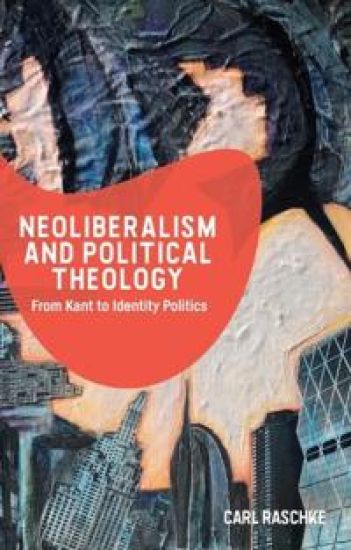
Neoliberalism and Political Theology

Neoliberalism and Political Theology

Carl Raschke

Edinburgh University Press
2021
nidottu
Neoliberalism has become the operative buzzword among pundits and academics to characterise an increasingly dysfunctional global political economy. It is often wrongly identified exclusively with free market fundamentalism and illiberal types of cultural conservatism. Combining penetrating argument and broad-ranging scholarship, Carl Raschke shows what the term really means, how it evolved and why it has been so misunderstood. He lays out how the present new world disorder, signalled by the election of Trump and Brexit, derives less from the ascendancy of reactionary forcesand morefrom the implosion of the post-Cold War effort to establish a progressive international moral and political order for the cynical benefit of a new cosmopolitan knowledge class, mimicking the so-called civilising mission of 19th-century European colonialists.
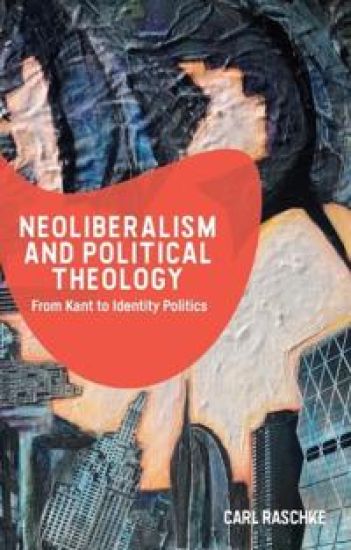
Neoliberalism and Political Theology

Neoliberalism and Political Theology

Carl Raschke

Edinburgh University Press
2019
sidottu
Neoliberalism has become the operative buzzword among pundits and academics to characterise an increasingly dysfunctional global political economy. It is often wrongly identified exclusively with free market fundamentalism and illiberal types of cultural conservatism. Combining penetrating argument and broad-ranging scholarship, Carl Raschke shows what the term really means, how it evolved and why it has been so misunderstood. He lays out how the present new world disorder, signalled by the election of Trump and Brexit, derives less from the ascendancy of reactionary forcesand morefrom the implosion of the post-Cold War effort to establish a progressive international moral and political order for the cynical benefit of a new cosmopolitan knowledge class, mimicking the so-called civilising mission of 19th-century European colonialists.
Christian Political Theology in an Age of Discontent

Christian Political Theology in an Age of Discontent

Jonathan Cole; Carl Raschke

Wipf Stock Publishers
2019
pokkari
At a moment in which interest in political theology is rising, acceptance of a public role for religion is declining, and cynicism regarding both political and religious institutions is overflowing, this book investigates the possibilities and constraints of a Christian political theology that can meaningfully mediate Scripture, doctrine, and political reality. In critical dialogue with political theologians and political philosophers past and present, we explore the origins, meaning, and purpose of Christian political theology in an age of growing discontent with the once-impregnable liberal democratic order of yesteryear. Approaching politics as both art and science, this book lays a challenge at the feet of political theologians to offer a theological account of politics that is genuinely illuminating of political reality and efficacious for the faithful who seek to operate within it. ""Jonathan Cole offers a powerful and fresh account of the importance and indispensability of political theology. Cole challenges simplistic notions of what it means to do political theology and he argues that it is time for political theology to grow up and become a real discipline. The essays in this book offer a creative, illuminating, and stimulating account of the issues and challenges facing political theology today. A major contribution from a formidable and exciting scholar."" --Stephen Pickard, Director, Centre for Public and Contextual Theology, Charles Sturt University Jonathan Cole is a research fellow of the Centre for Public and Contextual Theology, Charles Sturt University, Canberra, Australia. He is the director of AIOCS Press, a contributing editor to The New Polis, and a lecturer at the Lachlan Macquarie Institute. He previously spent fourteen years working for the Australian government in a range of departments and agencies, including as a senior terrorism analyst at the Office of National Assessments (2010-14).
Christian Political Theology in an Age of Discontent

Christian Political Theology in an Age of Discontent

Jonathan Cole; Carl Raschke

Wipf Stock Publishers
2019
sidottu
At a moment in which interest in political theology is rising, acceptance of a public role for religion is declining, and cynicism regarding both political and religious institutions is overflowing, this book investigates the possibilities and constraints of a Christian political theology that can meaningfully mediate Scripture, doctrine, and political reality. In critical dialogue with political theologians and political philosophers past and present, we explore the origins, meaning, and purpose of Christian political theology in an age of growing discontent with the once-impregnable liberal democratic order of yesteryear. Approaching politics as both art and science, this book lays a challenge at the feet of political theologians to offer a theological account of politics that is genuinely illuminating of political reality and efficacious for the faithful who seek to operate within it. ""Jonathan Cole offers a powerful and fresh account of the importance and indispensability of political theology. Cole challenges simplistic notions of what it means to do political theology and he argues that it is time for political theology to grow up and become a real discipline. The essays in this book offer a creative, illuminating, and stimulating account of the issues and challenges facing political theology today. A major contribution from a formidable and exciting scholar."" --Stephen Pickard, Director, Centre for Public and Contextual Theology, Charles Sturt University Jonathan Cole is a research fellow of the Centre for Public and Contextual Theology, Charles Sturt University, Canberra, Australia. He is the director of AIOCS Press, a contributing editor to The New Polis, and a lecturer at the Lachlan Macquarie Institute. He previously spent fourteen years working for the Australian government in a range of departments and agencies, including as a senior terrorism analyst at the Office of National Assessments (2010-14).
Postmodern Theology

Postmodern Theology

Carl Raschke

Cascade Books
2017
sidottu
Postmodern Theology consists in a sharp-edged retrospective and reflection on the forty-year history of the most important movement in contemporary religious thought that is only now passing from the scene. The author, Dr. Carl Raschke, is generally credited with having sparked the movement, even if he did not always happen to be its leading spokesperson. Not only has a comprehensive survey of postmodern theology in all its different phases and complexity not been published prior to the appearance of this book, but it is even more remarkable for someone who both ""launched"" it and had a central role in shepherding it along to offer what may be termed a ""movement memoir."" Postmodern Theology surveys and summarizes the major figures and trends that have given currency to such familiar expressions as ""deconstruction,"" ""deconstructive theology,"" ""radical theology,"" ""a/theology,"" ""God is dead,"" and of course, ""postmodernism"" itself. Dr. Raschke also contextualizes the emergence of these catchy phrases from a frothy soup of new intellectual theories and philosophical innovations, which were international in scope but customized for both academic and popular religious writers--mainly in Britain and America--from the late 1960s onward. ""Widely recognized as an inaugural voice in postmodern theology, Carl A. Raschke offers herein a sophisticated, and decidedly personal, account of the contours of the movement. Recounting the influence, and assessing the arguments, of such thinkers as Altizer, Derrida, Levinas, and Caputo, this book is as compellingly biographical as it is substantively rigorous. Raschke is necessary reading for all who are curious not only about the history of postmodern theology, but also invested in shaping its future."" --J. Aaron Simmons, Associate Professor of Philosophy, Furman University "". . . carefully charts the history of postmodernism's profound epistemological, metaphysical, and ethico-political influence on contemporary theology. The detailed expositions of philosophical and theological figures and movements relevant to the rise and dominance of poststructuralist methodologies beginning in the 1960s provides a much-needed critical context for today's 'post-post-modern' theological concerns."" --Victor E. Taylor, author of Religion after Postmodernism: Retheorizing Myth and Literature "" . . . an extremely readable introduction to 'Postmodern Theology.' Raschke critically, generously, and humorously presents the most important antecedents, developments, and consequences of this influential theological movement. It directly confronts thinkers like Caputo, Altizer, and Mark Taylor. Parallel to this Raschke offers a clear and in-depth introduction to Derrida and Deleuze's philosophies, which not only made postmodern theology possible, but have also shaped the course of contemporary theological and political discourse."" --Kurt Appel, Professor for Fundamental Theology, University of Vienna "". . . a concise, scintillatingly incisive, and richly informative introduction to the genealogy, present status, and future prospects of what insiders prefer to call Radical Theology, but outsiders mistakenly call Postmodern Theology, by one of its early pioneers and most sustained and innovative proponents, written with the flair, wit, honesty, and scholarly shorthand Carl Raschke is so much appreciated for. The title is already a play on this irony. It is a pocket-sized, reliable compass well-suited for a journey which can easily go astray and end up in muddy waters of confusion and misapprehension. What the project of a Radical Theology is all about is explained in vivid clarity. So also in what sense it is postmodern and in what sense it is a critique of shallow postmodernism."" --WL van der Merwe, chair in Philosophy of Religion, Vrije Universiteit Carl Raschke is Professor of Religious Studies at the University of Denver. He is an internationally renowned philosopher and theolo

Postmodern Theology

Postmodern Theology

Carl Raschke

Cascade Books
2017
pokkari
Postmodern Theology consists in a sharp-edged retrospective and reflection on the forty-year history of the most important movement in contemporary religious thought that is only now passing from the scene. The author, Dr. Carl Raschke, is generally credited with having sparked the movement, even if he did not always happen to be its leading spokesperson. Not only has a comprehensive survey of postmodern theology in all its different phases and complexity not been published prior to the appearance of this book, but it is even more remarkable for someone who both ""launched"" it and had a central role in shepherding it along to offer what may be termed a ""movement memoir."" Postmodern Theology surveys and summarizes the major figures and trends that have given currency to such familiar expressions as ""deconstruction,"" ""deconstructive theology,"" ""radical theology,"" ""a/theology,"" ""God is dead,"" and of course, ""postmodernism"" itself. Dr. Raschke also contextualizes the emergence of these catchy phrases from a frothy soup of new intellectual theories and philosophical innovations, which were international in scope but customized for both academic and popular religious writers--mainly in Britain and America--from the late 1960s onward. ""Widely recognized as an inaugural voice in postmodern theology, Carl A. Raschke offers herein a sophisticated, and decidedly personal, account of the contours of the movement. Recounting the influence, and assessing the arguments, of such thinkers as Altizer, Derrida, Levinas, and Caputo, this book is as compellingly biographical as it is substantively rigorous. Raschke is necessary reading for all who are curious not only about the history of postmodern theology, but also invested in shaping its future."" --J. Aaron Simmons, Associate Professor of Philosophy, Furman University "". . . carefully charts the history of postmodernism's profound epistemological, metaphysical, and ethico-political influence on contemporary theology. The detailed expositions of philosophical and theological figures and movements relevant to the rise and dominance of poststructuralist methodologies beginning in the 1960s provides a much-needed critical context for today's 'post-post-modern' theological concerns."" --Victor E. Taylor, author of Religion after Postmodernism: Retheorizing Myth and Literature "" . . . an extremely readable introduction to 'Postmodern Theology.' Raschke critically, generously, and humorously presents the most important antecedents, developments, and consequences of this influential theological movement. It directly confronts thinkers like Caputo, Altizer, and Mark Taylor. Parallel to this Raschke offers a clear and in-depth introduction to Derrida and Deleuze's philosophies, which not only made postmodern theology possible, but have also shaped the course of contemporary theological and political discourse."" --Kurt Appel, Professor for Fundamental Theology, University of Vienna "". . . a concise, scintillatingly incisive, and richly informative introduction to the genealogy, present status, and future prospects of what insiders prefer to call Radical Theology, but outsiders mistakenly call Postmodern Theology, by one of its early pioneers and most sustained and innovative proponents, written with the flair, wit, honesty, and scholarly shorthand Carl Raschke is so much appreciated for. The title is already a play on this irony. It is a pocket-sized, reliable compass well-suited for a journey which can easily go astray and end up in muddy waters of confusion and misapprehension. What the project of a Radical Theology is all about is explained in vivid clarity. So also in what sense it is postmodern and in what sense it is a critique of shallow postmodernism."" --WL van der Merwe, chair in Philosophy of Religion, Vrije Universiteit Carl Raschke is Professor of Religious Studies at the University of Denver. He is an internationally renowned philosopher and theolo