Kirjailija
Carl Rhodes
Kirjat ja teokset yhdessä paikassa: 22 kirjaa, julkaisuja vuosilta 2000–2026, suosituimpiin kuuluu The Good Business School. Vertaile teosten hintoja ja tarkista saatavuus suomalaisista kirjakaupoista.
22 kirjaa
Kirjojen julkaisuvuodet: 2000–2026.
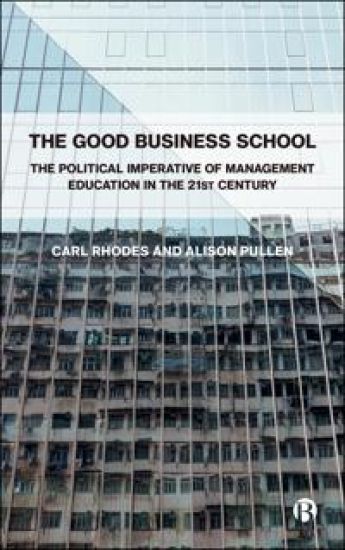
What makes a ‘good’ business school amid culture wars, inequality, and rising right-wing populism? This book argues that business schools cannot hide behind technocratic or scholarly neutrality. As social impact and stakeholder capitalism moved from boardrooms into lecture theatres, they became lightning rods in political battles over expertise, identity, and power. From politicising ‘wokeness’ to state intrusion into academic freedom, the struggle is no longer rigour versus relevance but what kind of institution business schools choose to be. This book calls for a democratically engaged business school grounded in public value, committed to intellectual pluralism, and oriented toward shared prosperity.
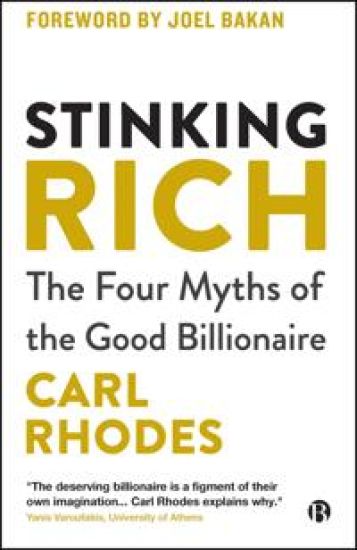
Billionaires are an ultra-elite social class whose numbers are growing alongside their obscene wealth while others struggle, suffer or even die. They represent a scourge of economic inequality, but how do they get away with it? A set of dangerous and deceptive inter-connected myths portrays them as a ‘force for good’: - the ‘heroic billionaire’ asserts they are gallant protagonists of the American Dream gone global - the ‘generous billionaire’ pretends that their philanthropic efforts and personal good deeds should be lauded for generosity and benevolence - the ‘meritorious billionaire’ insists that extreme wealth is a worthy reward for individual hard work and talent - the ‘vigilante billionaire’ claims to be able to solve the world’s biggest problems where bureaucrats and politicians have failed. Each of these myths enables billionaire wealth and power to set us back to old-style feudalism and plutocracy. Offering a trenchant critique, this incisive book testifies to the growing international political will to take concrete actions in supporting economic justice and democratic equality.
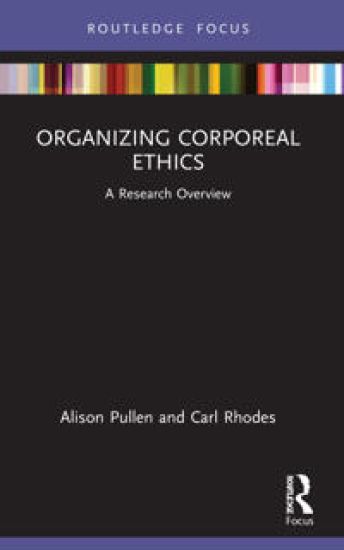
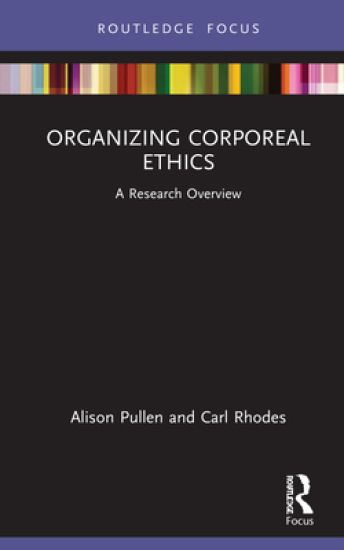
This book explores the meaning and practice of corporeal ethics in organized life. Corporeal ethics originates from an emergent, embodied, and affective experience with others that precedes and exceeds those rational schemes that seek to regulate it. Pullen and Rhodes show how corporeal ethics is fundamentally based in embodied affect, yet practically materialized in ethico-political acts of positive resistance and networked solidarity. Considering ethics in this way turns our attention to how people’s conduct and interactions might be ethically informed in the context of, and in resistance to, the masculine rationality of dominating organizational power relations in which they find themselves. Pullen and Rhodes outline the ways in which ethically grounded resistance and critique can and do challenge self-interested organizational power and privilege. They account for how corporeal ethics serves to destabilize the ways that organizations reproduce practices that negate difference and result in oppression, discrimination, and inequality. The book is suitable for students, scholars, and citizens who want to learn more about the radical possibilities of how political actions arising from corporeal ethics can strive for equality and justice.
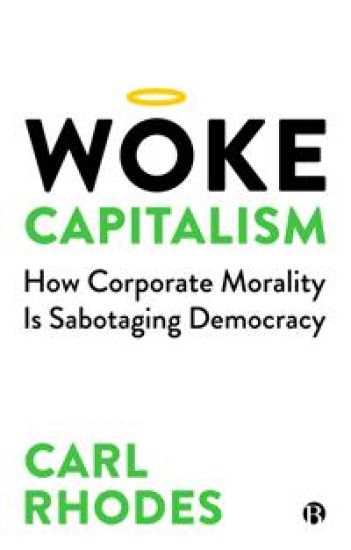
SHORTLISTED FOR THE BUSINESS BOOK AWARDS 2022 Does ‘woke capitalism’ improve capitalism’s image or does it threaten the future of democracy? From Nike’s support for Colin Kaepernick, to Gillette’s engagement with the toxic masculinity debate, the 21st century has seen a sharp increase in corporations taking over public morality, a phenomenon which has come to be known as ‘woke capitalism’. Carl Rhodes takes us on a lively and fascinating history of woke capitalism – from 1950s corporate social responsibility, through 1980s neoliberalism, tracing it alongside the adoption and mutation of the term ‘woke’ from Black American culture – and brings us right up to current-day debates. By examining the political causes that woke capitalism has co-opted, and the social causes that it has not, he argues that this surreptitious extension of capitalism has serious implications for us all.
This book explores the meaning and practice of corporeal ethics in organized life. Corporeal ethics originates from an emergent, embodied, and affective experience with others that precedes and exceeds those rational schemes that seek to regulate it. Pullen and Rhodes show how corporeal ethics is fundamentally based in embodied affect, yet practically materialized in ethico-political acts of positive resistance and networked solidarity. Considering ethics in this way turns our attention to how people’s conduct and interactions might be ethically informed in the context of, and in resistance to, the masculine rationality of dominating organizational power relations in which they find themselves. Pullen and Rhodes outline the ways in which ethically grounded resistance and critique can and do challenge self-interested organizational power and privilege. They account for how corporeal ethics serves to destabilize the ways that organizations reproduce practices that negate difference and result in oppression, discrimination, and inequality. The book is suitable for students, scholars, and citizens who want to learn more about the radical possibilities of how political actions arising from corporeal ethics can strive for equality and justice.
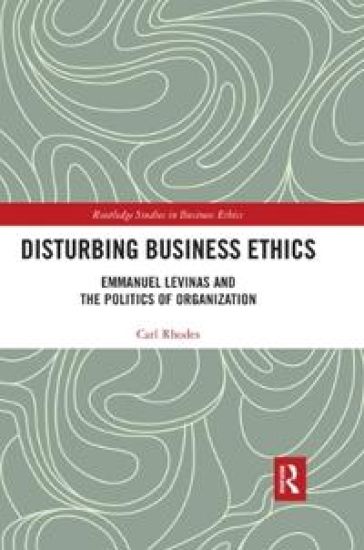
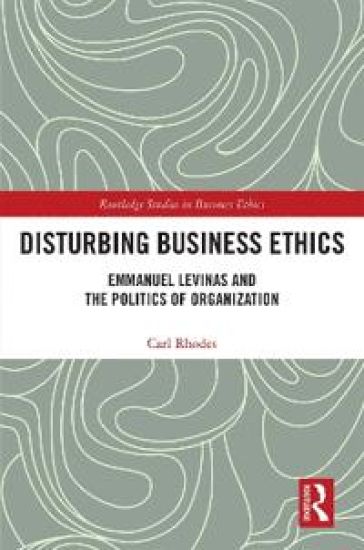
21st century Western neoliberalism has seen the transformation of self-interest from an economic imperative to a centrally constitutive part of dominant modes of subjective existence. Against this celebration of competitive individualism, Emmanuel Levinas’ philosophy stands as a haunting reminder of an ethics that passively disturbs the self from its egoistic slumber, awakening it to the incessant demands of the other. Ethics stands as an anxious affective state of being where one is held to account by others, each one demanding care, attention and respect. Focussing on business activities and organizations, this book explores how this ethical demand of being for the other becomes translated, in a necessarily impure way, into political action, contestation and resistance. Such a response to ethics invokes a disturbance of organizational order, including an order that might itself be labelled ‘ethical’. On these grounds, the book offers an explication of an ethics for organizations which disturbs the selfishness of neoliberal morality, and can inform a democratic politics rested on a genuine concern for the other and for justice. Disturbing Business Ethics: Emmanuel Levinas and the Politics of Organization offers an unconventional and enlightening approach to ethical thinking and practice in politics and organisations, and will be of interest to students of business, management, leadership, political science and organizational theory.

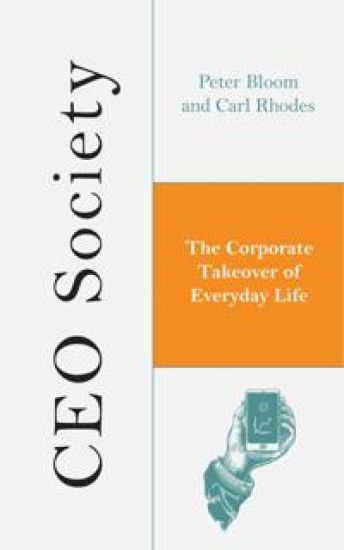
Chief Executive Officers (CEOs) have become the cultural icons of the 21st century. Figures like Steve Jobs and Mark Zuckerberg are held up as role models who epitomise the modern pursuit of innovation, wealth and success. We now live, Bloom and Rhodes argue, in a ‘CEO society’ – a society where corporate leadership has become the model for transforming not just business, but all spheres of life, where everyone from politicians to jobseekers to even those seeking love are expected to imitate the qualities of the lionized corporate executive. But why, in the wake of the failings exposed by the 2008 financial crisis, does the corporate ideal continue to exert such a grip on popular attitudes? In this insightful new book, Bloom and Rhodes examine the rise of the CEO society, and how it has started to transform governments, culture and the economy. This influence, they argue, holds troubling implications for the future of democracy - as evidenced by the disturbing political rise of Donald Trump in the US - and for our society as a whole.
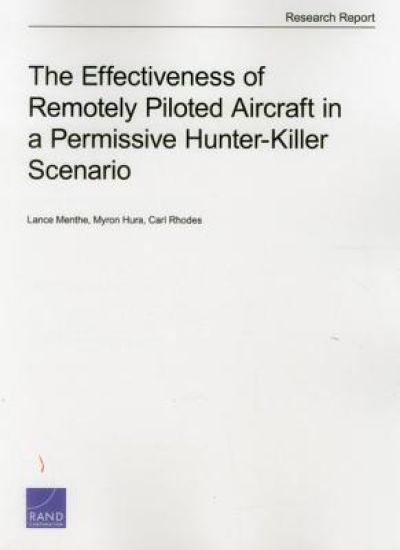
The Effectiveness of Remotely Piloted Aircraft in a Permissive Hunter-Killer Scenario
Lance Menthe; Myron Hura; Carl Rhodes
RAND
2014
pokkari
The Air Force has begun to evaluate new concepts of operation for remotely piloted aircraft to meet future needs. This report analyzes the operational effectiveness of several such concepts in a specific, permissive hunter-killer mission, which illuminates trade-offs between platform size and number; sensor performance; and the complicating effects of darkness, fog, and cloud cover."
Virtual Collaboration for a Distributed Enterprise
Amado Cordova; Kirsten M. Keller; Lance Menthe; Carl Rhodes
RAND
2013
pokkari
The Future of Air Force Motion Imagery Exploitation
Lance Menthe; Amado Cordova; Carl Rhodes; Rachel Costello; Jeffrey Sullivan
RAND
2012
pokkari
Critical Representations of Work and Organization in Popular Culture
Carl Rhodes; Robert Westwood
Routledge
2009
nidottu
This book challenges traditional organizational theory, looking to representations of work and organizations within popular culture and the ways in which these institutions have also been conceptualized and critiqued there. Through a series of essays, Rhodes and Westwood examine popular culture as a compelling and critical arena in which the complex and contradictory relations that people have with the organizations in which they work are played out. By articulating the knowledge in popular culture with that in theory, they provide new avenues for understanding work organizations as the dominant institutions in contemporary society. Rhodes and Westwood provide a critical review of how organizations are represented in various examples of contemporary popular culture. The book demonstrates how popular culture can be read as an embodiment of knowledge about organizations – often more compelling than those common to theory – and explores the critical potential of such knowledge and the way in which popular culture can reflect on the spirit of resistance, carnivalisation and rebellion.
Critical Representations of Work and Organization in Popular Culture
Carl Rhodes; Robert Westwood
Routledge
2007
sidottu
This book challenges traditional organizational theory, looking to representations of work and organizations within popular culture and the ways in which these institutions have also been conceptualized and critiqued there. Through a series of essays, Rhodes and Westwood examine popular culture as a compelling and critical arena in which the complex and contradictory relations that people have with the organizations in which they work are played out. By articulating the knowledge in popular culture with that in theory, they provide new avenues for understanding work organizations as the dominant institutions in contemporary society. Rhodes and Westwood provide a critical review of how organizations are represented in various examples of contemporary popular culture. The book demonstrates how popular culture can be read as an embodiment of knowledge about organizations – often more compelling than those common to theory – and explores the critical potential of such knowledge and the way in which popular culture can reflect on the spirit of resistance, carnivalisation and rebellion.
A Strategies-to-tasks Framework for Planning and Executing Intelligence, Surveillance, and Reconnaissance (ISR) Operations
Carl Rhodes
RAND
2007
pokkari
To move ISR planning and execution forward from a fixed target and deliberate planning focus to one centered on emerging targets, we propose enhancing collection management with a strategies-to-tasks and utility framework. By linking collection targets to operational tasks, objectives, and commander guidance with relative utilities, planning for the daily intelligence collections and real-time retasking for ad hoc ISR targets could be enhanced.
Reconstructing the Lifelong Learner
Clive Chappell; Carl Rhodes; Nicky Solomon; Mark Tennant; Lyn Yates
Routledge
2003
nidottu
How is adult learning used to produce personal, organisational and social change? This interesting examination of adult learning for change illustrates through diverse case studies and theoretical perspectives that personal change is inextricably linked to broader organisational and social change. The authors explore how theorising education as a vehicle for self-change is relevant to the practices of educators, learning specialists and others concerned with promoting learning for change. The book examines the relationship between pedagogy, identity and change, and illustrates this through a range of case studies focusing on the following: * Self-help books * Work-based learning * Corporate culture training * AIDS education * Gender education * Sex offender education. A concluding chapter discusses how writing an academic text is itself a pedagogical practice contributing to the identities of authors. This unique text will be of interest to students of education, sociology, cultural studies and change management as well as teachers, educators and professionals involved in lifelong learning or change management in any way.
Reconstructing the Lifelong Learner
Clive Chappell; Carl Rhodes; Nicky Solomon; Mark Tennant; Lyn Yates
Routledge
2003
sidottu
How is adult learning used to produce personal, organisational and social change? This interesting examination of adult learning for change illustrates through diverse case studies and theoretical perspectives that personal change is inextricably linked to broader organisational and social change. The authors explore how theorising education as a vehicle for self-change is relevant to the practices of educators, learning specialists and others concerned with promoting learning for change. The book examines the relationship between pedagogy, identity and change, and illustrates this through a range of case studies focusing on the following: * Self-help books * Work-based learning * Corporate culture training * AIDS education * Gender education * Sex offender education. A concluding chapter discusses how writing an academic text is itself a pedagogical practice contributing to the identities of authors. This unique text will be of interest to students of education, sociology, cultural studies and change management as well as teachers, educators and professionals involved in lifelong learning or change management in any way.