Kirjailija
Carl Sandburg
Kirjat ja teokset yhdessä paikassa: 86 kirjaa, julkaisuja vuosilta 1960–2026, suosituimpiin kuuluu Always the Young Strangers. Vertaile teosten hintoja ja tarkista saatavuus suomalaisista kirjakaupoista.
86 kirjaa
Kirjojen julkaisuvuodet: 1960–2026.

A fresh look at the Pulitzer Prize-winning poet laureate of the American Midwest With the publication of Chicago Poems in 1916, Carl Sandburg became one of the most famous poets in America: the voice of a Midwestern literary revolt, fusing free-verse poetics with hard-edged journalistic observation and energetic, sometimes raucous protest. By the time his first book appeared, Sandburg had been many things--a farm hand, a soldier in the Spanish-American War, an active Socialist, a newspaper reporter and movie reviewer--and he was determined to write poetry that would explode the genteel conventions of contemporary verse. His poems are populated by factory workers, washerwomen, crooked politicians, hobos, vaudeville dancers, and battle-scarred radicals. Writing from the bottom up, bringing to his poetry the immediacy of America's streets and prairies, factories and jails, Sandburg forged a distinctive style at once lyrical and vernacular, by turns angry, gritty, funny, and tender.
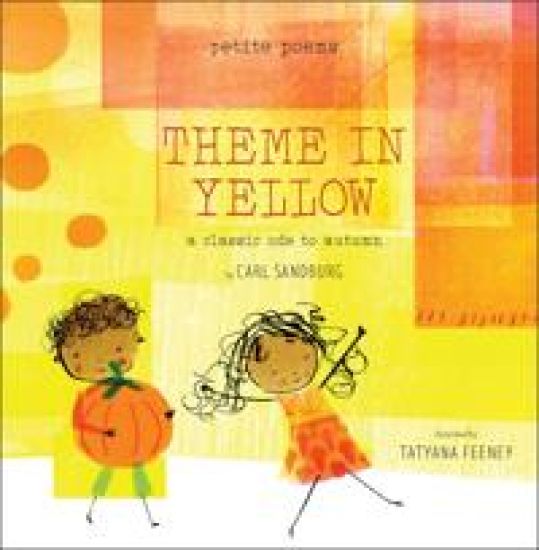
Discover the power of poetry in this simple, modern introduction to Carl Sandburg, featuring an ode to autumn and the joys of Halloween In this beautifully illustrated adaptation of a beloved Carl Sandburg poem, children delight in the sensory and spooky arrival of autumn.

Rootabaga Stories (Vintage Children's Books Series)
Carl Sandburg; Miska Petersham; Maud Petersham
OK Publishing
2022
nidottu
Rootabaga Stories is a children's book of interrelated short stories by Carl Sandburg. The whimsical, sometimes melancholy stories, which often use nonsense language, were originally created for his own daughters. Sandburg had three daughters, Margaret, Janet and Helga, whom he nicknamed ""Spink"", ""Skabootch"" and ""Swipes"", and those nicknames occur in some of his Rootabaga stories. The Rootabaga Stories were born of Sandburg's desire for ""American fairy tales"" to match American childhood. A large number of the stories are told by the Potato Face Blind Man, an old minstrel of the Village of Liver-and-Onions who hangs out in front of the local post office. His impossibly acquired first-hand knowledge of the stories adds to the book's narrative feel and fantastical nature. Excerpt: ""Gimme the Ax lived in a house where everything is the same as it always was. 'The chimney sits on top of the house and lets the smoke out, said Gimme the Ax. The doorknobs open the doors. The windows are always either open or shut. We are always either upstairs or downstairs in this house. Everything is the same as it always was...
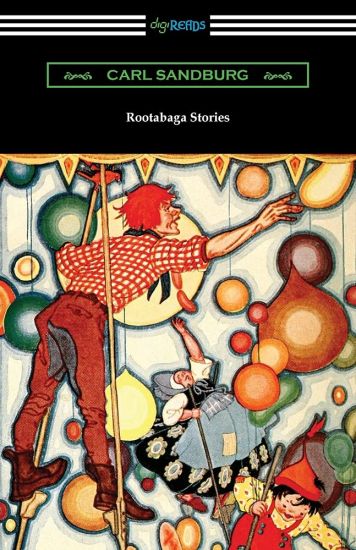
American author and poet Carl Sandburg, best known for the poetry that attributed to two of his three Pulitzer Prizes, also wrote histories, biographies, novels, and children's stories. Born in Illinois, Sandburg spent most of his life in the Midwest before moving to North Carolina in 1945, where he lived until his death. In the early 1920s Sandburg began writing children's stories for his three daughters, beginning with his "Rootabaga Stories", one of three collections of stories set in the small towns and farms of the American Midwest. The stories were widely read and enjoyed for their unique nonsensical style and distinctly American feeling. Sandburg wanted to create something different than the traditional European fairy tales, explaining that he was "tired of princes and princesses and I sought the American equivalent of elves and gnomes". He certainly succeeded with "Rootabaga Stories". The beautifully nonsensical writing, illogical grammar, and fantastical settings set the stage for such memorable characters as the Potato Face Blind Man, Hatrack the Horse, and Red Slippers. This edition is printed on premium acid-free paper.
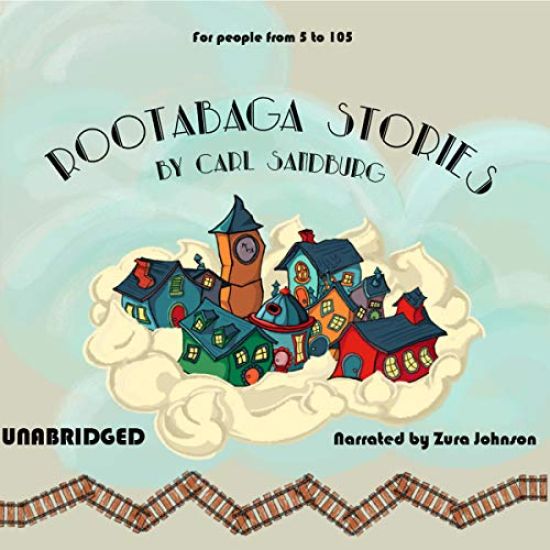
In the village of Liver-and-Onions, there was a Potato Face Blind Man who used to play an accordion on the corner near the post office. The sometime narrator of these tales, he transports readers and listeners to Rootabaga Country, where the railroad tracks go from straight to zigzag, the pigs wear bibs, and the Village of Cream Puffs floats in the wind, looking like a little hat that you could wear on the end of your thumb. Carl Sandburg, the beloved folk chronicler and three-time Pulitzer Prize winner, invented these stories for his own daughters. Populated by corn fairies, circus performers, and such memorable characters as Poker Face the Baboon, Hot Dog the Tiger, and Gimme the Ax, Rootabaga Country is built with the homespun poetry of the American frontier. The stories' inspired nonsense--loaded with rhythm, humor, and tongue-twisting names--fires the imagination and pulls at the heartstrings.

In the village of Liver-and-Onions, there was a Potato Face Blind Man who used to play an accordion on the corner near the post office. The sometime narrator of these tales, he transports readers and listeners to Rootabaga Country, where the railroad tracks go from straight to zigzag, the pigs wear bibs, and the Village of Cream Puffs floats in the wind, looking like a little hat that you could wear on the end of your thumb. Carl Sandburg, the beloved folk chronicler and three-time Pulitzer Prize winner, invented these stories for his own daughters. Populated by corn fairies, circus performers, and such memorable characters as Poker Face the Baboon, Hot Dog the Tiger, and Gimme the Ax, Rootabaga Country is built with the homespun poetry of the American frontier. The stories' inspired nonsense--loaded with rhythm, humor, and tongue-twisting names--fires the imagination and pulls at the heartstrings.
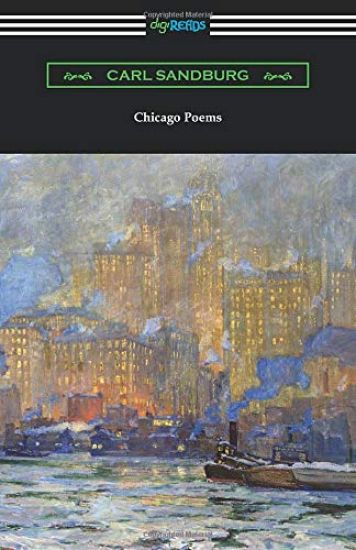
"Chicago Poems" is an early collection of poems by American writer, poet, and three-time Pulitzer Prize winner Carl Sandburg. Published in 1916 and his first by a mainstream publisher, this collection was a critical success and began Sandburg's career as a notable writer. Sandburg was a champion of an American form of social realism that celebrated American people, industry, and agriculture. He expressed this sentiment in an easy-to-read and plain-speaking free verse, a style that is often compared to Walt Whitman. Sandburg began working on the "Chicago Poems" in 1912, after moving to the city from Milwaukee with his wife and their young children. He embraced the gritty realism of the city, its important and central location to American commerce, and the hardworking people who kept the industrial machine running. Lyrical, soulful, compassionate, and intimately human, Sandburg earned his reputation as the "poet of the people" with his loving treatment of the common man and his struggles. Among the dozens of poems in this honest and touching collection are many of his most famous, such as "Chicago", "Fog", "Who Am I?", and "Under the Harvest Moon". This collection by one of America's most gifted poets is a moving meditation on love, loss, war, immigration, loneliness, and the beauty of the natural world. This edition is printed on premium acid-free paper.
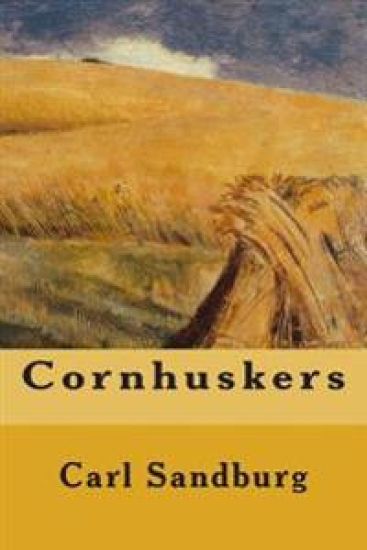
Winner of the 1919 Pulitzer Prize in Poetry, Cornhuskers is an homage to America and the American midwest from one of the nation's most acclaimed writers, Carl Sandburg. One hundred years after the book's first publication, this 104-poem collection breathes life into our national past--honoring the prairie, the changing seasons, and the hard-working people of the heartlands. Succinct and remarkably beautiful, these poems sing with a certain unencumbered honesty that both complicates and informs our understanding of the author's midwestern wilderness. Sandburg, the "poet of the people" as he came to be so affectionately known, writes plainly and unpretentiously about the place that he had called home.

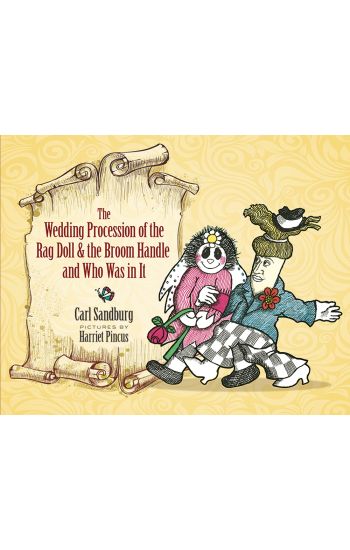
Wedding Procession of the Rag Doll and the Broom Handle and Who Was in it
Carl Sandburg
Dover Publications Inc.
2017
sidottu
The Rag Doll was blessed with many friends -- the Wisk Broom, the Furnace Shovel, and the Coffee Pot among them -- but when it came time to marry, she chose the Broom Handle. On the day of their wedding, the bride and groom were attended by a fantastical procession of well-wishers: the Spoon Lickers, the Tin Pan Bangers, the Easy Ticklers, the Musical Soup Eaters, and other whimsical characters, all marching along in a manner befitting their extraordinary names. This tale of wedding pomp and madcap mirth comes from poet Carl Sandburg's classic book of American fairy tales, The Rootabaga Stories. Marvelous drawings by Harriet Pincus, a noted illustrator of children's books, enhance the tale. Out of print for years, the book is now available in a new edition that introduces the story and its gloriously antic art to a new generation of parade-lovers, wedding-goers, and everyone who enjoys a fanciful celebration.
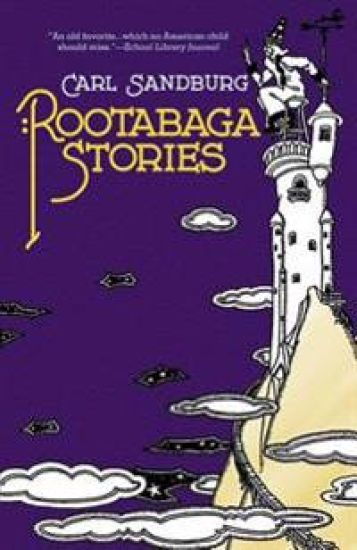
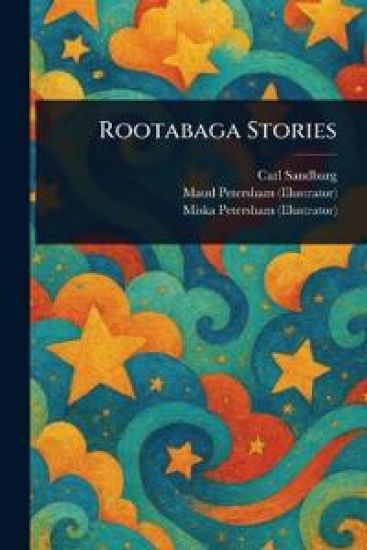
"Takes the home-bred American fantasy of The Wizard of Oz even further ... An old favorite, which no American child should miss." ― School Library Journal." These stories out of the Rootabaga Country... have taken root in American soil -- they are here to stay." -- New York Herald Tribune." Glorious for reading aloud." ― The New York Times Book Review. In the village of Liver-and-Onions, there was a Potato Face Blind Man who used to play an accordion on the corner near the post office. The sometime narrator of these tales, he transports readers and listeners to Rootabaga Country, where the railroad tracks go from straight to zigzag, the pigs wear bibs, and the Village of Cream Puffs floats in the wind, looking like a little hat that you could wear on the end of your thumb. Carl Sandburg, the beloved folk chronicler and three-time Pulitzer Prize winner, invented these stories for his own daughters. Populated by corn fairies, circus performers, and such memorable characters as Poker Face the Baboon, Hot Dog the Tiger, and Gimme the Ax, Rootabaga Country is built with the homespun poetry of the American frontier. The stories' inspired nonsense -- loaded with rhythm, humor, and tongue-twisting names -- fires the imagination and pulls at the heartstrings. This edition features the charming original illustrations by Maud and Miska Petersham." The original illustrations by Maud and Miska Petersham, including a colored frontispiece and plentiful black-and white line drawings, form the perfect complement in this very affordable paperback." -- The Emerald City Book Review
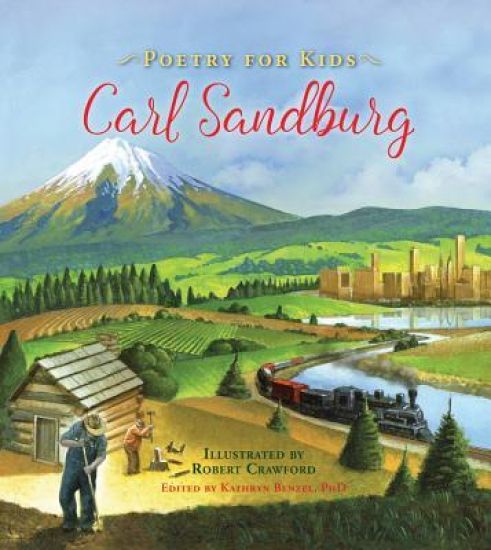
Discover the poetry of Carl Sandburg in Poetry for Kids: Carl Sandburg. Carefully chosen for kids, these 35 poems are presented, illustrated, and explained by an expert. There is no better time to introduce children to poetry and literature than during their formative years. That is why professor and scholar Kate Benzel has used her wealth of experience to carefully curate 35 of Carl Sandburg's luminary poems into one collection that is specially designed for children. In Poetry for Kids: Carl Sandburg you'll find many classics, some of which you may remember from your childhood, including "Young Bullfrogs," "Shenandoah", "Jazz Fantasia", "Fog", and 31 more of Sandburg's favorite and most accessible works. Accompanying the words are beautifully illustrated scenes by award-winning illustrator Robert Crawford. This gentle introduction includes commentary, definitions of key words, and an introduction to the poet's life, plus a final synopsis of the author's interpretation of the pieces.
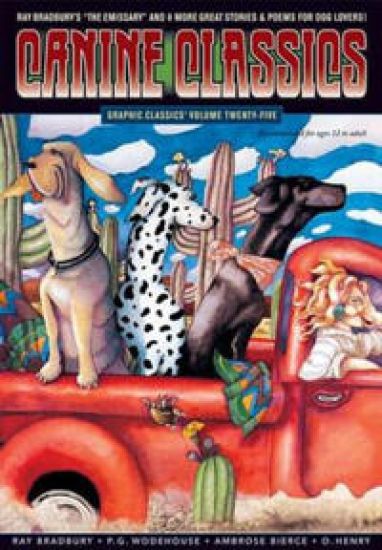
Graphic Classics Volume 25: Canine Feline Classics
Ray Bradbury; P. G. Wodehouse; Algernon Blackwood; Robert E. Howard; Franz Kafka; Saki; Edward Lear; Joe R. Lansdale; Carl Sandburg; Joseph Jacobs; H. P. Lovecraft; Ambrose Bierce
Eureka Productions
2014
nidottu
Canine/Feline Classics is a unique, two-in-one volume, with half stories for dog-lovers, and half for cat-fanciers. Featured are "The Emissary" by Ray Bradbury, "Ancient Sorceries" by Algernon Blackwood, "The Beast from the Abyss" by Robert E. Howard, and 17 more great stories and poems, including two from the volume's co-editor, John Lehman.