Kirjailija
Carl von Clausewitz
Kirjat ja teokset yhdessä paikassa: 150 kirjaa, julkaisuja vuosilta 1835–2026, suosituimpiin kuuluu Vom Kriege. Vertaile teosten hintoja ja tarkista saatavuus suomalaisista kirjakaupoista.
Nimi esiintyy myös muodoissa: (Carl Von Clausewitz
150 kirjaa
Kirjojen julkaisuvuodet: 1835–2026.
"Everything is very simple in War, but the simplest thing is difficult." -Carl von Clausewitz, On War, 1832 On War is Carl von Clausewitz' masterpiece on war and military strategy, which was written between 1816 and 1830 and was published posthumously by his wife Marie von Clausewitz (n e von Br hl) in 1832. Three main concepts of war stand out: war should be seen as an instrument of politics; the military objectives in war that support one's political objectives fall into two types: "war to achieve limited aims" and war to "disarm" the enemy; and the course of war will tend to favor the party with the stronger emotional and political motivations, but especially the defender. This edition is the classical translation of On War (1873) by Col. J. J. Graham, with an introduction and notes by Colonel F. N. Maude, published in three volumes. A must-read for military historians and theorists, policy makers, and anyone interested in understanding the philosophy and concepts of war.

"Anyone who falls into the habit of thinking and expecting the best of his subordinates at all times is, for that reason alone, unsuited to command an army." -Carl von Clausewitz, On War, 1832 On War is Carl von Clausewitz' masterpiece on war and military strategy, which was written between 1816 and 1830 and was published posthumously by his wife Marie von Clausewitz (n e von Br hl) in 1832. Three main concepts of war stand out: war should be seen as an instrument of politics; the military objectives in war that support one's political objectives fall into two types: "war to achieve limited aims" and war to "disarm" the enemy; and the course of war will tend to favor the party with the stronger emotional and political motivations, but especially the defender. This edition is the classical translation of On War (1873) by Col. J. J. Graham, with an introduction and notes by Colonel F. N. Maude, published in three volumes. A must-read for military historians and theorists, policy makers, and anyone interested in understanding the philosophy and concepts of war.

"War is not merely a political act, but also a real political instrument, a continuation of political commerce, a carrying out of the same by other means." -Carl von Clausewitz, On War, 1832On War is Carl von Clausewitz' masterpiece on war and military strategy, which was written between 1816 and 1830 and was published posthumously by his wife Marie von Clausewitz (n e von Br hl) in 1832. Three main concepts of war stand out: war should be seen as an instrument of politics; the military objectives in war that support one's political objectives fall into two types: "war to achieve limited aims" and war to "disarm" the enemy; and the course of war will tend to favor the party with the stronger emotional and political motivations, but especially the defender. This edition is the classical translation of On War (1873) by Col. J. J. Graham, with an introduction and notes by Colonel F. N. Maude, published in three volumes. A must-read for military historians and theorists, policy makers, and anyone interested in understanding the philosophy and concepts of war.
"War is not merely a political act, but also a real political instrument, a continuation of political commerce, a carrying out of the same by other means." -Carl von Clausewitz, On War, 1832On War is Carl von Clausewitz' masterpiece on war and military strategy, which was written between 1816 and 1830 and was published posthumously by his wife Marie von Clausewitz (n e von Br hl) in 1832. Three main concepts of war stand out: war should be seen as an instrument of politics; the military objectives in war that support one's political objectives fall into two types: "war to achieve limited aims" and war to "disarm" the enemy; and the course of war will tend to favor the party with the stronger emotional and political motivations, but especially the defender. This edition is the classical translation of On War (1873) by Col. J. J. Graham, with a preface by Marie von Clausewitz and the three main volumes of this work included in one book. A must-read for military historians and theorists, policy makers, and anyone interested in understanding the philosophy and concepts of war.
"War is not merely a political act, but also a real political instrument, a continuation of political commerce, a carrying out of the same by other means." -Carl von Clausewitz, On War, 1832 On War is Carl von Clausewitz' masterpiece on war and military strategy, which was written between 1816 and 1830 and was published posthumously by his wife Marie von Clausewitz (n e von Br hl) in 1832. Three main concepts of war stand out: war should be seen as an instrument of politics; the military objectives in war that support one's political objectives fall into two types: "war to achieve limited aims" and war to "disarm" the enemy; and the course of war will tend to favor the party with the stronger emotional and political motivations, but especially the defender. This edition is the classical translation of On War (1873) by Col. J. J. Graham, with a preface by Marie von Clausewitz and the three main volumes of this work included in one book. A must-read for military historians and theorists, policy makers, and anyone interested in understanding the philosophy and concepts of war.
On 23 June 1812 the French Grande Arme, over 600,000 strong and composed of men from the many nations that had become part of Napoleons empire, poured over the Russian border. In defence of Russia, an army of approximately the same number faced them. The campaign was disastrous for Napoleon, and it marked the beginning of his decline in power. Amongst those who participated in the campaign was von Clausewitz. This renowned Prussian military strategist and historian defected from the French Army and joined the Russian Imperial headquarters where he spent the campaign close to the senior Russian officers who made the critical decisions. The campaign raised many questions which continue to be debated to this day and Clausewitzs considered account has long been regarded as a highly valuable source. His expert analysis of the Battle of Borodino indicates that he was heavily involved in the engagement as a staff officer, whose duties would have entailed his constant travelling round the battlefield. He was present at the secret Convention of Tauroggen, and his account of this important treaty and its effect in bringing about the defection of the Prussian corps from the French is unique.
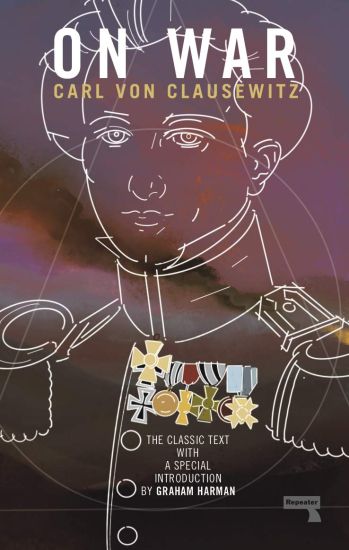
Prussian General Carl von Clausewitz famously wrote that ‘War is the continuation of politics by other means’. But what does Clausewitz mean to a world where economic, political and cultural conflicts are increasingly framed as wars? Written after the Napoleonic Wars but left unfinished at the author’s death and not published until 1832, On War is one of the most influential and important works on military strategy ever written. This new edition presents this classic text with a new introduction by Graham Harman, who reads Clausewitz’s ideas about war, politics and military strategy through the lens of speculative realism.
Über das Leben und den Charakter von Scharnhorst
Carl Von Clausewitz; Hermann Von Boyen
Vero Verlag
2019
pokkari
Über das Leben und den Charakter von Scharnhorst
Carl Von Clausewitz; Hermann Von Boyen
Vero Verlag
2019
pokkari
Carl von Clausewitz: Vom Kriege. Vollst ndige Ausgabe der acht B cher Lesefreundlicher Gro druck in 16-pt-Schrift Gro format, 210 x 297 mm Berliner Ausgabe, 2019 Durchgesehener Neusatz bearbeitet und eingerichtet von Theodor Borken Erstdruck: 1832. Inhaltsverzeichnis: Vom Kriege. Erster Teil. Vorreden]. Erstes Buch: ber die Natur des Krieges. Zweites Buch: ber die Theorie des Krieges. Drittes Buch: Von der Strategie berhaupt. Viertes Buch: Das Gefecht. Zweiter Teil. F nftes Buch: Die Streitkr fte. Sechstes Buch: Verteidigung. Dritter Teil. Skizzen zum siebenten Buche: Der Angriff. Achtes Buch: Kriegsplan. Umschlaggestaltung von Thomas Schultz-Overhage unter Verwendung des Bildes: Johann Peter Krafft, Siegesmeldung nach der Schlacht bei Leipzig 1813. Gesetzt aus der Minion Pro, 16 pt. Henricus Edition Deutsche Klassik UG (haftungsbeschr nkt)
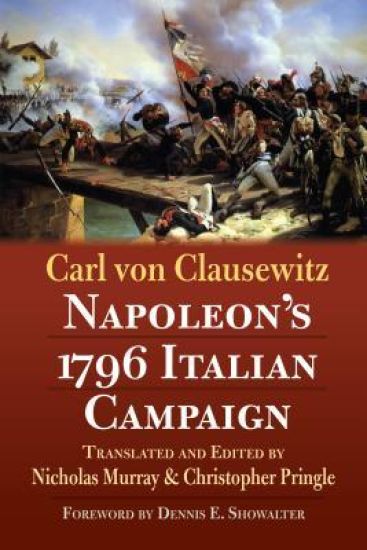
Carl von Clausewitz (1780–1831) is best known for his masterpiece of military theory On War, yet that work formed only the first three of ten volumes of his published writings. The others, historical analyses of the wars that roiled Europe from 1789 through 1815, informed and shaped Clausewitz’s military thought, so they offer invaluable insight into his dialectical, often difficult theoretical masterwork. Among these historical works, perhaps the most important is Napoleon’s 1796 Italian Campaign, which covers a crucial period in the French Revolutionary Wars. During this campaign the young, largely unknown Corsican, in his first command, led the French Army to triumph over the superior forces of the Austrian and Sardinian Armies. Moving from strategy to battle scene to analysis, this first English translation nimbly conveys the character of Clausewitz’s writing in all its registers: the brisk, often powerful description of events as they unfolded; the critical reflections on strategic theory and its implications; and, most bracing, the dissection and sharp judgment of the actions of the French and Austrian commanders. From the thrill of the Battle of Montenotte—the youthful Bonaparte’s first offensive—to the remorseless logic of Clausewitz’s assessments, Napoleon’s 1796 Italian Campaign will expand readers’ experience and understanding of not only this critical moment in European history but also the thought and writings of the modern master of military philosophy.
Reproduktion des Originals: Grundgedanken ber Krieg und Kriegf hrung von Carl von Clausewitz
Reproduction of the original: On War by Carl von Clausewitz
Les Arts de la Guerre (Edition Premium)
Nicolas Machiavel; Carl Von Clausewitz; Sun Tzu
Createspace Independent Publishing Platform
2018
nidottu
**** Cette dition poss de une mise en page esth tique optimis e pour la lecture **** Cette dition sp ciale propose trois trait s philosophiques incontournables sur les th mes conjoints de la Guerre et de la Strat gie: - L'Art de la Guerre de Sun Tzu - L'Art de la Guerre de Nicolas Machiavel - De la Strat gie par Carl von Clausewitz Malgr leur anciennet , ces ouvrages restent d'une actualit troublante et invitent le lecteur une r flexion qui d passe tr s largement le cadre des th mes propos s. Il y est ainsi question de pouvoir, de politique, d'influence, de s duction et de management.
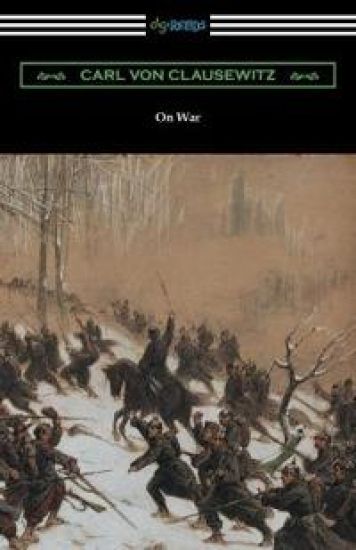
Carl von Clausewitz entered the Prussian military at the age of twelve as a Lance-Corporal and would go on to obtain the rank of Major-General. In "On War," Clausewitz draws upon his experiences fighting in the French Revolution and Napoleonic Wars, as well as his military studies at the "Kriegsakademie," or Prussian War Academy, which he would eventually become director of. Clausewitz employs a dialectical approach to military analysis, which leads to frequent modern misinterpretation. Described as both a realist and a romantic, Clausewitz argued that war could not simply be reduced to the logistics on the ground but rather called for rapid decision making by alert commanders responding to unexpected developments unfolding under the "fog of war." First published in 1832, "On War" is a mainstay of modern military colleges, a monumental work of military analysis and philosophy, which continues to be studied and interpreted to this day. This edition is printed on premium acid-free paper and follows the classic translation of Colonel J. J. Graham.
"Vom Kriege" ist das Hauptwerk von Carl von Clausewitz, das sich mit der Theorie des Krieges besch ftigt. Seine Theorien ber Strategie, Taktik und Philosophie hatten gro en Einfluss auf die Entwicklung des Kriegswesens in allen westlichen L ndern und werden bis heute an Milit rakademien gelehrt. Sie finden auch im Bereich der Unternehmensf hrung sowie im Marketing Anwendung. Seine Theorien sind Inhalt des Lehrplanes der Betriebswirtschaft an der Harvard University und verschiedener anderer Managementschulen. Carl Philipp Gottlieb von Clausewitz (1780-1831) war ein preu ischer General, Heeresreformer und Milit rtheoretiker.