Kirjojen hintavertailu – 12 859 827 kirjaa ja 27 kauppaa

Kirjailija

Carlo Bordoni

Kirjat ja teokset yhdessä paikassa: 17 kirjaa, julkaisuja vuosilta 2014–2026, suosituimpiin kuuluu The Society of Dividuals. Vertaile teosten hintoja ja tarkista saatavuus suomalaisista kirjakaupoista.

17 kirjaa

Kirjojen julkaisuvuodet: 2014–2026.

Public Intimacy

Public Intimacy

Carlo Bordoni

TAYLOR FRANCIS LTD
2026
sidottu
This book examines the paradoxical collapse of privacy in contemporary society, where personal boundaries are increasingly dissolved through digital technologies, exploring how social networks and new media technologies encourage individuals to publicly expose their most intimate thoughts and experiences in search for recognition and connection in a fragmented, liquid modern world. Throughout six focused chapters, the book explores the transformation of community bonds, the exhibition of intimacy online, and the rise of emotion-driven politics. It reveals how the constant sharing of private life creates a society dominated by the present moment, where fleeting connections replace deeper relationships and reason is subordinated to emotional impulses, leading to populist and sovereigntist tendencies. Drawing on lucid analysis of the dialectics of the state, the community, machine-based interaction, and the loss of intimacy, it thus offers valuable and timely insights into the changing nature of social relationships in late modernity. This timely analysis will appeal to scholars and students of sociology and philosophy, as well as researchers in the social sciences more broadly with interests in understanding the social implications of digital culture.
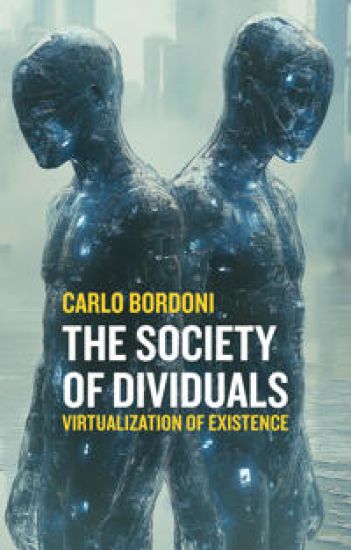
The Society of Dividuals

The Society of Dividuals

Carlo Bordoni

JOHN WILEY AND SONS LTD
2026
nidottu
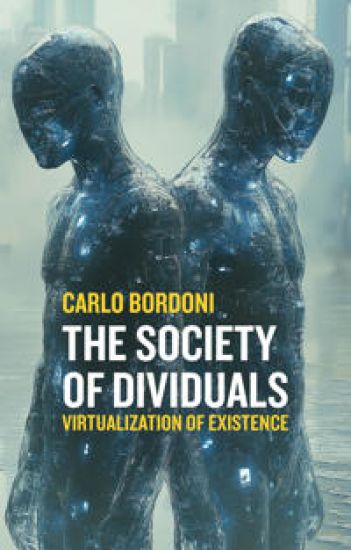
Human history is a history of individuals – of kings and queens, of leaders and thinkers and of the many individuals who struggle, work hard and find their paths in life. It is also the history of individuation, understood as a continuous search for autonomy, self-affirmation and the achievement of personal goals. But today, this process of individuation is coming to an end and morphing into its opposite – disindividuation. The individual is giving way to the progressive loss of individuality and social life is turning into the society of 'dividuals' – that is, beings who are becoming unaware of their uniqueness and who are losing their sense of self. The main driver of this process is technology. The more that individuals rely on technological devices to fill the social void and mitigate loneliness, the more they are recognized not so much for themselves but as the bearers of the devices that contain all the information necessary for their identity: images, texts and the digital traces of earlier exchanges. Individuals increasingly renounce their privacy, sharing it with a device that becomes an integral part of themselves. Deprived of uniqueness, the dividual is a lonely being who no longer has the ability to relate effectively to others and to external reality. We move towards a future without hope, immersed in the ever-innovative flow of information on screens, content to survive the present, as if nothing mattered.
The Society of Dividuals

The Society of Dividuals

Carlo Bordoni

JOHN WILEY AND SONS LTD
2026
sidottu
Human history is a history of individuals – of kings and queens, of leaders and thinkers and of the many individuals who struggle, work hard and find their paths in life. It is also the history of individuation, understood as a continuous search for autonomy, self-affirmation and the achievement of personal goals. But today, this process of individuation is coming to an end and morphing into its opposite – disindividuation. The individual is giving way to the progressive loss of individuality and social life is turning into the society of 'dividuals' – that is, beings who are becoming unaware of their uniqueness and who are losing their sense of self. The main driver of this process is technology. The more that individuals rely on technological devices to fill the social void and mitigate loneliness, the more they are recognized not so much for themselves but as the bearers of the devices that contain all the information necessary for their identity: images, texts and the digital traces of earlier exchanges. Individuals increasingly renounce their privacy, sharing it with a device that becomes an integral part of themselves. Deprived of uniqueness, the dividual is a lonely being who no longer has the ability to relate effectively to others and to external reality. We move towards a future without hope, immersed in the ever-innovative flow of information on screens, content to survive the present, as if nothing mattered.
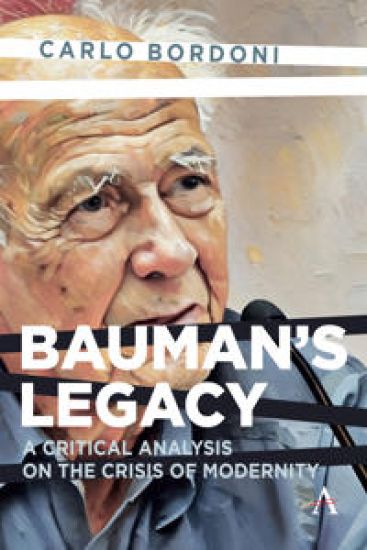
Bauman's Legacy

Bauman's Legacy

Carlo Bordoni

ANTHEM PRESS
2025
nidottu
What remains of the idea of liquid modernity? Is Bauman’s thought still relevant? This volume aims to answer these questions, without forgetting the vastness and complexity of his work, where the idea of liquidity remains fundamental, before and after the central turning point of the year 2000, when he published Liquid Modernity. Bauman’s legacy is multiform and complex, subdivided into partial legacies, not all of which are homogeneous and acceptable without benefit of inventory. The first difficulty consists in its complete lack of systematicity: Bauman-thought is by no means a single whole, nor can it be used as a key instrument to be applied to every condition, given that it explicitly concerns a precise fraction of our present. This is not to be understood as an oversight, but a conscious, strongly intended choice to eschew any systematic, systematising formulation of society. He prefers to understand the sociologist’s task as an acute observer, capable of enabling social agents – that is, all human beings – to make the right choices with awareness of its risks, as well as its effects. Bauman’s legacy leaves a bitter taste in the mouth, because in its very concluding phase it reveals pessimistic implications that seem to contradict his previous positions, so full of hope and confidence in the opportunities for improvement of the humans. The very theorisation of liquidity itself seemed to suggest, in the peaceful understanding of a phase of disorientation, the possibility of rediscovering momentarily forgotten human values, first and foremost social solidarity.
Ethical Violence

Ethical Violence

Carlo Bordoni

JOHN WILEY AND SONS LTD
2023
sidottu
Human civilization is founded on ethical principles, norms of behaviour that have accumulated over time. Perhaps the oldest of ethical principles is the rejection of violence, which includes the respect for life and for the physical and psychological integrity of others. But, in some circumstances, violence itself can be regarded as ethical – for example, when it is used by states claiming to act in self-defence. In these circumstances, the need to defend oneself against an enemy can transform war from an unacceptable act into a necessary, socially shared and morally sanctioned choice. And it is when violence becomes ethical that we must begin to fear for our future. In the wake of the pandemic, we are witnessing the growing prevalence of aggression and emotionality in social and political life. We find ourselves living in an increasingly impatient and insecure society, which is sceptical of scientific thought and which takes refuge in the irrational. The decline of rationality and the growing prevalence of violence are increasingly common features of a society that has lost touch with the great Enlightenment narrative. We need, argues Bordoni, to rediscover the rationality we have lost and recuperate the positive side of technology.
Ethical Violence

Ethical Violence

Carlo Bordoni

JOHN WILEY AND SONS LTD
2023
nidottu
Human civilization is founded on ethical principles, norms of behaviour that have accumulated over time. Perhaps the oldest of ethical principles is the rejection of violence, which includes the respect for life and for the physical and psychological integrity of others. But, in some circumstances, violence itself can be regarded as ethical – for example, when it is used by states claiming to act in self-defence. In these circumstances, the need to defend oneself against an enemy can transform war from an unacceptable act into a necessary, socially shared and morally sanctioned choice. And it is when violence becomes ethical that we must begin to fear for our future. In the wake of the pandemic, we are witnessing the growing prevalence of aggression and emotionality in social and political life. We find ourselves living in an increasingly impatient and insecure society, which is sceptical of scientific thought and which takes refuge in the irrational. The decline of rationality and the growing prevalence of violence are increasingly common features of a society that has lost touch with the great Enlightenment narrative. We need, argues Bordoni, to rediscover the rationality we have lost and recuperate the positive side of technology.
Post Society

Post Society

Carlo Bordoni

JOHN WILEY AND SONS LTD
2022
sidottu
Our societies are in transition, spurred on by a pandemic that disrupted many aspects of the social world we once took for granted. We’ve left behind the ‘solid modernity’ of the twentieth century and even the ‘liquid modernity’ so brilliantly analysed by Zygmunt Bauman, but what kind of society is now taking shape around us? In this highly original reflection on the current state of our world, Carlo Bordoni argues that we are on the threshold of ‘post-society’, a condition in which social distancing becomes the norm, real social relations are diminishing in favour of those mediated by technology, existential loneliness is becoming widespread, and we find ourselves voluntarily submitting to new forms of surveillance and control in the hope of increasing our security. Emotions are increasingly assuming a central role in social life, not only because of the growing prevalence of social media, which provide platforms for the public expression of emotion, but also because emotions have been freed from the ‘repression of emotionality’ that had characterized modern society. While many of these developments are rooted in broader social transformations, they were all deepened and accelerated by the pandemic, which propelled us headlong into a brave new world where social relations are sustained without physical contact but with intense communication. This is the new post-social condition: more humanity, less sociality.
Post Society

Post Society

Carlo Bordoni

JOHN WILEY AND SONS LTD
2022
nidottu
Our societies are in transition, spurred on by a pandemic that disrupted many aspects of the social world we once took for granted. We’ve left behind the ‘solid modernity’ of the twentieth century and even the ‘liquid modernity’ so brilliantly analysed by Zygmunt Bauman, but what kind of society is now taking shape around us? In this highly original reflection on the current state of our world, Carlo Bordoni argues that we are on the threshold of ‘post-society’, a condition in which social distancing becomes the norm, real social relations are diminishing in favour of those mediated by technology, existential loneliness is becoming widespread, and we find ourselves voluntarily submitting to new forms of surveillance and control in the hope of increasing our security. Emotions are increasingly assuming a central role in social life, not only because of the growing prevalence of social media, which provide platforms for the public expression of emotion, but also because emotions have been freed from the ‘repression of emotionality’ that had characterized modern society. While many of these developments are rooted in broader social transformations, they were all deepened and accelerated by the pandemic, which propelled us headlong into a brave new world where social relations are sustained without physical contact but with intense communication. This is the new post-social condition: more humanity, less sociality.
State of Fear in a Liquid World

State of Fear in a Liquid World

Carlo Bordoni

Routledge
2020
nidottu
This book examines the insecurity that besets our lives in the contemporary world, whether as a result of natural disasters, human negligence or, more recently, threats to security in the form of terrorist activity, which itself gives rise to new fears: fear of travel, agoraphobia, distrust of others and existential anxieties. Revealing the connection between the two components of our insecurity, as reflecting on and conditioning human existence, and producing social problems, the author brings this to bear on the notion of security that modernity had sought to guarantee to its citizens – a notion that has slowly crumbled with the crisis of modernity and with the emergence of the "liquid" world. Now insecurity is endemic and has so firmly become part of us as to be accepted as an unpleasant aspect of normality that we must live with. However, the necessity of living in a risk society in which security has emerged as important does nothing to dispel the fear that accompanies us at all times. An engagement with the thought of Bauman that explores fear as an accompaniment to the end of modernity and its assurances, State of Fear in a Liquid World offers developments of the thesis of liquid modernity and will appeal to scholars and students of sociology, social theory and politics with interests in individualisation, social change and (in)security.
The End of Equality

The End of Equality

Carlo Bordoni

Routledge
2020
nidottu
The economic crisis has brought social differences to the fore, reinventing the old question of inequality as democracy’s missed opportunity. Many have attempted to find a rational explanation of the problem, tracing it back to poor economic policy and reckless liberalisation of finance, or the crisis of banks and governments, as well as the collapse of family relationships. At the same time, globalisation has reduced the differences between some nations, bringing emerging countries to the level of the more advanced, but has dangerously increased internal inequalities. In this book, the author examines the question of inequality and the social problems it is creating in societies across the world, arguing that with the crisis of modernity, the ideal of equality appears to be over. As more and more of the world’s resources are concentrated in ever fewer hands, the promise of mass society as a means to grant equality and cancel the differences of classes appears to be giving way to a rising individualism. This book asks whether the apparent end of mass society will coincide with the end of equality and a re-evaluation of the worth of the individual. Are we heading towards a liquid world in which being equal is now considered less a virtue than a weakness?
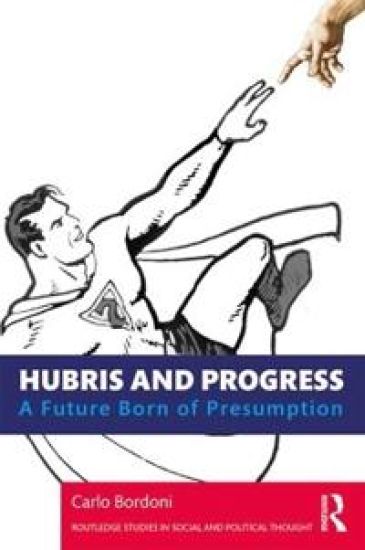
Hubris and Progress

Hubris and Progress

Carlo Bordoni

Routledge
2019
sidottu
This book explores the ancient question of why man seeks to go beyond his limits. A presumptuous tendency known by the ancient Greeks as hubris and believed to be punished by the gods, it developed from a need for our survival to a habit, as humanity has subdued animals, dominated nature, increased knowledge and sought even to overcome death. It also lies behind the crisis of our time, as the values of democracy, freedom, equality and progress have been weakened – sacrificed to excess, as we live in an eternal present, dominated by greed and indifference regarding the future. Addressing this crisis of our interregnum period, in which faith has been lost in the former certainties of modernity, such as science, progress and the idea of a better world, the author considers whether redemption for humanity might lie in our hubristic tendencies, as these give us scope to deviate from the existing path and find new ways forward.
Hubris and Progress

Hubris and Progress

Carlo Bordoni

Routledge
2019
nidottu
This book explores the ancient question of why man seeks to go beyond his limits. A presumptuous tendency known by the ancient Greeks as hubris and believed to be punished by the gods, it developed from a need for our survival to a habit, as humanity has subdued animals, dominated nature, increased knowledge and sought even to overcome death. It also lies behind the crisis of our time, as the values of democracy, freedom, equality and progress have been weakened – sacrificed to excess, as we live in an eternal present, dominated by greed and indifference regarding the future. Addressing this crisis of our interregnum period, in which faith has been lost in the former certainties of modernity, such as science, progress and the idea of a better world, the author considers whether redemption for humanity might lie in our hubristic tendencies, as these give us scope to deviate from the existing path and find new ways forward.
State of Fear in a Liquid World

State of Fear in a Liquid World

Carlo Bordoni

Routledge
2016
sidottu
This book examines the insecurity that besets our lives in the contemporary world, whether as a result of natural disasters, human negligence or, more recently, threats to security in the form of terrorist activity, which itself gives rise to new fears: fear of travel, agoraphobia, distrust of others and existential anxieties. Revealing the connection between the two components of our insecurity, as reflecting on and conditioning human existence, and producing social problems, the author brings this to bear on the notion of security that modernity had sought to guarantee to its citizens – a notion that has slowly crumbled with the crisis of modernity and with the emergence of the "liquid" world. Now insecurity is endemic and has so firmly become part of us as to be accepted as an unpleasant aspect of normality that we must live with. However, the necessity of living in a risk society in which security has emerged as important does nothing to dispel the fear that accompanies us at all times. An engagement with the thought of Bauman that explores fear as an accompaniment to the end of modernity and its assurances, State of Fear in a Liquid World offers developments of the thesis of liquid modernity and will appeal to scholars and students of sociology, social theory and politics with interests in individualisation, social change and (in)security.
The End of Equality

The End of Equality

Carlo Bordoni

Routledge
2016
sidottu
The economic crisis has brought social differences to the fore, reinventing the old question of inequality as democracy’s missed opportunity. Many have attempted to find a rational explanation of the problem, tracing it back to poor economic policy and reckless liberalisation of finance, or the crisis of banks and governments, as well as the collapse of family relationships. At the same time, globalisation has reduced the differences between some nations, bringing emerging countries to the level of the more advanced, but has dangerously increased internal inequalities. In this book, the author examines the question of inequality and the social problems it is creating in societies across the world, arguing that with the crisis of modernity, the ideal of equality appears to be over. As more and more of the world’s resources are concentrated in ever fewer hands, the promise of mass society as a means to grant equality and cancel the differences of classes appears to be giving way to a rising individualism. This book asks whether the apparent end of mass society will coincide with the end of equality and a re-evaluation of the worth of the individual. Are we heading towards a liquid world in which being equal is now considered less a virtue than a weakness?
Interregnum

Interregnum

Carlo Bordoni

Transcript Verlag
2016
nidottu
Challenging the thought of Zygmunt Bauman on the subject of liquid modernity, where everything has become unstable, precarious and uncertain, Carlo Bordoni (author with Bauman of »State of Crisis«) proposes to look at contemporary society as an »interregnum«, a temporary break with the past. In a condition characterised by anomie, the questioning of democratic achievements and the primacy of an unbridled economy, he offers a new perspective on our social condition. Understanding the interregnum and being aware of its instability and the social degradation that it entails can help us to make the right choices.
State of Crisis

State of Crisis

Zygmunt Bauman; Carlo Bordoni

Polity Press
2014
sidottu
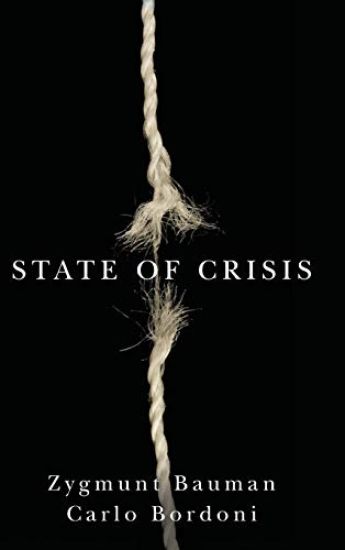
Today we hear much talk of crisis and comparisons are often made with the Great Depression of the 1930s, but there is a crucial difference that sets our current malaise apart from the 1930s: today we no longer trust in the capacity of the state to resolve the crisis and to chart a new way forward. In our increasingly globalized world, states have been stripped of much of their power to shape the course of events. Many of our problems are globally produced but the volume of power at the disposal of individual nation-states is simply not sufficient to cope with the problems they face. This divorce between power and politics produces a new kind of paralysis. It undermines the political agency that is needed to tackle the crisis and it saps citizens’ belief that governments can deliver on their promises. The impotence of governments goes hand in hand with the growing cynicism and distrust of citizens. Hence the current crisis is at once a crisis of agency, a crisis of representative democracy and a crisis of the sovereignty of the state. In this book the world-renowned sociologist Zygmunt Bauman and fellow traveller Carlo Bordoni explore the social and political dimensions of the current crisis. While this crisis has been greatly exacerbated by the turmoil following the financial crisis of 2007-8, Bauman and Bordoni argue that the crisis facing Western societies is rooted in a much more profound series of transformations that stretch back further in time and are producing long-lasting effects. This highly original analysis of our current predicament by two of the world’s leading social thinkers will be of interest to a wide readership.
State of Crisis

State of Crisis

Zygmunt Bauman; Carlo Bordoni

Polity Press
2014
nidottu
Today we hear much talk of crisis and comparisons are often made with the Great Depression of the 1930s, but there is a crucial difference that sets our current malaise apart from the 1930s: today we no longer trust in the capacity of the state to resolve the crisis and to chart a new way forward. In our increasingly globalized world, states have been stripped of much of their power to shape the course of events. Many of our problems are globally produced but the volume of power at the disposal of individual nation-states is simply not sufficient to cope with the problems they face. This divorce between power and politics produces a new kind of paralysis. It undermines the political agency that is needed to tackle the crisis and it saps citizens’ belief that governments can deliver on their promises. The impotence of governments goes hand in hand with the growing cynicism and distrust of citizens. Hence the current crisis is at once a crisis of agency, a crisis of representative democracy and a crisis of the sovereignty of the state. In this book the world-renowned sociologist Zygmunt Bauman and fellow traveller Carlo Bordoni explore the social and political dimensions of the current crisis. While this crisis has been greatly exacerbated by the turmoil following the financial crisis of 2007-8, Bauman and Bordoni argue that the crisis facing Western societies is rooted in a much more profound series of transformations that stretch back further in time and are producing long-lasting effects. This highly original analysis of our current predicament by two of the world’s leading social thinkers will be of interest to a wide readership.