Kirjojen hintavertailu – 12 859 826 kirjaa ja 27 kauppaa
Kirjailija
Carlo del Ninno
Kirjat ja teokset yhdessä paikassa: 4 kirjaa, julkaisuja vuosilta 2008–2020, suosituimpiin kuuluu Adaptive Social Protection. Vertaile teosten hintoja ja tarkista saatavuus suomalaisista kirjakaupoista.
Thomas Bowen; Carlo del Ninno; Colin Andrews; Sarah Coll-Black; Ugo Gentilini; Kelly Johnson; Yasuhiro Kawasoe; Adea Kryeziu; Barry Maher; Asha Williams
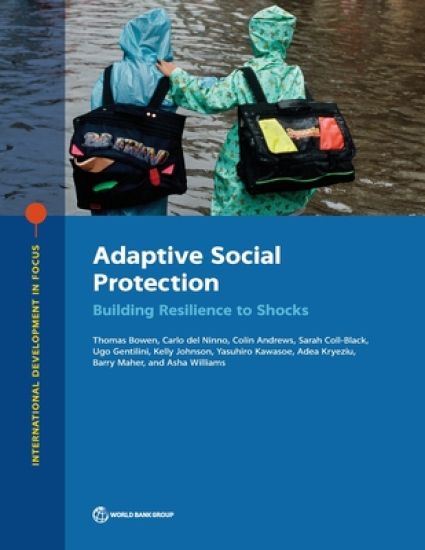
Adaptive social protection (ASP) helps build the resilience of poor and vulnerable households by supporting their capacity to prepare for, cope with, and adapt to large covariate shocks. This book outlines a framework to help guide the design and implementation of ASP.
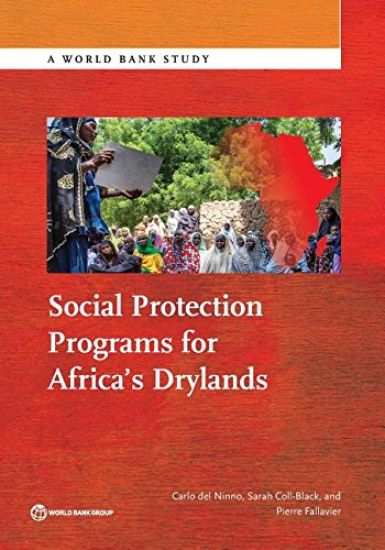
This paper argues that social protection policies and programs, including safety nets programs designed to deliver short-term relief, have an important role in promoting the resilience of the people residing in dryland regions.
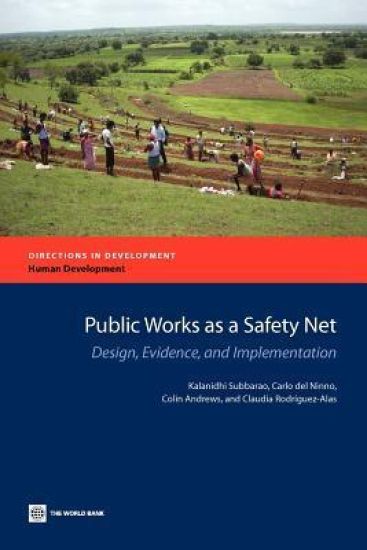
Public Works as a Safety Net: Design, Evidence, and Implementation reviews the conceptual underpinnings and operational elements of public works programs around the world. Drawing from a rich evidence base including program documentation, policy papers, peer-reviewed publications, and empirical data from over 40 countries, it provides an overview of the state of public works programs and how they function as part of wider social protection systems. The book provides a comprehensive analysis of the design features and alternative models of public works implemented under diverse country settings. Topics covered include program objectives, institutional and financing arrangements, targeting, costs and benefits, gender considerations, and monitoring and evaluation. Political economy issues that inform the development and effectiveness of public works programs are also addressed, bringing into focus the centrality of governance and transparency to ensure the achievement of program outcomes. The comprehensive nature of the review, and its thorough analysis of available data, fills a gap in knowledge related to public works program design and implementation. The book should benefit both policy makers and practitioners involved in public works planning. It will also help inform future efforts to incorporate public works as an important tool of an integrated national social protection systems, that will help respond to unpredictable global shocks leading to sudden declines in employment, whether seasonal or systemic.
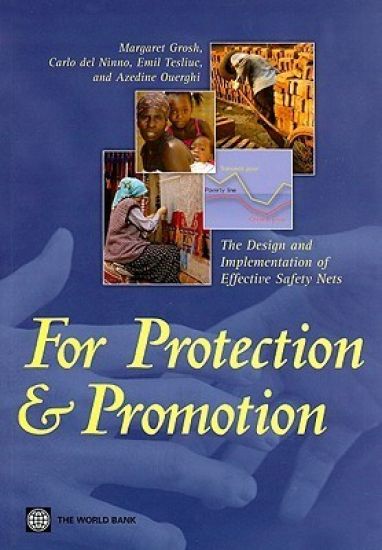
Safety nets are noncontributory transfer programs targeted to the poor or vulnerable. They play important roles in social policy. Safety nets redistribute income, thereby immediately reducing poverty and inequality; they enable households to invest in the human capital of their children and in the livelihoods of their earners; they help households manage risk, both ex ante and ex post; and they allow governments to implement macroeconomic or sectoral reforms that support efficiency and growth. To be effective, safety nets must not only be well intended, but also well designed and well implemented. A good safety net system and its programs are tailored to country circumstances, adequate in their coverage and generosity, equitable, cost-effective, incentive compatible, and sustainable. Good safety nets are also dynamic and change over time as the economy changes or as management problems are solved and new standards are set. Drawing on a wealth of research, policy, and operational documents from both academia and the World Bank’s work in over 100 countries, For Protection and Promotion provides pragmatic and informed guidance on how to design and implement safety nets, including useful information on how to define eligibility and select beneficiaries, set and pay benefits, and monitor and evaluate programs and systems. The book synthesizes the literature to date and enriches it with new examples on various program options-cash transfers (conditional and unconditional), in-kind transfers, price subsidies, fee waivers, and public works. It concludes with a comprehensive diagnostic for fitting safety net systems and programs to specific circumstances.