Kirjojen hintavertailu – 12 859 818 kirjaa ja 27 kauppaa

Kirjailija

CARLOS A. PEREZ

Kirjat ja teokset yhdessä paikassa: 6 kirjaa, julkaisuja vuosilta 2013–2025, suosituimpiin kuuluu Perez, Brady, Halperin, and Wazer's Principles and Practice of Radiation Oncology. Vertaile teosten hintoja ja tarkista saatavuus suomalaisista kirjakaupoista.

6 kirjaa

Kirjojen julkaisuvuodet: 2013–2025.

Perez, Brady, Halperin, and Wazer's Principles and Practice of Radiation Oncology

Perez, Brady, Halperin, and Wazer's Principles and Practice of Radiation Oncology

EDWARD C. HALPERIN; CARLOS A. PEREZ; DAVID E. WAZER

Wolters Kluwer Health
2025
muu
For nearly 40 years, Perez and Brady's Principles and Practice of Radiation Oncology has been the authoritative ‘book-of-record’ for the field of radiation oncology. Covering both the biological and physical science aspects of this complex field as well as site-specific information on the integrated, multidisciplinary management of patients with cancer, Perez & Brady continues to be the most comprehensive reference available for radiation oncologists and radiation oncology residents. Under the editorial leadership of Drs. Edward C. Halperin, David E. Wazer, and expert associate editors Drs. Brian C. Baumann, Rachel C. Blitzblau, and Natia Esiashvili, the fully revised 8th Edition, now known as Perez, Brady, Halperin, and Wazer’s Principles and Practice of Radiation Oncology, is available as a two-volume hardcover edition: Volume 1 covers The Scientific, Technological, Economic, and Ethical Basis of Radiation Oncology, while Volume 2 covers The Clinical Practice of Radiation Oncology. Offers comprehensive coverage of the current state of knowledge of cancer biology; medical radiation physics; clinical radiation oncology; and radiation oncology economics, ethics, and public policy Provides a foundational understanding of the natural history of cancer, the physical and technological methods of radiation application, the effects of irradiation on normal tissues, and the most judicious ways in which radiation therapy can be employed in the treatment of patients with cancer, either as a single modality or as part of a multi-modality treatment program Includes thorough clinical guidance on the management of each tumor type in site-specific chapters, including epidemiology, pathology, diagnostic work-up, prognostic factors, treatment techniques, applications of surgery, chemotherapy, immunotherapy and biological therapy, end results, and more Contains new chapters on Artificial Intelligence and Data Science, as well as a chapter providing a historical overview of radiation oncology as a medical specialty, of particular interest to residents beginning training and medical students undertaking a radiation oncology clinical clerkship Offers an increased emphasis on new approaches and technologies, including palliative and supportive care and the role of radiation treatment in non-curative roles Features more than 1,200 full-color illustrations that highlight key concepts in tumor pathogenesis, diagnosis, and targeted radiation therapy Contains a comprehensive and authoritative historical account of the field of radiation oncology Ideal for radiation oncologists, radiation oncology residents, radiation biologists, medical radiation physicists, oncologists, physicists-in-training, radiation dosimetrists, and nurses and physician assistants working in radiation oncology departments
Multiple Sclerosis

Multiple Sclerosis

Carlos A. Perez; Andrew Smith; Flavia Nelson

Cambridge University Press
2021
pokkari

Halvin toimitettuna 62,80 €

Affecting an estimated 2.5 million people worldwide, multiple sclerosis (MS) is the most common neurological cause of debilitation in young adults. Incurable, and with the precise causes still unknown, both diagnosis and management of the condition is complicated. This book summarizes the latest understanding of the causes of the disease, using accessible, bullet-point text to describe key clinical features and diagnostic criteria. Disease-modifying therapies and management of symptoms, including fatigue, tremor and cognitive changes, are covered in detail. With a chapter focusing solely on presentations in the emergency room, the importance of recognizing these neurological emergencies is emphasised, along with indications for admission in MS patients. The impact of MS on women's reproductive health and the increasing recognition of MS in pediatric patients is also explored. An up-to-date and practical approach to the accurate diagnosis and management of MS, this is an invaluable resource for both hospital and outpatient settings.
Perez & Brady's Principles and Practice of Radiation Oncology

Perez & Brady's Principles and Practice of Radiation Oncology

Edward C. Halperin; David E. Wazer; Carlos A. Perez; Luther W. Brady

Lippincott Williams and Wilkins
2018
sidottu
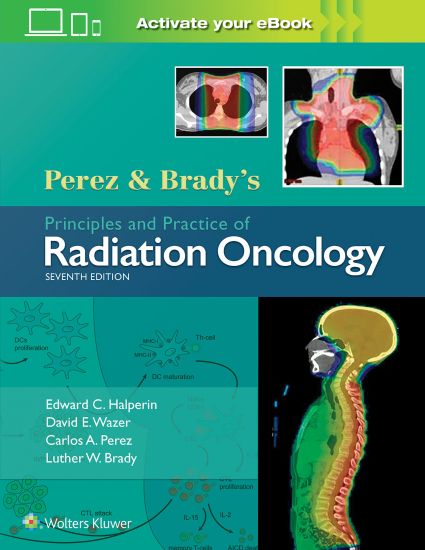
Selected as a Doody’s Essential Title for 2025! For more than 30 years, Perez and Brady's Principles and Practice of Radiation Oncology has been the must-have standard reference for radiation oncologists and radiation oncology residents who need a comprehensive text covering both the biological and physical science aspects of this complex field as well as disease site-specific information on the integrated, multidisciplinary management of patients with cancer. The book has established itself as the discipline’s "text-of-record," belonging on the shelf of all of those working in the field. The Seventh Edition continues this tradition of excellence with extensive updates throughout, many new chapters, and more than 1,400 full-color illustrations that highlight key concepts in tumor pathogenesis, diagnosis, and targeted radiation therapy. Comprehensive coverage of the current state of knowledge of cancer biology; medical radiation physics; clinical radiation oncology; and radiation oncology economics, ethics, and public policy. Regular, twice-yearly content updates available with the digital version of the text. Ideal for radiation oncologists, radiation oncology residents, radiation biologists, medical radiation physicists, oncologists, physicists-in-training, radiation dosimetrists, and nurses and physician assistants working in radiation oncology departments. New chapters include: Proton and Carbon Ion Beam Dosimetry and Treatment Planning; Stereotactic Radiation Therapy; Re-Irradiation; Error Avoidance; Undergraduate, Graduate, and Continuing Medical Education in Radiation Oncology; and a completely rewritten chapter on the economics of radiation oncology. Designed to provide a better understanding of the natural history of cancer, the physical and technological methods of radiation application, the effects of irradiation on normal tissues, and the most judicious ways in which radiation therapy can be employed in the treatment of patients with cancer, either as a single modality or as part of a multi-modality treatment program. All references printed in the book are now streamlined for quick access to further information. Site-specific chapters include relevant background information on each tumor—including epidemiology, pathology, diagnostic work-up, prognostic factors, treatment techniques, applications of surgery, chemotherapy, immunotherapy and biological therapy, end results, and more. Increased focus on new approaches and technologies with new and updated chapters. Greater emphasis on palliative and supportive care reflects the role of radiation treatment in non-curative roles. An international group of expert chapter authors keeps you well-informed. A completely revised first chapter is designed to provide an overview of the discipline of radiation oncology. This will be particularly useful for residents beginning training and medical students beginning a radiation oncology clinical clerkship. The chapter is supplemented with multiple sidebars to augment the reader's understanding of the field. Enhance Your eBook Reading Experience: Read directly on your preferred device(s), such as computer, tablet, or smartphone. Easily convert to audiobook, powering your content with natural language text-to-speech.
Radiation Oncology Management Decisions

Radiation Oncology Management Decisions

K.S. Clifford Chao; Carlos A. Perez; Tony J. C. Wang

Lippincott Williams and Wilkins
2018
pokkari
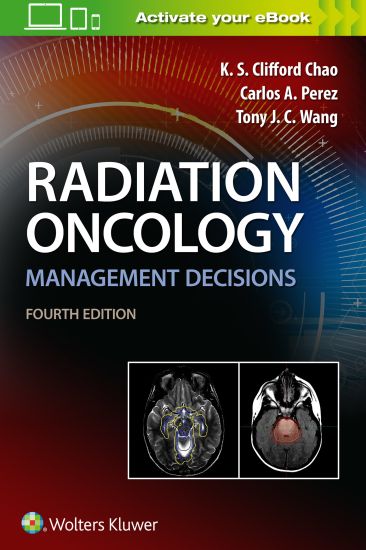
Updated with details on the newest therapies and sporting a new full-color design, this latest edition of Radiation Oncology: Management Decisions continues to offer comprehensive guidance for residents as well as radiation oncologists already in professional practice. You’ll discover the latest treatment plans for numerous cancer sites and tumor types, including the mouth and sinus, gastrointestinal areas, lungs, bones, and blood. Concise, easy-to-read material you can use in a clinical setting immediately with patients! Combines comprehensive overviews of basic concepts with the latest radiologic treatment regimens for a wide variety of tumor types and cancer sites. Now in full color! Bursting with hundreds of illustrations, figures, and images to illuminate visually important and state-of-the-art techniques. Heavily bulleted content format and to-the-point writing style makes content easy to digest and use with patients quickly. Chapters that address tumor- or site-specific treatments cover screening, assessment, staging, therapeutic developments, and other key information. Features an up-to-date list of commonly prescribed drugs—streamlined for easier reading—and coverage of the latest pain management and palliative treatments. Enhance Your eBook Reading ExperienceRead directly on your preferred device(s), such as computer, tablet, or smartphone. Easily convert to audiobook, powering your content with natural language text-to-speech.
Delineating Organs at Risk in Radiation Therapy

Delineating Organs at Risk in Radiation Therapy

Giampiero Ausili Cèfaro; Domenico Genovesi; Carlos A. Perez

Springer Verlag
2016
nidottu
Defining organs at risk is a crucial task for radiation oncologists when aiming to optimize the benefit of radiation therapy, with delivery of the maximum dose to the tumor volume while sparing healthy tissues. This book will prove an invaluable guide to the delineation of organs at risk of toxicity in patients undergoing radiotherapy. The first and second sections address the anatomy of organs at risk, discuss the pathophysiology of radiation-induced damage, and present dose constraints and methods for target volume delineation. The third section is devoted to the radiological anatomy of organs at risk as seen on typical radiotherapy planning CT scans, with a view to assisting the radiation oncologist to recognize and delineate these organs for each anatomical region – head and neck, mediastinum, abdomen, and pelvis. The book is intended both for young radiation oncologists still in training and for their senior colleagues wishing to reduce intra-institutional variations in practice and thereby to standardize the definition of clinical target volumes. ?
Delineating Organs at Risk in Radiation Therapy

Delineating Organs at Risk in Radiation Therapy

Giampiero Ausili Cèfaro; Domenico Genovesi; Carlos A. Perez

Springer Verlag
2013
sidottu
Defining organs at risk is a crucial task for radiation oncologists when aiming to optimize the benefit of radiation therapy, with delivery of the maximum dose to the tumor volume while sparing healthy tissues. This book will prove an invaluable guide to the delineation of organs at risk of toxicity in patients undergoing radiotherapy. The first and second sections address the anatomy of organs at risk, discuss the pathophysiology of radiation-induced damage, and present dose constraints and methods for target volume delineation. The third section is devoted to the radiological anatomy of organs at risk as seen on typical radiotherapy planning CT scans, with a view to assisting the radiation oncologist to recognize and delineate these organs for each anatomical region – head and neck, mediastinum, abdomen, and pelvis. The book is intended both for young radiation oncologists still in training and for their senior colleagues wishing to reduce intra-institutional variations in practice and thereby to standardize the definition of clinical target volumes. ?