Kirjojen hintavertailu – 12 903 725 kirjaa ja 27 kauppaa

Kirjailija

Carlos Alberto Torres

Kirjat ja teokset yhdessä paikassa: 17 kirjaa, julkaisuja vuosilta 1990–2019, suosituimpiin kuuluu The Church, Society, and Hegemony. Vertaile teosten hintoja ja tarkista saatavuus suomalaisista kirjakaupoista.

17 kirjaa

Kirjojen julkaisuvuodet: 1990–2019.

Theoretical and Empirical Foundations of Critical Global Citizenship Education
In the first volume in the Critical Global Citizenship Education series, Torres combines theoretical and empirical research to present an original perspective on global citizenship education as a vitally important way of learning in a globalized world. In examining the requirements for effective global citizenship education and education reform, he investigates pathways to citizenship-building at the local, national and global levels and urges development of teaching methods, teacher education, and curriculum within a social justice education framework. Taking into account post-colonial perspectives, political realities at play, and practical implications, Torres provides a succinct but comprehensive understanding of how global citizenship education can expand the concept of civic education in a global society and interrupt inequality. This volume considers the ways that global citizenship education has been incorporated and is used by international institutions, governments, and the academy, and provides a clear framework for anyone struggling to make sense of the tensions and complexities of global citizenship education today.
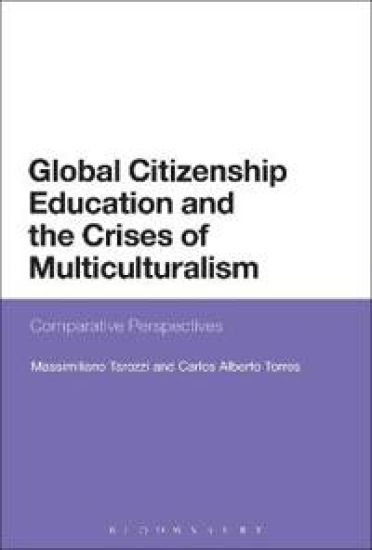
Global Citizenship Education and the Crises of Multiculturalism

Global Citizenship Education and the Crises of Multiculturalism

Massimiliano Tarozzi; Carlos Alberto Torres

Bloomsbury Academic
2018
nidottu
The notion of global citizenship education (GCE) has emerged in the international education discourse in the context of the United Nations Education First Initiative that cites developing global citizens as one of its goals. In this book, the authors argue that GCE offers a new educational perspective for making sense of the existing dilemmas of multiculturalism and national citizenship deficits in diverse societies, taking into account equality, human rights and social justice. The authors explore how teaching and research may be implemented relating to the notion of global citizenship and discuss the intersections between the framework of GCE and multiculturalism. They address the three main topics which affect education in multicultural societies and in a globalized world, and which represent unsolved dilemmas: the issue of diversity in relation to creating citizens, the issue of equality and social justice in democratic societies, and the tension between the global and the local in a globalized world. Through a comparative study of the two prevailing approaches – intercultural education within the European Union and multicultural education in the United States – the authors seek what can be learned from each model. Global Citizenship Education and the Crises of Multiculturalism offers not only a unifying theoretical framework but also a set of policy recommendations aiming to link the two approaches.
Theoretical and Empirical Foundations of Critical Global Citizenship Education
In the first volume in the Critical Global Citizenship Education series, Torres combines theoretical and empirical research to present an original perspective on global citizenship education as a vitally important way of learning in a globalized world. In examining the requirements for effective global citizenship education and education reform, he investigates pathways to citizenship-building at the local, national and global levels and urges development of teaching methods, teacher education, and curriculum within a social justice education framework. Taking into account post-colonial perspectives, political realities at play, and practical implications, Torres provides a succinct but comprehensive understanding of how global citizenship education can expand the concept of civic education in a global society and interrupt inequality. This volume considers the ways that global citizenship education has been incorporated and is used by international institutions, governments, and the academy, and provides a clear framework for anyone struggling to make sense of the tensions and complexities of global citizenship education today.
Global Citizenship Education and the Crises of Multiculturalism

Global Citizenship Education and the Crises of Multiculturalism

Massimiliano Tarozzi; Carlos Alberto Torres

Bloomsbury Academic
2016
sidottu
The notion of global citizenship education (GCE) has emerged in the international education discourse in the context of the United Nations Education First Initiative that cites developing global citizens as one of its goals. In this book, the authors argue that GCE offers a new educational perspective for making sense of the existing dilemmas of multiculturalism and national citizenship deficits in diverse societies, taking into account equality, human rights and social justice. The authors explore how teaching and research may be implemented relating to the notion of global citizenship and discuss the intersections between the framework of GCE and multiculturalism. They address the three main topics which affect education in multicultural societies and in a globalized world, and which represent unsolved dilemmas: the issue of diversity in relation to creating citizens, the issue of equality and social justice in democratic societies, and the tension between the global and the local in a globalized world. Through a comparative study of the two prevailing approaches – intercultural education within the European Union and multicultural education in the United States – the authors seek what can be learned from each model. Global Citizenship Education and the Crises of Multiculturalism offers not only a unifying theoretical framework but also a set of policy recommendations aiming to link the two approaches.
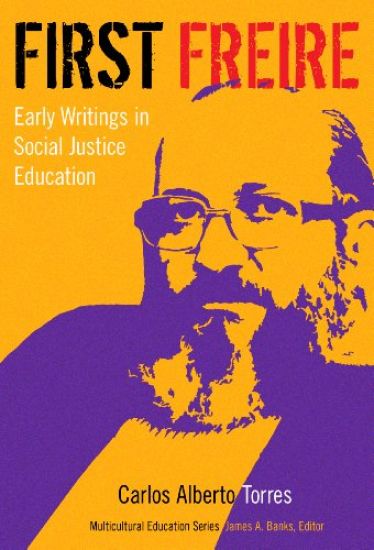
First Freire

First Freire

Carlos Alberto Torres

Teachers' College Press
2014
sidottu
In his new book, Carlos Alberto Torres, an internationally renowned critical theorist of education, explores the early writings of Paulo Freire whose ideas have had a tremendous and long-lasting impact on the world of pedagogy and politics. Torres analyses Freire’s works, from the 1960s and 1970s, before Freire gained worldwide recognition for his Pedagogy of the Oppressed. Offering an in-depth look into the formative thinking of Freire, Torres identifies how his ideas produced frameworks for educating global citizens, building community and mutual respect, creating social responsibility, instilling an appreciation for diversity, promoting multiple literacies, and social justice education. This volume is the result of more than 3 decades of research with access to Freire’s personal library and the archives of the Paulo Freire Institute, as well as the author’s extensive conversations with Paulo Freire over two decades - Dr. Torres was Freire’s adviser during his tenure as Secretary of Education in the Municipality of São Paulo, Brazil, 1989-1991.
First Freire

First Freire

Carlos Alberto Torres

Teachers' College Press
2014
nidottu
In his new book, Carlos Alberto Torres, an internationally renowned critical theorist of education, explores the early writings of Paulo Freire whose ideas have had a tremendous and long-lasting impact on the world of pedagogy and politics. Torres analyses Freire’s works, from the 1960s and 1970s, before Freire gained worldwide recognition for his Pedagogy of the Oppressed. Offering an in-depth look into the formative thinking of Freire, Torres identifies how his ideas produced frameworks for educating global citizens, building community and mutual respect, creating social responsibility, instilling an appreciation for diversity, promoting multiple literacies, and social justice education. This volume is the result of more than 3 decades of research with access to Freire’s personal library and the archives of the Paulo Freire Institute, as well as the author’s extensive conversations with Paulo Freire over two decades - Dr. Torres was Freire’s adviser during his tenure as Secretary of Education in the Municipality of São Paulo, Brazil, 1989-1991.
Paulo Freire Encyclopedia

Paulo Freire Encyclopedia

Carlos Alberto Torres

Rowman Littlefield
2012
sidottu
Comprised of 230 entries written by 104 international scholars well-known in the field, this is the definitive resource on one of the most influential educators of the second half of the last century. The entries are more properly themes (or using Freirean language, generative themes) from Paulo Freire’s work and include: Action-Reflection, Alienation, Otherness , Illiteracy, Activism, the Classroom, Autonomy, Authority, Authoritarianism, Evaluation, Citizenship, Culture circles, Social class, Coherence, Trust, Knowledge/knowing, Contradiction, Conflict, Popular culture, Epistemological curiosity, Decency, Human rights, Ecology, Professional education, State, Ethics, Exile, Existence, Experience, Family, Feminism, Phenomenology, Globalization, Indignation, Intersubjectivity, Cultural invasion, Interdisciplinarity, Freedom, Liberation Theology, Leadership, Marx/Marxism, Modernity/Post-modernity, Human nature, Participation, Pedagogy, Praxis, Teacher, Racism, Rigor/rigorousness (Methodological), Transcendence, Utopia, Violence, Ontological vocation.
Education and Neoliberal Globalization

Education and Neoliberal Globalization

Carlos Alberto Torres

Routledge
2012
nidottu
This volume by noted critical education scholar Carlos Alberto Torres takes up the question of how structural changes in schooling and the growing impacts of neoliberalism and globalization affect social change, national development, and democratic educational systems throughout the world. The first section of the book offers analytical avenues to understand and criticize the practices and policies of neoliberal states, both domestically and internationally. More than a mere lament of the state of educational policy, however, Torres also documents the critiques and alternatives developed by social movements against neoliberal governments and policies. Ultimately, his work urges readers to engage in the struggle to resist the oppressive forces of neoliberal globalization, and proactively and deliberately act in informed ways to create a better world.
Globalizations and Education

Globalizations and Education

Carlos Alberto Torres; Michael W. Apple

Teachers' College Press
2009
nidottu
Spanning an extraordinary 30-year career, this book collects seminal essays by critical theorist Carlos Alberto Torres. Torres is among the foremost scholars devoted to interpreting the work of Paulo Freire and has done much over the years to raise the visibility of Freire's contribution to educational theory. In addition, he has helped to establish the discipline of the political sociology of education. His work on Latin American education has made substantial contributions to the fields of comparative and international education. All of the strands of his thinking, along with his commitment to employing scholarship for social change, are evident in this important collection.
Education and Neoliberal Globalization

Education and Neoliberal Globalization

Carlos Alberto Torres

Routledge
2008
sidottu
This volume by noted critical education scholar Carlos Alberto Torres takes up the question of how structural changes in schooling and the growing impacts of neoliberalism and globalization affect social change, national development, and democratic educational systems throughout the world. The first section of the book offers analytical avenues to understand and criticize the practices and policies of neoliberal states, both domestically and internationally. More than a mere lament of the state of educational policy, however, Torres also documents the critiques and alternatives developed by social movements against neoliberal governments and policies. Ultimately, his work urges readers to engage in the struggle to resist the oppressive forces of neoliberal globalization, and proactively and deliberately act in informed ways to create a better world.
Reading Freire and Habermas

Reading Freire and Habermas

Raymond A. Morrow; Carlos Alberto Torres

Teachers' College Press
2002
sidottu
In this book, two well-known scholars of critical educational studies provide a compelling introduction to the thoughts of Brazilian educator Paulo Freire and German critical theorist Jurgen Habermas. While there are many other books about these influential thinkers, this is the first to compare their theories in-depth and situate their thinking in relation to other social theories and philosophies of education. The authors demonstrate that, despite their differences, these philosophers share crucial views on science, society, critical social psychology, and educational praxis that are mutually illuminating and offer a new point of departure for a critical theory of education. The book is organized around the following themes: (a) Freire and Habermas' philosophies of the social sciences as a form of critical social theory; (b) their theories of society; (c) the critical social psychology that underlies their conception of the dialogical and developmental subject; and (d) the implications of their overall perspective for educational practice.
Democracy, Education, and Multiculturalism

Democracy, Education, and Multiculturalism

Carlos Alberto Torres

Rowman Littlefield
1998
nidottu
This important book looks at developments that are changing our understanding of the role of education in citizenship and the possibilities of democratic participation. The first chapter reviews theories of citizenship and education based on the classical contributions to political theory of C. B. MacPherson and T. H. Marshall. The second chapter challenges educators to think more politically about education. It is based on a seminal analysis that shows the role education plays in the liberal, neoliberal, and neoconservative state, incorporating critical perspectives from neo-Marxism, postmodernism, and feminism. In chapter three Professor Torres analyzes the transition from the welfare state to the neoliberal state, including the role of international organizations in promoting educational reform and privatization policies. In the concluding chapter Torres draws on Hobbes, Locke, Jefferson, Kant, Hegel, Marx and other writers such as C. Mouffe and C. Pateman to outline contemporary approaches to multiculturalism in education and citizenship.
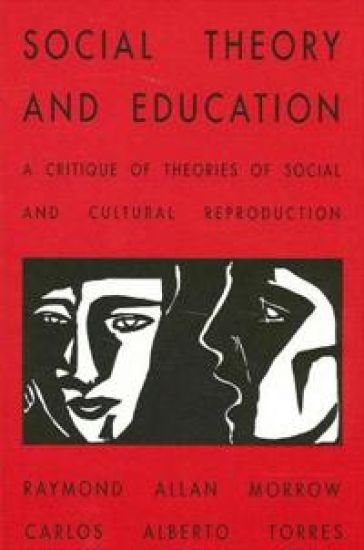
Social Theory and Education

Social Theory and Education

Raymond Allen Morrow; Carlos Alberto Torres

State University of New York Press
1995
pokkari
Summarizes and critiques theories of social and cultural reproduction as they relate to sociology of education. This book summarizes the body of knowledge about sociology of education and cultural studies as it informs educational research and critical pedagogy. It synthesizes the most relevant work in social and cultural reproduction published in the last three decades in English, French, German, Spanish, and Portuguese. The authors document and critique the theoretical discussion in developments in both advanced societies and peripheral ones, and link macro-sociological issues with social psychological ones. The book introduces theories of the state to underscore a political sociology of education, and highlights an agenda for theory building, research, and practice in sociology of education.
The Church, Society, and Hegemony

The Church, Society, and Hegemony

Carlos Alberto Torres; Richard A. Young

Praeger Publishers Inc
1992
sidottu
This book provides a critical sociology of religion in Latin America. Its purpose is to discuss the notion of religion as part of social, cultural, and political processes in capitalist societies, drawing on the classics of sociological thought (Marx, Durkheim, Weber, and Gramsci). Thus, churches are analyzed as organized institutions of religious mediation intimately linked to the production of social, cultural, and political hegemony in Latin America. The Catholic Church, the dominant church in the region, is analyzed in terms of its different faces, changes, and transformations from conquest and colonization through the changing winds of Vatican II to the revolutionary experiences of the popular church in the 1970s and 1980s. This work will be of interest to scholars of Latin American studies, politics, religion, culture, and sociology. It also speaks to theologians and philosophers working in Latin America.
Education, Policy, and Social Change

Education, Policy, and Social Change

Daniel A. Morales Gomez; Carlos Alberto Torres

Praeger Publishers Inc
1992
sidottu
The purpose of this contributed volume is to examine the links among research, policy, and change in education in Latin America in the context of the relationships between the economy, politics, and the state in the 1980s. The case analyses will discuss the challenges these societies face in education in their progression towards the twenty-first century. In its various sections, the book addresses the following questions: How did education respond during the 1980s to the major sociopolitical and economic changes that affected these countries? How did the changes in the 1980s affect the relationships between education, society, and the state, and what lessons can be learned from the interaction between research and policy that may help in understanding the developmental role of education in the 1990s? And is educational research and policy helping to improve the social condition of minorities in Latin America? This volume will be of interest to scholars and policymakers in Latin American studies, educational research, education policy, and educational planning.
The State, Corporatist Politics, and Educational Policy Making in Mexico

The State, Corporatist Politics, and Educational Policy Making in Mexico

Daniel A. Morales Gomez; Carlos Alberto Torres

Praeger Publishers Inc
1990
sidottu
An important contribution to the growing body of work on Latin American policy making in education, this volume presents a critical analysis of the conflicts and contradictions inherent in educational policy planning in Mexico since the early 1970s. In an effort to forge a clearer and more comprehensive understanding of the processes involved, the authors examine the complex relationships among the politics of a corporative State built on the remains of a revolutionary tradition, the current model of associated-dependent development, and the process of policy formation in formal and nonformal education. Analysis of specific cases enables the authors to present an overview of the factors involved in the designing, planing, and implementation of educational policies in Mexico, as well as assessing the effects of educational change on the poorest sectors of its society. Morales-Gomez and Torres begin by analyzing some of the political economy factors that historically have determined the current process of associate-dependent development in Mexico and how they have evolved and shaped the role of education in the country. They show how educational policies and practices are affected by the processes of sociopolitical change that underly the formation and evolution of the corporatist State. A critical review of the structure and functioning of the educational system in Mexico precedes three case studies of formal and nonformal education that illustrate the relationships among the predominant ideas shaping current development in the country, the process of policy formation in education, and the actual practice of formal and nonformal education. The first case study examines primary education as a manifestation of the contradictions in educational policy; the second focuses on some of the nonformal initiatives carried out by the government over the last two decades; and the third looks at adult workers' education.
The Politics of Nonformal Education in Latin America

The Politics of Nonformal Education in Latin America

Carlos Alberto Torres

Praeger Publishers Inc
1990
sidottu
Torres here brings a unique theoretical perspective to the study of the politics of nonformal education in Latin America. Using the literacy programs in several Latin American countries--including Mexico, Cuba, Nicaragua, and Grenada--as the prime examples of adult educational reform, Torres examines such issues as: Why are given educational policies created? How are they constructed, planned, and implemented? Who are the most relevant actors in their formulation and operationalization? What are the implications of such policies for both clients and the broader society? What are the fundamental, systematic, and organizational processes involved? Throughout, Torres uses an approach based on a political sociology and informed by political economy analysis. Challenging the established assumptions of mainstream adult and nonformal education, he argues persuasively that, rather than providing new training for the labor force or attempting to improve the living conditions of the poor, the nonformal education policies in Latin America have played an integral role in governments' attempts to legitimize the capitalist state. Torres begins by addressing some of the basic problems of illiteracy and adult education in Latin America. He then offers a brief overview of the relations between the state and education, which sets the stage for the theoretical discussion in the following chapters. Subsequent chapters analyze the political economy of adult education in Latin America and explore the political implications of adult education and literacy training. An in-depth study of education reform in socialist-oriented countries contrasts the pre- and post-revolutionary situation in adult education in Cuba, Nicaragua, and Grenada. The national system of adult education in Mexico during the late 1970s and early 1980s also receives extended treatment. Finally, Torres presents both a theoretical and methodological perspective for the study of adult education policy formation and a new agenda for research inspired by the political sociology of education. Students and scholars of Latin American studies and comparative education will find this work an important catalyst for further work on the politics of education in Latin America.