

Kirjojen hintavertailu – 12 903 725 kirjaa ja 27 kauppaa

Kirjailija

Carlos Fraenkel

Kirjat ja teokset yhdessä paikassa: 3 kirjaa, julkaisuja vuosilta 2012–2016, suosituimpiin kuuluu Teaching Plato in Palestine. Vertaile teosten hintoja ja tarkista saatavuus suomalaisista kirjakaupoista.

3 kirjaa

Kirjojen julkaisuvuodet: 2012–2016.

Teaching Plato in Palestine

Teaching Plato in Palestine

Carlos Fraenkel; Michael Walzer

Princeton University Press
2016
pokkari
Teaching Plato in Palestine is part intellectual travelogue, part plea for integrating philosophy into our personal and public life. Philosophical toolkit in tow, Carlos Fraenkel invites readers on a tour around the world as he meets students at Palestinian and Indonesian universities, lapsed Hasidic Jews in New York, teenagers from poor neighborhoods in Brazil, and the descendants of Iroquois warriors in Canada. They turn to Plato and Aristotle, al-Ghaz?l? and Maimonides, Spinoza and Nietzsche for help to tackle big questions: Does God exist? Is piety worth it? Can violence be justified? What is social justice and how can we get there? Who should rule? And how shall we deal with the legacy of colonialism? Fraenkel shows how useful the tools of philosophy can be--particularly in places fraught with conflict--to clarify such questions and explore answers to them. In the course of the discussions, different viewpoints often clash. That's a good thing, Fraenkel argues, as long as we turn our disagreements on moral, religious, and philosophical issues into what he calls a "culture of debate." Conceived as a joint search for the truth, a culture of debate gives us a chance to examine the beliefs and values we were brought up with and often take for granted. It won't lead to easy answers, Fraenkel admits, but debate, if philosophically nuanced, is more attractive than either forcing our views on others or becoming mired in multicultural complacency--and behaving as if differences didn't matter at all.

Teaching Plato in Palestine

Teaching Plato in Palestine

Carlos Fraenkel; Michael Walzer

Princeton University Press
2015
sidottu
Teaching Plato in Palestine is part intellectual travelogue, part plea for integrating philosophy into our personal and public life. Philosophical toolkit in tow, Carlos Fraenkel invites readers on a tour around the world as he meets students at Palestinian and Indonesian universities, lapsed Hasidic Jews in New York, teenagers from poor neighborhoods in Brazil, and the descendants of Iroquois warriors in Canada. They turn to Plato and Aristotle, al-Ghaz?l? and Maimonides, Spinoza and Nietzsche for help to tackle big questions: Does God exist? Is piety worth it? Can violence be justified? What is social justice and how can we get there? Who should rule? And how shall we deal with the legacy of colonialism? Fraenkel shows how useful the tools of philosophy can be--particularly in places fraught with conflict--to clarify such questions and explore answers to them. In the course of the discussions, different viewpoints often clash. That's a good thing, Fraenkel argues, as long as we turn our disagreements on moral, religious, and philosophical issues into what he calls a "culture of debate." Conceived as a joint search for the truth, a culture of debate gives us a chance to examine the beliefs and values we were brought up with and often take for granted. It won't lead to easy answers, Fraenkel admits, but debate, if philosophically nuanced, is more attractive than either forcing our views on others or becoming mired in multicultural complacency--and behaving as if differences didn't matter at all.
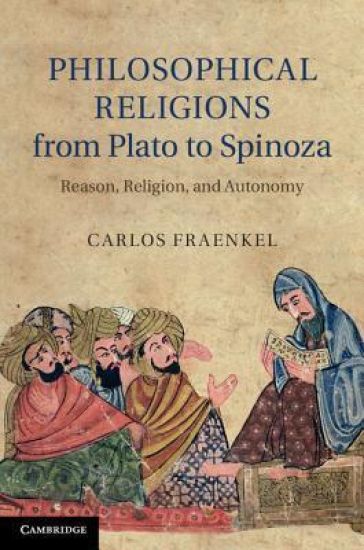
Philosophical Religions from Plato to Spinoza

Philosophical Religions from Plato to Spinoza

Carlos Fraenkel

Cambridge University Press
2012
sidottu
Many pagan, Jewish, Christian and Muslim philosophers from Antiquity to the Enlightenment made no meaningful distinction between philosophy and religion. Instead they advocated a philosophical religion, arguing that God is Reason and that the historical forms of a religious tradition serve as philosophy's handmaid to promote the life of reason among non-philosophers. Carlos Fraenkel provides the first account of this concept and traces its history back to Plato. He shows how Jews and Christians appropriated it in Antiquity, follows it through the Middle Ages in both Islamic and Jewish forms and argues that it underlies Spinoza's interpretation of Christianity. The main challenge to a philosophical religion comes from the modern view that all human beings are equally able to order their lives rationally and hence need no guidance from religion. Fraenkel's wide-ranging book will appeal to anyone interested in how philosophy has interacted with Jewish, Christian, and Muslim religious traditions.