Kirjojen hintavertailu – 12 903 725 kirjaa ja 27 kauppaa

Kirjailija

Carlos Pascual

Kirjat ja teokset yhdessä paikassa: 3 kirjaa, julkaisuja vuosilta 2010–2024, suosituimpiin kuuluu Learning to Salsa. Vertaile teosten hintoja ja tarkista saatavuus suomalaisista kirjakaupoista.

3 kirjaa

Kirjojen julkaisuvuodet: 2010–2024.

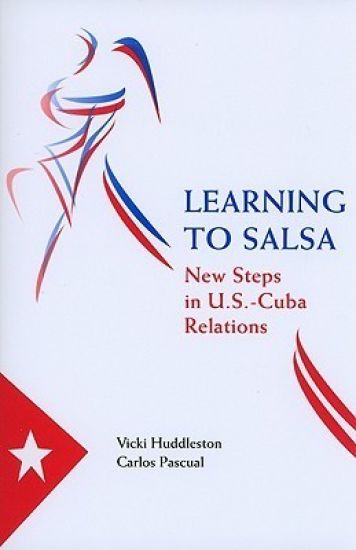
Learning to Salsa

Learning to Salsa

Vicki Huddleston; Carlos Pascual

Brookings Institution
2010
nidottu
" Today the United States has little leverage to promote change in Cuba. Indeed, Cuba enjoys normal relations with virtually every country in the world, and American attempts to isolate the Cuban government have served only to elevate its symbolic predicament as an ""underdog"" in the international arena. A new policy of engagement toward Cuba is long overdue. —From the IntroductionAs longtime U. S. diplomats Vicki Huddleston and Carlos Pascual make painfully clear in their introduction, the United States is long overdue in rethinking its policy toward Cuba. This is a propitious time for such an undertaking—the combination of change within Cuba and in the Cuban American community creates the most significant opening for a reassessment of U. S. policy since Fidel Castro took control in 1959. To that end, Huddleston and Pascual convened opinion leaders in the Cuban American community, leading scholars, and international diplomats from diverse backgrounds and political orientations to seek common ground on U. S. policy toward Cuba. This pithy yet authoritative analysis is the result. In the quest for ideas that would support the emergence of a peaceful, prosperous, and democratic Cuba—one in which the Cuban people shape their political and economic future—the authors conducted a series of simulations to identify the critical factors that the U. S. government should consider as it reformulates its Cuba policies. The advisers' wide-ranging expertise was applied to a series of hypothetical scenarios in which participants tested how different U. S. policy responses would affect a political transition in Cuba. By modeling and analyzing the decisionmaking processes of the various strategic actors and stakeholders, the simulations identified factors that might influence the success or failure of specific policy options. They then projected how key actors such as the Cuban hierarchy, civil society, and the international and Cuban American communities might act and react to internal and external events that would logically be expected to occur in the near future. The lessons drawn from these simulations led to the unanimous conclusion that the United States should adopt a proactive policy of critical and constructive engagement toward Cuba."
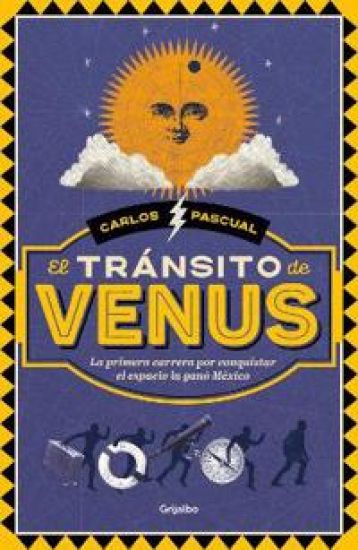
El Tránsito de Venus / The Transit of Venus
En un claro homenaje a las extraordinarias aventuras de Julio Verne, y con un sentido del humor excepcional, Carlos Pascual hace gala una vez m s de su destreza literaria para narrarnos un evento ver dico en la historia de M xico que parece, sin embargo, sacado de una estrafalaria obra de ficci n. 1874. Se aproxima el gran evento astron mico del siglo, el tr nsito de Venus, que permitir calcular la distancia entre el Sol y la Tierra, y la comunidad cient fica est conmocionada. El presidente Sebasti n Lerdo de Tejada, movido por el esp ritu de su tiempo y asesorado por un grupo de expertos, decide insertar a M xico en la modernidad y crea la Comisi n Astron mica Mexicana, encargada de llegar a las costas de Jap n para tomar las tan esperadas mediciones. Es as como cinco cient ficos mexicanos --entre los que se encuentra Francisco D az Covarrubias-- se embarcan en un periplo de varios meses sin tener idea de las aventuras que los esperan. Despu s de un accidentado trayecto a Veracruz, una confusi n diplom tica en Cuba, una cuarentena obligada en Filadelfia, una trifulca con los apaches y un dram tico naufragio, llegar n por fin a las playas niponas, donde instalar n su campamento. Lograr M xico participar en la carrera internacional por conquistar el espacio? ENGLISH DESCRIPTION In clear homage to Jules Verne's extraordinary adventures, and with an exceptional sense of humor, Carlos Pascual flaunts his literary mastery once more to tell us a true story in Mexican history that nevertheless seems taken from an outlandish work of fiction. 1874. The great astronomical event of the century approaches: the transit of Venus, after which it will be possible to calculate the distance between the Earth and the Sun, and the scientific community is in shock. President Sebasti n Lerdo de Tejada, moved by the spirit of his time and advised by a group of experts, decides to direct Mexico towards modernity and create the Mexican Astronomy Commission, responsible for going to Japan and take the much-awaited measurements. And that is how five Mexican scientists--Francisco D az Covarrubias among them--embark on a several-month-long periplus, unaware of the adventures that awaited them. After a rough journey to Veracruz, a diplomatic mix-up in Cuba, a forced quarantine in Philadelphia, a brawl with the Apache, and a dramatic shipwreck, they finally arrive on Japanese shores, where they will set up camp. Will Mexico be able to take part in the international race to conquer space?
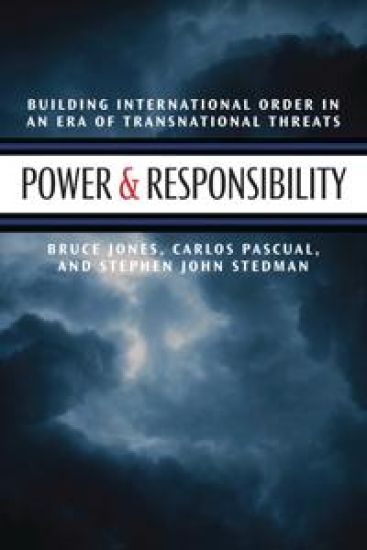
Power and Responsibility

Power and Responsibility

Bruce D. Jones; Carlos Pascual; Stephen John Stedman

Brookings Institution
2010
nidottu
"""The aim of the Managing Global Insecurity project is to launch a reform effort of the global security system in 2009. That task is both ambitious and urgent.... The time to act is now.""—from the Foreword by Javier SolanaThe twenty-first century will be defined by security threats unconstrained by borders—from economic instability, climate change, and nuclear proliferation to conflict, poverty, terrorism, and disease. The greatest test of global leadership will be building partnerships and institutions for cooperation that can meet the challenge. Power and Responsibility describes how American leadership can rebuild international order to promote global security and prosperity for today's transnational world. Power & Responsibility establishes a new foundation for international security: ""responsible sovereignty,"" or the notion that sovereignty entails obligations and duties toward other states as well as one's own citizens. Governments must cooperate across borders to safeguard common resources and tackle common threats. Power & Responsibility argues that in order to advance its own interests, the United States must learn to govern in an interdependent world, exercise leadership through cooperation, and create new institutions with today's traditional and emerging powers. The result of a collaborative project on Managing Global Insecurity, the book also reflects the MGI project's global dialogue—extensive consultations in the United States and in regions around the world as well as discussions with the MGI project's Advisory Group, composed of prominent U. S. and international figures. ""The 2008 financial crisis has brought our global interconnectedness close to home. But economic insecurity is just one concern. Power and Responsibility provides a road map for building effective policies and legitimate global institutions to tackle today's suite of transnational challenges.""—Kemal Dervis, administrator, UN Development Program"