Kirjojen hintavertailu – 12 859 828 kirjaa ja 27 kauppaa

Kirjailija

Carol Owens

Kirjat ja teokset yhdessä paikassa: 6 kirjaa, julkaisuja vuosilta 2005–2021, suosituimpiin kuuluu Studying Lacan’s Seminar VI. Vertaile teosten hintoja ja tarkista saatavuus suomalaisista kirjakaupoista.

6 kirjaa

Kirjojen julkaisuvuodet: 2005–2021.

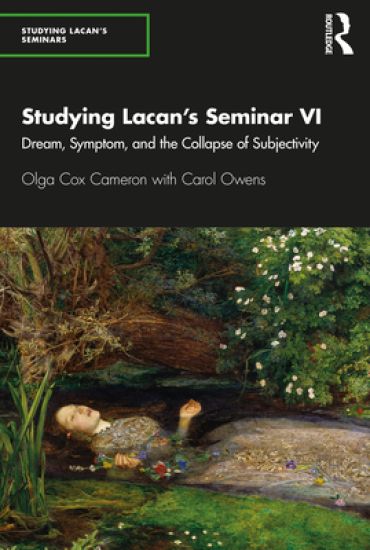
Studying Lacan’s Seminar VI

Studying Lacan’s Seminar VI

Olga Cox Cameron; Carol Owens

Routledge
2021
nidottu
The second volume in the Studying Lacan’s Seminars series, this book is the first comprehensive study of Lacan’s Seminar VI: Desire and its Interpretation. A natural companion to Bruce Fink’s recent translation of the seminar into English (2019), this book offers a genuine opportunity to delve deeply into the seminar, and a hospitable introduction to Lacan’s teachings of the 1950s. This important book brings together various aspects of Cox Cameron’s teachings and systematic, careful, and critical readings of Seminar VI. Lacan’s theorizing and conceptualizing of the object a, the fundamental fantasy, and aphanisis, as well as the ambiguous treatment of the phallus in his work at the time, are all introduced, contextualized, and explored in detail. The trajectories of his thinking are traced in terms of future developments and elaborations in the seminars that follow closely on the heels of Seminar VI – Seminars VII (Ethics of Psychoanalysis), VIII (Transference), IX (Identification), and X (Anxiety). Consideration is also given to how certain themes and motifs are recapitulated or reworked in his later teachings such as in Seminars XX (Encore), and XXIII (The Sinthome). Also included in this volume are two further essays by Cox Cameron, a most valuable critique of the concept of the phallus in Lacan’s theories of the 1950s, and an overview of Seminar VI originally presented as a keynote address to the APW congress in Toronto 2014. The book is of great interest to Lacanian scholars and students, as well as psychoanalytic therapists and analysts interested in Lacan’s teachings of the 1950s and in how important concepts developed during this period are treated in his later work.
Studying Lacan’s Seminar VI

Studying Lacan’s Seminar VI

Olga Cox Cameron; Carol Owens

Routledge
2021
sidottu
The second volume in the Studying Lacan’s Seminars series, this book is the first comprehensive study of Lacan’s Seminar VI: Desire and its Interpretation. A natural companion to Bruce Fink’s recent translation of the seminar into English (2019), this book offers a genuine opportunity to delve deeply into the seminar, and a hospitable introduction to Lacan’s teachings of the 1950s. This important book brings together various aspects of Cox Cameron’s teachings and systematic, careful, and critical readings of Seminar VI. Lacan’s theorizing and conceptualizing of the object a, the fundamental fantasy, and aphanisis, as well as the ambiguous treatment of the phallus in his work at the time, are all introduced, contextualized, and explored in detail. The trajectories of his thinking are traced in terms of future developments and elaborations in the seminars that follow closely on the heels of Seminar VI – Seminars VII (Ethics of Psychoanalysis), VIII (Transference), IX (Identification), and X (Anxiety). Consideration is also given to how certain themes and motifs are recapitulated or reworked in his later teachings such as in Seminars XX (Encore), and XXIII (The Sinthome). Also included in this volume are two further essays by Cox Cameron, a most valuable critique of the concept of the phallus in Lacan’s theories of the 1950s, and an overview of Seminar VI originally presented as a keynote address to the APW congress in Toronto 2014. The book is of great interest to Lacanian scholars and students, as well as psychoanalytic therapists and analysts interested in Lacan’s teachings of the 1950s and in how important concepts developed during this period are treated in his later work.
Psychoanalysing Ambivalence with Freud and Lacan

Psychoanalysing Ambivalence with Freud and Lacan

Stephanie Swales; Carol Owens

Routledge
2019
nidottu
Taking a deep dive into contemporary Western culture, this book suggests we are all fundamentally ambivalent beings. A great deal has been written about how to love – to be kinder, more empathic, a better person, and so on. But trying to love without dealing with our ambivalence, with our hatred, is often a recipe for failure. Any attempt, therefore, to love our neighbour as ourselves – or even, for that matter, to love ourselves – must recognise that we love where we hate and we hate where we love. Psychoanalysis, beginning with Freud, has claimed that to be in two minds about something or someone is characteristic of human subjectivity. Owens and Swales trace the concept of ambivalence through its various iterations in Freudian and Lacanian psychoanalysis in order to question how the contemporary subject deals with its ambivalence. They argue that experiences of ambivalence are, in present-day cultural life, increasingly excised or foreclosed, and that this foreclosure has symptomatic effects at the individual as well as social level. Owens and Swales examine ambivalence as it is at work in mourning, in matters of sexuality, and in our enjoyment under neoliberalism and capitalism. Above all, the authors consider how today’s ambivalent subject relates to the racially, religiously, culturally, or sexually different neighbour as a result of the current societal dictate of complete tolerance of the other. In this vein, Owens and Swales argue that ambivalence about one’s own jouissance is at the very roots of xenophobia. Peppered with relevant and stimulating examples from clinical work, film, television, politics, and everyday life, Psychoanalysing Ambivalence breathes new life into an old concept and will appeal to any reader, academic, or clinician with an interest in psychoanalytic ideas.
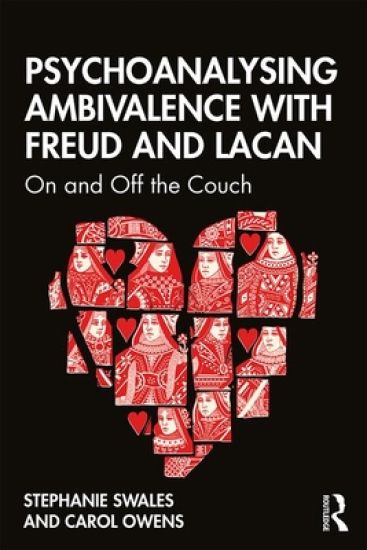
Psychoanalysing Ambivalence with Freud and Lacan

Psychoanalysing Ambivalence with Freud and Lacan

Stephanie Swales; Carol Owens

Routledge
2019
sidottu
Taking a deep dive into contemporary Western culture, this book suggests we are all fundamentally ambivalent beings. A great deal has been written about how to love – to be kinder, more empathic, a better person, and so on. But trying to love without dealing with our ambivalence, with our hatred, is often a recipe for failure. Any attempt, therefore, to love our neighbour as ourselves – or even, for that matter, to love ourselves – must recognise that we love where we hate and we hate where we love. Psychoanalysis, beginning with Freud, has claimed that to be in two minds about something or someone is characteristic of human subjectivity. Owens and Swales trace the concept of ambivalence through its various iterations in Freudian and Lacanian psychoanalysis in order to question how the contemporary subject deals with its ambivalence. They argue that experiences of ambivalence are, in present-day cultural life, increasingly excised or foreclosed, and that this foreclosure has symptomatic effects at the individual as well as social level. Owens and Swales examine ambivalence as it is at work in mourning, in matters of sexuality, and in our enjoyment under neoliberalism and capitalism. Above all, the authors consider how today’s ambivalent subject relates to the racially, religiously, culturally, or sexually different neighbour as a result of the current societal dictate of complete tolerance of the other. In this vein, Owens and Swales argue that ambivalence about one’s own jouissance is at the very roots of xenophobia. Peppered with relevant and stimulating examples from clinical work, film, television, politics, and everyday life, Psychoanalysing Ambivalence breathes new life into an old concept and will appeal to any reader, academic, or clinician with an interest in psychoanalytic ideas.
Sussex Cove

Sussex Cove

Jimmy Owens; Carol Owens

Smmi
2012
nidottu
From the trauma of a childhood blunder comes a lifetime of secrets and lies that Sam Cannady must uncover...or die trying. In posh Sussex Cove, Massachusetts, eleven year old Sam is accused of molesting little Joanna Stanfield, the ward of his father's powerful employer. The fallout is catastrophic: his father's career is damaged and his family uprooted. His father never forgives Sam, nor lets him forget. Thirty years later, Sam is a celebrated California pastor whose famous feel-good doctrine isn't working: his wife has died, his faith is in crisis, and when his father is killed, everything points to murder...and to the past. Sam's desperate search for the truth becomes a journey he soon wishes he had never begun as the tentacles of his childhood trauma reach out and suck him into a vortex of violence, political intrigue, and occult spiritual reality that he never dreamed existed. Armed with reality-shifting revelation from God, the strength of an old friend, and a heart-melting new love, Sam is soon enmeshed in the ancient power struggle between the two spiritual kingdoms that still war for our world.